Ornamental Edible Garden Ideas: Beautiful Plants You Can Also Eat
An attractive front yard does not have to be filled with plants that only look good. With a little planning, you can grow colorful vegetables, flowering herbs, fruiting shrubs, and edible flowers that make your landscape look inviting while providing ingredients for your kitchen.
That is the appeal of an ornamental edible garden. Instead of separating vegetables into a hidden garden at the back of the property, you mix useful plants into borders, containers, pathways, and traditional landscape beds. The result can look just as intentional as a decorative garden, but some of the plants also give you something to harvest.
The easiest way to begin is to choose plants for more than one purpose. Purple basil can add rich color to a sunny border, rainbow Swiss chard brings bright stems into a vegetable bed, and blueberry bushes can provide flowers, seasonal foliage color, and fruit. The best combinations depend on your climate, available sunlight, soil, and how much maintenance you are comfortable doing.
If you are looking for ornamental edible garden ideas that work in an ordinary American yard, these 12 options will help you create a landscape that is beautiful, productive, and manageable.
Affiliate Disclosure: As an Amazon Associate, SpruceTouch earns from qualifying purchases.
What Is an Ornamental Edible Garden?
An ornamental edible garden, sometimes called foodscaping, combines edible plants with landscape design. Vegetables, fruiting shrubs, herbs, and edible flowers become part of the garden’s visual structure instead of being planted only in a separate vegetable patch.
The key is to think about each plant’s appearance as well as its growing requirements. Consider its mature height, leaf color, flower shape, seasonal changes, and the space it needs. A plant that looks beautiful in a small nursery pot may become too large for a narrow walkway border once it matures.
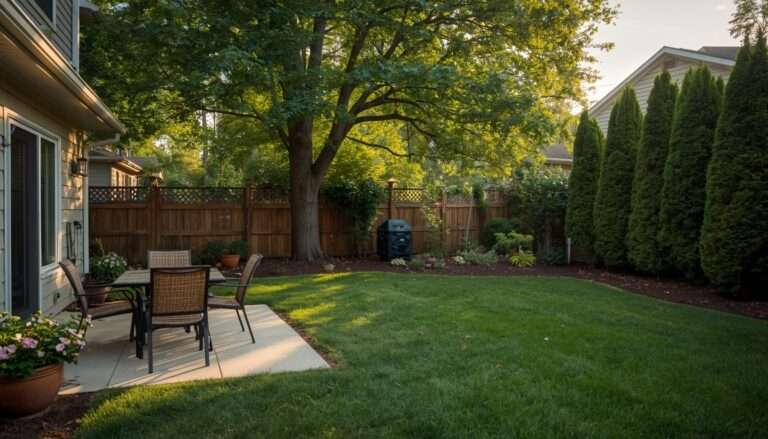
You can create an edible landscape in a front yard, along a fence, around a patio, in raised beds, or in containers on a sunny porch. Even a small space can support a few useful plants when you select compact varieties and arrange them thoughtfully.
12 Ornamental Edible Garden Ideas to Try
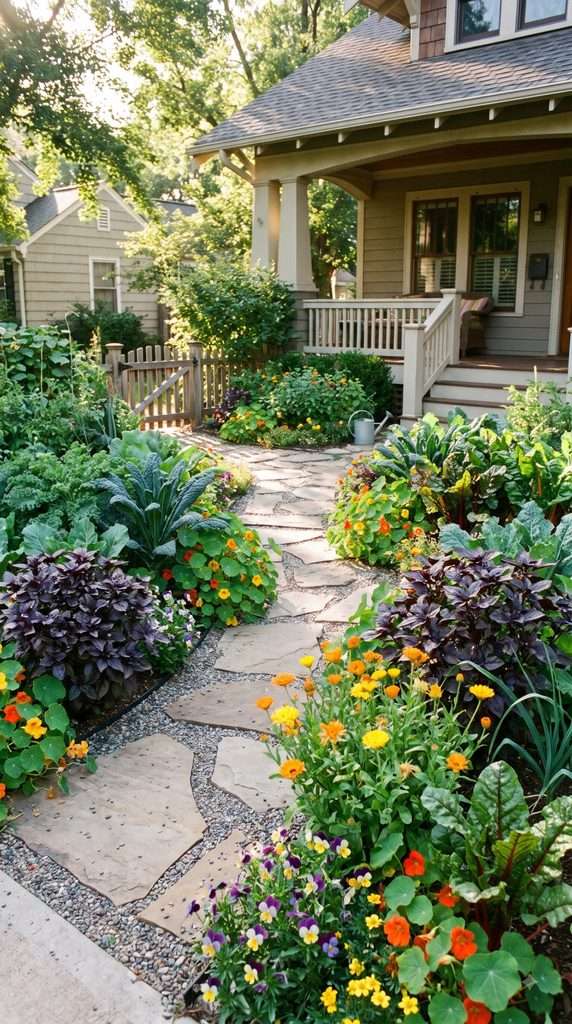
1. Create a Colorful Edible Border Along the Front Walkway
A front walkway is a practical place to start because a narrow planting bed can make a visible difference without requiring a complete landscape renovation.
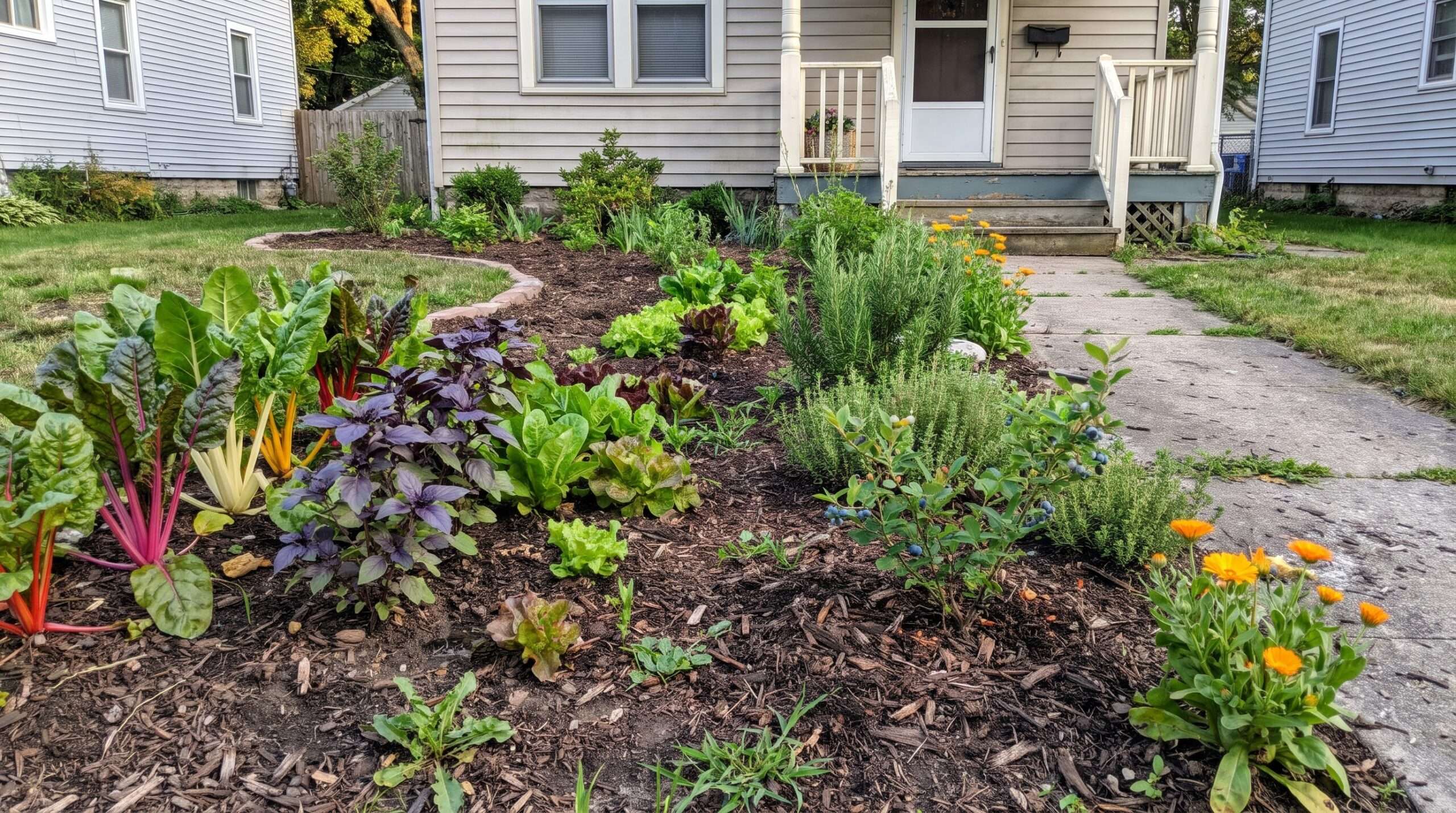
Build a border using low-growing lettuce, compact herbs, colorful chard, and a few edible flowers. Place shorter plants close to the path so they do not spill over and obstruct the walking area. Taller herbs or compact fruiting plants can go toward the back of the bed.
Choose plants with complementary colors rather than trying to fit every available variety into one space. Green lettuce, purple basil, and orange or yellow edible flowers can create a balanced display without looking overly busy.
Before planting, check how many hours of direct sunlight the bed receives. Many fruiting vegetables need a sunny location, while some leafy crops tolerate partial shade. Keep the plants away from areas where pets are regularly walked or where runoff from treated lawns could reach edible leaves.
2. Use Rainbow Swiss Chard for Bright Stems and Full Foliage
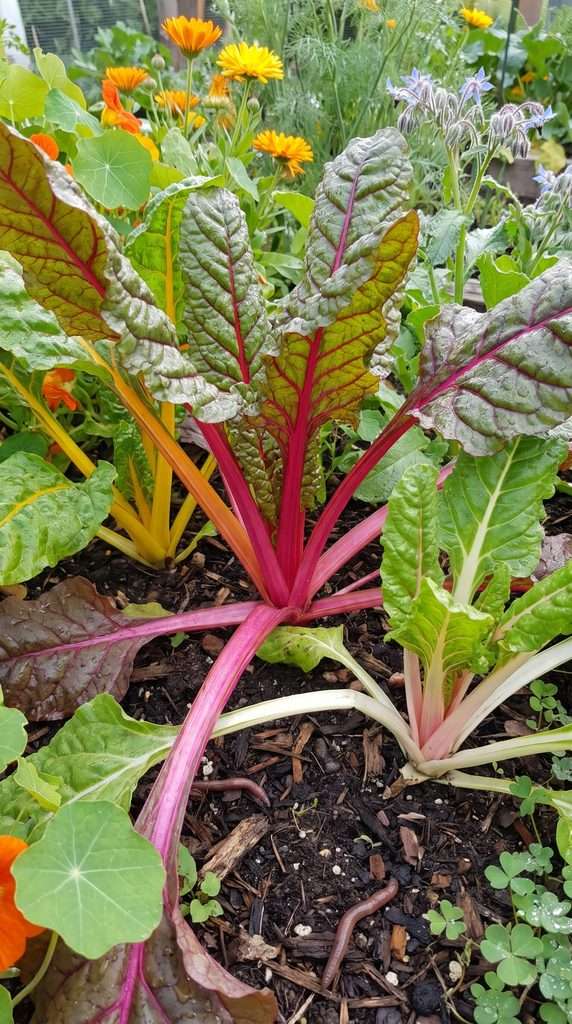
Rainbow Swiss chard is one of the easiest plants to use when you want a vegetable bed to look decorative. Its large green leaves and colorful stems can bring red, orange, yellow, and pink tones into a planting area.
Plant it in small groups rather than scattering individual plants throughout the garden. Repeating the same colors in a few places gives the bed a more organized appearance. Chard also works well beside green lettuce, parsley, or low-growing herbs because its larger leaves provide contrast.
Give each plant enough room for its mature leaves to spread. Crowded foliage can reduce airflow and make harvesting awkward. Pick outer leaves as needed while leaving the growing center intact so the plant can continue producing.
Swiss chard is generally grown as a cool-season crop, although its performance varies with climate. In hot regions, it may need afternoon shade or a planting season better suited to local temperatures.
3. Plant Blueberry Bushes as Edible Foundation Shrubs
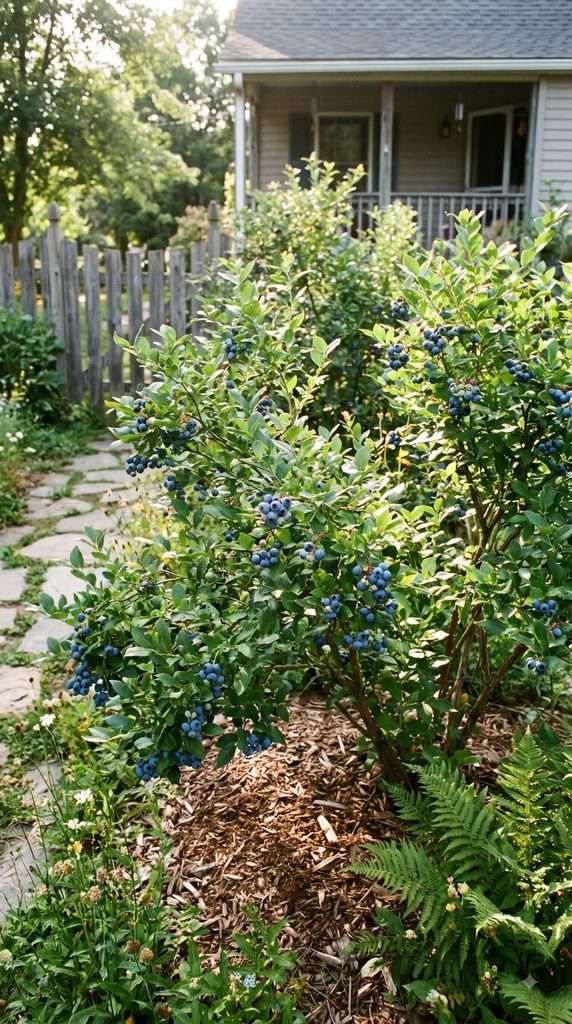
Foundation beds often rely on evergreen shrubs or decorative plants to provide structure. Depending on your climate and soil, blueberry bushes can serve a similar role while producing edible fruit.
Blueberries have spring flowers, green summer foliage, berries, and often attractive fall color. They look especially good when planted in a small group or used as part of a mixed edible border.
The important detail is soil. Blueberries need acidic soil, and ordinary garden soil may not provide the right conditions. Before buying plants, check your soil’s pH and make sure the location receives suitable sunlight. A home garden soil test kit can help you check whether your planting area needs further attention, although a local soil-testing service may provide more complete recommendations.
Do not plant blueberries simply because you like their appearance. If your soil is unsuitable and you cannot reasonably amend or manage it, a different fruiting shrub may be a better choice. Also check the mature size of the variety so it does not crowd windows, paths, or utility access.
For another way to bring structure and seasonal interest into your landscape, see SpruceTouch’s guide to shrubs that add structure, color, and charm to your garden.
4. Turn Culinary Herbs Into a Fragrant Garden Border
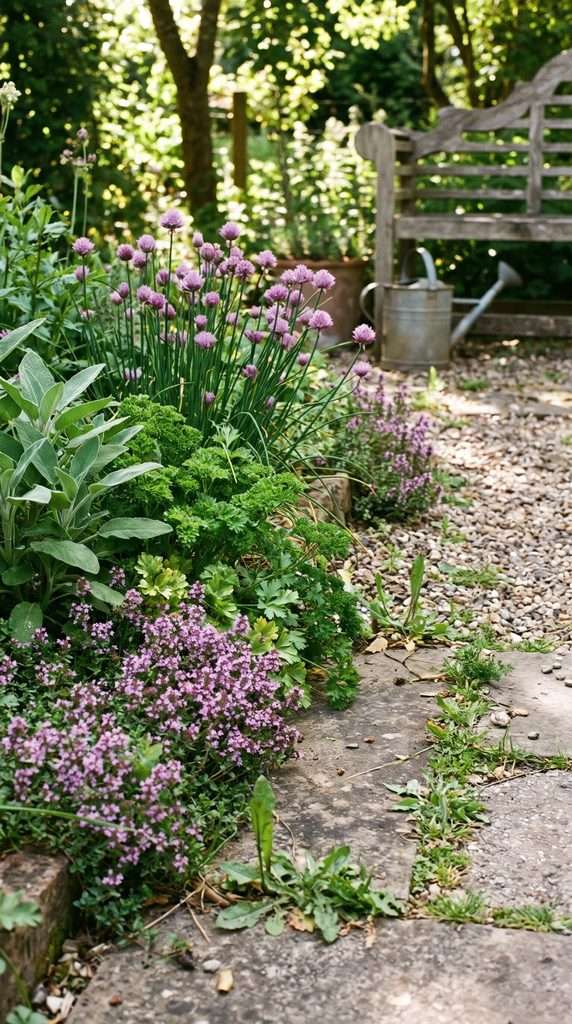
Herbs are especially useful in ornamental edible garden design because many stay compact, have attractive foliage, and can be harvested in small amounts throughout the growing season.
Try a border of thyme, chives, parsley, oregano, and sage, choosing varieties that suit your local climate. Low-growing thyme can soften the edge of a sunny bed, while upright sage and parsley add variation in height and leaf shape. Chives provide slender foliage and flowers that can add another layer of interest.
Group plants according to their growing needs. Mediterranean herbs such as thyme, oregano, and many types of sage generally prefer well-drained soil and should not be kept constantly wet. Parsley usually appreciates more consistent moisture.
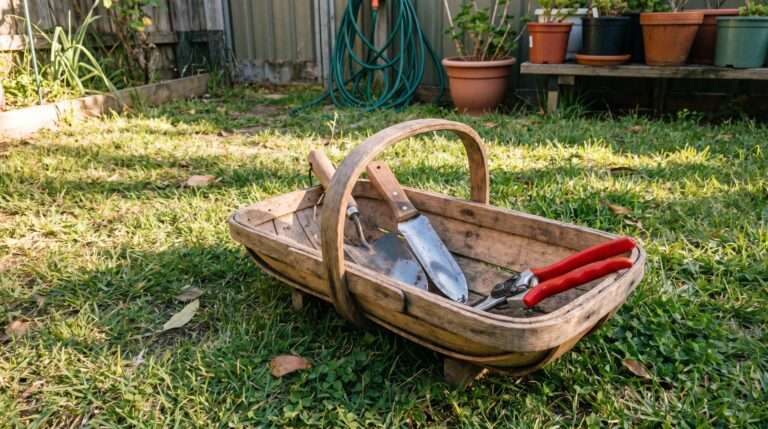
Harvest herbs with clean, sharp cuts rather than tearing stems roughly. A pair of bypass pruning shears for garden herbs and soft stems can be useful for thicker herb stems and small garden harvests; for delicate herbs, clean kitchen scissors may be sufficient.
If you want to grow herbs vertically or make use of a narrow patio, take a look at this SpruceTouch project for a DIY tiered herb planter ladder.
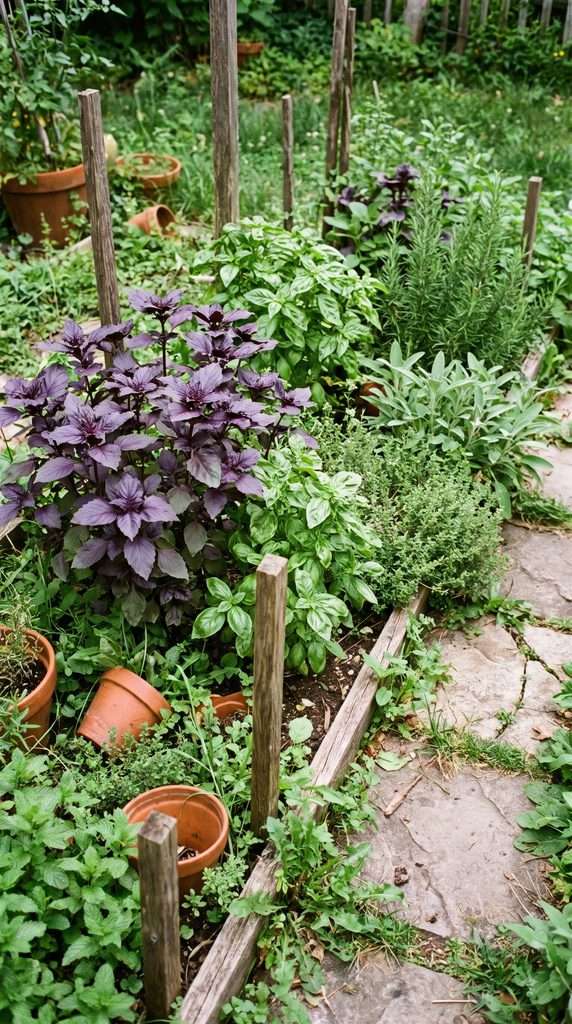
5. Add Purple Basil for Deep Color and Kitchen Use
Purple basil is a good choice when a garden needs a strong patch of color without relying entirely on flowers. Its dark leaves contrast with bright green lettuce, silver-toned foliage, and lighter herbs.
Plant it in a sunny bed or a container near the kitchen door, where it is easy to harvest. Basil generally prefers warm conditions and soil that drains well. Avoid keeping the roots constantly soggy, and leave enough space between plants for air to circulate.
Pinching the growing tips can encourage branching and a fuller shape. If flower spikes appear, you can remove them when you want to encourage leafy growth, although allowing some flowers to remain can also support pollinators. Choose your approach according to whether you value leaf production, flowers, or both.
Purple basil works particularly well in repeated groups of three or five plants. Repetition makes the color feel deliberate and helps connect different parts of a mixed edible border.
6. Use Strawberries as a Low-Growing Edible Groundcover
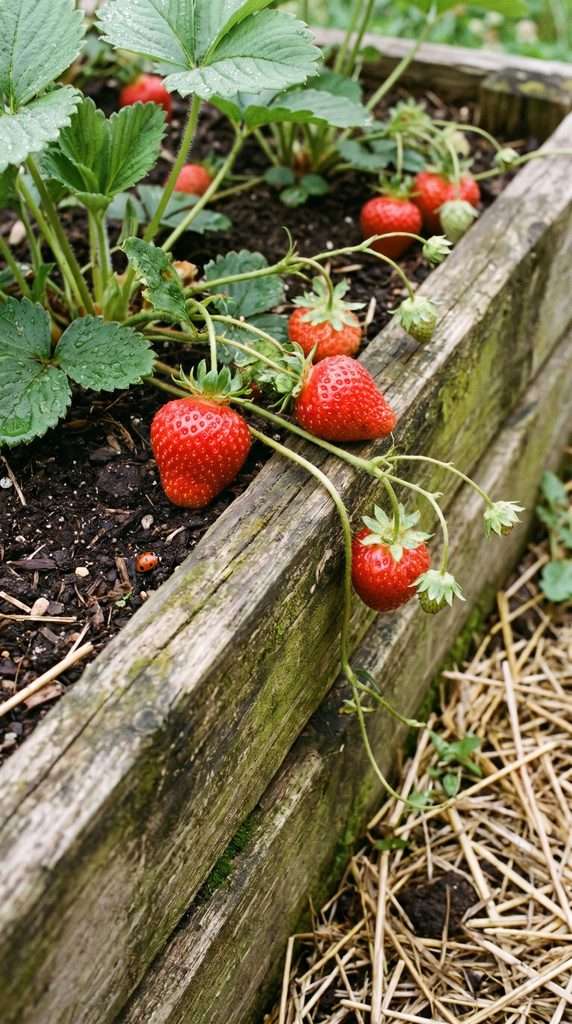
Strawberries can soften the edges of raised beds, fill gaps between larger plants, or grow in containers near a patio. Their leaves create a low carpet of greenery, while flowers and fruit add seasonal interest.
Choose a strawberry type that suits the space. Some varieties spread by runners and can fill a bed, while others are more compact or suited to containers. If you want a tidy front-yard border, check the growth habit before planting so the patch does not spread into the walkway.
Strawberries need suitable sunlight, regular moisture, and good drainage. Avoid placing them where water collects after rain. A layer of clean straw mulch can help keep berries off bare soil, but do not bury the crowns beneath it.
Because strawberries are low to the ground, keep the area free of weeds and avoid planting them where runoff from a treated lawn could reach the fruit. Pick ripe berries regularly to keep the planting productive and prevent overripe fruit from attracting pests.
7. Grow Edible Flowers Among Vegetables and Herbs
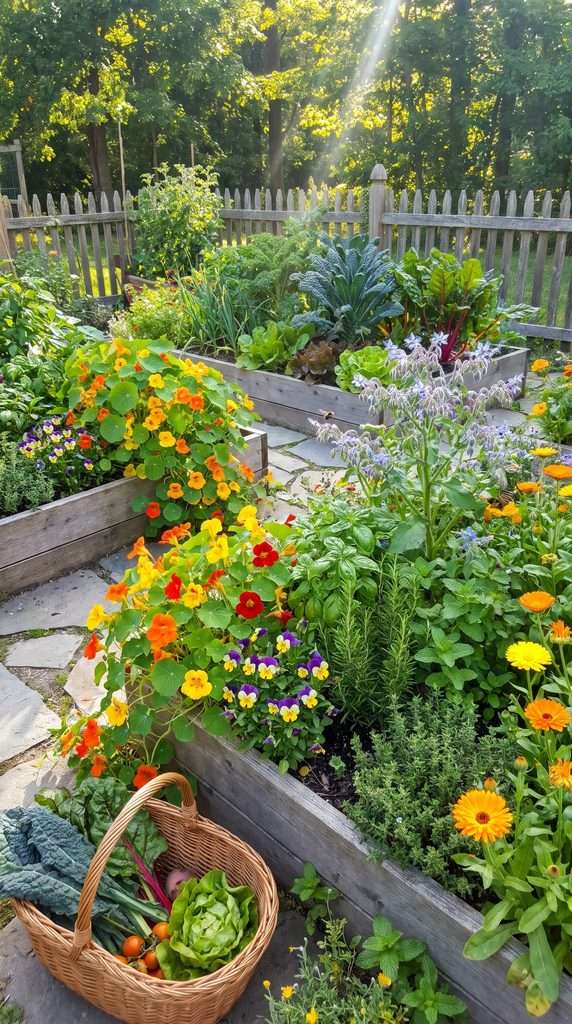
Edible flowers add color, but they also need careful selection. Some commonly grown edible flowers include nasturtiums, calendula, and certain varieties of viola. Their suitability depends on correct identification, growing conditions, and whether they have been treated with products labeled for ornamental use only.
Nasturtiums can trail over the edge of a container or raised bed, while calendula brings warm yellow and orange shades to a sunny border. Violas are useful for smaller spaces and can add color around low-growing greens.
Do not assume that every flower is safe to eat. Only harvest flowers that you can positively identify as edible, and follow reliable food-safety guidance. Avoid flowers from florists, roadsides, or ornamental nursery plants unless you can verify they were grown without unsuitable pesticides or other treatments.
Plant flowers where you can reach them easily for harvesting. A few small groups will usually look more intentional than a random mixture scattered across the entire garden.
8. Train Compact Tomatoes on a Decorative Trellis
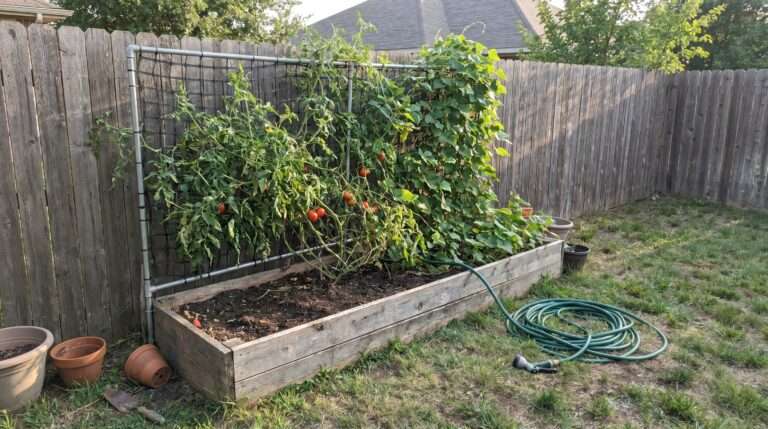
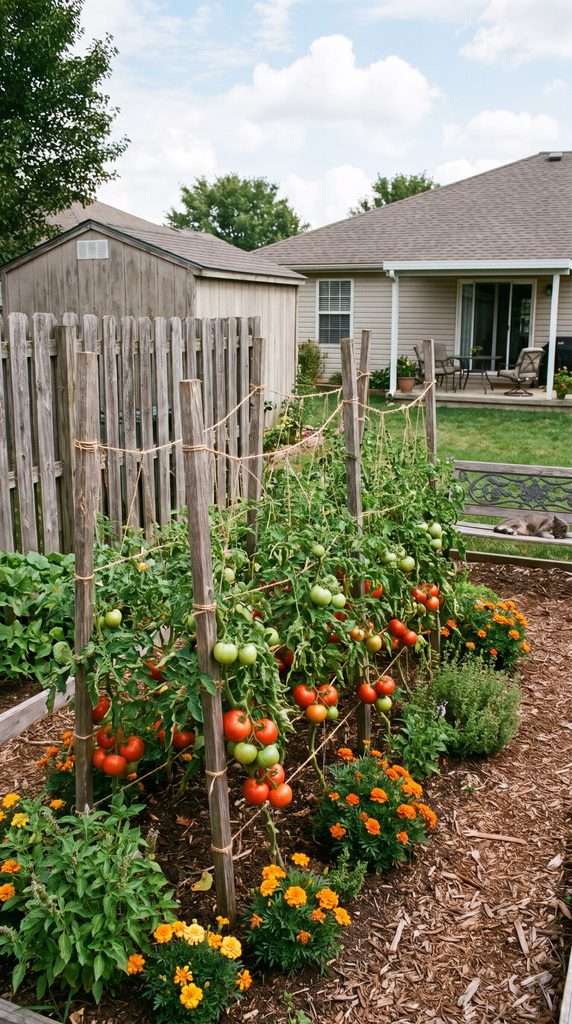
Tomatoes can look attractive in an edible landscape when their growth is supported and their placement is planned. Instead of letting plants sprawl across a bed, use a sturdy trellis or cage that fits the variety.
Compact or determinate tomato varieties can work well in smaller spaces, while indeterminate types need more ongoing support and pruning. Check the plant label before choosing a support system. A decorative trellis should be strong enough to handle the weight of mature plants and fruit.
Position tomatoes where they receive the sunlight needed for healthy growth, and avoid crowding them against walls or neighboring plants. Good airflow makes it easier to inspect foliage and manage common garden problems.
Water near the base of the plant when possible, keeping the soil moisture reasonably consistent. A drip irrigation kit for garden beds and containers may be useful if you have several plants or frequently forget to water, but a watering can or hose is perfectly workable for a small garden.
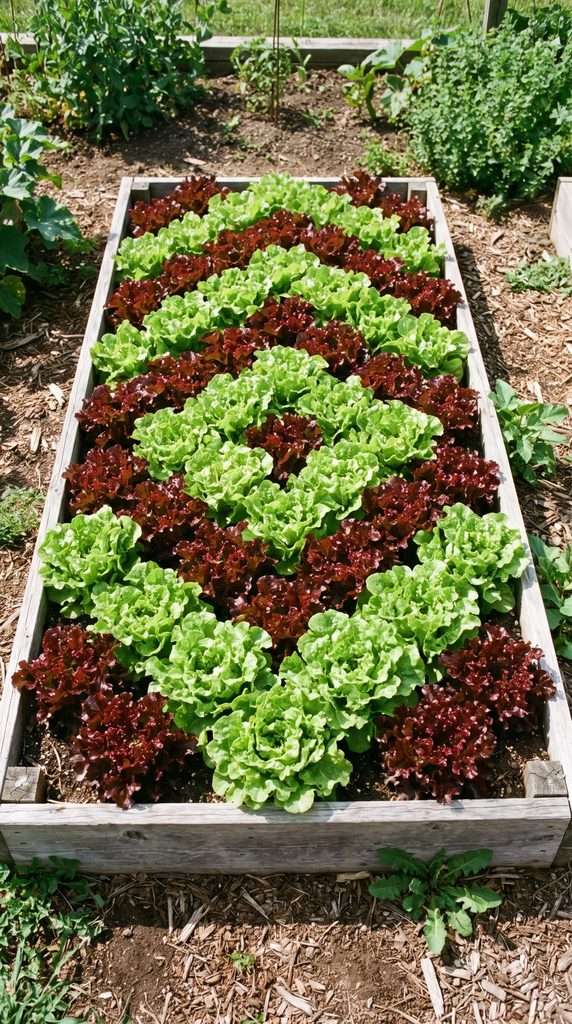
9. Plant Colorful Lettuce in Repeated Groups
Lettuce is a practical option for adding texture and color to a garden bed, particularly during cooler growing weather. Depending on the variety, leaves can be bright green, bronze, red, or speckled.
For a designed look, plant lettuce in short rows or repeated clusters rather than mixing every variety together. Red-leaf lettuce beside green butterhead or loose-leaf varieties creates contrast without needing ornamental plants that require separate care.
Lettuce generally benefits from cool conditions and consistent moisture. Warm weather can cause many varieties to become bitter or bolt, so plan sowing dates around your local growing season. In warm climates, afternoon shade can help extend the harvest, but it will not eliminate heat stress.
Harvest outer leaves from loose-leaf varieties as needed, or harvest whole heads according to the type you are growing. Keep the bed accessible, because leaves that are difficult to reach often end up being neglected.
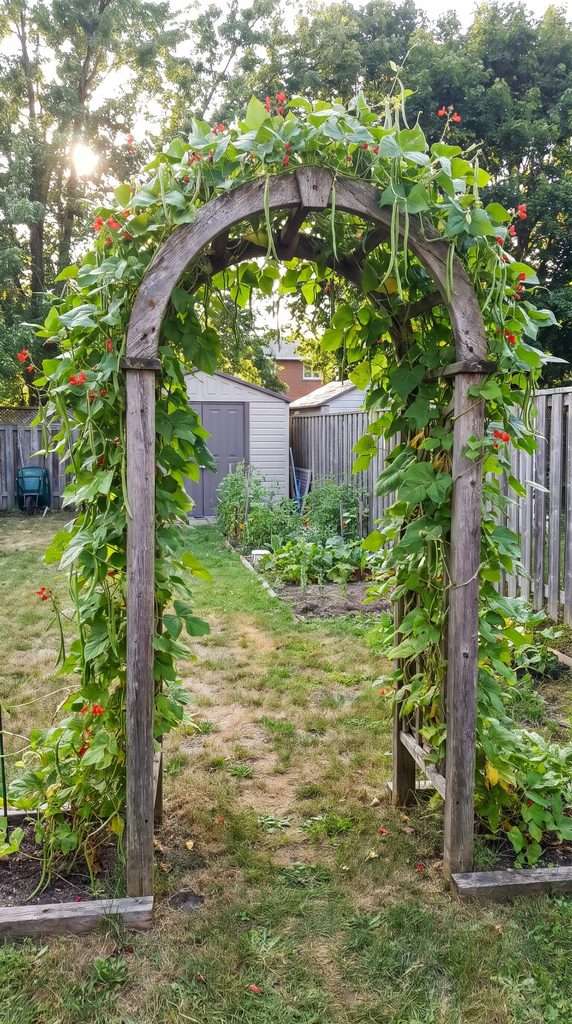
10. Grow Climbing Beans on an Arch or Garden Support
A bean arch can give an edible garden a clear focal point while making use of vertical space. As the vines grow, their leaves create a green canopy, and many varieties produce flowers and long pods that can be harvested.
Choose a support that is stable and tall enough for the variety. Install it securely before the plants become heavy, and make sure it does not block a main path or create a difficult-to-maintain corner.
Climbing beans need access to sunlight and regular moisture while growing and producing pods. Check the seed packet for spacing and mature height. Keep in mind that a dense canopy can shade plants beneath it, so avoid putting sun-loving vegetables directly under a heavily covered arch.
A garden trellis for climbing vegetables and vines can also support beans along a fence or at the back of a raised bed. Pick a design that suits the available footprint rather than buying a support that overwhelms the space.
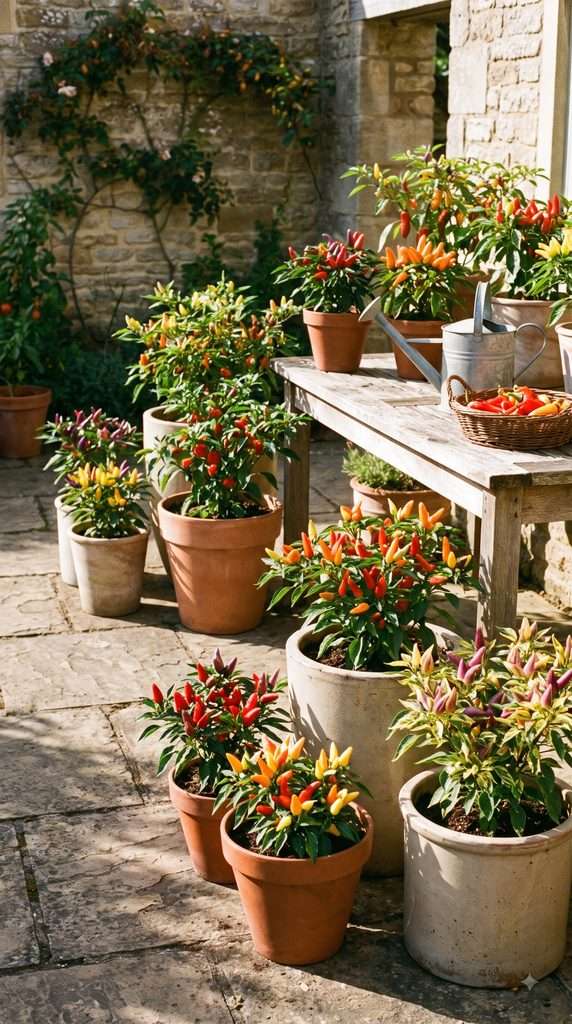
11. Use Colorful Peppers in Containers
Peppers can be attractive container plants because their glossy leaves and colorful fruit stand out against a porch, patio, or sunny garden corner. Depending on the variety, fruit may mature through shades of green, yellow, orange, red, or purple.
Use containers with drainage holes and enough room for the selected variety’s roots. A pot that is too small dries out quickly and can make watering more difficult. Choose a container size based on the plant label and its expected mature size rather than appearance alone.
Place containers where they receive suitable sunlight and where you can water them without difficulty. If you group several pots together, vary their heights with stable plant stands or arrange them along a step, but leave enough space to inspect foliage and harvest fruit.
Remember that ornamental appearance does not automatically mean a pepper is mild or edible. Some decorative varieties can be very hot, and plants may have been treated with products unsuitable for food crops. Grow known edible varieties from a reliable source and label them clearly.
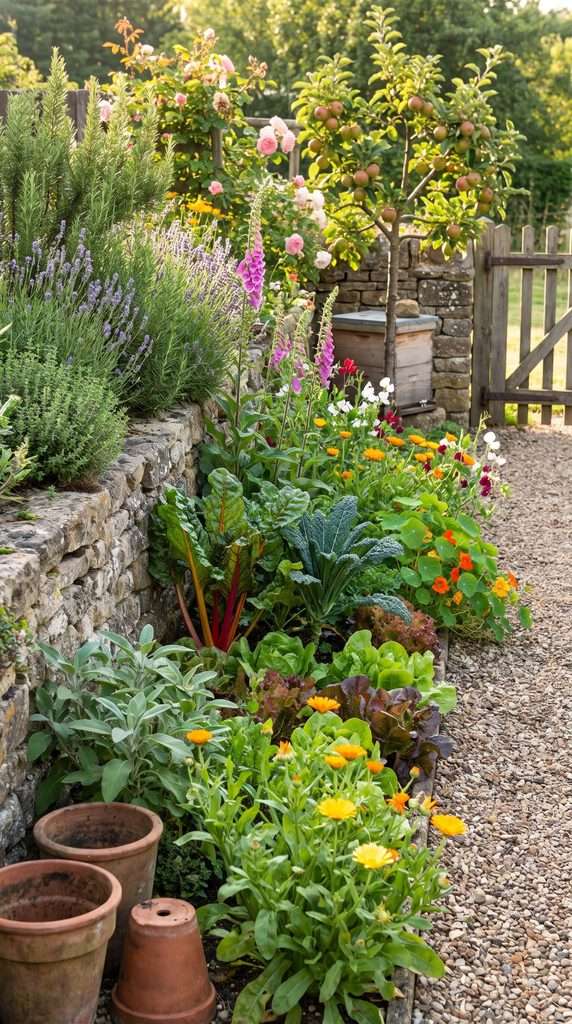
12. Build a Cottage-Style Edible Border With Layers
If you prefer a relaxed garden rather than straight vegetable rows, combine herbs, flowering plants, leafy greens, and fruiting plants in a layered border. The aim is not to make every plant look perfectly arranged. It is to give the planting enough repetition and structure that it still feels intentional.
Start with a few taller plants at the back, medium-height herbs and leafy crops in the center, and low-growing lettuce or strawberries along the front edge. Repeat selected colors or plant types in different parts of the border so the design feels connected.
Leave small access gaps for harvesting, weeding, and watering. A border that looks full in a photograph may be frustrating to maintain if you cannot reach the plants in the middle. Keep aggressive spreaders contained and check the mature size of shrubs before using them in a mixed bed.
For more inspiration on combining informal planting, flowers, and layered garden structure, browse SpruceTouch’s dreamy cottage garden ideas.
How to Design an Edible Landscape That Looks Intentional
The difference between a productive garden and an ornamental edible landscape is often the arrangement. You do not need expensive materials or a perfectly symmetrical layout, but a few design choices can help the planting feel connected to the rest of the yard.
Choose a Small Color Palette
Start with two or three dominant colors. For example, use green foliage as the base, purple basil for contrast, and orange calendula for seasonal color. Or combine red-leaf lettuce with green herbs and the blue-green foliage of a suitable edible plant.
Repeated colors help the garden feel organized. Too many unrelated colors can make a small bed look crowded, particularly when plants mature at different rates.
Layer Plants by Height
Place taller plants toward the back of a border or where they will not shade shorter crops. Use medium-height herbs or vegetables in the middle and low-growing plants along the edge.
Always consider the direction of sunlight. In many Northern Hemisphere gardens, placing taller plants on the north side of shorter plants helps reduce unwanted shading, though the best arrangement depends on the layout and sun exposure.
Give the Garden a Clear Edge
A defined edge helps separate the planting from lawn, gravel, or a walkway. You might use a simple bed line, an existing raised bed, or a narrow path that makes harvesting easier.
If you are working on a tight budget, these budget-friendly backyard ideas may help you think about the garden as part of the whole outdoor space rather than a stand-alone planting.
Match Plants to Their Growing Conditions
A beautiful layout will struggle if the plants have incompatible needs. Sun-loving fruiting crops, moisture-sensitive herbs, and leafy greens that prefer cooler conditions may need separate sections.
Before planting, review your soil and drainage. SpruceTouch’s complete guide to soil health can help you plan the growing area before investing in plants or amendments.
Plan Watering Before the Plants Fill In
It is easier to water a new garden when the soil is visible and plants are small. Once the bed fills out, reaching the base of each plant can become more difficult.
Group plants with similar moisture needs together, and make sure containers drain freely. Water deeply enough to reach the root zone, then adjust the schedule according to rainfall, temperature, soil type, and plant needs. Avoid relying on a fixed daily schedule regardless of weather.
Best Plants for an Ornamental Edible Garden
| Plant | Main ornamental feature | Edible part | Best use |
|---|---|---|---|
| Rainbow Swiss chard | Bright stems and large leaves | Leaves and stems | Colorful beds and borders |
| Purple basil | Deep purple foliage | Leaves | Containers and sunny borders |
| Blueberries | Flowers, fruit, fall foliage | Berries | Suitable foundation beds and edible hedges |
| Thyme | Small leaves and low growth | Leaves | Border edges and pathways |
| Strawberries | Low foliage, flowers, fruit | Berries | Bed edges and containers |
| Nasturtiums | Bright flowers and trailing growth | Correctly identified flowers and leaves | Container edges and mixed beds |
| Lettuce | Red, green, or speckled foliage | Leaves | Cool-season borders |
| Tomatoes | Green foliage and colorful fruit | Fruit | Supported beds and large containers |
| Climbing beans | Vines, flowers, and pods | Pods or beans, depending on variety | Arches and trellises |
| Peppers | Glossy foliage and colorful fruit | Fruit of known edible varieties | Sunny containers |
The best choices for your yard depend on your USDA hardiness zone, local growing season, sun exposure, and soil. Hardiness zones help with perennial survival, but they do not tell you everything about heat tolerance or the best planting dates for vegetables.
Simple Setup: Start With One Small Edible Bed
You do not have to redesign your entire front yard at once. A small bed or a few containers can help you learn which plants grow well in your conditions before expanding the design.
- Observe the sunlight. Check the area at different times of day and note whether it receives full sun, partial shade, or mostly shade.
- Choose the footprint. Select a bed or container arrangement that leaves a clear route for walking, watering, and harvesting.
- Check the soil and drainage. Identify obvious drainage problems and determine whether your chosen plants need special soil conditions.
- Pick three to five compatible plants. Combine plants with similar light and moisture needs, then use leaf color, height, and texture to make the layout interesting.
- Prepare the planting area. Remove weeds, improve the soil where needed, and use containers or raised beds when the existing soil is unsuitable.
- Plant with mature size in mind. Follow spacing recommendations instead of squeezing in extra plants to make the bed look full immediately.
- Water and observe. Check soil moisture regularly and adjust as weather changes. Replace plants that repeatedly struggle rather than forcing them into an unsuitable location.
- Harvest and maintain. Remove damaged leaves, keep paths accessible, and harvest edible parts only when you have positively identified the plant and confirmed that it is suitable to eat.
For more ways to grow food in a limited footprint, SpruceTouch also has a guide to maximizing yield in a 5-by-5 balcony garden.
Common Mistakes to Avoid
Planting Only for Appearance
A plant may have beautiful leaves but still be a poor choice for your garden if it needs more sunlight, different soil, or more space than you can provide. Check the growing requirements before choosing plants for color.
Crowding the Bed
Small plants look harmless when first planted, but many grow considerably wider or taller. Crowding reduces airflow, complicates harvesting, and can make the garden difficult to maintain. Use the spacing on the seed packet or plant label.
Mixing Plants With Different Water Needs
Some herbs prefer well-drained soil and dislike constant moisture, while lettuce and many vegetables need more consistent watering. Grouping plants by water needs makes care easier and reduces avoidable stress.
Forgetting That Edible Plants Need Food-Safe Care
Do not eat a plant just because it looks like an edible variety. Correct identification matters, and flowers or foliage grown as ornamentals may have been treated with products that are not suitable for food crops. Follow pesticide labels and harvest guidance carefully.
Ignoring Maintenance Access
Leave room to reach the center of a bed, prune shrubs, pick fruit, and remove weeds. If the design is difficult to access, routine care becomes a chore and edible produce may go unharvested.
Expecting Every Plant to Look Good All Season
Lettuce may bolt in hot weather, annual herbs may flower and decline, and fruiting shrubs change through the seasons. Plan for these changes by choosing plants with overlapping seasons of interest and replacing short-season crops when needed.
Frequently Asked Questions
Blueberries, culinary herbs, colorful lettuce, Swiss chard, strawberries, and known edible pepper varieties can all work in a front-yard landscape when the location suits their growing needs. Choose plants according to mature size, sunlight, soil, and local climate rather than appearance alone.
Yes. Many vegetables have colorful foliage, distinctive textures, flowers, or attractive fruit. Rainbow Swiss chard, purple basil, red-leaf lettuce, compact peppers, and supported tomatoes can all add visual interest to a mixed garden.
Yes. Containers, narrow borders, raised beds, and vertical supports can make productive use of limited space. Compact varieties are particularly helpful, and a small garden is often easier to maintain when you are starting out.
They can require more seasonal attention because edible plants may need harvesting, crop replacement, closer watering, and regular checks for pests or disease. The workload depends on the plants you choose. Perennial herbs and suitable fruiting shrubs may provide structure for years, while lettuce and other annual crops need more frequent replanting.
No. Only eat flowers that have been positively identified as edible and grown under appropriate conditions. Some plants are toxic, and ornamental flowers may have been treated with pesticides that are not intended for food crops. Never rely on appearance alone to determine whether a flower is safe.
Final Thoughts
An ornamental edible garden can be as simple as a colorful herb border, a few strawberry plants along a raised bed, or a small group of blueberry bushes in a suitable location. You do not need to replace your whole landscape to enjoy the benefits of growing plants that are both attractive and useful.
Start with a few plants that suit your sunlight, soil, and available time. Use color and height to create a balanced design, leave enough room for harvesting, and choose plants that you can care for consistently. As you learn what performs well in your yard, you can gradually expand the planting into a more complete edible landscape.
The best garden is not just the one that looks good in a photograph. It is the one that fits your home, grows well in your conditions, and gives you a reason to step outside and enjoy it.
Editorial note: Plant selection and growing guidance should be adapted to local conditions. Always verify plant identification and food-safe growing practices before consuming flowers, leaves, berries, or other plant parts.

Aagam – Founder of SpruceTouch
I’m Aagam, a home and garden enthusiast who enjoys growing, building, and improving outdoor spaces. I focus on practical backyard projects, garden ideas, and simple DIY solutions that are useful in real homes. Through SpruceTouch, I share what I’ve learned, what worked, what didn’t, and the small details that can make an outdoor project easier.