20+ Stunning Christmas Tree Decoration Ideas & Themes to Make Your Holiday Home Feel Magical
A Christmas tree is often the centerpiece of holiday decorating. It is where family ornaments come out of storage, presents start collecting underneath, and the living room slowly begins to feel ready for the holidays. But choosing the right decorations can be surprisingly difficult. There are so many beautiful colors, ornaments, ribbons, and decorating styles that putting everything together without a plan can quickly become overwhelming.
The good news is that a stunning Christmas tree does not require expensive decorations or a completely new collection of ornaments every year. Sometimes, a simple combination of beautiful greenery, warm lighting, and a few carefully selected decorations creates a much more inviting result than a tree covered with unrelated ornaments.
The secret is choosing a decorating theme that complements your home, budget, and personal style. You might prefer traditional red and green, natural woodland decorations, elegant champagne gold, or a more dramatic arrangement featuring velvet ribbons and jewel-toned ornaments.
For the foundation of most decorating styles, I recommend starting with Warm White LED Christmas Tree Lights. They provide a soft, welcoming glow that complements traditional, rustic, vintage, and modern Christmas tree themes. Look for appropriately certified lights, select the correct indoor-use rating, and check the strands before decorating.
In this collection, we’re exploring 21 Christmas tree decoration ideas that range from timeless holiday classics to creative and unusual arrangements. Along the way, you’ll find practical styling suggestions, color combinations, ornament recommendations, and simple ways to recreate each look without unnecessarily increasing your holiday decorating budget.
Affiliate Disclosure: As an Amazon Associate, SpruceTouch earns from qualifying purchases. This post may contain affiliate links, which means we may earn a commission at no additional cost to you.
1. Classic Red, Green, and Gold Christmas Tree
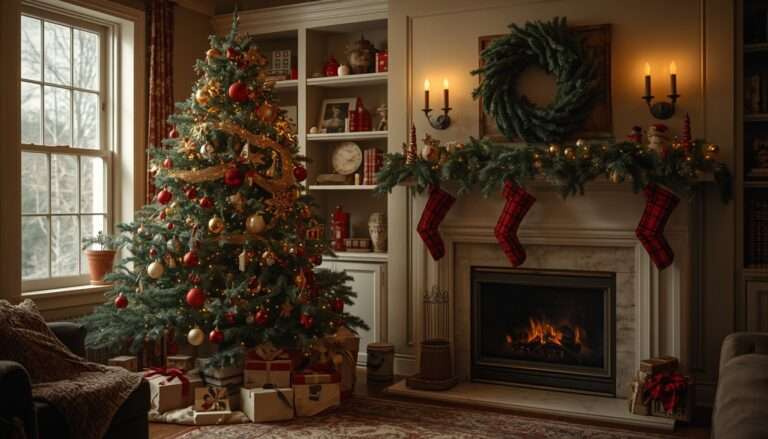
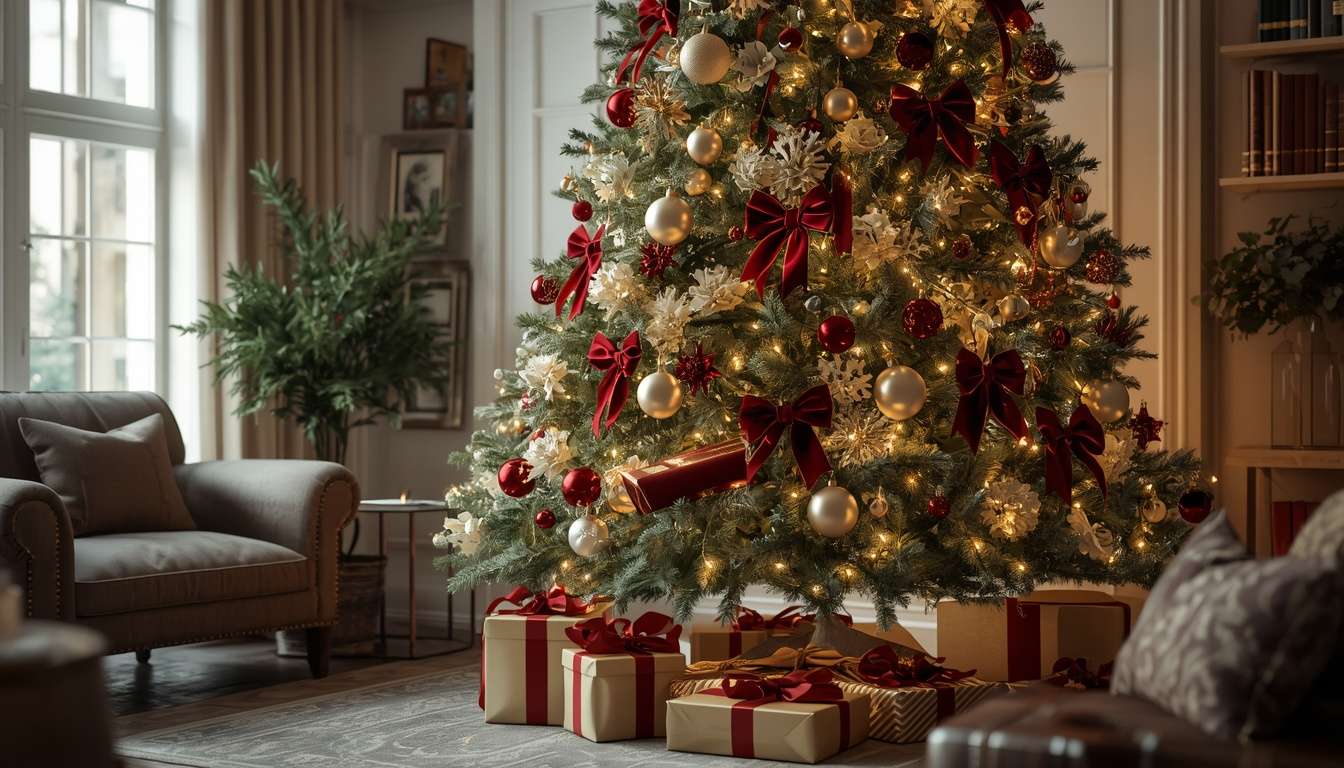
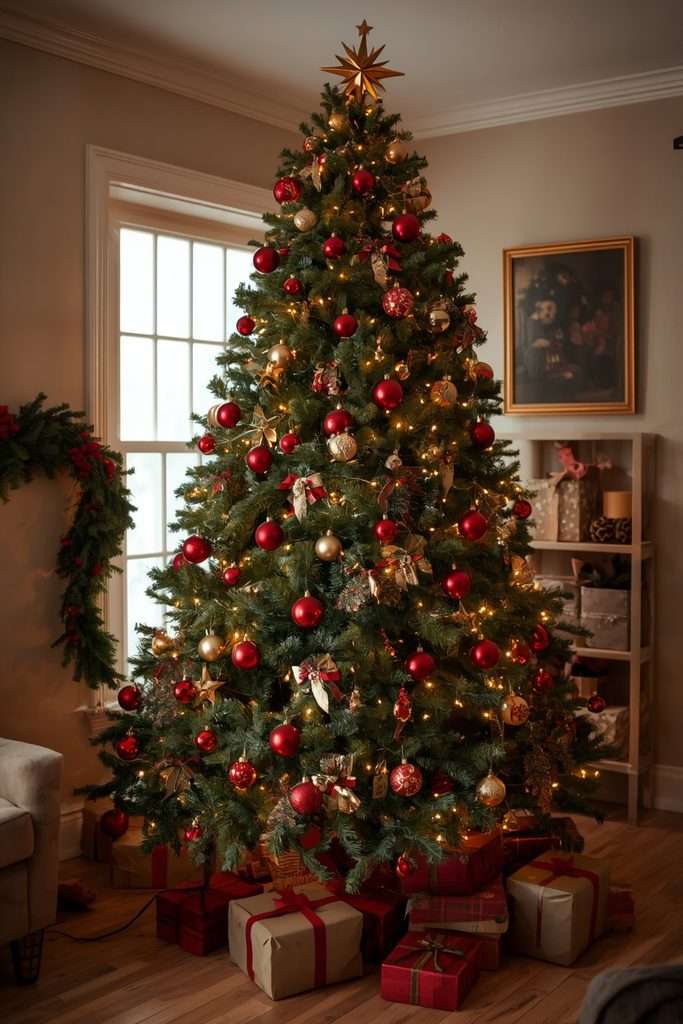
There is a reason the traditional red, green, and gold Christmas tree remains a favorite. These familiar holiday colors create a warm, cheerful appearance that works with almost any traditional living room.
Start with a full green tree and distribute red ornaments throughout the branches. Mix glossy red baubles with matte green decorations, gold stars, and a few larger statement ornaments. You can also add a gold ribbon to create a little extra dimension.
One decorating detail that makes a noticeable difference is the distribution of colors. Rather than hanging all the red ornaments together, spread them around the tree and repeat the same pattern with gold decorations. This makes the entire arrangement feel balanced.
Styling tip: Choose a traditional gold star or angel for the topper. Keep the presents underneath coordinated with red, cream, and gold wrapping paper for a finished appearance.
2. Ralph Lauren Inspired Christmas Tree
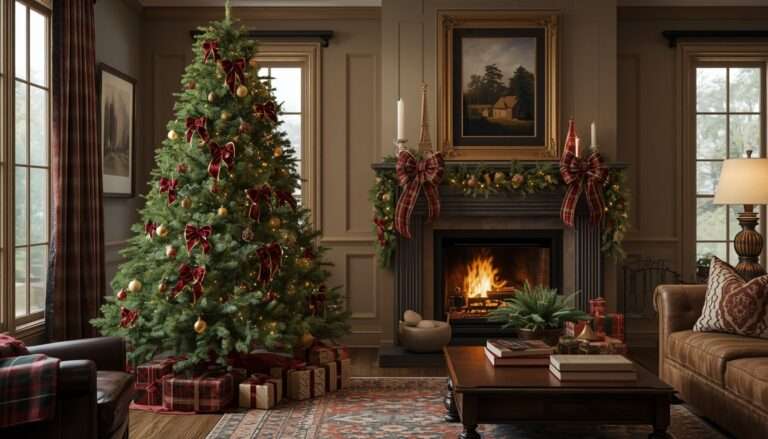
If you prefer a rich, traditional decorating style, a Ralph Lauren-inspired Christmas tree is worth considering.
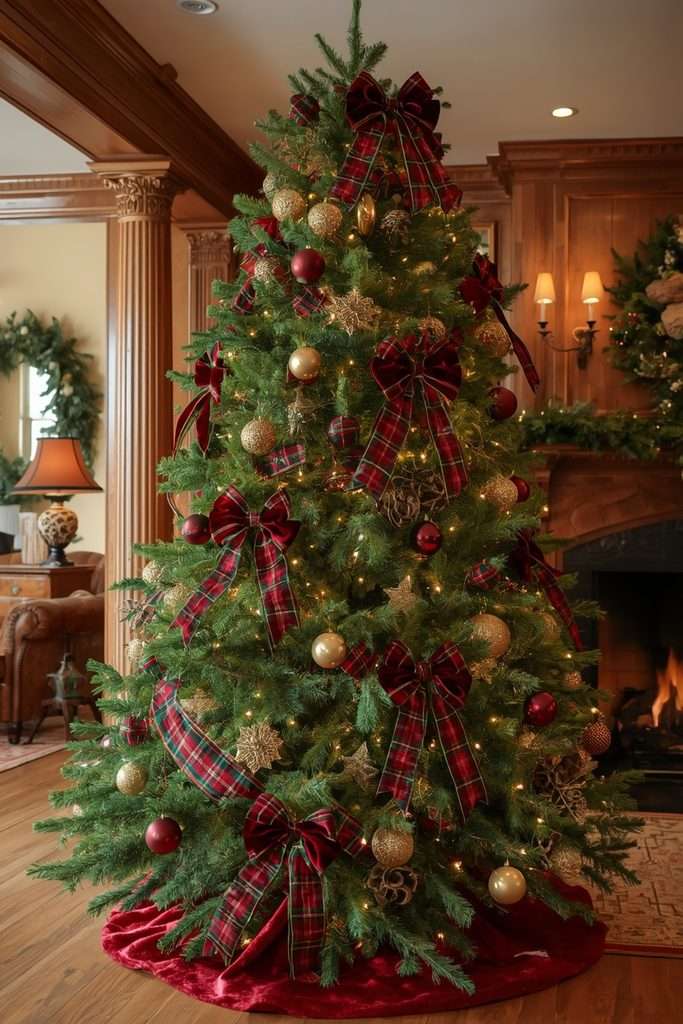
This look combines deep forest green, burgundy, tartan patterns, antique gold, and luxurious-looking fabrics. Rather than relying on lots of glitter, the design uses texture and traditional details to make the tree look elegant.
Start with burgundy and deep green baubles, then introduce plaid ornaments, brass-colored bells, miniature nutcrackers, and a few wooden decorations. A generous length of velvet ribbon can be arranged in large bows or loose cascading sections.
A Wired Velvet Christmas Ribbon is especially useful for this arrangement because its flexible edges help bows retain their shape and make it easier to position larger loops around the branches.
This theme looks particularly beautiful alongside darker wood furniture, traditional fireplaces, leather accents, and warm lighting.
For more coordinating holiday inspiration, you can also explore our Ralph Lauren Inspired Christmas Aesthetic: 14 Classic & Elegant Decorating Ideas.
Styling tip: Choose one main tartan pattern and repeat it in a few places. Too many competing plaid designs can make the tree feel busy.
3. Elegant Champagne Gold Christmas Tree
A champagne gold Christmas tree is a beautiful choice when you want something elegant without using too many strong colors.
The combination of champagne, ivory, muted gold, and metallic finishes creates a softer appearance than traditional bright gold decorations. It also works particularly well in rooms with cream-colored furniture, beige walls, and neutral furnishings.
Begin with champagne-colored baubles in different sizes. Mix smooth ornaments with textured decorations such as beaded balls, glittered snowflakes, delicate stars, and fabric bows.
You can add a few larger ornaments to fill open sections without overcrowding the branches. Finish with warm white lights and a simple gold topper.
Styling tip: Avoid mixing too many different metallic finishes. Champagne, brushed gold, and warm ivory generally look more cohesive together than a combination of every available metallic color.
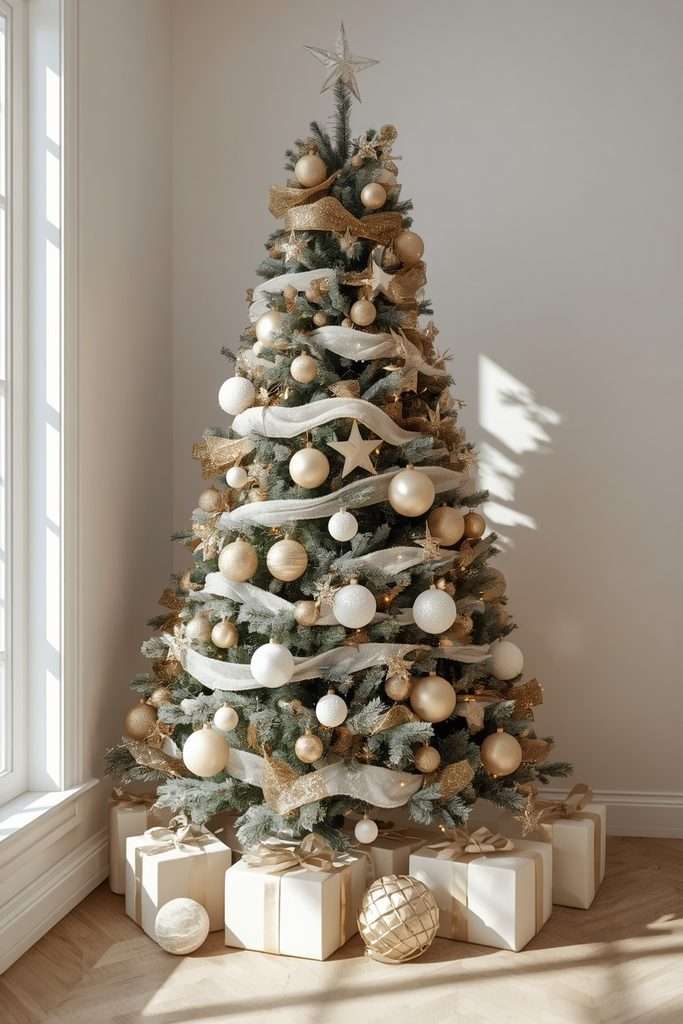
4. Winter White and Silver Christmas Tree
Bring a snowy winter atmosphere indoors with a white and silver Christmas tree. This theme is especially attractive for homeowners who prefer a bright, clean, and understated decorating style.
A frosted artificial tree provides an easy starting point, although a regular green tree can look equally beautiful. Add white baubles, silver snowflakes, transparent ornaments, and crystal-inspired decorations.
The important thing is to vary the textures rather than making every ornament identical. Mix matte white decorations with reflective silver pieces and a few glittered accents.
For lighting, warm white LEDs can soften the overall appearance and prevent the tree from looking too icy.
Styling tip: Place reflective decorations closer to the outer branches so they catch the light. Larger matte white ornaments can fill deeper gaps without creating excessive sparkle.
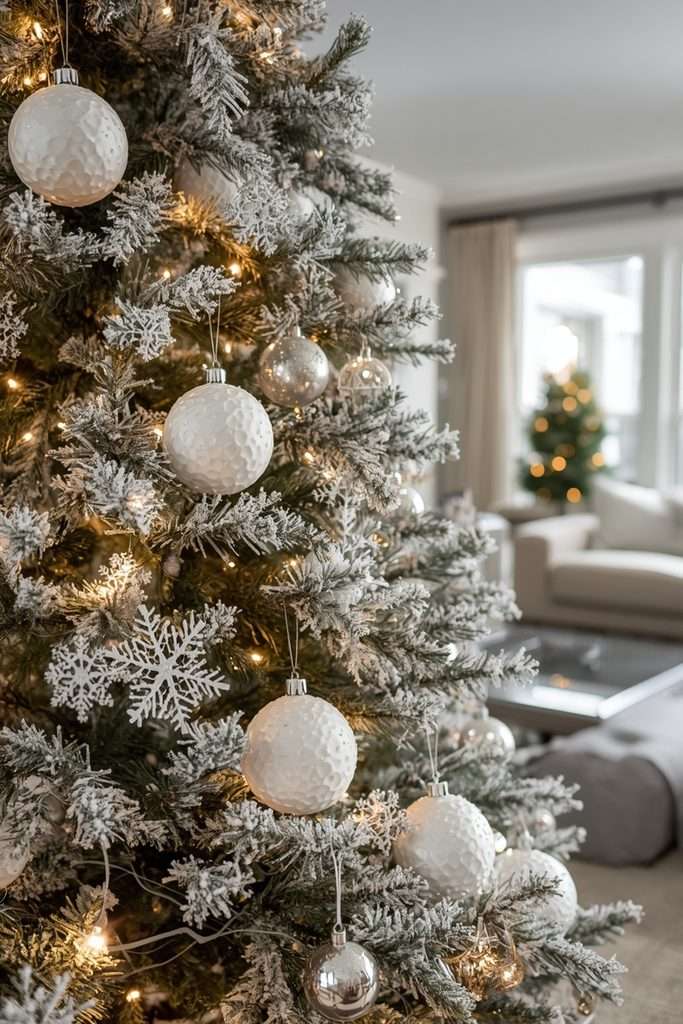
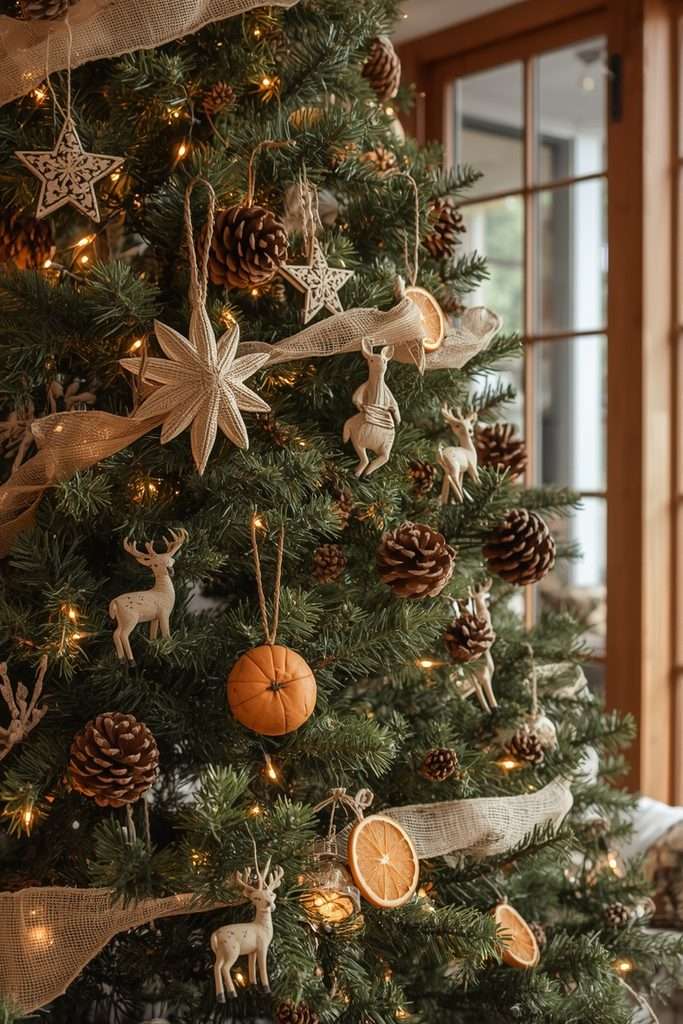
5. Rustic Woodland Christmas Tree
A woodland Christmas tree brings a little of the outdoors into your home. It is a wonderful option for anyone who prefers natural materials, handmade decorations, and a relaxed holiday atmosphere.
Begin with pinecones, wooden stars, miniature deer, felt birds, and woodland animal ornaments. Natural burlap ribbon can add texture, while properly dried orange slices introduce warm seasonal color.
You can also make small decorations using twine, wooden beads, cinnamon sticks, and leftover craft materials.
This is one of the more budget-friendly Christmas tree themes because many decorations can be made at home. Our guide to 21 Cheap Homemade DIY Christmas Decorations That Look Expensive has additional ideas for creating a coordinated handmade holiday atmosphere.
Styling tip: Combine different natural materials instead of using only wooden ornaments. A mixture of wood, fabric, pinecones, and greenery makes the tree more visually interesting.
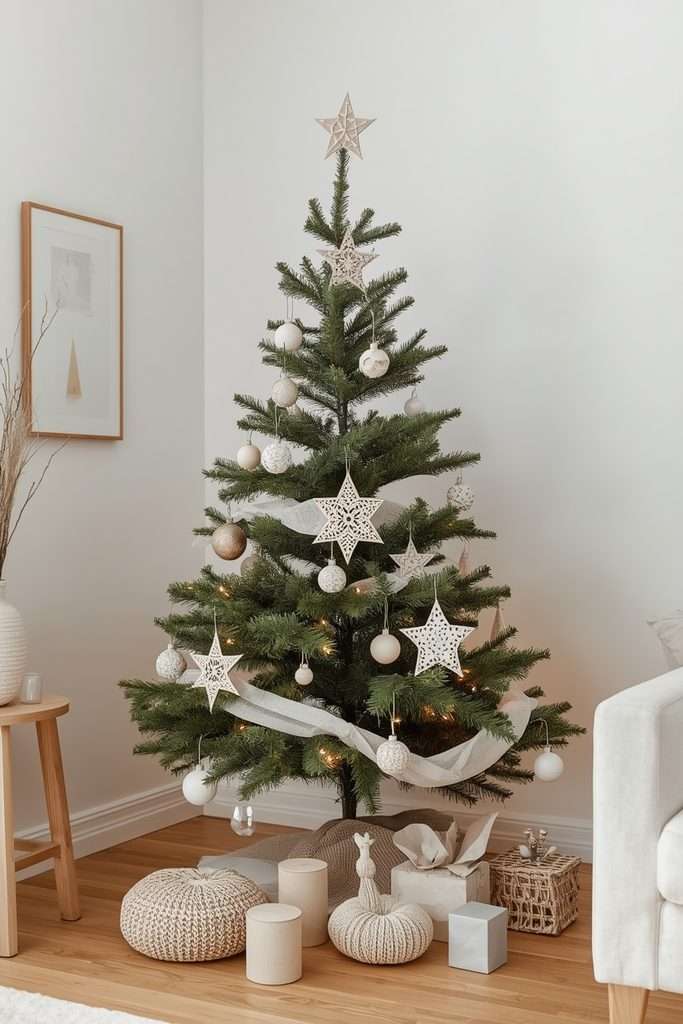
Not every Christmas tree needs dozens of decorations. A Scandinavian-inspired design shows how a simple decorating approach can still create a beautiful holiday focal point.
This style focuses on natural greenery, understated ornaments, and breathing room between decorations.
Use a green tree and add wooden stars, simple white baubles, handmade paper decorations, and a few fabric ornaments. A narrow linen ribbon can introduce softness without overwhelming the branches.
You can complete the arrangement with kraft-paper gift wrapping, cream ribbons, and simple handwritten gift tags.
Styling tip: Resist the urge to fill every empty space. The visible greenery is an important part of the minimalist appearance.
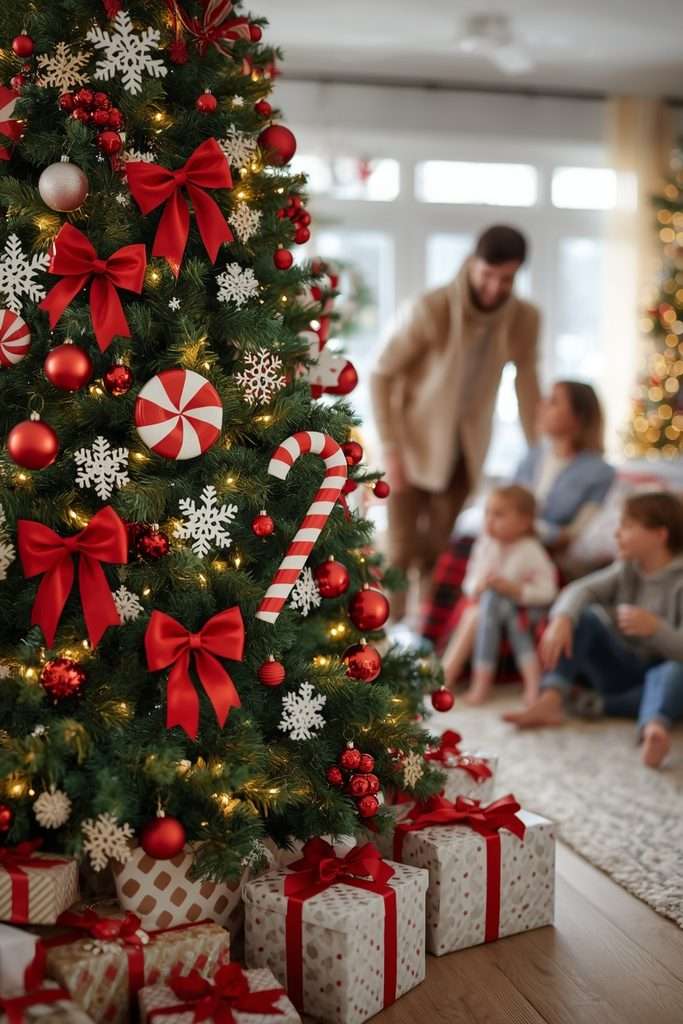
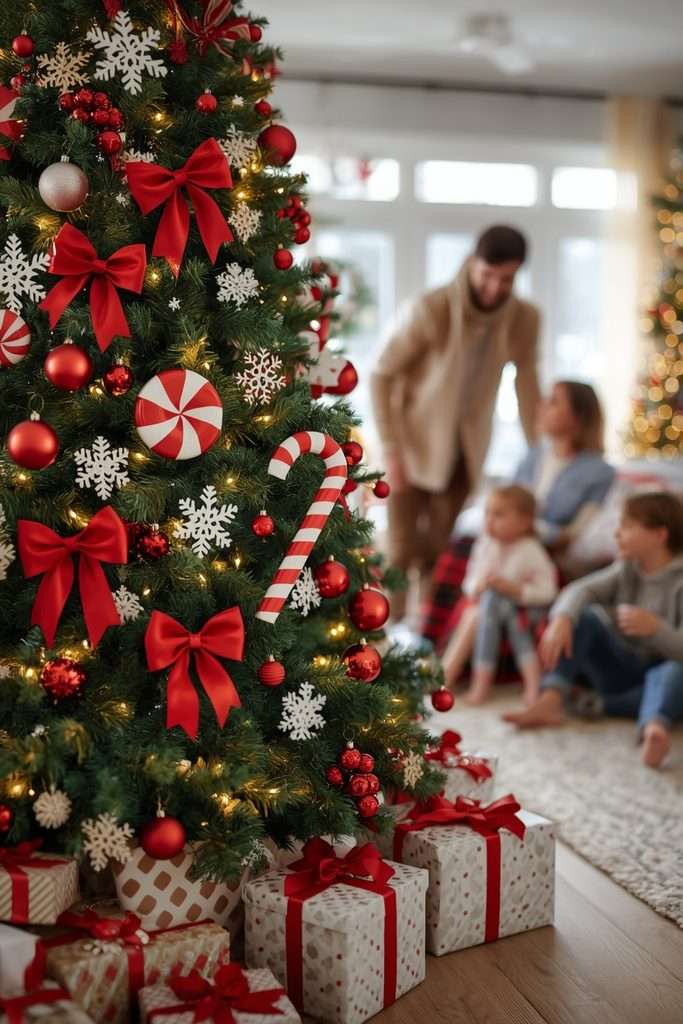
7. Red and White Candy Cane Christmas Tree
A red and white candy cane Christmas tree is a playful choice for families who enjoy cheerful and colorful holiday decorating.
The combination of red baubles, white ornaments, peppermint decorations, striped candy canes, and oversized bows creates an instantly recognizable Christmas theme.
Start by adding the larger red and white ornaments, then distribute candy cane decorations throughout the branches. A few peppermint-shaped ornaments can fill smaller gaps, while white snowflakes introduce another layer of texture.
For homes with young children or pets, Shatterproof Red and White Christmas Ornament Sets are a practical alternative to fragile glass decorations, particularly on lower branches that might get bumped.
Styling tip: Limit the number of different candy patterns. Repeating two or three designs creates a more coordinated appearance than mixing too many unrelated prints.
8. Vintage Christmas Tree With Retro Ornaments
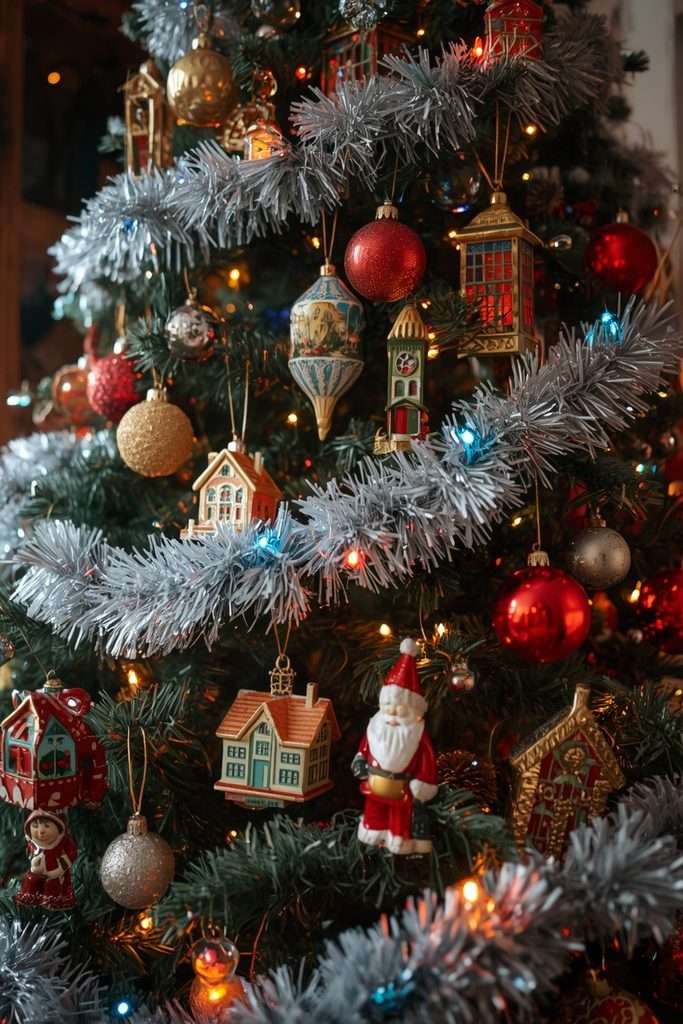
There is something special about a Christmas tree decorated with ornaments that look as though they have been collected over several decades.
A vintage-inspired tree can feature colorful glass baubles, old-fashioned tinsel, miniature ceramic decorations, nostalgic Santa figures, and traditional multicolored lights.
Try combining faded red, forest green, gold, silver, and muted blue. You do not need every decoration to match perfectly. The slightly collected appearance is part of the charm.
Family heirlooms can also become the most interesting ornaments on the tree. Give meaningful pieces enough room to stand out rather than hiding them behind thick layers of tinsel.
For more ideas that complement this style, explore our 31 Smart Vintage Christmas Decorating Tricks for a Warm, Timeless Holiday Home.
Styling tip: Mix older-looking decorations with a few newly purchased retro-style ornaments. This creates a fuller collection without making the entire tree feel overly coordinated.
9. Jewel-Tone Christmas Tree
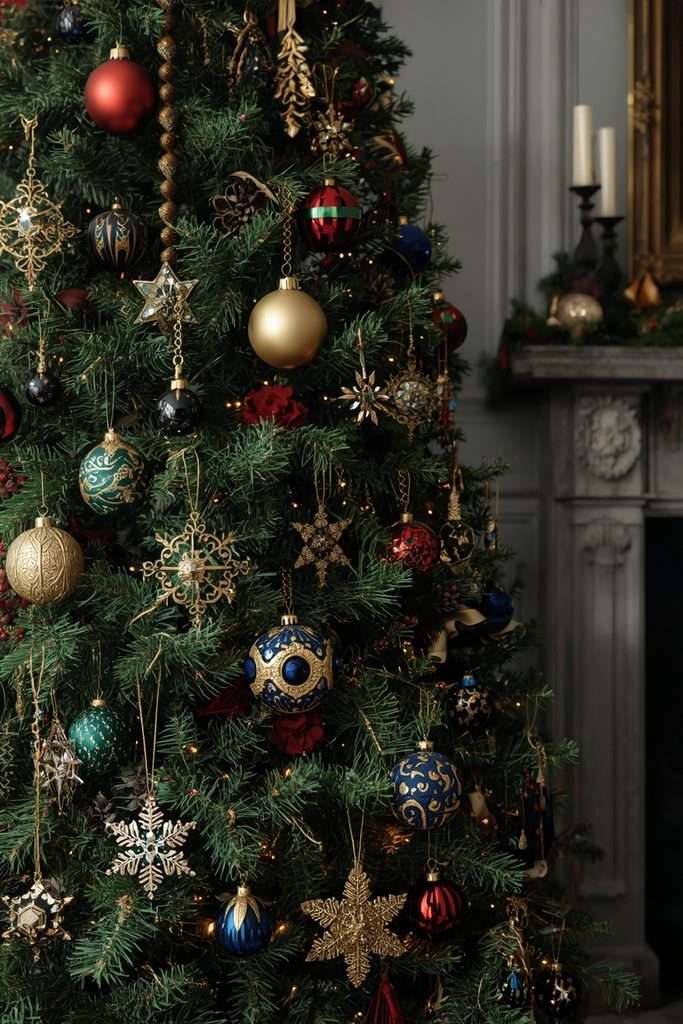
For a more dramatic decorating style, consider using rich jewel tones.
Emerald green, ruby red, sapphire blue, deep plum, and antique gold create a luxurious appearance without requiring a completely different kind of Christmas tree.
Start by choosing two or three dominant colors. Emerald and burgundy make a beautiful traditional combination, while sapphire blue and gold create a slightly more unexpected arrangement.
Use a combination of glossy baubles, velvet bows, beaded ornaments, and metallic decorations. Larger statement ornaments can help fill the more open sections of the tree.
Styling tip: Dark ornaments can disappear against deep green branches. Introduce reflective gold and lighter decorations between them so that each color remains visible.
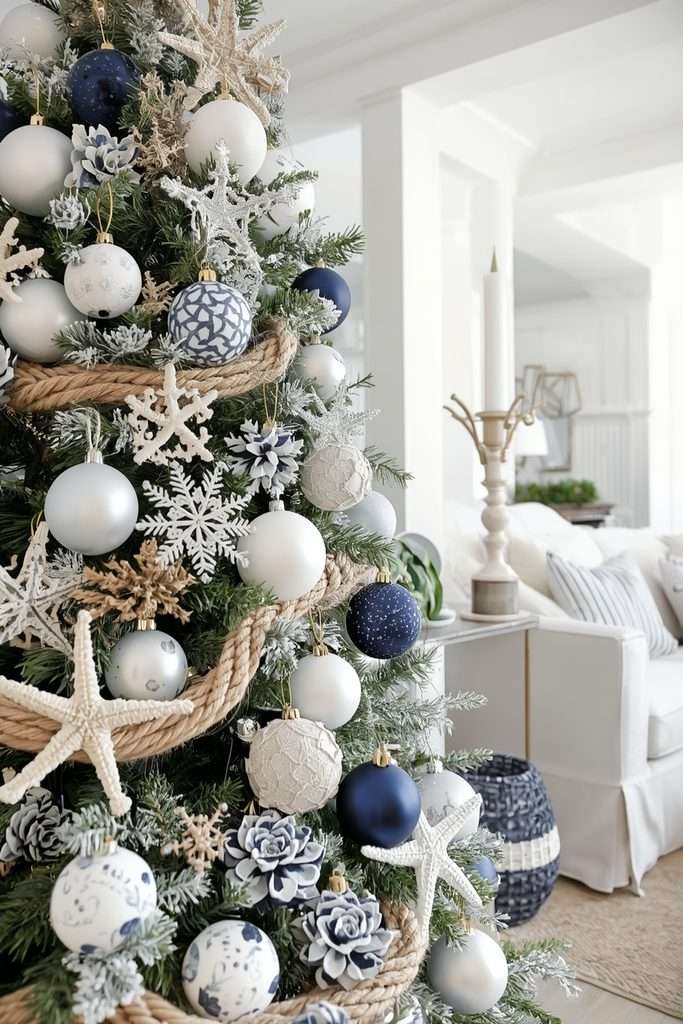
10. Coastal Christmas Tree
A coastal Christmas tree is a refreshing alternative to traditional red and green decorations.
It takes inspiration from the ocean, using soft blue, navy, white, sandy beige, and silver to create a light and relaxed holiday appearance.
Start with white and pale blue ornaments. Add starfish-inspired decorations, miniature sailboats, seashell-style pieces, and a few silver snowflakes.
Natural rope or pale fabric ribbon can introduce an additional layer of texture. Lightweight decorative shells are preferable to heavy or sharp natural pieces.
Styling tip: Include a few navy decorations to anchor the lighter colors. Without a darker accent, an entirely white and pale-blue tree can look a little washed out.
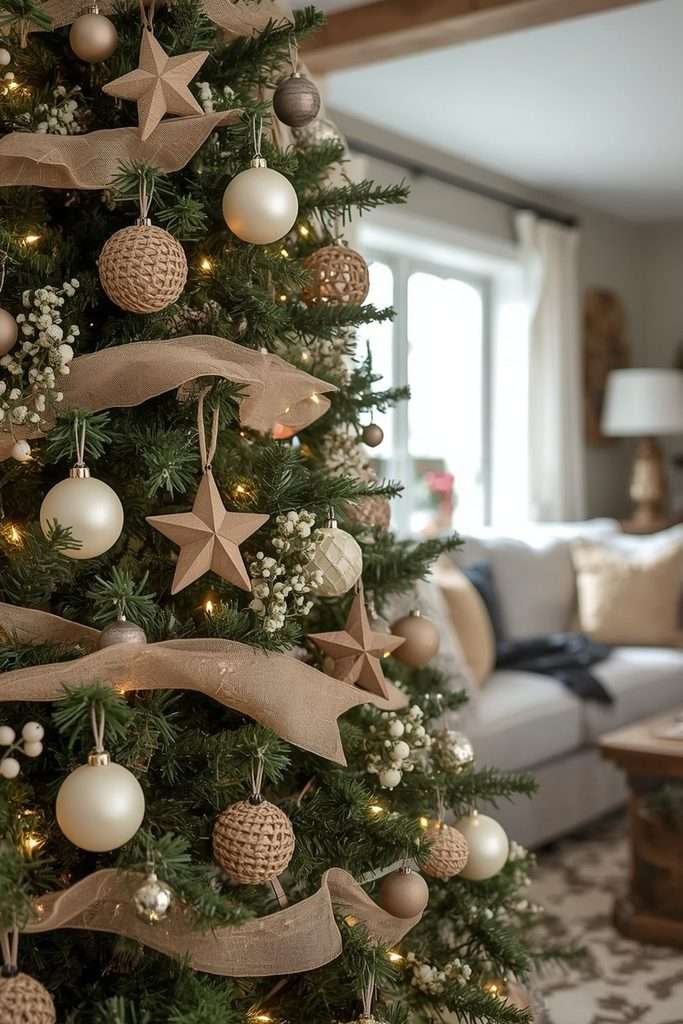
11. Neutral Farmhouse Christmas Tree
A neutral farmhouse Christmas tree is ideal for homes decorated in warm whites, beige, cream, and natural wood.
Rather than relying on colorful baubles, this style uses subtle variations in texture. Think cream fabric ornaments, wooden stars, natural woven decorations, white berries, and linen ribbon.
You can also incorporate muted gold or bronze pieces to add a little contrast without moving away from the neutral theme.
The important thing is to avoid using exactly the same finish everywhere. Smooth baubles, woven ornaments, fabric details, and textured wooden decorations help the tree look fuller.
Styling tip: Add a few darker tan or natural wood ornaments to stop the entire arrangement from blending into one flat beige color.
12. Gingerbread Christmas Tree
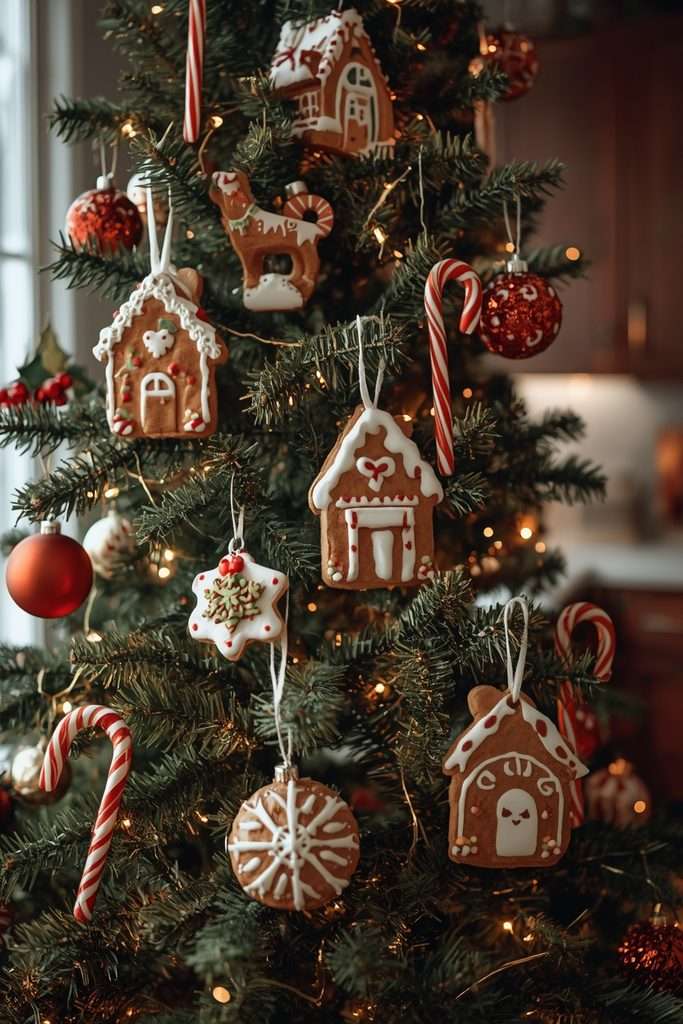
A gingerbread-themed Christmas tree is a lovely option for anyone who enjoys holiday baking and playful decorations.
The main colors are gingerbread brown, caramel, cream, and white. Gingerbread-house ornaments, faux cookie decorations, candy canes, and frosting-inspired designs give the tree a charming bakery appearance.
You can also add miniature wooden kitchen decorations, candy-shaped ornaments, and small fabric bows.
For a longer-lasting arrangement, use faux gingerbread decorations rather than actual cookies. Real food decorations can become damaged and may attract insects or pests over time.
Styling tip: Repeat white icing-style patterns across different ornaments. This creates a recognizable theme even when the decorations have different shapes and sizes.
13. Natural Botanical Christmas Tree
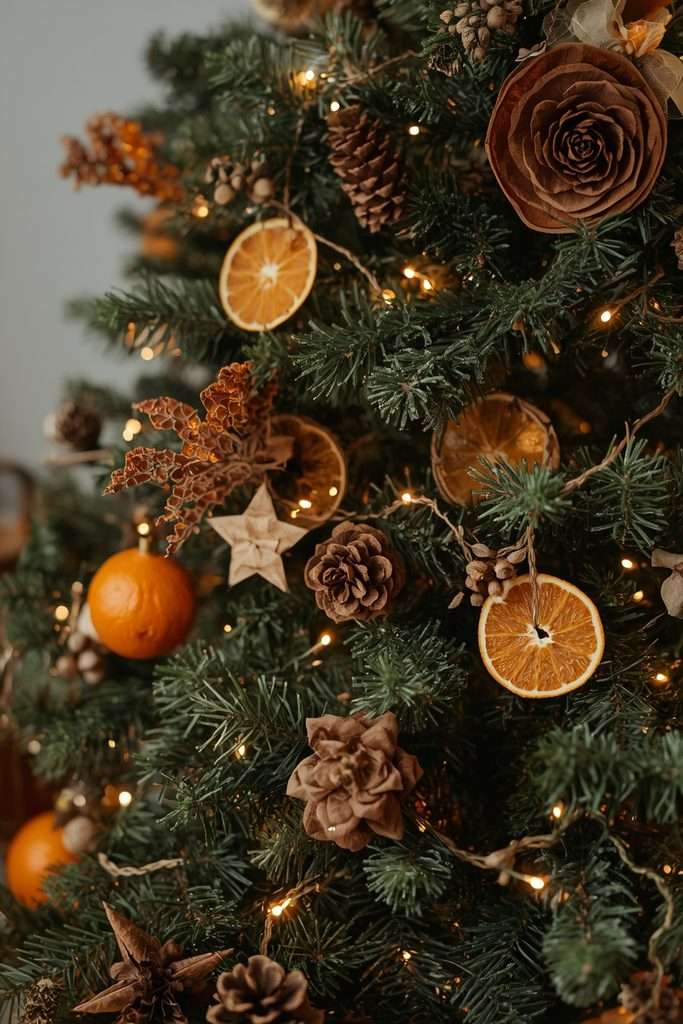
A botanical Christmas tree takes inspiration from forests, gardens, and natural seasonal materials.
Instead of using mostly shiny decorations, this theme features dried orange slices, wooden stars, pinecones, cinnamon bundles, dried flowers, and natural-looking greenery.
The color palette can include soft brown, muted green, cream, and warm gold. A few citrus decorations introduce seasonal color without overwhelming the tree.
Wooden decorations also work especially well here. A Wooden Christmas Tree Ornament Set can provide a consistent natural accent when you want to fill small gaps without introducing additional bright colors.
For a more handmade appearance, combine these pieces with simple twine decorations or fabric bows.
Styling tip: Make sure dried botanical decorations are completely dry before hanging them. Keep them away from candles, fireplaces, and other heat sources.
14. Personalized Family Memory Christmas Tree
A personalized family Christmas tree is one of the most meaningful decorating ideas because it tells a story rather than following a particular design trend.
Use family photographs, personalized name ornaments, handmade decorations, travel souvenirs, and small keepsakes collected over the years.
You do not need to make everything match. The variety is what makes this arrangement special.
Small photographs can be placed in lightweight hanging frames, while wooden name ornaments and handcrafted decorations add a little more personality.
A pack of Metal Christmas Ornament Hooks is useful for positioning lightweight decorations at different heights. Choose an appropriate size, and use stronger branch support for heavier pieces.
This is also a lovely opportunity to make new decorations with children. Our guide to 21 Christmas Crafts for Kids That Are Fun, Easy, and Budget-Friendly offers additional handmade holiday inspiration.
Styling tip: Give important family keepsakes enough space to remain visible rather than hiding them behind layers of other ornaments.
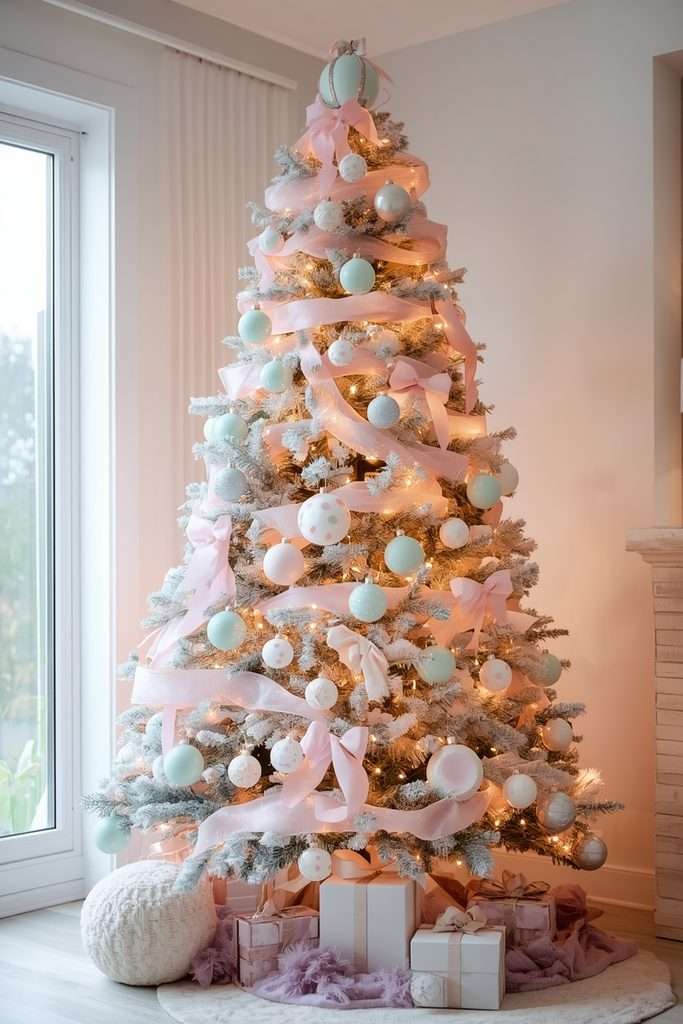
15. Pastel Candyland Christmas Tree
A pastel Candyland Christmas tree offers a playful alternative to traditional holiday decorating.
Use blush pink, mint green, lavender, pale blue, and creamy white as the main colors. Large pastel baubles, miniature candy ornaments, oversized bows, and whimsical decorations help create a cheerful appearance.
This style works particularly well in children’s rooms, colorful family spaces, or homes where playful seasonal decorations are already part of the decor.
You can also add oversized lollipop ornaments and miniature gift-box decorations for a more imaginative look.
Styling tip: Pick one pastel shade as the dominant color and use the others as accents. This keeps the tree looking coordinated without losing its playful character.
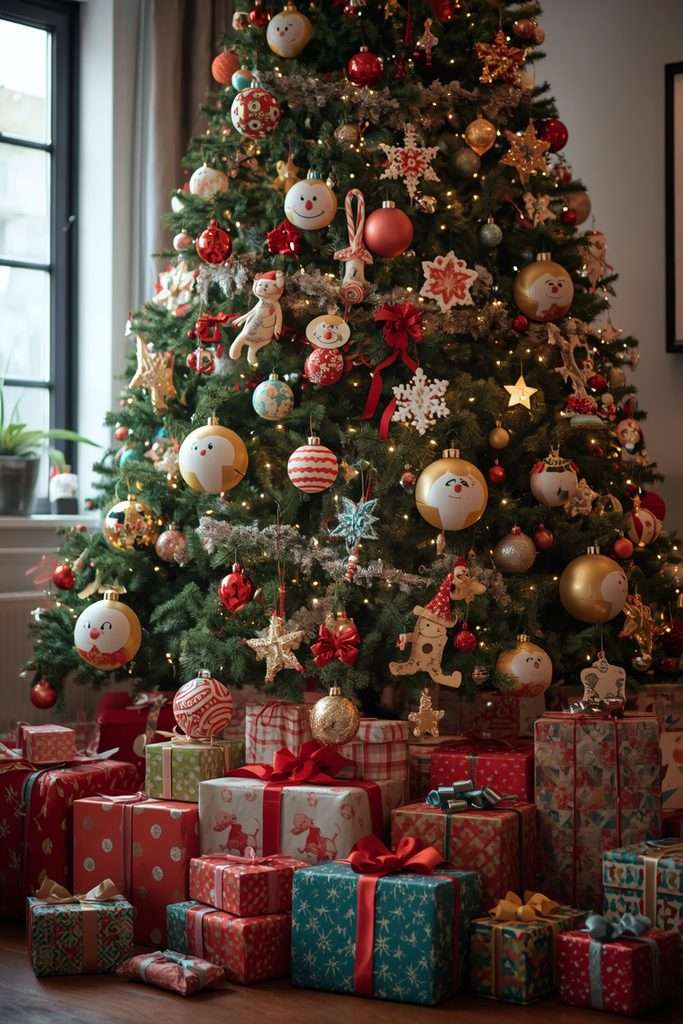
16. Maximalist Christmas Tree With Colorful Ornaments
For people who love bold decorating, a maximalist Christmas tree is an opportunity to use all those interesting ornaments that never seem to fit into one particular theme.
Mix colorful baubles, oversized stars, patterned decorations, ribbons, miniature figures, and unusual hanging ornaments.
The difference between intentional maximalism and an overcrowded tree is repetition. Even when the decorations are colorful, repeating a few colors, patterns, or shapes helps the overall arrangement feel connected.
You can also include ornaments representing hobbies, favorite places, family traditions, and personal interests.
Styling tip: Place the larger decorations first and distribute them around the tree. Fill the smaller gaps with lightweight pieces rather than concentrating all the oversized ornaments in one area.
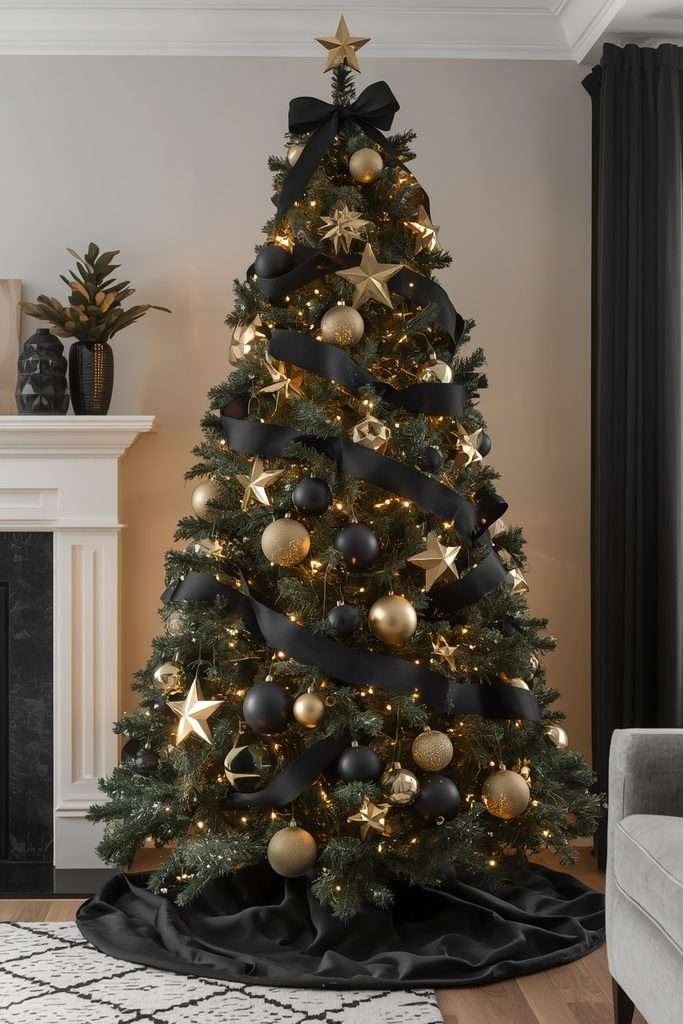
17. Black and Gold Modern Christmas Tree
A black and gold Christmas tree offers a more contemporary approach to holiday decorating.
It works particularly well in modern interiors where darker furniture, black accents, and metallic details already appear throughout the home.
Use a regular green tree or, for a more dramatic appearance, a black artificial tree. Decorate it with matte black baubles, reflective gold ornaments, metallic stars, and warm white lights.
You can introduce black velvet ribbon or geometric decorations to make the look more interesting.
Styling tip: On a green tree, combine black ornaments with reflective gold pieces so the darker decorations remain visible against the greenery.
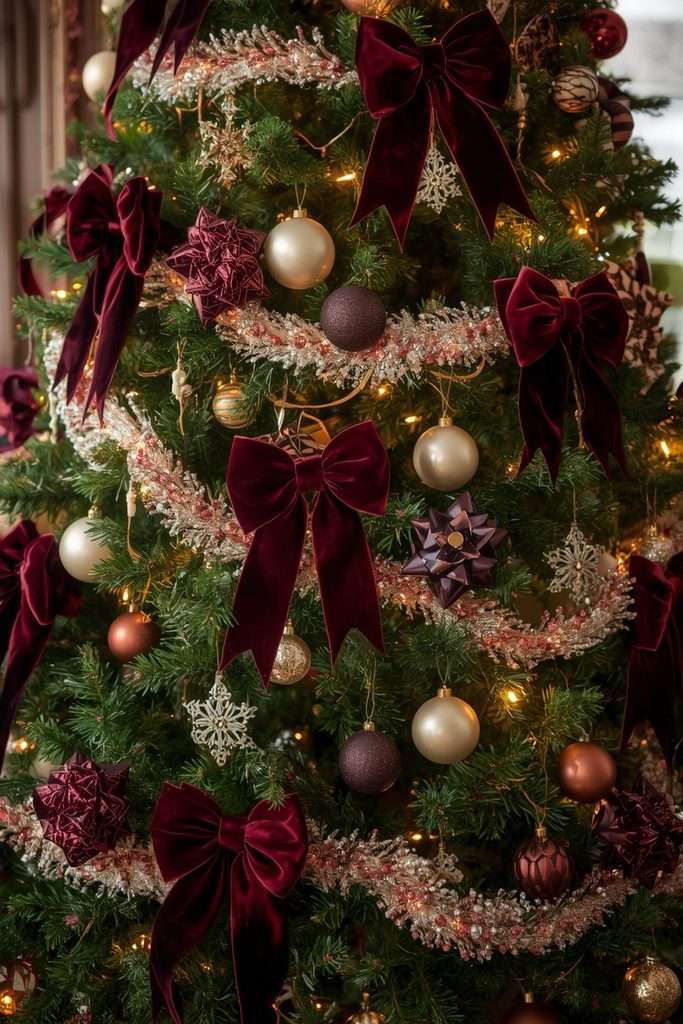
18. Burgundy and Deep Plum Christmas Tree
Deep burgundy and plum create a rich Christmas tree theme that feels especially beautiful under warm lighting.
These colors offer something a little different from traditional bright red decorations while retaining the familiar festive appearance.
Start with wine-red baubles, dark plum ornaments, velvet bows, and antique gold accents. Add a few cream-colored decorations to provide contrast and prevent the darker colors from looking too heavy.
This combination works particularly well with natural green branches and traditional furniture.
Styling tip: Use warm white lighting to complement the darker colors and highlight the different finishes of velvet, glass, and metallic ornaments.
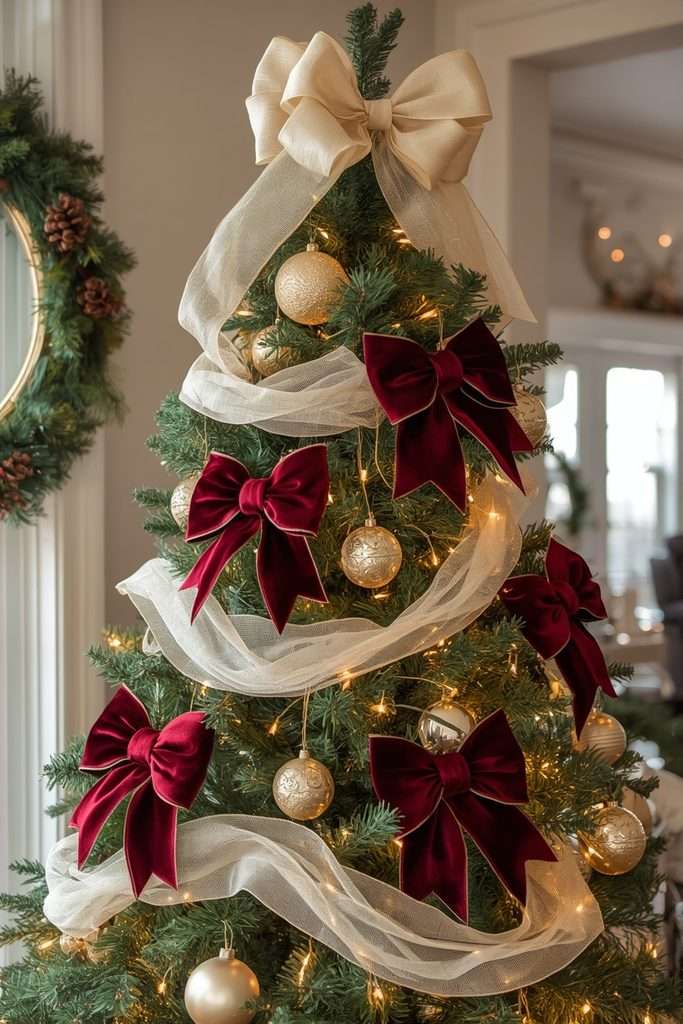
19. Statement Bow Christmas Tree
Sometimes a simple change can completely transform the appearance of a Christmas tree. Oversized bows are a good example.
Instead of filling every branch with different ornaments, make decorative bows the main feature.
Choose velvet, satin, plaid, or wired fabric ribbon depending on the look you want. Use one large statement bow as the topper and smaller bows throughout the branches.
Alternatively, arrange cascading ribbon sections from the top toward the lower part of the tree. Simple baubles in coordinating colors can complete the design without competing with the bows.
Styling tip: Wired ribbon is helpful for maintaining large shapes. Keep bows reasonably lightweight so they do not pull down thinner branches.
20. Small Tabletop Christmas Tree for Compact Spaces
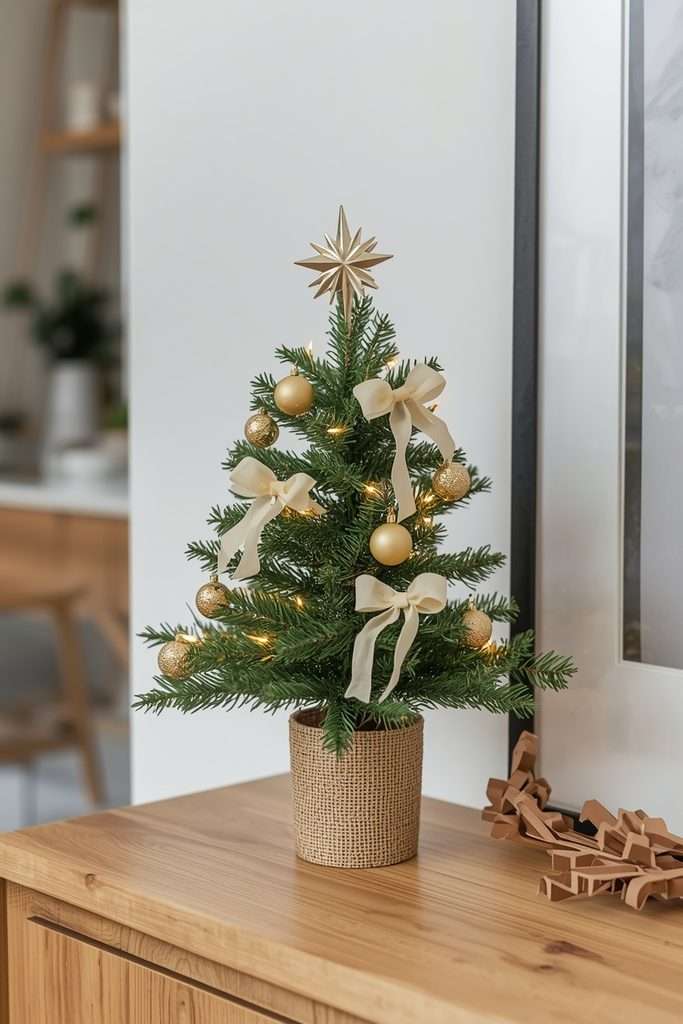
You do not need a massive Christmas tree to make your home feel festive. A small tabletop tree can work beautifully in apartments, compact living rooms, bedrooms, entryways, and home offices.
Choose a tree that fits comfortably on a console table, side table, or sturdy cabinet. Decorate it with smaller baubles, miniature bows, delicate lights, and a simple topper.
A consistent color palette makes a compact tree look intentional. For instance, champagne ornaments and cream ribbon can create an elegant arrangement without requiring many decorations.
You can also place smaller trees in other rooms to carry the same decorating theme throughout your home.
Styling tip: Check the stability of the surface before decorating. Make sure the tree cannot easily be knocked over by children, pets, or passing furniture.
21. Natural Woven Christmas Tree Collar and Basket Theme
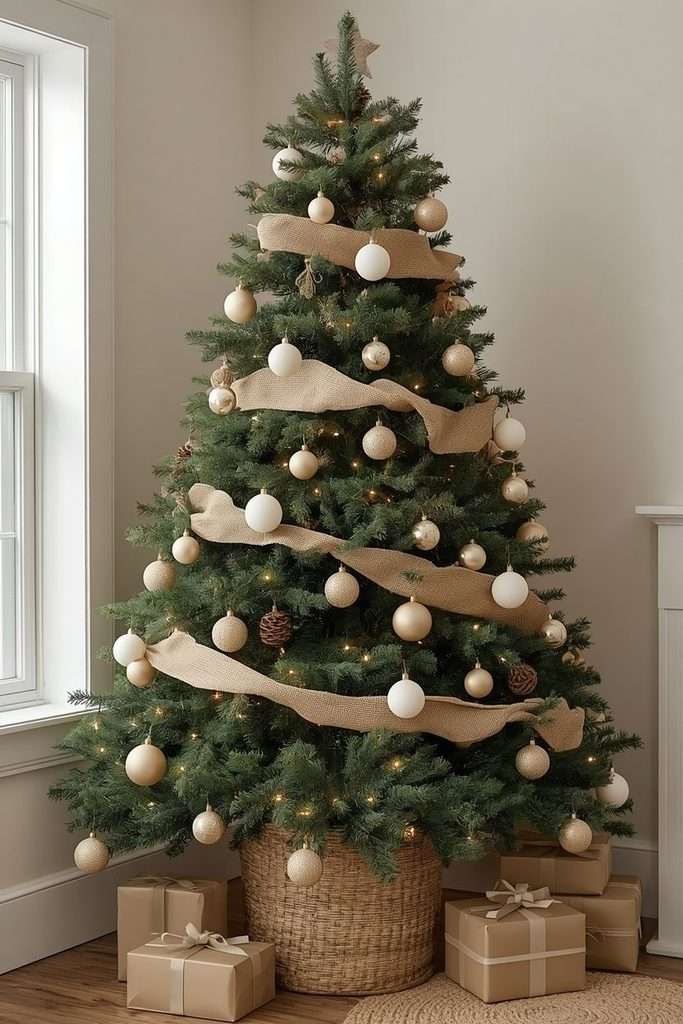
The area around the bottom of a Christmas tree deserves a little attention too. A natural woven tree collar or decorative basket can make the entire arrangement feel more complete.
This look works particularly well with rustic, farmhouse, Scandinavian, and woodland decorating themes.
Choose a purpose-made Woven Christmas Tree Collar or a suitable decorative basket that fits around the tree stand. Natural wicker and woven textures contrast beautifully with green branches, metallic ornaments, and warm lights.
You can finish the arrangement with neutral gift wrapping, kraft paper, and simple fabric ribbons.
One important consideration is the size of the collar. It should fit around the stand without interfering with access to the water reservoir of a live Christmas tree.
Styling tip: Match the tree base with the rest of your decorations. A woven collar is particularly attractive with wood, cream, muted green, and natural botanical ornaments.
How to Make Your Christmas Tree Decorations Look Professionally Styled
Choosing the right theme is only the beginning. The way you arrange the decorations makes a big difference in how the finished tree looks.
Even relatively inexpensive ornaments can look beautiful when they are distributed thoughtfully. Here are a few practical techniques to help your tree look fuller, more balanced, and more visually interesting.
1. Start With the Lights
Lights should be one of the first decorations you add.
Start near the trunk and work gradually toward the outer branches. Distributing lights at different depths creates a layered appearance and illuminates ornaments from behind.
Warm white lights work especially well with traditional, rustic, neutral, and vintage themes. Multicolored lights are a better fit for playful or nostalgic designs.
Check the lighting instructions before connecting multiple strands, and make sure the lights are rated for indoor use.
2. Choose Two or Three Main Colors
One of the easiest ways to avoid a messy-looking tree is to establish a color palette before purchasing decorations.
Here are some combinations worth considering:
| Decorating style | Main colors |
|---|---|
| Traditional | Red, green, and gold |
| Elegant | Champagne, ivory, and gold |
| Winter wonderland | White, silver, and pale blue |
| Rustic woodland | Brown, green, and cream |
| Heritage | Burgundy, forest green, and antique gold |
| Modern | Black, gold, and charcoal |
| Coastal | Blue, white, and sandy beige |
| Botanical | Natural green, brown, and muted gold |
You can introduce a few contrasting ornaments, but let your main palette guide the overall arrangement.
3. Mix Ornament Sizes and Textures
Decorating exclusively with small baubles can leave a Christmas tree looking flat.
Instead, combine large statement ornaments, medium-sized baubles, and smaller decorative pieces. Add matte, glossy, glittered, fabric, and metallic finishes to create visual depth.
Place larger ornaments closer to sturdier branches and use lighter decorations toward the thinner outer tips.
4. Decorate the Inner and Outer Branches
One common reason Christmas trees look underdecorated is that ornaments are placed only at the ends of the branches.
Try positioning a few decorations closer to the trunk and others near the branch tips. This creates a layered appearance and makes the tree look more dimensional.
It also helps fill some of the visible gaps without needing to buy more ornaments.
5. Finish With a Suitable Tree Topper
Your topper acts as the finishing detail.
A traditional star or angel complements classic decorating themes, while an oversized bow works beautifully with modern heritage and maximalist styles.
Make sure the topper is lightweight enough for the upper branches to support. A heavy decoration can tilt the tree’s top and affect the overall arrangement.
What Christmas Tree Decorating Styles Are Popular in 2026?
Christmas decorating trends change every year, but that does not mean you need to replace all your existing decorations.
For 2026, several noticeable design directions include oversized statement bows, rich jewel tones, vintage-inspired ornaments, nostalgic decorations, and more personal arrangements that combine different textures.
Here are some decorating directions worth considering.
Oversized statement bows: Large velvet, satin, and patterned bows are being used as tree toppers and decorative accents throughout the branches.
Rich heritage colors: Burgundy, emerald, plum, ruby red, and antique gold create a traditional but more dramatic appearance.
Vintage nostalgia: Retro baubles, colorful tinsel, family heirlooms, and handmade pieces make trees feel collected rather than purchased as one matching set.
Natural textures: Wooden decorations, woven materials, handmade paper ornaments, and botanical details provide a softer decorating approach.
Personalized ornament collections: Family photographs, travel souvenirs, hobby-themed ornaments, and meaningful keepsakes give Christmas trees more individuality.
My recommendation is to choose one direction that suits your home and build around decorations you can reuse in future years. You can also explore our 21 Budget Christmas Decor Trends for 2025 That Look Luxurious on Less for additional ways to refresh your existing holiday decorations without starting from scratch.
How to Decorate a Christmas Tree on a Budget
A beautiful Christmas tree does not require purchasing an entirely new collection of decorations each year.
Start by taking everything out of storage and sorting the ornaments into groups. Separate the pieces you genuinely enjoy from decorations that are damaged or no longer suit the theme you have in mind.
Next, choose a small color palette. This makes it easier to reuse existing ornaments while identifying only the few missing pieces worth purchasing.
Here are some inexpensive ways to refresh your tree:
- Cut decorative stars from sturdy cardstock.
- Make fabric bows from leftover ribbon.
- Use properly dried orange slices for natural decorations.
- Create lightweight wooden ornaments.
- Reuse attractive gift ribbons as tree accents.
- Refresh suitable old decorations using craft materials and appropriate finishes.
- Make personalized ornaments using family photographs.
You can also involve children in making simple holiday decorations. Handmade pieces often become the most memorable additions to a family tree.
One useful approach is to purchase a few statement decorations each year and keep the rest of your collection relatively consistent. Over time, your tree develops its own character without requiring a large seasonal decorating budget.
Christmas Tree Safety and Maintenance Tips
Decorative details are important, but the tree should also be safe and practical to maintain throughout the holiday season.
The National Fire Protection Association recommends keeping Christmas trees at least three feet away from heat sources such as fireplaces, radiators, candles, and heat vents. It also recommends watering live trees daily, checking holiday lights, and switching them off before leaving home or going to bed.
A few additional considerations can make your decorating routine safer.
Check your lights before decorating. Replace light strings with broken sockets, damaged insulation, frayed wires, or loose connections. UL Solutions recommends using appropriately certified seasonal lighting and following the manufacturer’s instructions.
Keep fragile glass ornaments away from busy areas. Place delicate decorations higher on the tree or in areas where children and pets are less likely to knock them down.
Avoid real candles on the tree. Use suitable electric decorative lighting instead.
Keep live trees hydrated. Check the stand’s water level daily and follow the manufacturer’s instructions.
Do not block walkways or exits. A tree should not become an obstruction, particularly in smaller living rooms.
Store decorations properly. Before putting away your ornaments, remove batteries where appropriate, wrap fragile pieces individually, and separate decorations according to size and material.
Finally, remove a live Christmas tree after the holidays or when it becomes dry. Dried-out trees present a fire hazard and should not remain inside the home or garage.
Frequently Asked Questions
Traditional red, green, and gold remains a timeless option. Other popular choices include neutral farmhouse, vintage-inspired, rustic woodland, jewel-tone, and heritage-style Christmas trees.The best theme depends on your home’s existing decor and personal preferences.
There is no fixed number because it depends on the tree’s height, width, density, and the size of the ornaments.
A fuller tree generally needs more decorations than a narrow pencil tree. Add ornaments gradually and check the arrangement from different angles rather than following a strict number.
Start by distributing lights throughout the branches, including some closer to the trunk.
Use a mixture of large, medium, and small ornaments. Fill noticeable gaps with suitable lightweight decorations, ribbon, or decorative picks.
Champagne and gold, burgundy and forest green, white and silver, and emerald with antique gold are attractive combinations.
Limiting the main palette to two or three colors usually makes the overall appearance more coordinated.
Reuse your existing ornaments, choose a simple color theme, and make inexpensive decorations using suitable craft supplies.
You can also refresh an older tree by changing the ribbon, topper, or tree collar rather than replacing all the decorations.
Install the lights first. Then arrange your larger ribbon or garland before adding most of the individual ornaments.
This gives you room to position the larger decorative elements without repeatedly moving smaller decorations.
Choose a topper that suits the overall theme and proportions of your tree.
A traditional star or angel works well with classic decorating styles, while oversized bows and decorative starbursts suit more contemporary arrangements.
Also check that the topper is lightweight enough for the upper branches to support.
Choose a slim or tabletop tree that leaves enough room for everyday movement.
Use a limited color palette, smaller ornaments, and simple lighting. Position the tree where it can be seen without blocking a doorway, walking path, or frequently used furniture.
Final Thoughts
A beautiful Christmas tree does not have to follow a particular trend or decorating formula. The most successful arrangements usually have one thing in common: the decorations work together rather than competing for attention.
Whether you choose a traditional red-and-gold tree, a natural woodland theme, or an elaborate jewel-tone arrangement, start with a clear color palette and add decorations gradually.
You can also mix family keepsakes with newer ornaments to make the tree feel more personal. After all, a Christmas tree should not just look attractive in photographs. It should feel like a natural part of your home and the holiday traditions you enjoy celebrating each year.

Aagam – Founder of SpruceTouch
I’m Aagam, a home and garden enthusiast who enjoys growing, building, and improving outdoor spaces. I focus on practical backyard projects, garden ideas, and simple DIY solutions that are useful in real homes. Through SpruceTouch, I share what I’ve learned, what worked, what didn’t, and the small details that can make an outdoor project easier.