
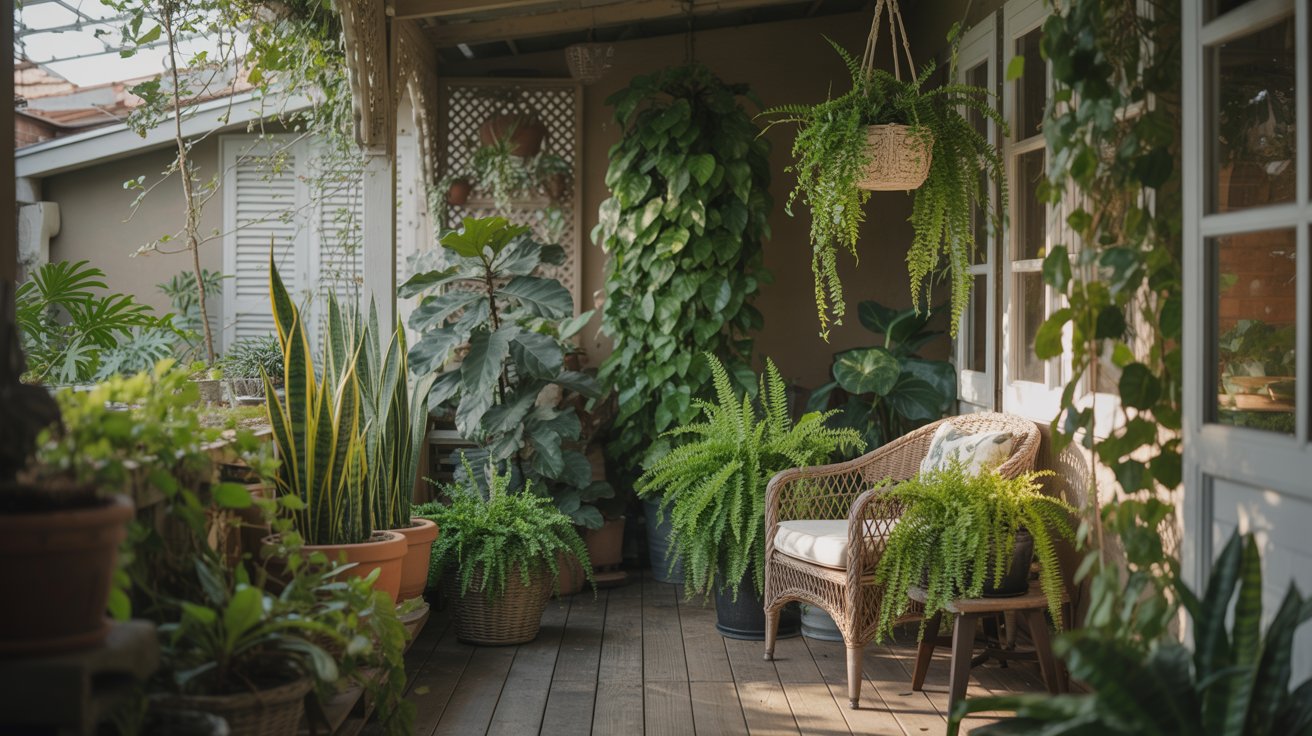
I used to think my dark porch was a lost cause. No matter what I planted, everything turned yellow, leggy, or just… gave up. It honestly felt like I was throwing money away on plants that never had a chance.
Then one rainy afternoon, I noticed something interesting — a forgotten plant tucked into the darkest corner was actually thriving. That moment changed everything.
The truth is, it’s not about more sunlight. It’s about choosing the right plants.
Once I discovered the secret world of shade-loving plants, my dull, lifeless patio transformed into a lush, calming retreat. And the best part? Many of these plants are low-maintenance and budget-friendly.
Below, I’m sharing the exact plants (and real-life tips) that finally made my dark porch feel alive again.
Quick Selection Table
| Plant Name | Best Feature 🌟 | Light Level ☁️ | Care Level 🌱 | Perfect Spot |
|---|---|---|---|---|
| Snake Plant | Nearly indestructible | Low light | Very easy | Corners |
| Ferns | Lush jungle look | Shade | Moderate | Hanging pots |
| Peace Lily | Flowers indoors | Low light | Easy | Entryways |
| Pothos | Fast-growing vines | Low light | Very easy | Shelves |
| Caladium | Colorful leaves | Partial shade | Moderate | Accent pots |
1. Snake Plant — The “Set It and Forget It” Hero
If there’s one plant I recommend to anyone with a dark porch, it’s the snake plant. I’ve personally neglected mine more times than I’d like to admit—and somehow, it still stands tall like nothing happened.
What makes this plant special is its ability to tolerate extremely low light. I’ve placed mine in a corner that barely gets indirect light, and it still grows slowly but steadily. That’s rare.
When styling, I like to use tall ceramic pots to enhance its vertical look. It instantly adds structure to a dull patio. You’ll often find affordable snake plants at local nurseries or even roadside plant sellers—much cheaper than big garden centers.
One mistake I made early on? Overwatering. This plant hates soggy soil. Water it once every 2–3 weeks and forget about it. Seriously.
If you’re planning a layered patio look, this pairs beautifully with ideas from “creative vertical vegetable garden ideas” where height variation adds visual interest.
2. Boston Fern — Instant Jungle Vibes
Boston ferns completely changed how my patio felt. The moment I hung one near the ceiling, the space felt cooler, fuller, and alive.
They thrive in indirect light, which makes them perfect for shaded porches. But here’s something I learned the hard way—ferns LOVE humidity. My first one dried out within weeks because I treated it like a regular plant.
Now, I mist mine every few days or place a small water tray nearby. It makes a huge difference.
For budget-friendly options, check local plant markets—they’re often cheaper and healthier than store-bought ones. Hanging baskets work best, especially if your floor space is limited.
Avoid placing them near dry winds or fans. That’s a silent killer.
3. Peace Lily — Elegant Blooms in the Dark
I’ll be honest—I didn’t believe a plant could bloom in low light until I tried the peace lily. But it does, and beautifully.
I keep mine near my patio entrance where light is minimal, yet it still surprises me with white blooms every few months.
What I love most is how it “talks” to you. When it needs water, it droops dramatically—but perks back up within hours after watering. It’s like having a built-in alert system.
A simple plastic pot works fine, but I prefer decorative ceramic covers to elevate the look. You don’t need expensive setups.
The mistake to avoid? Direct sunlight. It burns the leaves quickly.
4. Pothos — The Lazy Gardener’s Dream Vine
Pothos is that friend who thrives no matter what. I’ve grown it in bottles, hanging baskets, and even neglected pots—and it just keeps going.
It’s ideal for adding movement to a space. Let it trail from shelves or railings for that relaxed, natural look.
One trick I use? Propagating cuttings in water and replanting them to create fuller pots. If you’re interested in expanding your plant collection, this ties perfectly with “fast-growing vegetables you can harvest in 30–60 days”—the same propagation mindset applies.
Avoid overwatering and keep it in indirect light.
5. Caladium — Bright Colors Without Sun
Caladium was my solution when I wanted color but had no sunlight. Its leaves look almost painted—reds, pinks, and greens that pop even in dim corners.
I place mine in decorative pots as accent pieces. They instantly draw attention.
They do need slightly more care—keep soil moist but not soggy. I learned this after losing one to root rot.
They’re seasonal, so don’t panic if they go dormant.
PRO TIP
Most people fail with shade plants because they overwater them.
Low light = slower growth = less water needed. Always check soil before watering. Also, rotate plants monthly so all sides get equal light exposure.
6. ZZ Plant — The “Almost Impossible to Kill” Beauty
If the snake plant had a rival for toughness, it would be the ZZ plant. I got mine during a phase when I kept forgetting to water anything—and somehow, it thrived better than everything else.
The glossy, dark green leaves reflect whatever little light is available, making even dim patios feel brighter. I like placing it in minimalist pots near seating areas—it gives a clean, modern vibe without trying too hard.
This plant is perfect for people who travel or forget their watering schedule. I water mine once every 3–4 weeks, sometimes even longer during winter.
You’ll often find ZZ plants at reasonable prices in local nurseries, and they grow slowly, so you won’t need frequent repotting.
One mistake to avoid? Over-loving it. Too much water or frequent repotting can stress the plant.
7. Coleus — Bold Patterns That Brighten Shade
Coleus is like having artwork in plant form. The leaves come in stunning combinations—deep reds, lime greens, purples—and they actually look better in shade than in harsh sun.
I like using coleus when a space feels too “green” and needs contrast. Pair it with ferns or pothos, and suddenly your patio looks professionally styled.
One thing I learned the hard way: pinch the tips regularly. If you don’t, the plant becomes leggy and loses its bushy shape.
They’re also super easy to propagate. Cut a stem, place it in water, and within days you’ll see roots forming. It’s honestly addictive.
You can find them cheaply at plant markets, especially during seasonal sales.
8. Areca Palm — Soft, Airy Tropical Feel
The first time I added an areca palm to my patio, it instantly felt like a mini vacation spot. The soft, feathery leaves move gently with air, making the space feel alive.
It prefers indirect light, making it perfect for covered patios. I usually place it in a corner where it can spread naturally without crowding other plants.
One tip I swear by—wipe the leaves occasionally. Dust dulls their natural shine, especially in shaded areas.
They’re slightly pricier than smaller plants, but worth it as a statement piece.
Mistake to avoid? Dry soil. Keep it lightly moist, but never soggy.
9. Begonia — Subtle Elegance in the Shadows
Begonias surprised me. I expected them to be fussy, but many varieties actually love shade and do incredibly well in pots.
Their leaves often have unique textures—some metallic, some velvety—which adds depth to your plant arrangement.
I like placing them on tables or plant stands where their details can be appreciated up close.
They do need a bit of attention—well-draining soil is key. My first begonia died because I used heavy garden soil that held too much water.
If you’re building layered plant displays, begonias pair beautifully with setups like those in “stunning DIY garden path ideas on a budget”, where visual texture makes a big impact.
10. Aspidistra (Cast Iron Plant) — The True Survivor
This plant earned its nickname for a reason. It survives conditions where most plants would give up.
I once left mine in a forgotten corner for weeks—low light, irregular watering—and it didn’t even flinch.
Its long, dark green leaves give a simple, classic look. It’s not flashy, but it’s reliable.
Perfect for filling empty corners or grounding a plant arrangement.
Avoid overwatering—that’s literally the only thing that can harm it.
GROWING SECRET
Not all shade is equal.
There’s a big difference between deep shade and bright indirect light. Try placing your plants where they receive reflected light from walls or floors—it dramatically improves growth without direct sun.
11. Spider Plant — The Fast Multiplier
Spider plants are one of the most rewarding plants I’ve grown. Within months, they start producing little “babies” that you can replant or share.
I love placing them in hanging baskets where their arching leaves can cascade naturally.
They tolerate low light well, though they grow faster in brighter indirect light.
One trick: trim brown tips early—it keeps the plant looking fresh.
If you’re into multiplying plants cheaply, this is one of the easiest ways to do it.
12. Aglaonema — Low Light, High Style
Aglaonema is what I recommend when someone wants a “designer” plant without high maintenance.
Its leaves come in beautiful patterns—silver, green, even pink tones—and it handles shade like a pro.
I usually place it near seating areas because it looks elegant and intentional.
It’s forgiving but doesn’t like cold drafts, so keep it in stable conditions.
Avoid direct sunlight—it fades the colors quickly.
13. Philodendron — The Relaxed Climber
Philodendrons are like pothos but slightly more refined in appearance.
I’ve trained mine to climb a small moss pole, and it adds vertical interest to my patio.
They’re easy to care for and adapt well to low light conditions.
One mistake I made was letting dust collect on leaves—it slowed growth. Wiping them occasionally helps.
Perfect for creating that “indoor jungle” look even in dark spaces.
14. Fatsia Japonica — Bold and Architectural
This plant is a statement piece. The large, glossy leaves look almost sculptural.
I use it when I want a focal point in a shaded area. It instantly draws attention.
It does well in containers and prefers cool, shaded spots.
Keep soil slightly moist and avoid harsh sunlight.
It’s not as common, but worth finding at specialty nurseries.
15. Impatiens — Flowers That Love Shade
If you want non-stop color, impatiens are your best bet. Unlike most flowering plants, they actually prefer shade.
I use them in small pots and window boxes to add instant brightness.
They do require regular watering—this is one plant you shouldn’t neglect.
One mistake? Letting soil dry out completely. They bounce back, but repeated stress weakens them.
They’re affordable and widely available, making them perfect for beginners.
16. Japanese Forest Grass — Soft Movement in the Shade
This is one of those plants you don’t fully appreciate until you see it moving. Japanese forest grass has this soft, cascading flow that instantly makes a patio feel calmer and more intentional.
I added it near a seating corner, and honestly—it changed the mood of the entire space. Even a slight breeze makes it sway gently, creating that peaceful, almost meditative vibe.
It thrives in partial to full shade and doesn’t demand much once established. I planted mine in a wide, shallow container to let it spread naturally.
One mistake I made early? Placing it in a cramped pot. It needs space to show its true beauty.
If you’re designing a relaxing outdoor corner, this pairs beautifully with ideas from “biophilic balcony design ideas”, where natural textures and movement create a calming effect.
17. Dieffenbachia — Bold Leaves for Dark Corners
Dieffenbachia is my go-to when a space feels too empty or flat. The large, patterned leaves instantly fill visual gaps and make the area feel lush.
I like placing it in corners where smaller plants get lost. It becomes a focal point without needing flowers.
It thrives in low light but grows faster with indirect brightness. Keep the soil lightly moist and rotate the plant occasionally for even growth.
One mistake to avoid? Letting water sit in the pot tray. I lost a beautiful plant because of unnoticed root rot.
It’s widely available and usually affordable for its size, which makes it a great value plant.
18. Parlor Palm — Classic, Compact Elegance
The parlor palm has this understated elegance that never goes out of style. It doesn’t scream for attention—but it quietly elevates any space.
I use it for smaller patios where large plants feel overwhelming. It fits perfectly near chairs or side tables.
It’s incredibly tolerant of low light and doesn’t require frequent watering. In fact, it prefers to dry slightly between waterings.
One thing I’ve noticed—clean leaves make a huge difference. Dust builds up easily in shaded areas.
Avoid placing it in direct sunlight—it can scorch the delicate fronds.
19. Oxalis (Purple Shamrock) — Unique Color Pop
Oxalis is one of those plants guests always ask about. The deep purple, triangular leaves almost look unreal.
I love placing it where it contrasts against green plants—it creates a striking visual balance.
It does well in bright shade and even opens and closes its leaves based on light, which is fascinating to watch.
One mistake I made? Overwatering during dormancy. It naturally goes through rest periods, so don’t panic if it looks like it’s dying.
It’s usually inexpensive and easy to find in local nurseries.
20. Heuchera (Coral Bells) — Texture Meets Color
Heuchera is one of my favorite plants for mixing textures. The leaves come in shades of burgundy, lime, and bronze, and they look stunning in shaded containers.
I often use it as a “filler” plant in mixed pots, especially when I want depth without overwhelming the design.
It prefers partial shade and well-draining soil. I learned the importance of drainage after losing one during heavy monsoon season.
If you enjoy building layered plant setups, combining this with concepts from “groundcovers that choke weeds naturally” can inspire fuller, denser arrangements even in containers.
Keep it slightly moist but never soggy.
PRO TIP
Use light-colored pots in dark spaces.
This is a small trick that makes a huge difference. Light or neutral pots reflect available light, making your plants stand out more and preventing your patio from feeling too heavy or dull.
21. Lucky Bamboo — Minimalist & Low-Light Friendly
Lucky bamboo is perfect if you love a clean, minimal look. It doesn’t need soil—you can grow it in water, which makes it incredibly easy to maintain.
I keep a small arrangement on my patio table, and it adds a subtle, calming presence without cluttering the space.
It thrives in low light and requires very little attention. Just change the water every couple of weeks and you’re good.
One mistake I made early on was using tap water directly. If your water is heavily chlorinated, let it sit overnight before using.
It’s widely available and budget-friendly, making it perfect for beginners or small spaces.
FAQ Section
1. Can plants really survive in complete shade?
Most need some indirect light. Even a bright wall reflection helps.
2. Which plant is best for beginners?
Snake plant and pothos are the easiest to start with.
3. Why do my shade plants turn yellow?
Overwatering is usually the cause—not lack of light.
4. How often should I water shade plants?
Every 2–3 weeks depending on humidity and pot size.
5. Can I grow vegetables in shade?
Yes, leafy greens work best—pair with vertical setups.
Seasonal Maintenance Calendar
Spring: Repot, fertilize lightly, propagate cuttings
Summer: Increase watering slightly, avoid heat stress
Monsoon: Watch for fungal issues, improve airflow
Winter: Reduce watering, keep plants dry and stable
Common Mistakes
- Overwatering low-light plants
- Using heavy garden soil instead of well-draining mix
- Expecting fast growth in shade
- Ignoring humidity needs (especially for ferns)
- Placing plants in zero light conditions
Final Wrap-Up Thought
By now, you’ve probably noticed a pattern—shade gardening isn’t about limitations, it’s about intentional choices.
Some plants bring structure. Some bring color. Some bring movement. When you combine them thoughtfully, even the darkest porch can feel layered, alive, and deeply inviting.
If I could give you one final piece of advice—it’s this:
Don’t try to copy a sunny garden. Build a shade garden that feels like a retreat.
Start with just a few plants from this list, experiment with placement, and let your space evolve naturally.
That’s exactly how my once-forgotten porch became my favorite place to unwind.

Aagam – Founder of SpruceTouch
Hi, I’m the creator behind SpruceTouch. i am a home and garden enthusiast who shares practical ideas for backyard design, garden projects, patio decor, and small outdoor spaces. Through SpruceTouch, he focuses on simple and budget-friendly ways to improve outdoor living spaces.