
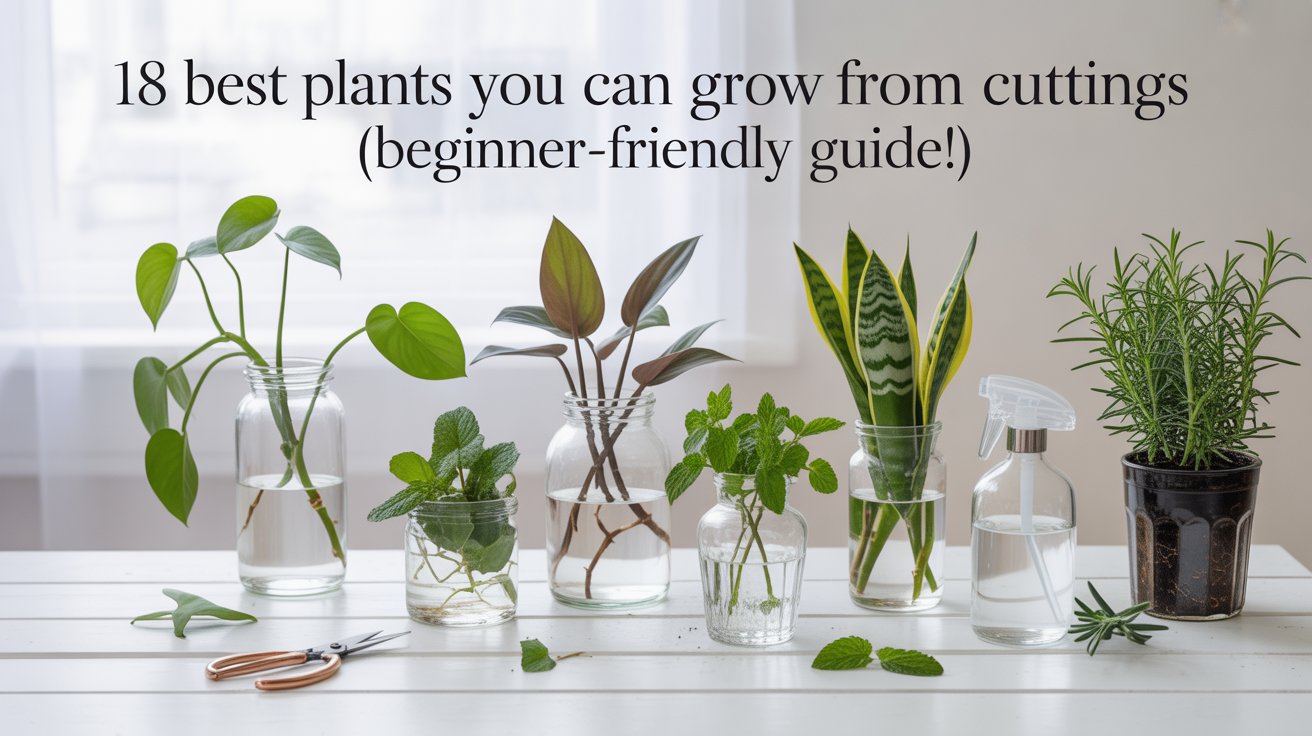
I still remember the first time I tried growing a plant from a cutting—it was a pothos vine I randomly snipped from my friend’s plant. I honestly didn’t expect much, but within a week, tiny white roots started showing up in the jar. That moment completely changed how I looked at gardening.
Since then, I’ve propagated dozens of plants—some successfully, some… not so much. But that’s part of the process. If you’ve ever wanted more plants without spending more money, learning how to grow plants from cuttings is honestly one of the best skills you can pick up.
In this guide, I’m sharing plants that actually work (not just theory), along with real tips, small mistakes I’ve made, and what actually helped me get better results. Whether you’re a beginner or someone who just wants to expand their garden cheaply, this is going to help.
What I Learned From Growing Plants From Cuttings
When I first started, I thought propagation was just “cut and put in water.” That’s what most videos show. But I quickly realized there’s more to it—small things make a big difference.
One thing I learned the hard way is that not all cuttings survive, and that’s normal. I used to think I was doing something wrong every time a stem rotted. But over time, I noticed patterns—like overwatering, using dirty scissors, or keeping plants in low light were the real reasons.
Another big realization: patience matters more than technique. Some plants root in days, while others take weeks or even months. Early on, I kept pulling cuttings out to check roots (big mistake). It actually slows growth or damages them.
Also, I noticed that location inside the house matters a lot. Cuttings near a bright window grow much faster than ones kept in darker corners. You don’t need direct sunlight, but you definitely need good natural light.
If I had to give one practical tip—it’s this:
👉 Start with easy plants first (like pothos or mint).
That early success builds confidence, and then you can try slower or trickier plants later.
1. Pothos (Epipremnum aureum) – The Easiest Cutting Plant Ever
Pothos is honestly where I recommend everyone start. It’s forgiving, fast, and gives visible results quickly. Just cut below a node and place it in water—it’s that simple.
From my experience, pothos roots best when the node is fully submerged but the leaves stay dry. I usually use a clear glass jar so I can actually see what’s happening. It’s oddly satisfying watching roots grow day by day.
One mistake I made early on was not changing the water regularly. After a few days, the water can get cloudy, and that slows down rooting. Now I change it every 3–4 days, and the difference is noticeable.
Another thing I noticed—pothos grows faster in warmer months. In winter, it still works, but the process slows down. So if you’re not seeing quick results, don’t panic—it’s just the season.
2. Snake Plant (Sansevieria) – Grow a Whole New Plant From One Leaf
Snake plants test your patience, but they’re worth it.
When I first tried propagating one, I thought it failed because nothing happened for weeks. But then suddenly, tiny shoots appeared. That’s when I realized—this plant works quietly.
A common mistake here is overwatering the cuttings. Snake plants hate too much moisture. I now plant them in slightly dry soil and water very lightly. That improved my success rate a lot.
Also, make sure you remember the direction of the leaf. If you plant it upside down, it won’t grow. Sounds obvious—but I’ve done it before!
3. Coleus – Explosion of Color From a Simple Snip
Coleus is one of the most rewarding outdoor plants to propagate. The vibrant foliage creates an instant pop of color in garden beds and balcony planters. A 4–6 inch cutting placed in water roots so quickly it almost feels like cheating.
One thing I’ve learned is that coleus roots faster in warm weather. In cool seasons, move your jar indoors near a sunny window. Once the roots get thick and white, transplant them gently into soil. Pinch the top growth for a fuller, bushier plant.
Coleus is perfect if you want low-effort color in your yard. I often pair my propagations with ideas from my Outdoor BBQ Kitchen Ideas post, especially when designing colorful garden corners around seating areas.
4. Mint – The Herb That Repopulates Itself
Mint is probably the fastest-growing cutting I’ve ever tried.
I once placed a few stems in water and forgot about them. Within a week, they had strong roots and were ready for soil. It’s almost impossible to fail with mint.
But here’s the catch: mint spreads aggressively. I planted it directly in my garden once, and it took over everything. Now I always keep it in pots.
One useful tip—keep trimming mint regularly. The more you cut, the more it grows. It’s perfect if you want something productive and low effort.
5. Rosemary – Tough but Totally Rootable
Rosemary taught me patience more than anything.
The first few times I tried, nothing happened. Later I realized I was using very soft stems. Once I switched to slightly woody stems, things improved.
One important tip: don’t overwater. Rosemary prefers dry conditions, even while rooting.
It’s slower than herbs like mint or basil, but once established, it becomes a very strong plant.
6. Basil – A Kitchen Favorite That Roots Overnight
Basil is one of those plants that makes you feel like you know what you’re doing.
It roots very quickly in water, especially in warm weather. I usually keep a jar near my kitchen window, and it doubles as both decor and a fresh herb supply.
One mistake I made early was letting basil flower too much. Once it flowers, growth slows down. Now I trim it regularly to keep it bushy.
Also, basil needs sunlight. If your cuttings look weak or pale, it’s usually because they’re not getting enough light.
7. Rose – A Classic Plant You Can Root at Home
Roses are a bit tricky, but when it works—it feels amazing.
I’ve had mixed results with rose cuttings. Some rooted beautifully, while others didn’t survive at all. What helped me improve was maintaining humidity using a plastic cover.
One mistake I made was choosing the wrong stem. Too soft or too woody doesn’t work well. A semi-hard stem is ideal.
Also, don’t expect quick results. Roses take time. But once they start growing, it’s incredibly satisfying to see a full plant from a single cutting.
8. Geranium – Colorful, Low-Stress, and Easy
Geraniums root surprisingly well in plain water or soil. Snip below a node, remove the lower leaves, and keep the cutting somewhere bright. The stems are firm enough that they rarely rot if you avoid overwatering.
I often propagate geraniums in late summer to prepare new plants for spring garden beds. Once planted outdoors, they add a cheerful punch of color and pair beautifully with rustic decor ideas like in my Outdoor BBQ Kitchen Ideas post.
Growing a whole row from cuttings feels like leveling up as a gardener—plus, it saves money when you want mass plantings.
9. Lavender – Fragrant Cuttings That Thrive
Lavender thrives from semi-woody cuttings. Choose stems that haven’t fully hardened, snip below a node, remove the leaves at the bottom, and plant in gritty soil. They root surprisingly well when kept warm and bright.
I love starting lavender cuttings to fill walkway borders. The scent they release when brushed is heavenly. Once established, lavender requires minimal watering and is perfect for hot climates.
Rooting lavender is a long-term investment but absolutely worth it.
10. Begonia – Leaf or Stem, Both Work
Begonias are fascinating because you can propagate them from both leaf and stem cuttings. For leaf methods, slice the veins and lay the leaf flat on moist soil. For stems, simply place a section in water or soil.
I’ve had great success with cane begonias in particular—they root reliably in water jars on my window shelf. Keep humidity moderate but avoid waterlogging. Begonia roots are delicate and need gentle handling.
Once potted, they thrive in bright, indirect light and make stunning indoor focal points.
11. Hydrangea – Big Blooms From Simple Cuttings
Hydrangeas root best from softwood cuttings taken in early summer. These young, flexible stems grow roots quickly if placed in moist soil. Covering with a plastic dome ensures consistent humidity.
I love gifting hydrangea cuttings because they feel premium yet are completely homegrown. They’re also perfect for forming natural borders or filling large pots. Once rooted, hydrangeas grow fast and produce giant, showy blooms.
If you’re planning landscape updates, hydrangeas pair beautifully with ideas from my post on Best Perennial Plants for Borders.
12. Dracaena – Bold Indoor Plant With Easy Propagation
Dracaenas are tall, architectural plants, but what many people don’t know is that they root incredibly well from cane cuttings. Simply cut a section of the cane, lay it horizontally on moist soil, or place it upright in water.
New leaves sprout from the nodes after a few weeks. I love using this method when my dracaena gets too tall or leggy. Propagation lets you rejuvenate the main plant and create new ones at the same time.
These make great indoor corner fillers since they thrive in low-light conditions.
13. ZZ Plant – Surprisingly Rootable
ZZ plants are famously tough, but propagation is slow. Don’t expect fast results, but if you’re patient, you’ll eventually see small bulbous rhizomes forming. You can root whole stems in water or leaflets in soil.
ZZ cuttings are great for people who love low-maintenance indoor plants. Keep the cuttings in bright shade and forget about them for a while. Eventually, you’ll get new growth—even if it takes months.
Worth it for the glossy, sculptural foliage you get later!
14. Jade Plant (Crassula) – Succulent That Loves Cuttings
Jade plants root best when the cut ends are allowed to callus for a day. Once planted in gritty soil, keep watering minimal until new growth appears. These plants store moisture in their leaves, so overwatering is the biggest risk.
Jade cuttings often become chubbier and stronger than the parent plant. They’re perfect if you love sculptural, bonsai-style arrangements.
A small jade forest on your windowsill looks surprisingly premium.
15. Oregano – A Kitchen Staple That Roots Quickly
Oregano is very similar to mint when it comes to propagation. Snip a healthy stem, remove lower leaves, and root in either water or soil. Rooting typically takes under a week in warm weather.
What I love about oregano is how fragrant it becomes after transplanting. One or two rooted cuttings are enough to supply your kitchen all season long. This herb loves full sun and rewards you with compact, flavorful growth.
Keep trimming the plant—regular pruning encourages fresh leaves.
16. Sweet Potato Vine – Fast, Vibrant, and Fun
Sweet potato vine is a fantastic plant for hanging baskets, borders, or trellises. Cut a 6–8 inch stem, pop it in water, and you’ll have a full root system in days.
Their bright chartreuse or deep-purple foliage brings instant drama to outdoor spaces. I love using propagated vines to fill empty garden spots quickly.
Great for beginners, and kids love watching the roots grow so fast.
17. Philodendron – Trailing Beauty Made for Beginners
Philodendron varieties such as Brazil, Heartleaf, and Lemon Lime are incredibly easy to propagate. Cut below a node, place it in water, and wait 1–2 weeks for roots to appear. You can keep them in water or move them to soil later.
These plants mix wonderfully with cottage-style interiors or minimalist decor. I often use philodendron cuttings to refresh older plants that have grown leggy. Propagated plants look fresh and youthful.
Their trailing vines make any shelf or hanging planter look instantly styled.
18. Christmas Cactus – A Unique Prop That Loves Humidity
This plant isn’t actually a cactus—it’s a succulent that loves humidity. You can propagate it by twisting off a few segments and letting the ends callus for 24 hours. Plant them in a cactus mix and keep the soil lightly moist.
Christmas cactus cuttings root better when kept in bright but indirect light. I love gifting propagated pots during the holidays—they feel personal and festive.
You’ll get gorgeous blooms once the plant matures.
Water Propagation vs Soil Propagation – Which One Works Better?
This is something I experimented with a lot.
Water propagation is great for beginners. You can see the roots growing, which makes it easier to understand what’s happening. It’s also more satisfying visually.
But I noticed that plants grown in water sometimes struggle when moved to soil. The roots are softer and need time to adjust.
On the other hand, soil propagation takes more patience because you can’t see the roots. But the plant adapts better from the start and often grows stronger long-term.
👉 My honest opinion:
- Start with water if you’re a beginner
- Switch to soil once you’re more confident
That combination worked best for me.
🌿 Final Thoughts
Growing plants from cuttings is one of those simple things that feels incredibly rewarding once you try it. You don’t need fancy tools or expert knowledge—just a small cutting, a bit of patience, and the willingness to experiment.
From my experience, the best way to learn is to just start. Try one or two easy plants like pothos or mint, watch how they grow, and build confidence from there.
You’ll make mistakes—I definitely did—but that’s how you figure out what works in your space. And once you get the hang of it, you’ll never look at a plant the same way again.
So grab a pair of scissors, take that first cutting, and give it a try.
FAQs (Beginner-Friendly)
1. How long do plant cuttings take to root?
It depends on the plant. Some (like mint or basil) root in 5–7 days, while others (like rosemary or snake plant) can take several weeks.
2. Do I need rooting hormone?
No, not for most beginner plants. I’ve successfully grown many plants without it. It can help, but it’s not necessary.
3. Why are my cuttings rotting?
This usually happens due to dirty water, too much moisture, or low light. Try changing water regularly and placing them near a bright window.
4. Can I grow all plants from cuttings?
Not all, but many common houseplants and herbs can be easily propagated this way.

Aagam – Founder of SpruceTouch
Aagam is a home and garden enthusiast who shares practical ideas for backyard design, garden projects, patio decor, and small outdoor spaces. Through SpruceTouch, he focuses on simple and budget-friendly ways to improve outdoor living spaces.