Where to Put a Bird Bath: 9 Best Spots in Your Small Backyard
A bird bath can make an ordinary backyard feel a little more alive. Watching songbirds stop for a drink, splash around, and perch nearby is one of the simple pleasures of having a garden. But there’s something many homeowners overlook when setting one up: the location matters just as much as the bird bath itself.
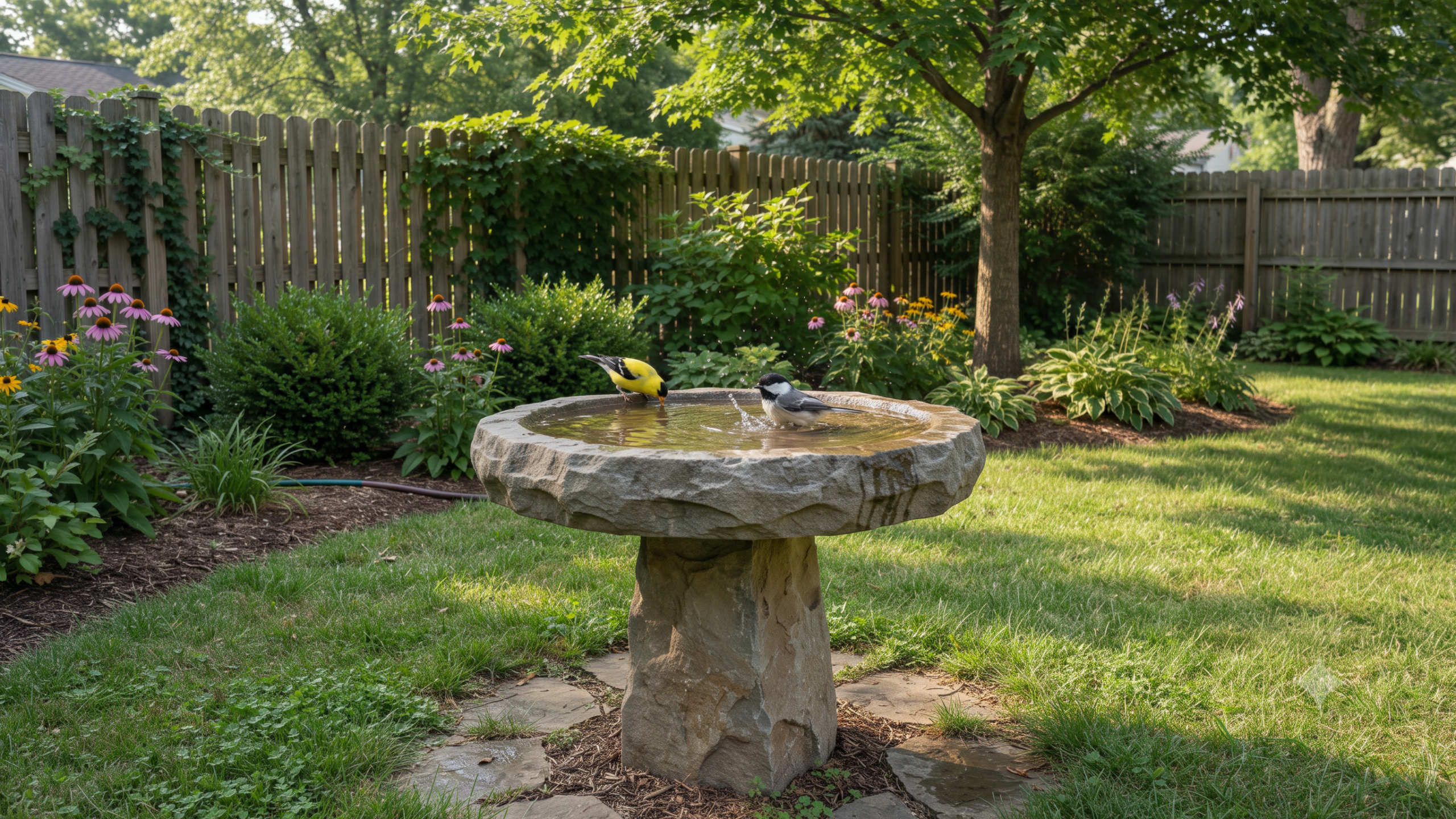
You could have a beautiful stone pedestal bath, a decorative ceramic basin, or even a small DIY water station. However, placing it in the wrong corner can make birds reluctant to visit. Too much direct sunlight, nearby hiding places for predators, deep water, and a lack of accessible shelter can all make a bird bath less inviting.
The best placement for a bird bath balances four things: partial shade, a clear view of the surrounding area, nearby escape cover, and convenient access for regular cleaning. Fortunately, you don’t need a large property or an elaborate garden design to get these things right.
When choosing your setup, start with a Shallow Textured Bird Bath Basin. A gently sloping basin with a textured interior gives birds a better foothold than a deep, smooth decorative bowl. Cornell Lab recommends keeping water around 1 inch deep at the edges and no more than 2 inches in the middle. A few stable stones can also create additional shallow standing areas.
Let’s look at nine practical places to put a bird bath, including options for small backyards, patios, shady gardens, and homes where neighborhood cats may be a concern.
Affiliate Disclosure: As an Amazon Associate, SpruceTouch earns from qualifying purchases. This post may contain affiliate links, which means we may earn a commission at no additional cost to you.
1. Place the Bird Bath Near Shrubs for Natural Escape Cover
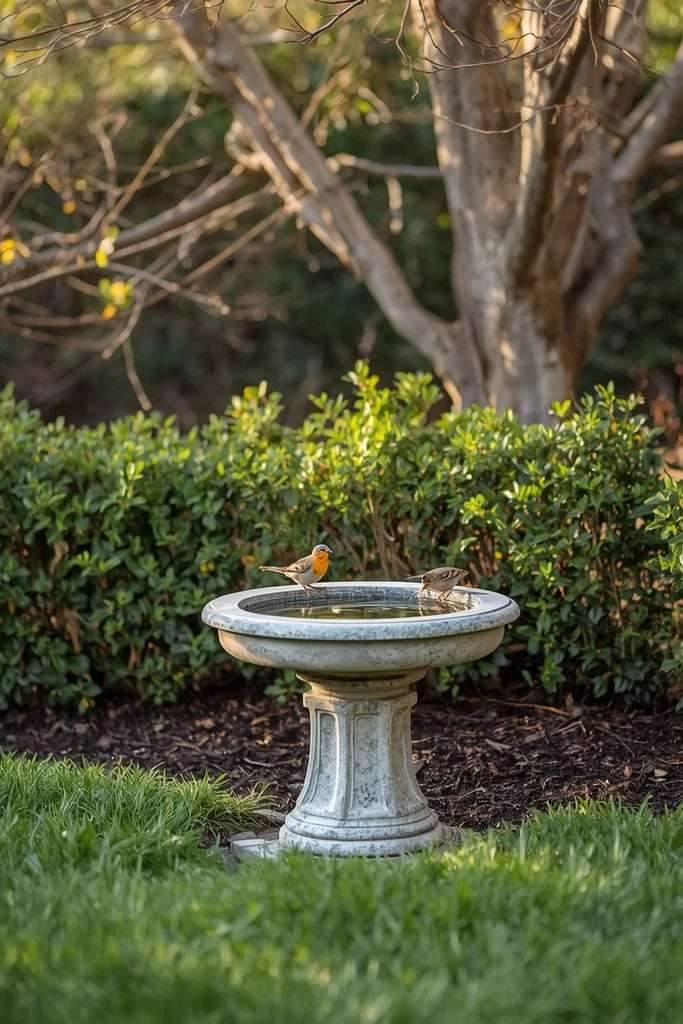
One of the best places to put a bird bath is near a few shrubs or small trees. Birds need somewhere to retreat when they sense danger, and nearby branches can provide convenient perching spots after bathing.
Think about a corner where the lawn meets a planted border. You might have a small hydrangea, a native shrub, or a few low-growing ornamental plants nearby. Positioning the bath beside this greenery can make the water station feel like a natural part of the garden.
However, there’s an important distinction between nearby shelter and dense hiding places.
If you place a bird bath directly inside thick bushes, neighborhood cats may be able to approach without being noticed. Birds need enough open space to see what’s happening around them before they enter the water.
Penn State Extension recommends placing bird baths near shrubs or low tree branches while taking care to protect ground-level baths from cats. For areas where cats are a concern, it suggests keeping the bath approximately 10–15 feet from the nearest hiding place.
A practical arrangement looks like this:
- Choose a location near accessible branches.
- Keep the immediate approach relatively open.
- Avoid thick groundcover directly beside the basin.
- Remove dense growth that creates concealed approaches.
- Leave enough space for birds to land and take off comfortably.
This arrangement works particularly well in suburban backyards where a lawn meets a flower bed or shrub border.
2. Choose a Partially Shaded Spot Under a Tree
A bird bath sitting in direct afternoon sunlight can become uncomfortable during hot weather. The water may warm up quickly, evaporation increases, and algae can become more noticeable.
That’s why a partially shaded location is often a sensible choice.
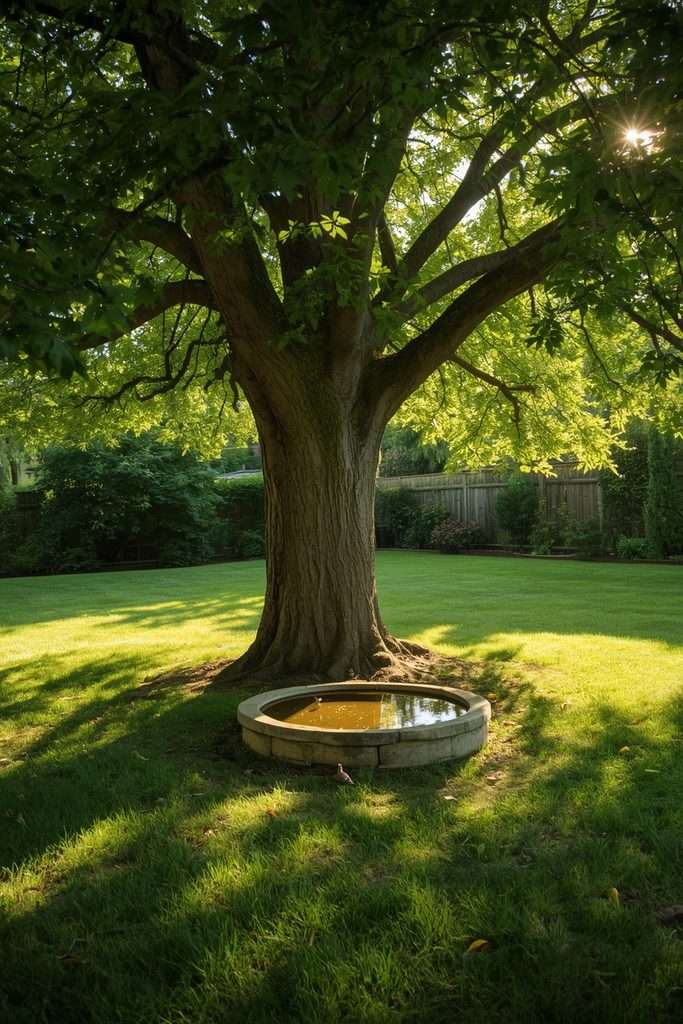
Look for a mature tree that provides filtered sunlight rather than complete darkness. Morning sunlight can reach the basin, while the canopy provides some protection during the hottest part of the day.
A maple, oak, or other mature backyard tree can work, depending on your garden layout.
Penn State Extension recommends shady locations because they help prevent bird baths from overheating and can help keep algae levels down.
There is another advantage to placing a bath near a tree. Birds can use nearby branches to perch, observe their surroundings, and preen after bathing.
One thing worth considering is falling debris. Avoid placing the basin directly below branches that constantly drop leaves, seeds, berries, or other material into the water.
Instead, position the bath near the outer edge of the tree canopy. It can receive filtered light without sitting directly beneath the messiest branches.
If your garden doesn’t have mature trees, a pergola or another open-sided structure may provide some useful shade. Just make sure the bath remains easy for birds to approach.
3. Position It in an Open Area Where Predators Are Easy to Spot
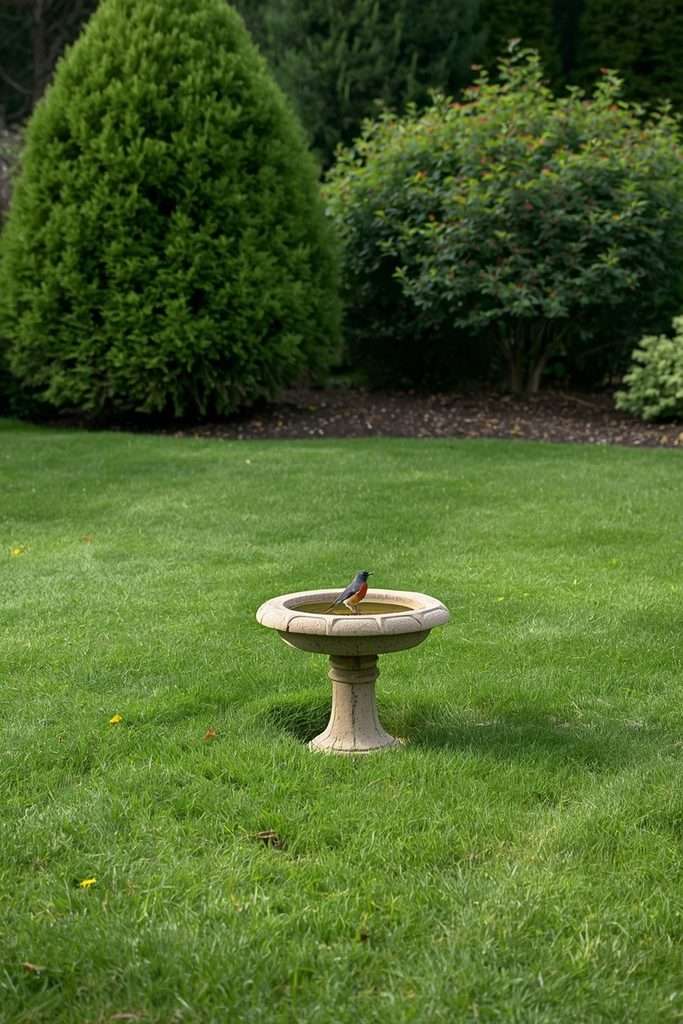
A beautifully landscaped garden can sometimes be less suitable for birds than a simple open patch of lawn.
Think about what happens when a bird approaches the water. It needs to land, look around, and leave quickly if something appears threatening.
Tall ornamental grasses, dense flower borders, outdoor storage boxes, and thick groundcover can create hiding places for predators.
This is particularly important if cats regularly visit your yard.
Cornell Lab explains that birds are vulnerable while bathing, especially when cats are nearby. Its guidance recommends leaving open ground between a bird bath and the nearest thick shrubbery so birds have a better chance of spotting an approaching cat.
For a yard with frequent cat activity, consider a position with approximately 10–15 feet of open space between the basin and potential hiding spots.
Good locations include:
- An open lawn corner with visible surroundings.
- A clear area between two garden beds.
- A level patch away from tall ornamental grasses.
- A location where birds can see approaching animals.
You don’t need to remove every plant from the area. Just avoid surrounding the bath with thick vegetation.
If your property has outdoor cats, keeping them away from the bathing area is also important. A raised pedestal bath may be a more suitable option than a ground-level bowl in a yard where cats can approach unnoticed.
The idea is simple: birds should have enough nearby habitat to feel comfortable but enough visibility to notice danger.
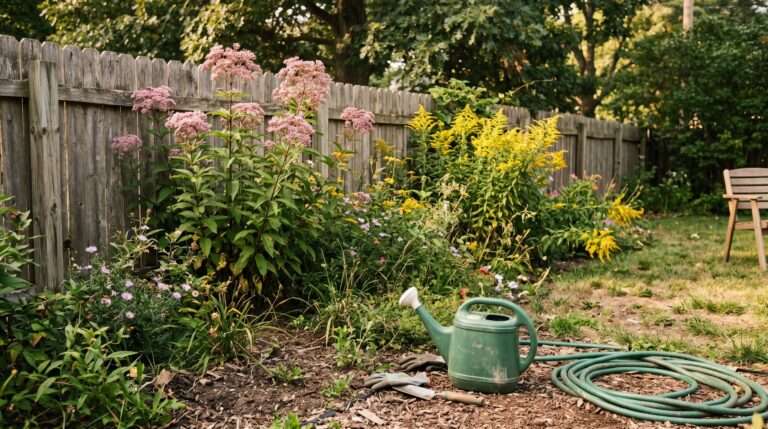
4. Set It Near a Native Flower Garden
A bird bath can become part of a much larger wildlife-friendly garden when you position it near flowering plants and other bird-friendly landscaping.
Native flowers, seed-producing plants, and berry-bearing shrubs provide food and habitat for different wildlife species. Adding a shallow water source gives visiting birds another useful resource.
Instead of placing the bath directly in the middle of a crowded flower bed, choose an open patch beside the planting area.
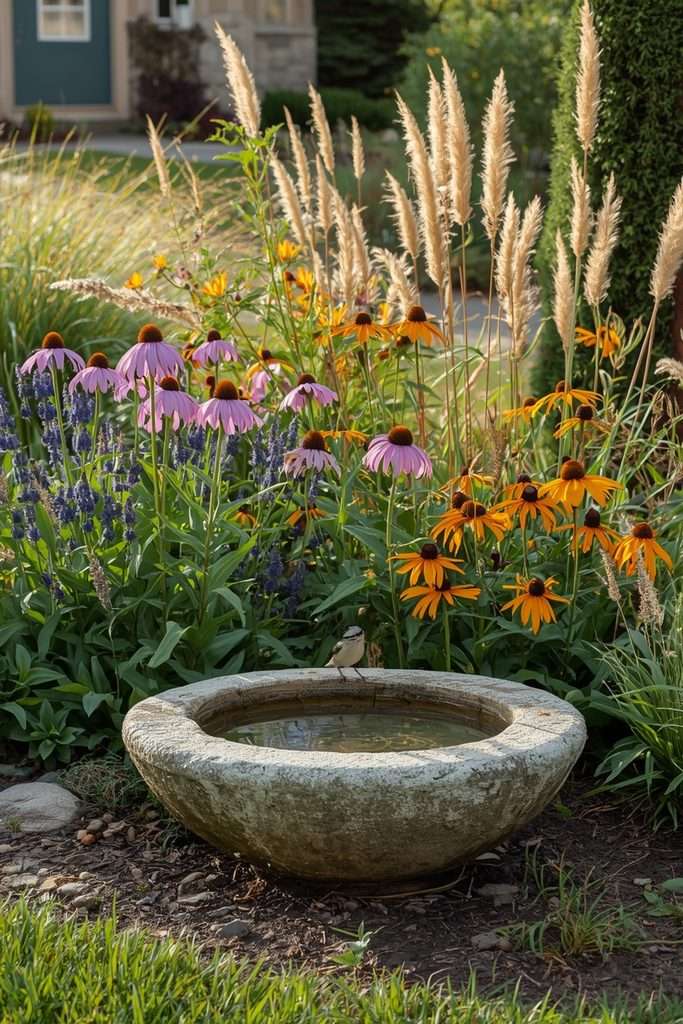
For example, a small stone bird bath beside purple coneflowers, black-eyed Susans, or native flowering shrubs can look attractive without blocking access to the water.
You can also create different planting heights. Lower flowers can frame the bath, while taller native shrubs sit farther away to provide shelter.
When selecting plants, consider what naturally grows well in your region rather than choosing everything based on appearance alone.
Our guide to 12 Keystone Plants for U.S. Wildlife and Butterfly Gardens is useful when planning a planting area that supports more local wildlife.
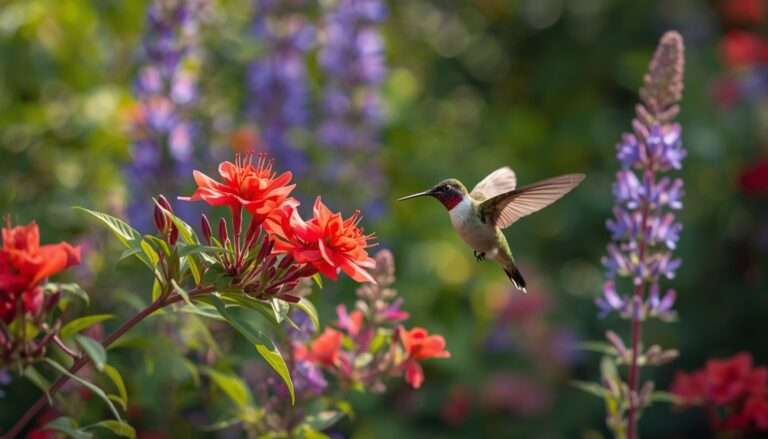
You can also explore 17 Best Hummingbird Flowers to Bring Birds to Your Yard for additional flowering-plant inspiration.
One practical detail: avoid plants that drop excessive petals, sticky material, or leaves directly into the basin. You’ll otherwise spend more time cleaning the water than enjoying the birds.
Avoid using freshly applied pesticides around the bathing area, and follow the product label whenever garden treatments are necessary.
Why this placement works: It combines a water source with a more complete habitat rather than treating the bird bath as an isolated garden decoration.
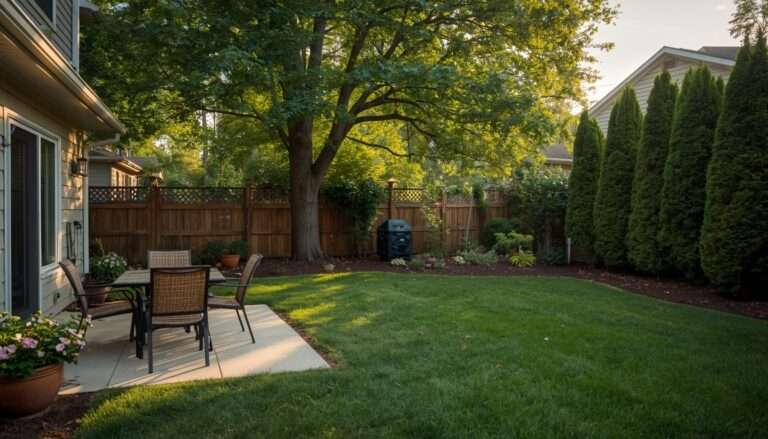
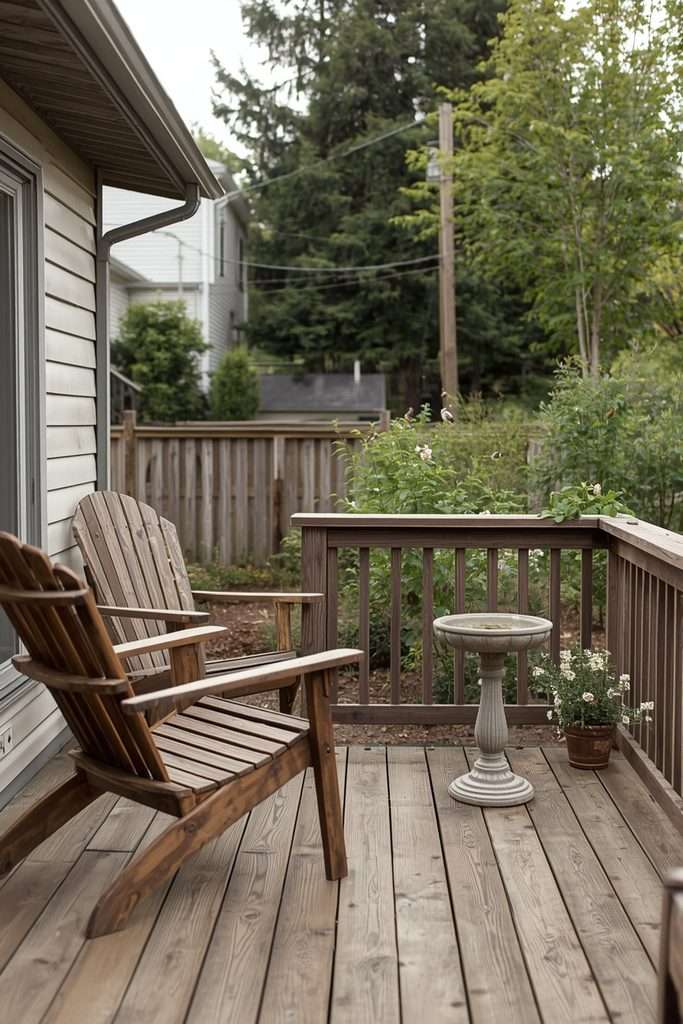
5. Place It Near a Patio or Deck for Easy Birdwatching
One of the most enjoyable places to put a bird bath is near a patio or deck where you can watch visiting birds without walking through the entire garden.
A location visible from your outdoor seating area makes it easier to observe different visitors throughout the day. You can enjoy the activity while having your morning coffee or relaxing outside in the evening.
For a larger patio, position a pedestal bath beside the seating area where birds have enough room to approach.
For a smaller deck, a Deck-Rail Bird Bath Mount can be a practical alternative because it doesn’t take up much floor space.
Before installing one, check that the bracket fits your railing and can support the weight of the filled basin. Follow its installation instructions and make sure the bowl cannot easily shift or fall.
There is one additional consideration when positioning a bird bath near a house: glass windows and sliding doors.
Reflective or transparent glass can create dangerous illusions for birds. According to the U.S. Geological Survey, exterior window patterns and other visible treatments can help birds recognize glass as a barrier.
If the bath is near a large window or glass patio door, consider bird-safe external window treatments before encouraging more bird activity in that area.
A good arrangement is to place the bath near the outside edge of the patio, with a clear flight path and accessible planting nearby.
6. Create a Small Water Feature Corner in the Garden
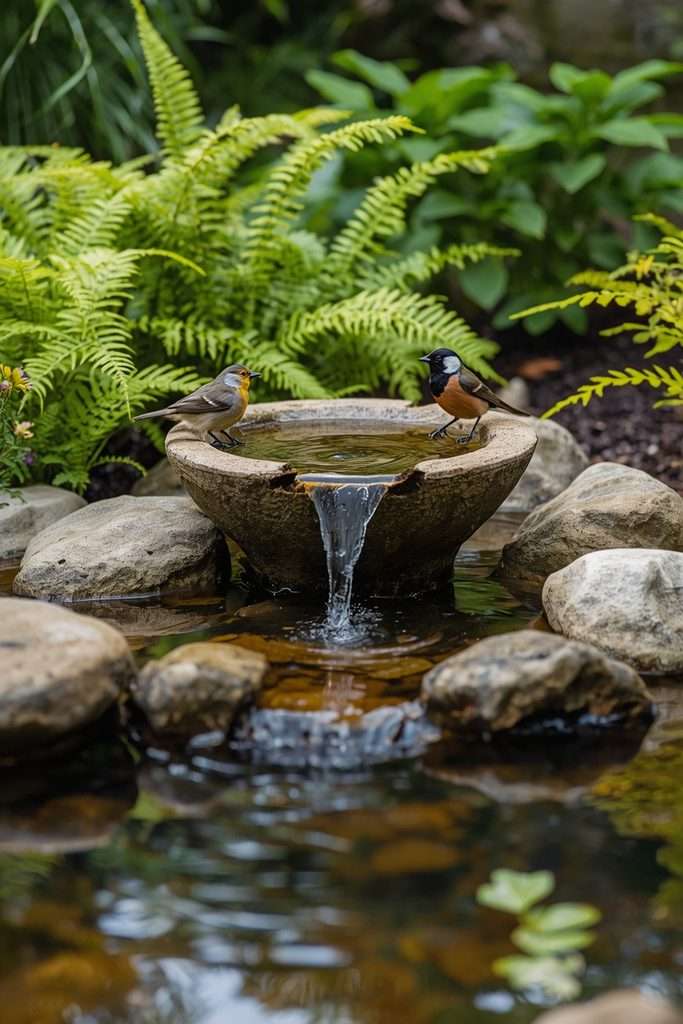
If you already have a garden water feature, consider making the bird bath part of a dedicated water corner.
Moving water can make a water source more noticeable to birds. The sound of gentle dripping or the sight of ripples can help attract attention compared with a completely still basin.
A small Bird Bath Dripper Kit is one option for creating a gentle stream of water without installing a large fountain.
You can attach a suitable dripper above the bath so that water slowly falls into the basin. Keep the flow gentle rather than creating excessive splashing.
This arrangement works particularly well beside a small garden pond, a stone water feature, or a modest planted corner.
For more inspiration, explore our ideas for 17 Dreamy Water Features to Transform Your Garden.
If you’re working with a compact backyard, our guide to 21 Small Garden With Pond Ideas also offers useful inspiration for arranging water features in limited spaces.
Moving water may help reduce mosquito breeding compared with stagnant water, but a fountain or dripper doesn’t eliminate the need for regular cleaning and water replacement.
Keep the basin accessible so you can inspect the pump, remove leaves, and refresh the water.
7. Try a Ground-Level Bird Bath in a Quiet Garden Spot
Not every bird bath needs a tall pedestal.
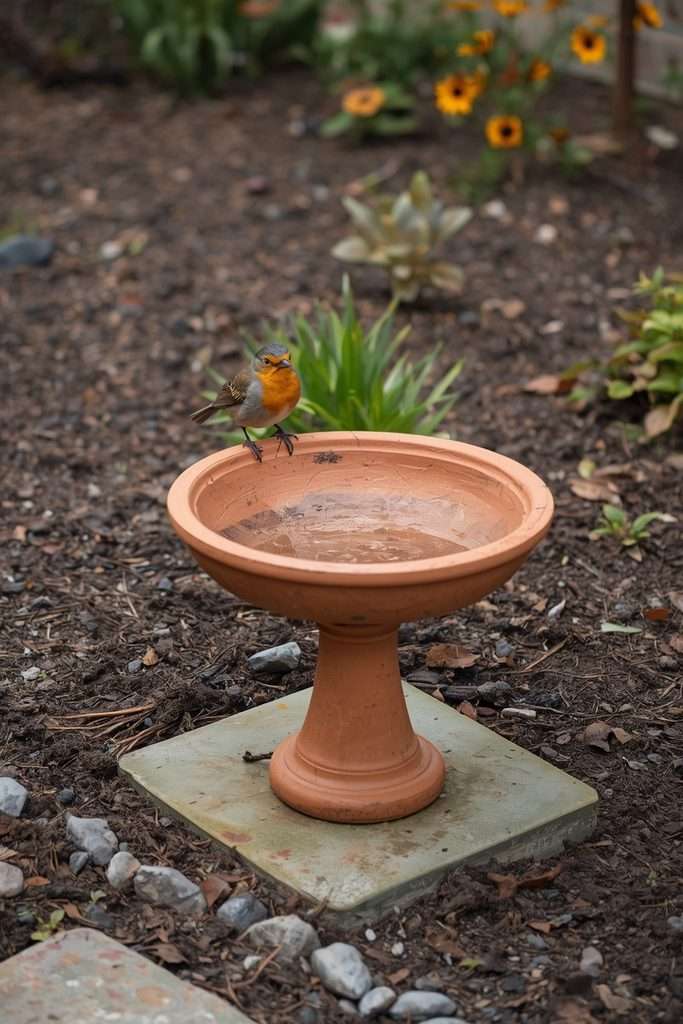
A shallow basin positioned close to ground level can attract birds that naturally look for water in puddles and shallow pools.
Cornell Lab notes that birds often use ground-level baths because they resemble natural water sources. Ground-level placement can be especially useful when you want to create a simple wildlife-friendly garden.
A wide ceramic saucer, shallow plant tray, or natural-stone basin can work for this arrangement.
Place it on a flat paving stone, compacted surface, or stable piece of ground. Avoid soft soil where the bowl might sink or tilt after being filled.
A few practical details make a difference:
- Choose a basin with gently sloping sides.
- Keep the water shallow.
- Add stable stones for additional footholds.
- Remove nearby areas where cats could hide.
- Check the basin regularly for soil and debris.
The National Wildlife Federation recommends shallow baths with textured interiors and suggests using gravel or stones if the surface is slippery or the container is a little too deep.
However, ground-level placement isn’t suitable for every backyard.
If neighborhood cats regularly roam through your garden, an elevated bird bath with an open surrounding area may be a safer choice.
8. Choose a Sheltered Location for Winter Bird Bathing
In colder parts of the United States, winter placement deserves a little extra planning.
A bird bath that works well during summer may become less useful when temperatures fall and the water freezes.
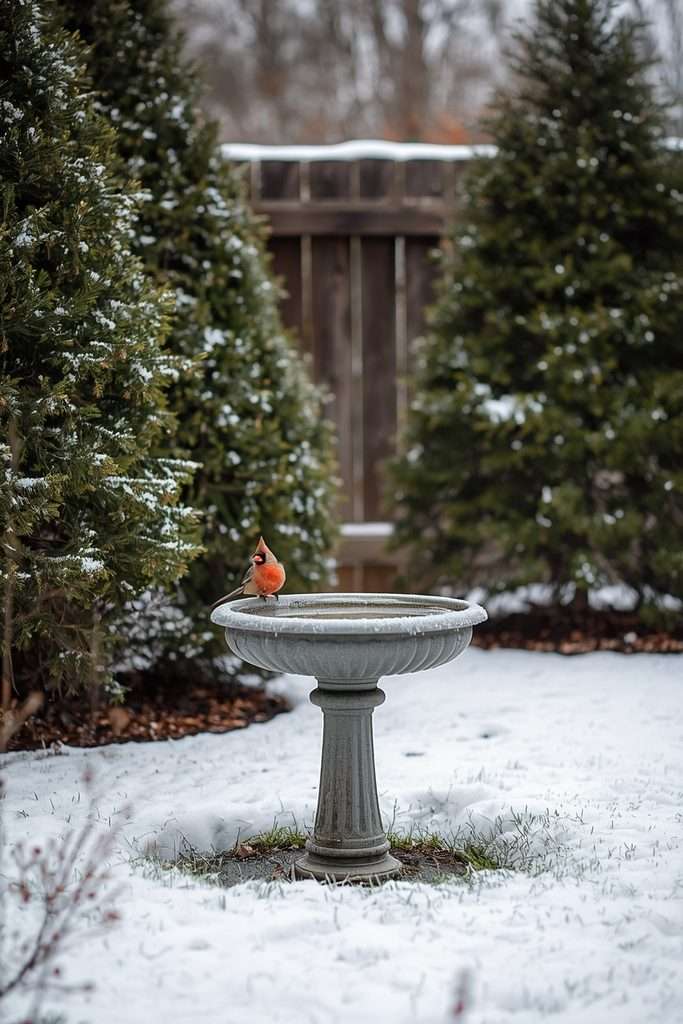
Start by choosing a location protected from strong winter winds. A position near evergreen shrubs or a sheltered garden wall may provide some protection while keeping the basin accessible.
Avoid putting it where snow sliding from a roof or ice falling from overhead branches could damage it.
If you want to keep the bath available during freezing weather, a Thermostatically Controlled Bird Bath Heater may help prevent the water from freezing.
Choose a heater specifically designed for outdoor bird baths. Follow the manufacturer’s installation instructions, use a properly protected outdoor electrical connection, and check the water level regularly.
The National Wildlife Federation recommends purpose-made bird bath heaters as one option for keeping water ice-free during winter.
Cornell Lab also advises using an appropriate immersion heater with a ground-fault interrupter-protected electrical connection.
Never add antifreeze or glycerin to bird bath water. These substances can harm birds.
Another option is to provide fresh water in a removable bowl and replace it when it freezes.
If you live in an area with regular freezing temperatures, check the manufacturer’s winter-care guidance for your basin material. Some decorative bird baths may crack when trapped water freezes and expands.
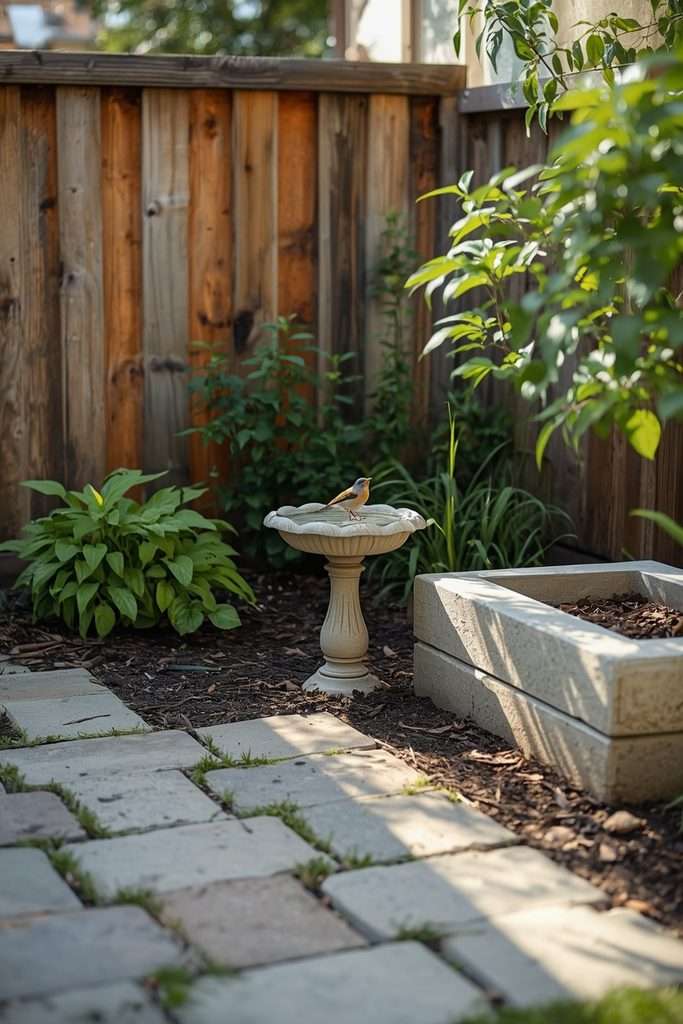
9. Use a Compact Corner in a Small Backyard or Patio Garden
A small backyard doesn’t need to be a limitation.
You can create a useful bird bath area in a compact corner between a patio, raised planter, or garden border.
The important thing is to avoid squeezing the basin into a space where birds cannot approach or leave comfortably.
Look for a relatively open corner with enough room for a shallow bowl and clear movement around it.
A sturdy low pedestal can work in a small lawn, while a securely mounted basin may be more practical for a narrow deck.
Here are a few arrangements worth considering:
- A shallow basin on a level paver beside a raised garden bed.
- A compact pedestal near a small patio planting area.
- A railing-mounted basin on a suitable deck.
- A low bird bath beside a container garden with an open approach.
- A small water station near a garden path, away from busy foot traffic.
One advantage of keeping the bath in a visible corner is that you can refill and clean it without walking through the entire backyard.
For additional inspiration on making limited outdoor space more useful, explore our guide to Backyard Ideas for Small Spaces: Make the Most of Every Square Inch.
Try to position the bath within convenient reach of a garden hose or watering can. This small decision can make ongoing maintenance much easier.
Avoid placing it where people regularly step, where children may knock it over, or where pets can disturb visiting birds.
A compact setup should feel like a natural part of the garden rather than an object squeezed into leftover space.
Where Should You Not Put a Bird Bath?
Finding the right location also means avoiding positions that create unnecessary problems.
A bird bath can look attractive almost anywhere, but some locations make it harder for birds to use safely and harder for you to maintain.
Directly beside thick bushes: Dense vegetation can give cats and other predators a concealed approach. Keep the immediate area visible and provide suitable shelter nearby.
In the hottest, most exposed part of the yard: Constant afternoon sunshine can warm the water and increase evaporation. Partial shade is usually more practical during hot summer weather.
Directly beneath messy trees: Leaves, fruit, seeds, and other debris can quickly dirty the basin. Choose a nearby position instead of putting it directly underneath a heavily shedding branch.
Beside busy walkways: Constant human activity, pets, and moving garden equipment may discourage birds from approaching.
Beside untreated reflective windows: Birds may mistake reflections for open space. Install suitable exterior window treatments where needed.
On uneven or unstable ground: A leaning basin can spill water, tip over, or create a hazard. Always check the surface before filling it.
How to Set Up a Bird Bath in the Right Position
Choosing the location is only part of the job. A few setup details can make the bath more comfortable for visiting birds.
1. Keep the water shallow
A deep decorative basin may look attractive to homeowners but can be uncomfortable for smaller birds.
Aim for approximately 1 inch of water at the edges and no more than 2 inches in the deepest central area.
The National Wildlife Federation recommends keeping bird baths no more than 3 inches deep and using a textured interior for secure footing.
A gently sloping basin is useful because birds can gradually enter the water rather than stepping into a deep pool.
2. Give birds a secure foothold
Smooth, slippery surfaces are not ideal for bathing.
A textured basin is preferable. You can also add a few clean, stable stones to create shallower standing areas.
Make sure the stones cannot roll around or create deep pockets where a bird might struggle to stand.
3. Keep the bath stable
Place pedestal baths on firm, level ground.
For a lighter bowl, choose a sturdy base that will not shift when filled with water.
If you’re using a raised stand, check its stability after filling the basin rather than assuming it will remain balanced.
4. Consider gentle moving water
A little movement can make a water station more noticeable.
A Solar Bird Bath Bubbler Pump can create gentle ripples without requiring a large permanent water feature.
Check that the pump is suitable for the basin, that the water depth is sufficient for its operation, and that splashing doesn’t empty the bath too quickly.
Solar models also depend on available sunlight, so check how much sun reaches your selected location.
5. Make refilling easy
A bird bath that is difficult to reach can quickly become a maintenance problem.
Position it somewhere you can conveniently refill with a garden hose or watering can. Consider how you will empty the basin, scrub the surface, and reach it during different seasons.
How Often Should You Clean a Bird Bath?
Regular maintenance is one of the most important parts of providing water for wildlife.
Birds leave feathers, droppings, and other material behind after using a bath. Warm, stagnant water can also become a breeding place for mosquitoes.
Cornell Lab recommends changing bird bath water every day or two when temperatures are above freezing. Its guidance also emphasizes cleaning the basin whenever algae begins to develop.
A Long-Handled Bird Bath Cleaning Brush can make this job easier, particularly when you have a deeper basin or a heavier pedestal that you don’t want to move frequently.
A sensible maintenance routine includes:
- Emptying and replacing the water every day or two.
- Removing visible leaves, feathers, and other debris.
- Scrubbing away algae and accumulated dirt.
- Rinsing the basin thoroughly before refilling.
- Checking the base for cracks, loose fittings, or instability.
Avoid leaving dirty water in the basin for extended periods. Don’t use harsh chemical cleaners or leave cleaning residue behind.
For ordinary maintenance, a stiff brush and clean water are useful starting points. Follow reliable wildlife-cleaning guidance if disinfection is needed, and rinse thoroughly before allowing birds to use the bath again.
A clean bath is more useful than an elaborate one that rarely receives attention.
Frequently Asked Questions
A partially shaded area near accessible shrubs or tree branches is a good starting point. Make sure birds can see approaching predators and have enough room to escape. The bath should also sit on stable, level ground.
Partial shade is generally a practical choice, particularly during hot summer weather. It helps limit overheating and can slow algae growth. A little morning sunlight with afternoon shade provides a useful balance.
There is no single distance that works for every garden. Birds benefit from nearby branches and shelter, but thick shrubs can also hide predators. In areas with frequent cat activity, keep approximately 10–15 feet of open space between a ground-level bath and the nearest hiding place.
Yes. A ground-level bird bath can attract birds that naturally use shallow puddles and pools. However, it may be less suitable in yards where cats can approach unnoticed. An elevated option may be preferable in those situations.
A shallow basin is best for many backyard songbirds. Aim for approximately 1 inch near the edges and no more than 2 inches in the deepest central area. Add stable stones if you need additional shallow standing spots.
It can. Mosquitoes may lay eggs in stagnant water. Change the water every day or two, remove debris, and clean the basin regularly to reduce the chance of mosquito breeding. Moving water can also help, but it doesn’t replace regular maintenance.
You can have both in the same general garden area, but avoid placing the bath directly underneath a feeder. Fallen seed, hulls, and droppings can contaminate the water. Give both areas enough space to remain clean and accessible.
Yes, provided the material and setup are suitable for winter conditions. You can offer fresh water in a removable bowl or use a properly designed bird bath heater with a GFCI-protected power connection. Never add antifreeze or glycerin to the water.
Final Thoughts
The best place for a bird bath isn’t necessarily the most decorative corner of your backyard. It’s the location where birds can approach safely, drink and bathe comfortably, and escape quickly if they sense danger.
For most homeowners, a partially shaded area near accessible branches, with open visibility and stable ground, is a sensible starting point.
You can build around that basic setup with native flowers, a gentle dripper, or a compact water feature. Just remember that fresh water, shallow depth, and regular cleaning matter more than expensive decorations.
Start with one suitable location, observe whether birds visit, and make small adjustments when necessary. A simple, well-maintained bird bath can become a useful part of a welcoming backyard habitat.
Transparency Note: This article draws on researched information from wildlife organizations, university extension resources, and established backyard bird habitat practices. Recommendations may need to be adapted to your yard, local wildlife, climate, and the presence of neighborhood predators.

Aagam – Founder of SpruceTouch
I’m Aagam, a home and garden enthusiast who enjoys growing, building, and improving outdoor spaces. I focus on practical backyard projects, garden ideas, and simple DIY solutions that are useful in real homes. Through SpruceTouch, I share what I’ve learned, what worked, what didn’t, and the small details that can make an outdoor project easier.