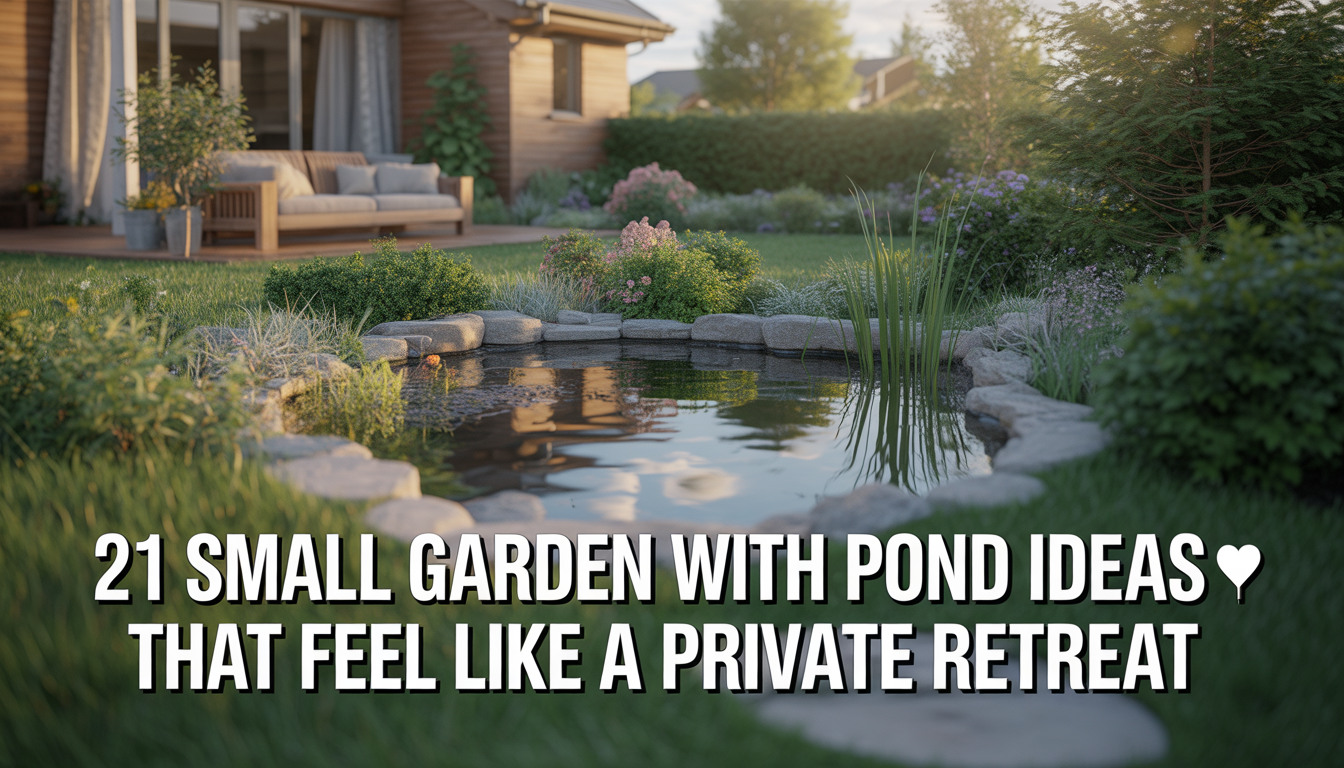
21 Small Garden With Pond Ideas That Turn Tiny Backyards Into Peaceful Retreats
I used to think my backyard felt “off,” but I couldn’t figure out why. The plants were healthy, the seating was nice, and yet… something was missing. It wasn’t until I visited a friend’s home and heard the soft sound of water in her tiny garden that it clicked instantly.
You’re about to discover 21 space-saving pond designs that prove you don’t need a sprawling estate to enjoy the tranquility of water. We will cover everything from no-dig container ponds to modern reflecting pools that make small yards look twice their size.
I’ve tested dozens of setups over the last 15 years—from massive koi projects to micro-pond experiments in awkward 2-foot corners. I’ve learned exactly what keeps the water clear and the maintenance low in tight spaces.
I’ll be honest: my first pond was a disaster. I didn’t hide the liner properly, and it looked like a black plastic bag stuck in a hole. It was a relatable struggle that taught me the importance of “edge finishing”—a secret I’ll share with you today.
Disclosure: This post contains affiliate links. If you make a purchase through these links, I may earn a small commission at no extra cost to you.
Quick Selection Table (Start Here)
| Pond Idea | Best For | Budget | Effort | Why It Works |
|---|---|---|---|---|
| Ceramic Bowl Pond | Patios & balconies | Low | Easy | No digging, instant impact |
| Corner Natural Pond | Small yards | Medium | Medium | Uses dead space beautifully |
| Raised Wooden Pond | Rentals/paved yards | Medium | Easy | Flexible & stylish |
| Modern Reflecting Pond | Minimalist homes | Medium-High | Medium | Makes space look bigger |
| Stepping Stone Pond | Narrow gardens | Medium | Medium | Adds movement & design |
1. The Tiny Patio Pond in a Large Ceramic Bowl
If you truly have limited space, start with a large glazed ceramic bowl. This is essentially “pond gardening for beginners.” I’ve used a turquoise glazed pot about 20 inches wide, placed right on my patio, and it instantly became a focal point.
Why it works: It’s a self-contained ecosystem that requires zero landscaping. The reflection of the sky in the glazed finish creates a sense of depth in a small area. What I noticed is that these work best near seating areas where you can actually see the micro-life, like water snails, moving around.
When I first experimented with a container pond, I realized the bowl itself makes a huge difference. I had much better results after switching to a wider, sturdier container like the [Large Outdoor Ceramic Planter Bowl] because it holds water more steadily, gives aquatic plants room to grow, and instantly looks like a permanent garden feature instead of a simple planter.
- Small Mistake: Don’t place this in full midday sun; in a small container, the water heats up too fast and can cook your plants (and any snails!).
- Practical Tip: Always seal the drainage hole with waterproof silicone and let it cure for 48 hours before adding water.
2. A Corner Pond That Softens Sharp Angles
Corners are often “dead zones.” Instead of letting a corner collect cobwebs, carve out a small kidney-shaped pond. It visually breaks the 90-degree lines of your fence.
Why it works: Our eyes naturally follow curves. By placing a pond here, you make the boundaries of a small yard feel more organic and less “boxed in.” This worked better than I expected when I used it to hide a drainage issue in my own yard.
- Practical Tip: Use a [heavy duty pond liner] and ensure you over-dig the hole by 2 inches to add a layer of sand underneath for protection against sharp rocks.
- To make this area truly pop, check out our soil health guide to ensure the surrounding plants thrive in the damp margin soil.
3. Modern Minimalist Rectangular Reflecting Pond
If your style leans modern, go for a clean-lined rectangular pond. The still water acts like a mirror, doubling the visual space by reflecting the sky and nearby architecture.
Why it works: Minimalist designs use “negative space” to create a feeling of luxury. One mistake I made early on was adding too many plants to a reflecting pond—it ruined the mirror effect. Keep the surface 70% clear.
- Practical Tip: Use dark-colored pond liners or black pond dye. Darker bottoms create much crisper reflections than light-colored ones.
4. Natural Rock-Lined Wildlife Pond
This is for the gardener who wants to feel like they’ve stumbled upon a woodland spring. Use varying sizes of river rocks and fieldstones to hide the edges completely.
Why it works: It creates a “beach” effect where birds and frogs can easily enter and exit. I learned this the hard way: if your pond edges are too vertical, small wildlife can fall in and struggle to get out.
One lesson I learned early on is that even gentle water movement makes a pond feel healthier and more inviting. I now almost always use a [Solar Fountain Pump Kit] since it creates soft ripples without needing electrical wiring, and it also helps keep the water from becoming stagnant during warmer months.
- Practical Tip: Create a “bog zone” on one side—a shallow area only 2-3 inches deep filled with pea gravel where you can plant watering plants correctly like Marsh Marigolds.
5. Raised Wooden Pond for Compact Spaces
Not everyone wants to (or can) dig. A raised wooden pond is incredibly practical—especially in rental homes or on paved patios.
Why it works: It brings the water up to eye level and provides a “seating ledge.” The best part? You can sit right on the edge with a coffee and watch the water without straining your back.
- Practical Tip: Use pressure-treated timber but line it with a fish-safe EPDM liner so chemicals from the wood don’t leach into the water.
But here’s the thing:
Most people focus on the pond itself—but the surroundings matter more. If you don’t blend the edges, it will always look like an “add-on” rather than a part of your home.
If you’re building a pond from scratch, don’t underestimate the importance of the liner. After replacing a cheaper liner that developed tiny leaks, I switched to a [Heavy-Duty Pond Liner], and it’s been one of those upgrades that quietly saves time, water, and maintenance year after year.
6. Pond with a Mini Waterfall Feature
The gentle sound of water masks traffic noise and creates a “sound cocoon.” You don’t need a massive waterfall; a simple flat stone spillway works beautifully.
Why it works: Moving water oxygenates the pond, which keeps it clear and healthy. What I noticed is that the sound of a small trickle is often more relaxing than a loud, splashing roar in a tiny space.
- Practical Tip: Use a Solar Powered Fountain Pump for an easy, wire-free setup that runs whenever the sun is out.
7. Pond Surrounded by Cozy Patio Lighting
Lighting is the “secret sauce” for small gardens. When you light a pond from the outside, the water catches the glow; when you light it from within, the whole yard feels magical.
Why it works: It extends your garden’s usability into the night. One mistake I made was using bright white lights—they look clinical. Always go for “warm white” (2700K) to create a cozy atmosphere.
One upgrade that completely changed how often I enjoyed my pond was adding subtle lighting beneath the water. A few [Submersible LED Pond Lights] tucked between rocks create beautiful evening reflections without overpowering the natural look, making the garden feel just as inviting after sunset.
- Practical Tip: Place Submersible LED Pond Lights behind a rock or under a plant ledge to hide the bulb and create a “glow” effect.
8. Pond with Floating Stepping Stones
In narrow gardens, a pond that spans the width of the yard can be crossed with large, flat stepping stones.
Why it works: It forces the viewer to slow down and interact with the water. It makes a small garden feel like a journey. This worked better than I expected for making a narrow side-yard feel like a deliberate “destination.”
- Practical Tip: Ensure the stones are set on concrete piers beneath the water level so they are 100% stable. Nobody wants a “wobbly” pond crossing!
9. Cottage-Style Pond with Flower Borders
This is the “English Country” look. Surround a simple round pond with overflowing, “messy” flower beds.
Why it works: The soft textures of flowers like Lavender and Foxgloves contrast beautifully with the flat surface of the water. I learned this the hard way: avoid planting messy trees like Willows too close, or you’ll spend your life skimming leaves.
- If you’re worried about making mistakes with your surrounding plants, check out our list of beginner gardening mistakes to stay on track.
10. Zen-Inspired Small Pond with Gravel
Focus on “Ma”—the Japanese concept of negative space. Use light-colored gravel, a few choice rocks, and a single statement plant.
Why it works: It reduces visual clutter, which makes a small space feel much larger and calmer. What I noticed is that raking the gravel around the pond becomes a form of meditation in itself.
- Practical Tip: Use a “weed barrier” under your gravel, but make sure it slopes away from the pond so rain doesn’t wash dirt into your clean water.
GROWING SECRET
To keep a small pond healthy, aim for 50-60% surface coverage with floating plants (like Water Lettuce). This shades the water and starves algae of the sunlight it needs to turn your pond into “pea soup.”
11. Pond Beneath a Small Tree Canopy
Placing a pond under a tree like a Japanese Maple or a Dwarf Cherry provides natural shade and stunning dappled light.
Why it works: The tree provides a vertical element that “anchors” the pond into the landscape. The best part? Watching the autumn leaves change color and reflect in the water is a seasonal highlight.
- Practical Tip: Use a fine-mesh net over the pond during the 2 weeks the tree drops its leaves to prevent them from rotting at the bottom.
12. Pond + Fire Pit Combo for Cozy Evenings
Fire and water are the two most powerful elements in design. Placing a small fire pit near your pond creates a spectacular reflection of flickering flames.
Why it works: It hits all the sensory buttons—warmth, sound, and visual beauty. I learned this the hard way: keep the fire pit at least 3-4 feet away from the pond to prevent ash from falling into the water and changing the pH.
- Practical Tip: Use a smokeless fire pit to ensure your “peaceful retreat” doesn’t become a “smoke-filled corner.”
13. Tiny Front Yard Pond Feature
Don’t hide your peace in the back! A small front yard pond can transform your home’s curb appeal and give you a reason to enjoy the “sunny side.”
Why it works: It’s an unexpected greeting for guests and creates a welcoming atmosphere. What I noticed is that front yard ponds often become a neighborhood talking point.
- Practical Tip: Keep this pond shallow (under 12 inches) for safety in a public-facing area and focus on high-quality stonework for a polished look.
14. Pond with Built-In Bench Nook
Instead of just putting a chair near the pond, build the seating into the pond’s structure using the same stone or wood.
Why it works: It creates an immersive experience. You aren’t just looking at the pond; you are part of it. This worked better than I expected for maximizing space in a very narrow 10-foot wide yard.
- Practical Tip: Angle the bench slightly so you aren’t staring at the fence, but rather looking down into the longest “axis” of the water for the best view.
15. Micro Pond in a Narrow Side Yard
Side yards are usually just “utility corridors.” A long, narrow “canal-style” pond can turn this wasted space into a hidden gem.
Why it works: It utilizes space that is too thin for traditional gardening or seating. One mistake I made was not adding enough lighting here—side yards can get dark and creepy without it.
- To keep this area looking lush, read our composting at home guide to create rich mulch for the narrow planting strips alongside the water.
Here’s where most people go wrong:
They buy the smallest pump available. In a small pond, the water gets dirty faster than in a large one. Always buy a pump rated for twice your pond’s volume.
As my pond matured, I found that keeping the water balanced naturally was much easier than constantly cleaning it. I now add [Beneficial Pond Bacteria Treatment] as part of my regular maintenance routine because it helps break down organic debris and keeps the water noticeably clearer with less effort.
16. Pond with Layered Plant Shelves for Depth
Flat-bottomed ponds look artificial. When digging, create “steps” or shelves at 6-inch and 12-inch depths.
Why it works: Different aquatic plants need different depths. Lilies like it deep; Irises like it shallow. What I noticed is that these shelves also make the pond look much deeper than it actually is.
- Practical Tip: Cover the shelves with large pebbles to hide the black liner and give it a professional, finished look.
17. Small Pond with Decorative Bridge Accent
A bridge creates a “focal point” that draws the eye across the water. In a tiny pond, even a 2-foot decorative bridge adds a whimsical, storybook feel.
Why it works: It adds a vertical architectural element to a flat horizontal surface. The best part? It’s a great place to hide your pump or filter underneath!
- Practical Tip: You don’t have to build a bridge; you can use a single large, flat “plank stone” to bridge a narrow section for a more modern, rustic look.
18. Reflective Pond Against a Textured Fence Wall
If your pond is backed by a beautiful wall (stone, cedar, or even dark-painted brick), the water will reflect that texture.
Why it works: It blends the vertical and horizontal planes of your garden. One mistake I made was using a white fence—the glare was too much. A dark charcoal or natural wood fence reflects much better.
- Practical Tip: Mount a few “wall-spouts” that trickled water into the pond to combine the visual reflection with the sound of a fountain.
19. Small Pond with Gravel Surround for Easy Maintenance
Swap the grass for gravel. A 2-foot “moat” of gravel around your pond makes maintenance a breeze.
Why it works: No more grass clippings in the water! It also provides a clean, dry place to stand while you’re trimming plants. What I noticed is that birds love the gravel for “dust baths” near the water.
The finishing touches are what make a small pond look natural rather than newly installed. I like using [Decorative River Rocks & Pond Stones] around the edges because they hide the liner, soften the transition into the garden, and create sheltered spots where birds and beneficial insects often stop to drink.
- Practical Tip: Use Decorative River Stones of varying sizes from pea gravel to cobbles to make it look like a natural dry creek bed.
20. Small Pond Integrated with a Deck Edge
This is the ultimate seamless look. Build your deck so it “overhangs” the pond by an inch or two.
Why it works: It hides the liner perfectly and creates a sleek, high-end architectural finish. This worked better than I expected for making the pond feel like an extension of the living room.
- Practical Tip: Ensure the deck wood is sealed with a non-toxic finish so rain runoff doesn’t harm the pond’s ecosystem.
21. Kid-Friendly Shallow Pond with Safety Stones
Safety first! A “beach entry” pond that is only 2-4 inches deep at the edges is safer for families with small children.
Why it works: It allows kids to explore the water safely under supervision. The best part? It doubles as a massive birdbath for local wildlife.
- Practical Tip: Fill the deepest part of the pond with large boulders so there is no “open” deep water, but plenty of “cracks” for water to sit in.
Step-by-Step Setup: The “Instant” Container Pond
If you’re overwhelmed, start here. This takes 30 minutes.
- Select Your Vessel: Use a ceramic pot, galvanized tub, or whiskey barrel (lined).
- Seal It: Ensure it’s 100% watertight.
- The “Oxygen” Base: Drop in a [Solar Powered Fountain Pump] to keep the water moving.
- Add Your “Filters”: Place two potted oxygenating plants (like Hornwort) at the bottom.
- Add The “Beauty”: Place a miniature water lily on the bottom and a few floating plants like Frogbit on top.
- The Finish: Place 3-4 “floating” decorative stones or a ceramic frog for personality.
Things That Didn’t Work for Me
- The “Cheap Liner” Mistake: I once used a thin plastic tarp to save $20. It leaked within a month, and I had to dig the whole thing up. Buy the [Heavy Duty Pond Liner] once, and never do it again.
- Over-feeding Fish: In a small pond, if you have fish, do not overfeed them. The excess food rots and turns the water into a toxic green soup overnight.
Small Things That Make a Big Difference
- Barley Straw: A tiny pouch of this prevents algae naturally.
- Surface Skimmer: Use a simple kitchen sieve to grab leaves once a week.
- Beneficial Bacteria: Use [Beneficial Bacteria for Ponds] monthly to keep the water “crystal” clear.
- The “No-Tap” Rule: If using tap water, let it sit for 24 hours to dechlorinate before adding plants.
Gardening is a journey of trial and error. Your first pond doesn’t need to be a masterpiece; it just needs to be a start. Pick the one idea that made you smile, grab a shovel (or a pot), and start small. You can always adjust as you go.
FAQ Section
As small as a 12-inch bowl! As long as you have one oxygenating plant and moving water, it counts.
Only if the water is stagnant. Moving water (via a pump) prevents mosquitoes from laying eggs.
Dwarf Water Lilies, Water Lettuce, and Miniature Blue Iris are perfect for compact spaces.
Keep the pond in partial shade and use “oxygenating” plants to out-compete the algae for nutrients.
In containers, stick to 2-3 small goldfish or minnows. Large Koi need much more space and depth.

Aagam – Founder of SpruceTouch
Hi, I’m Aagam — the creator behind SpruceTouch. I’m a home and garden enthusiast who shares practical ideas for backyard design, garden projects, patio decor, and small outdoor spaces. Through SpruceTouch, I focus on simple and budget-friendly ways to improve outdoor living spaces.