The “Invisible Garden”: 15 Genius Ways to Hide Ugly Backyard Gear (Without Expensive Renovation)
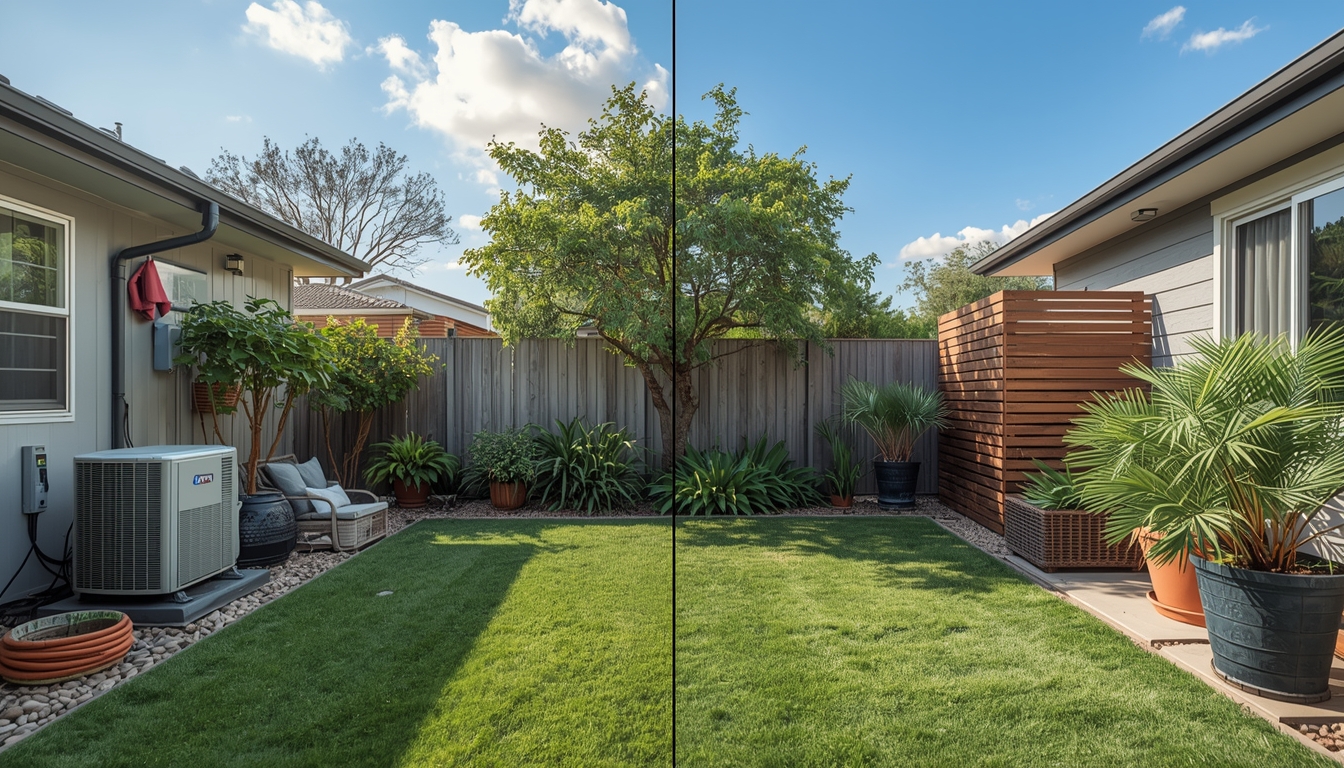
Every backyard has its dirty secrets. Ours happens to be a giant plastic AC unit, two neon-blue municipal recycling bins, and a web of black irrigation hose that looks like an angry octopus.
Over 18 years of working on this plot, I’ve learned that hiding these eyesores doesn’t require a $5,000 contractor visit. A couple of weekends, basic lumber, and the right plants will do the job for a fraction of the cost.
Here are 15 practical, field-tested ways to make the ugly stuff disappear.
Essential Planning Checklist (Before You Start)
| Recommended Product | Why You Need It | Estimated Price | Action |
|---|---|---|---|
| [Outdoor Privacy Screen Panels] | Helps plan and hide AC units, trash bins, and utility equipment quickly | $30 – $80 | [Check Price on Amazon ↗] |
| [Tall Outdoor Planter Boxes] | Creates instant visual barriers while adding greenery | $25 – $60 | [Check Price on Amazon ↗] |
| Disclosure |
|---|
| Disclaimer: As an Amazon Associate, we earn a small commission from qualifying purchases at no extra cost to you. |
Quick Selection Table
| Solution | Best For | Budget Level | Difficulty | Visual Impact |
|---|---|---|---|---|
| Wooden Slat Screens | AC Units & Trash | Medium | Easy | ⭐⭐⭐⭐⭐ |
| Vertical Garden Walls | Pipes & Meters | Low | Medium | ⭐⭐⭐⭐ |
| Storage Benches | Tools & Toys | Medium | Easy | ⭐⭐⭐⭐⭐ |
| Decorative Gravel Zones | Drainage Areas | Low | Easy | ⭐⭐⭐ |
| Trellis + Climbers | Fences & Walls | Low | Medium | ⭐⭐⭐⭐⭐ |
The Ideas Section
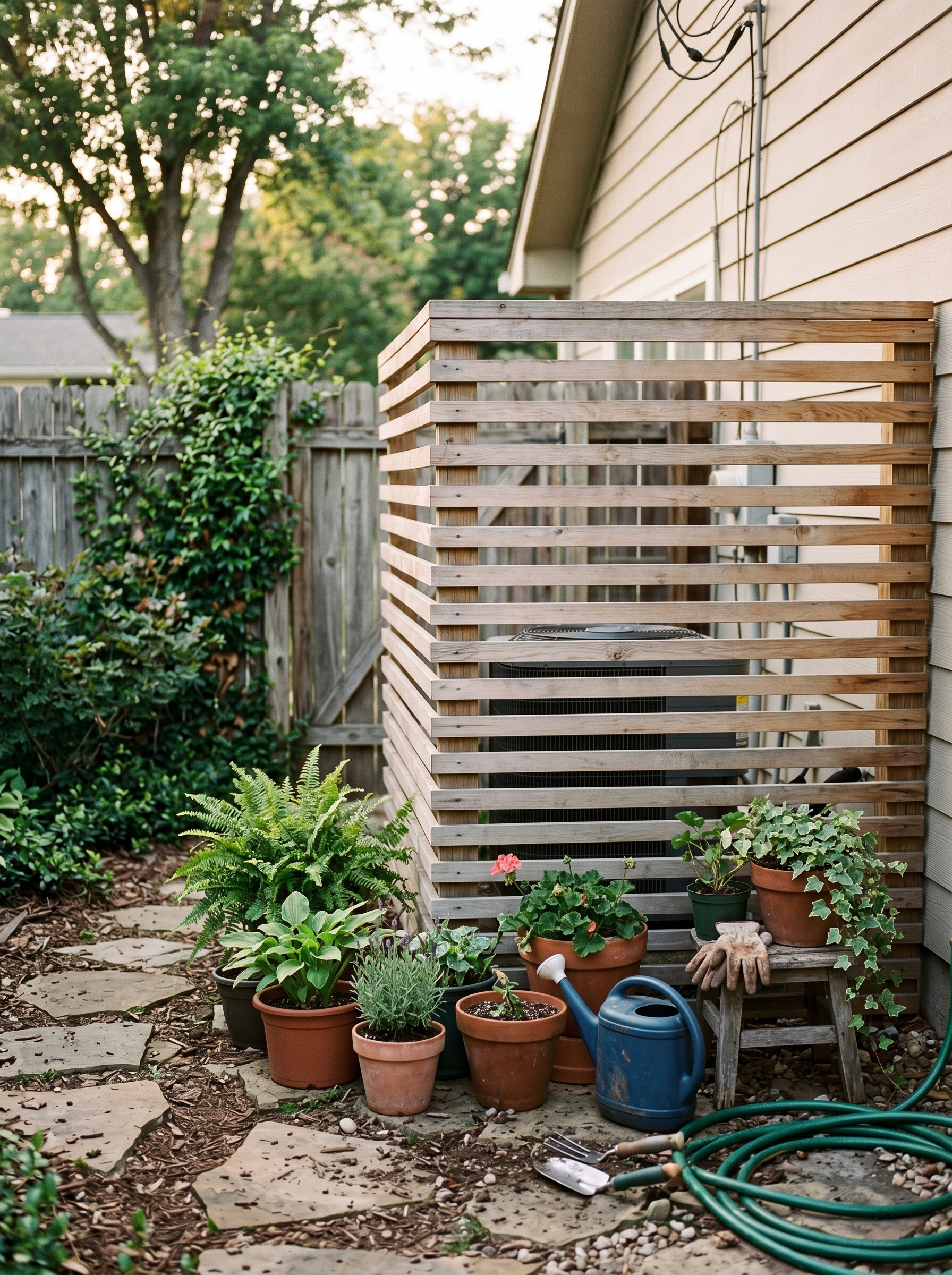
1. The Slatted Cedar AC Screen
Air conditioners need airflow. Wrap them in a solid box, and you’ll burn out the compressor within a season—a mistake that cost me an $800 repair bill back in 2012.
Build a three-sided screen using 1×2 cedar slats spaced 1.5 inches apart to allow proper ventilation. Attach the front panel with galvanized hinges so you can swing it open when the HVAC tech arrives. A 4×4-foot frame costs under $90 in materials and takes three hours to assemble. Neutral stains like slate gray or clear teak help the wood blend directly into your siding.
2. Vertical Grid Wall Camouflage
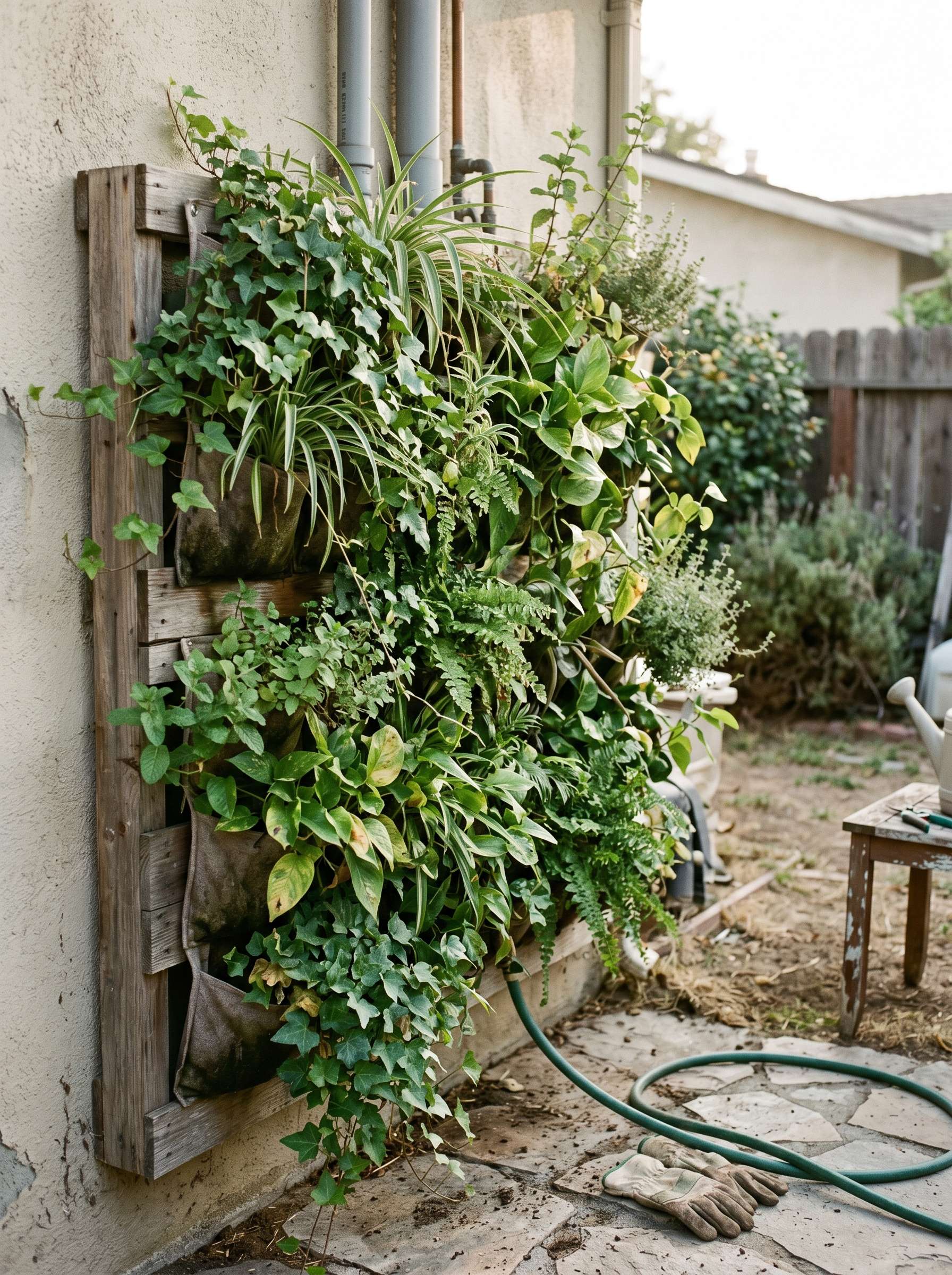
If you have an ugly water meter or electrical junction box stuck to an exterior wall, vertical grids offer instant coverage. Secure a 3×5-foot powder-coated wire mesh panel 4 inches off the wall using standoff brackets.
Hang small metal planters loaded with trailing Pothos or Tradescantia. The foliage cascades over the box while leaving the sides clear so meter readers can still do their job without clipping your foliage.
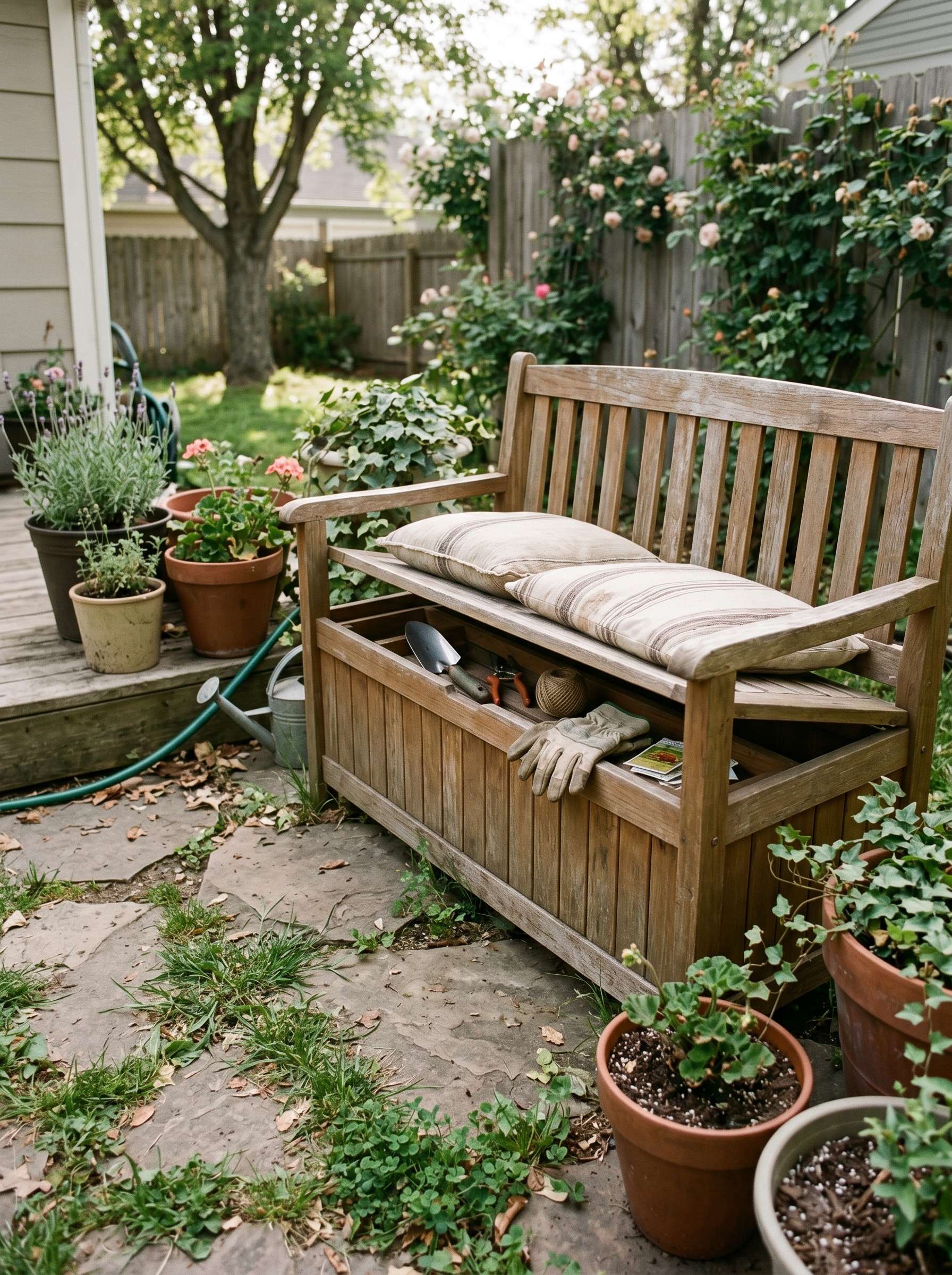
3. Dual-Purpose Decking Storage Bench
A storage bench is one of the smartest investments for a cluttered patio. Instead of buying cheap plastic tubs that crack under UV light within two years, build a simple 48-inch cedar box with a hinged top.
Line the interior with 6-mil plastic sheeting to keep moisture out, and add a quick exterior coat of marine-grade spar urethane. It hides your hand tools, extra soil bags, and sprinkler heads while adding extra seating for summer cookouts.
4. Trellis Setup with Clematis Vines
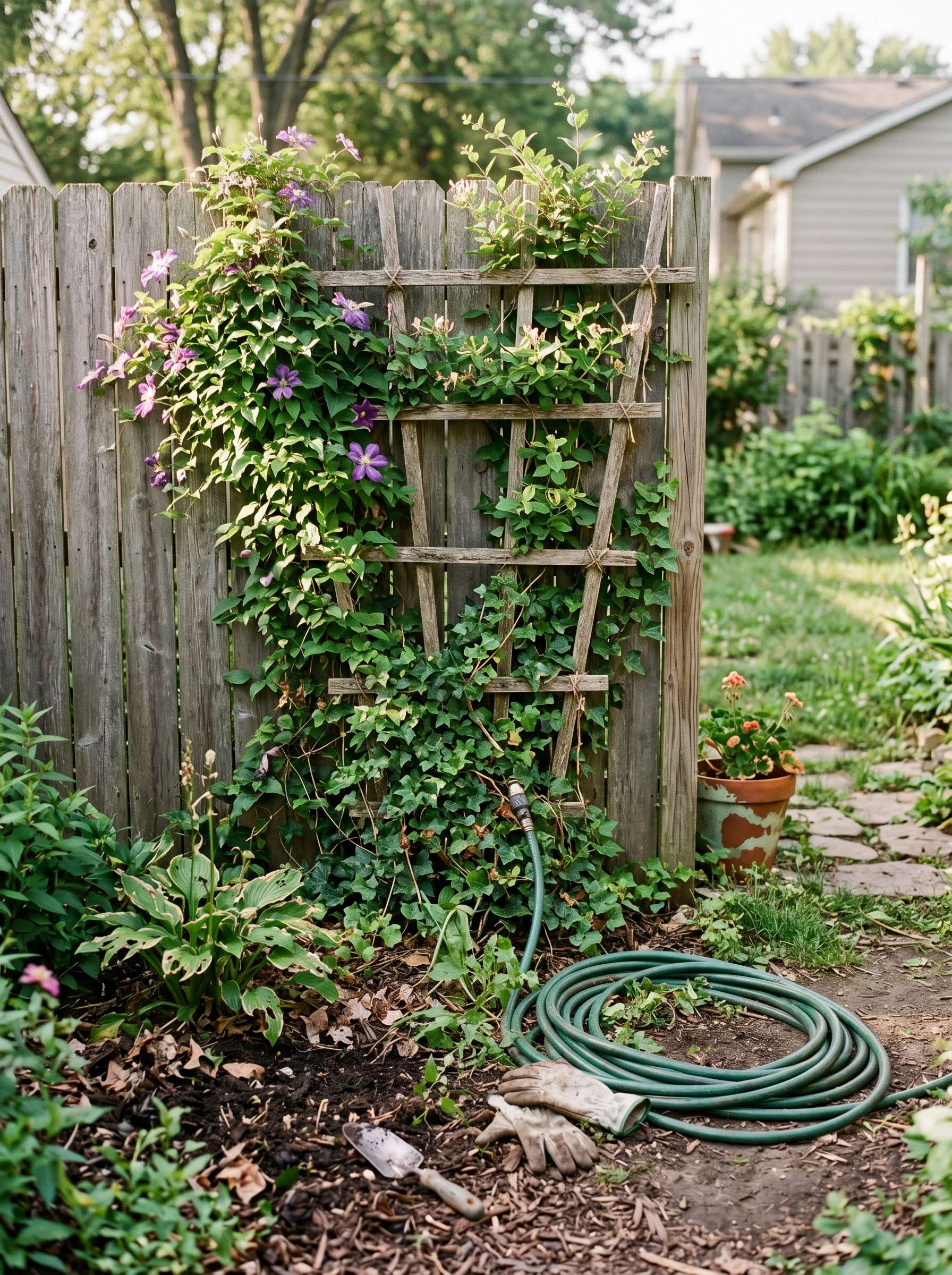
This is the most natural-looking solution—and honestly, the most satisfying. Watching plants slowly cover an ugly cinderblock wall feels like pure magic.
Attach a treated wooden trellis directly to your fence. Plant Clematis jackmanii at the base. Within two growing seasons, its dense foliage and deep purple blooms will blanket exposed wires and pipes. Space the trellis 3 inches out from the structure so air circulates behind the leaves, preventing fungal mildew.
5. Decorative Gravel Distraction Zones
Sometimes physical barriers aren’t an option due to access codes. When you can’t build up, change the ground texture to guide the eye away.
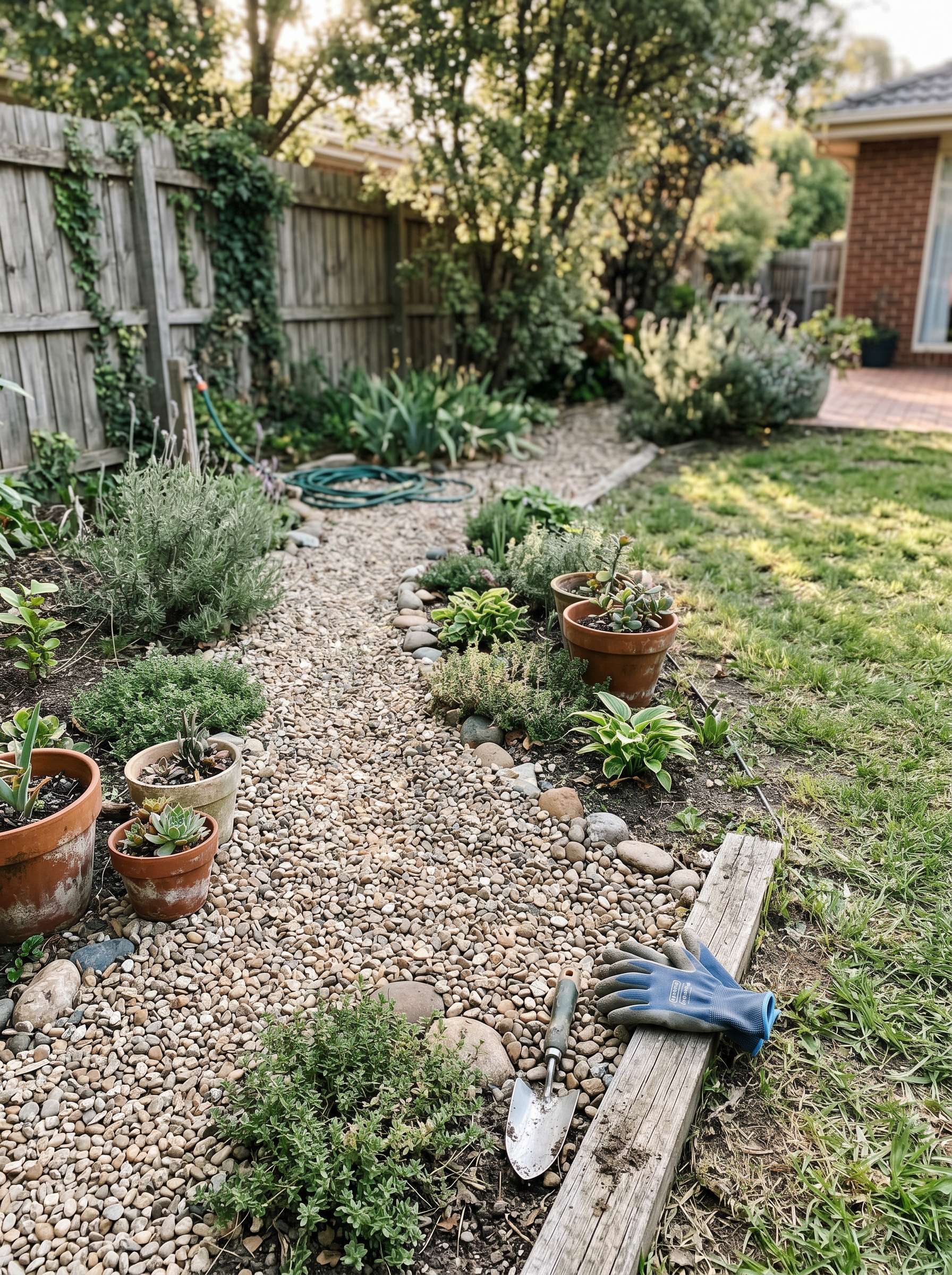
Around exposed PVC drainage pipes, clear away dead grass, lay down commercial-grade woven landscape fabric, and dump 3 inches of washed river rock or pea gravel. Border the patch with three large fieldstones and two terra-cotta pots filled with red geraniums. The eye immediately focuses on the pottery rather than the utility drain.
PRO TIP
Most people try to hide everything—but the real trick is controlling where the eye goes.
Use one strong focal point (like a seating area or plant wall), and your brain naturally ignores the rest.
Design isn’t about perfection—it’s about attention control.
6. Slim Outdoor Utility Cabinet
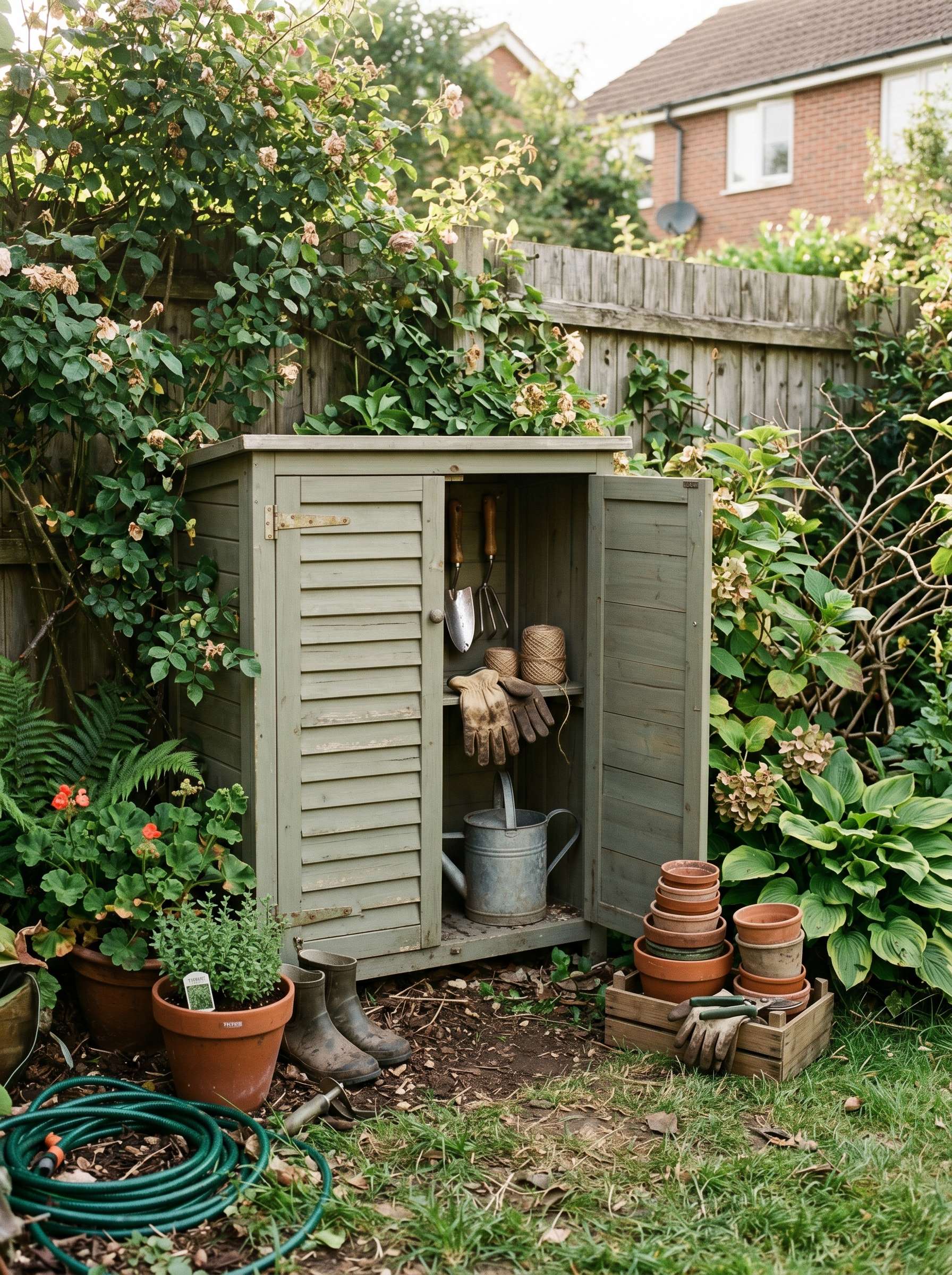
A scattered pile of trowels, potting soil, and plant food ruins an otherwise pristine patio layout. A shallow 18-inch-deep vertical wooden cabinet tucked against your garage wall fixes this instantly.
Mount small pegboard panels inside the doors to hang your bypass loppers and hand trowels. Paint the cabinet the exact same shade as your house trim so it optically flattens against the wall.
7. Waist-High Planters as Movable Walls
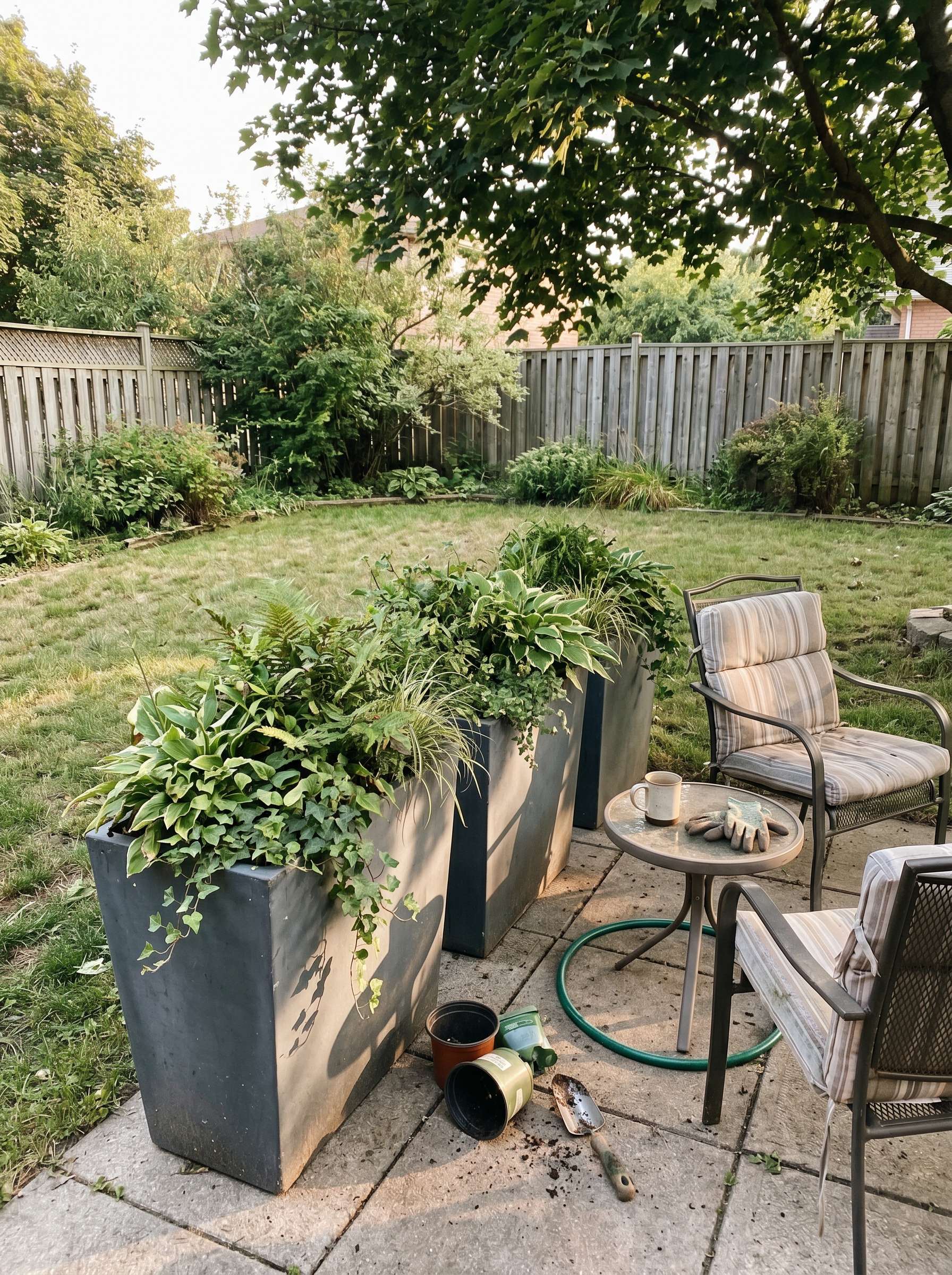
Tall planters act like flexible, non-permanent walls. I placed three 36-inch-tall rectangular trough planters in a row to block off a neighbor’s cluttered alleyway.
Fill the bottom third of deep planters with empty gallon milk jugs to cut down on heavy soil weight and cost. Top with rich potting mix and plant dense Bambusa multiplex (a non-invasive clumping bamboo) or ornamental feather reed grass (Calamagrostis). You get an instant 6-foot green wall that you can roll or move if you’re renting.
8. Woven Bamboo Screen Covers
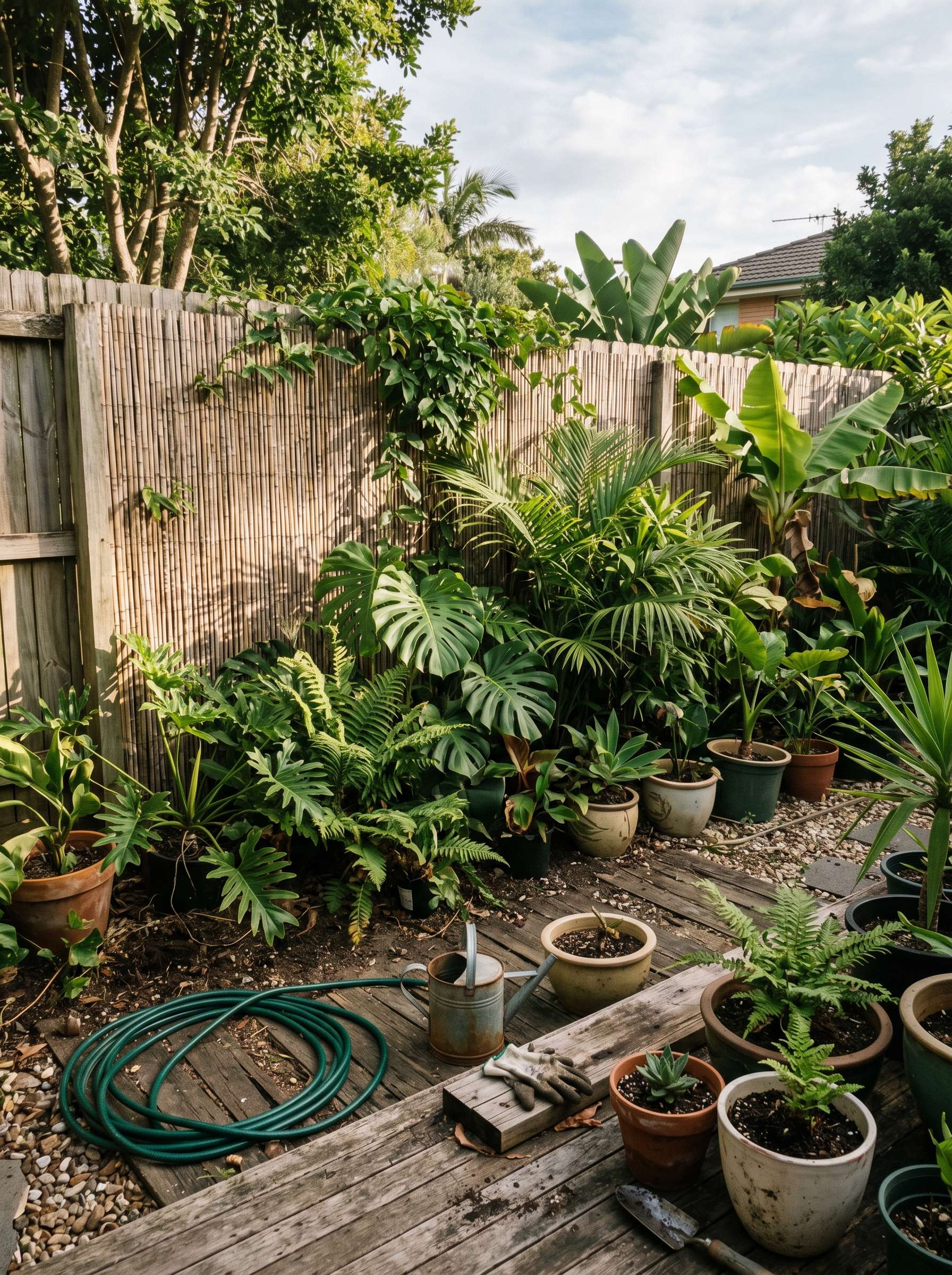
For a fast, low-cost fence cover-up, natural woven bamboo rolls work wonders. Unroll the bamboo along a rusted chain-link or discolored wood fence and secure it using heavy-duty 50-lb ultraviolet-resistant zip ties spaced every 12 inches.
It takes less than an hour, costs under $40 for an 8-foot section, and gives your yard a warm, organic backdrop.
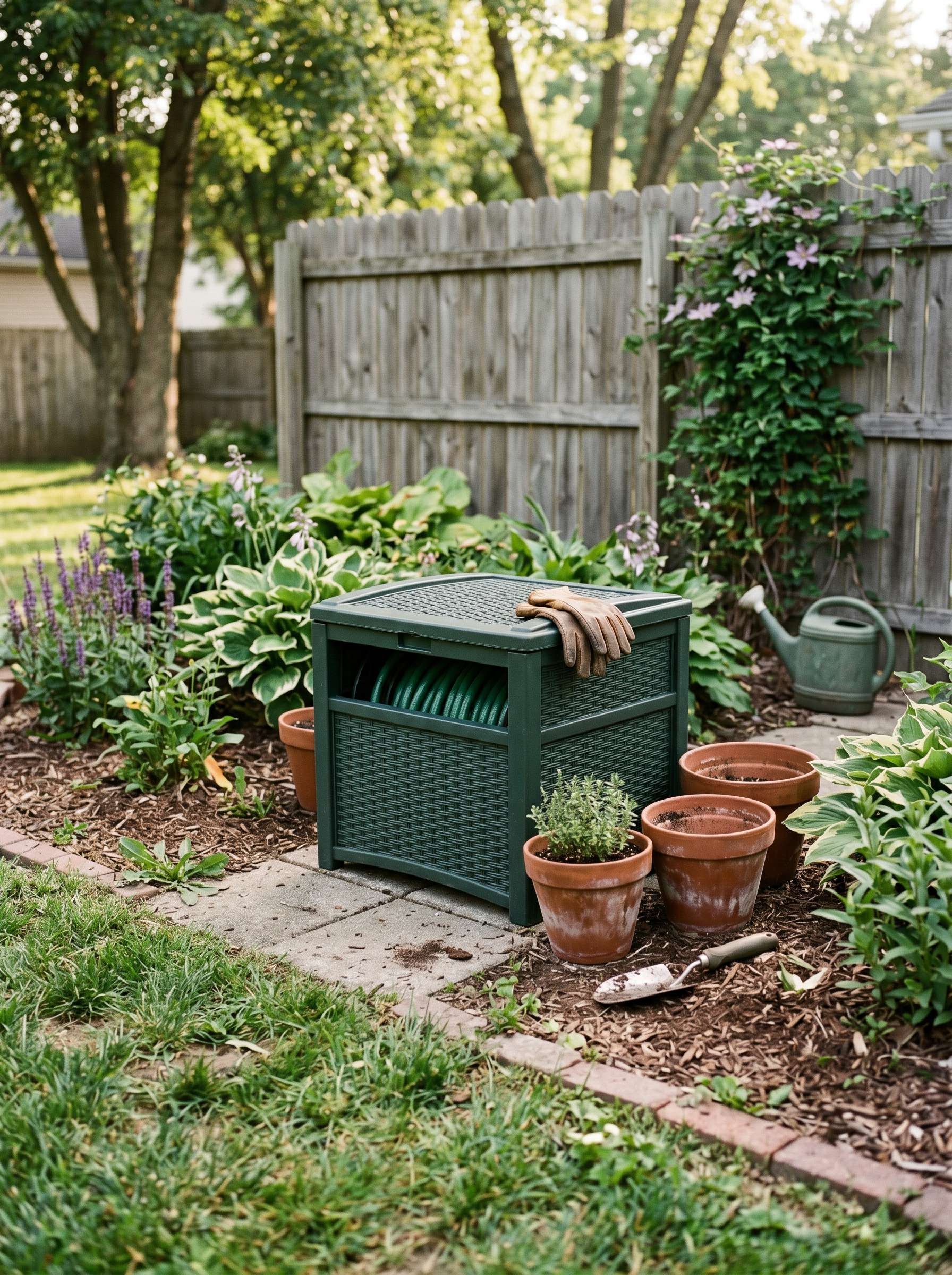
9. Cedar Hose Reel Box
A bright yellow or green vinyl hose coiled messily on the lawn ruins your curb appeal. Swap the plastic bracket for an enclosed wooden hose reel box.
Position the box within 3 feet of your outdoor spigot, hidden behind a large perennial like a Hosta or Hydrangea. The hose feeds smoothly out of a side grommet while the heavy brass hardware stays hidden under a fitted wooden lid.
10. Raised Garden Bed Barriers
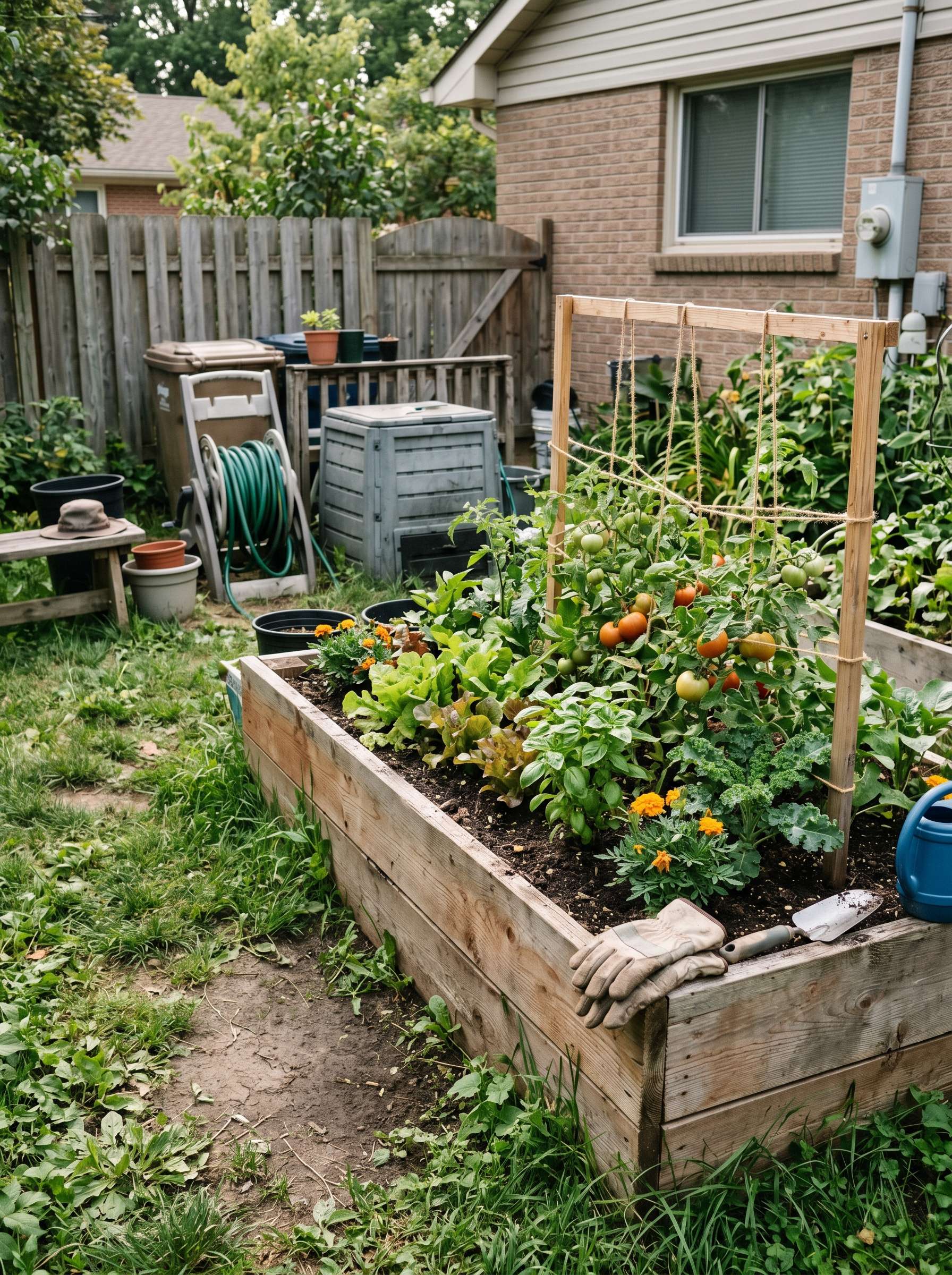
Instead of looking at low-lying irrigation manifolds or ugly septic access covers, build a 24-inch-high raised planter bed directly in front of them.
Construct the bed out of 2×8 cedar boards. Plant taller crops like sweet corn or indeterminate tomatoes at the back, and short herbs like basil and thyme in the front. The tiered growth completely blocks ground-level eyesores from your patio’s line of sight.
PRO TIP
The best “invisible gardens” don’t just hide things—they replace them with something better.
Whenever possible, swap clutter for function (like planters or seating).
That way, your garden doesn’t just look clean—it becomes more useful too.
Required Tools & Materials for Installation
| Recommended Product | Why You Need It | Estimated Price | Action |
|---|---|---|---|
| [Cordless Drill & Driver Kit] | Makes installing screens, trellises, and storage solutions much easier | $40 – $120 | [Check Price on Amazon ↗] |
| [Heavy-Duty Zip Ties & Mounting Hardware Set] | Useful for securing bamboo screens, lattice panels, and garden dividers | $10 – $25 | [Check Price on Amazon ↗] |
| Disclosure |
|---|
| Disclaimer: As an Amazon Associate, we earn a small commission from qualifying purchases at no extra cost to you. |
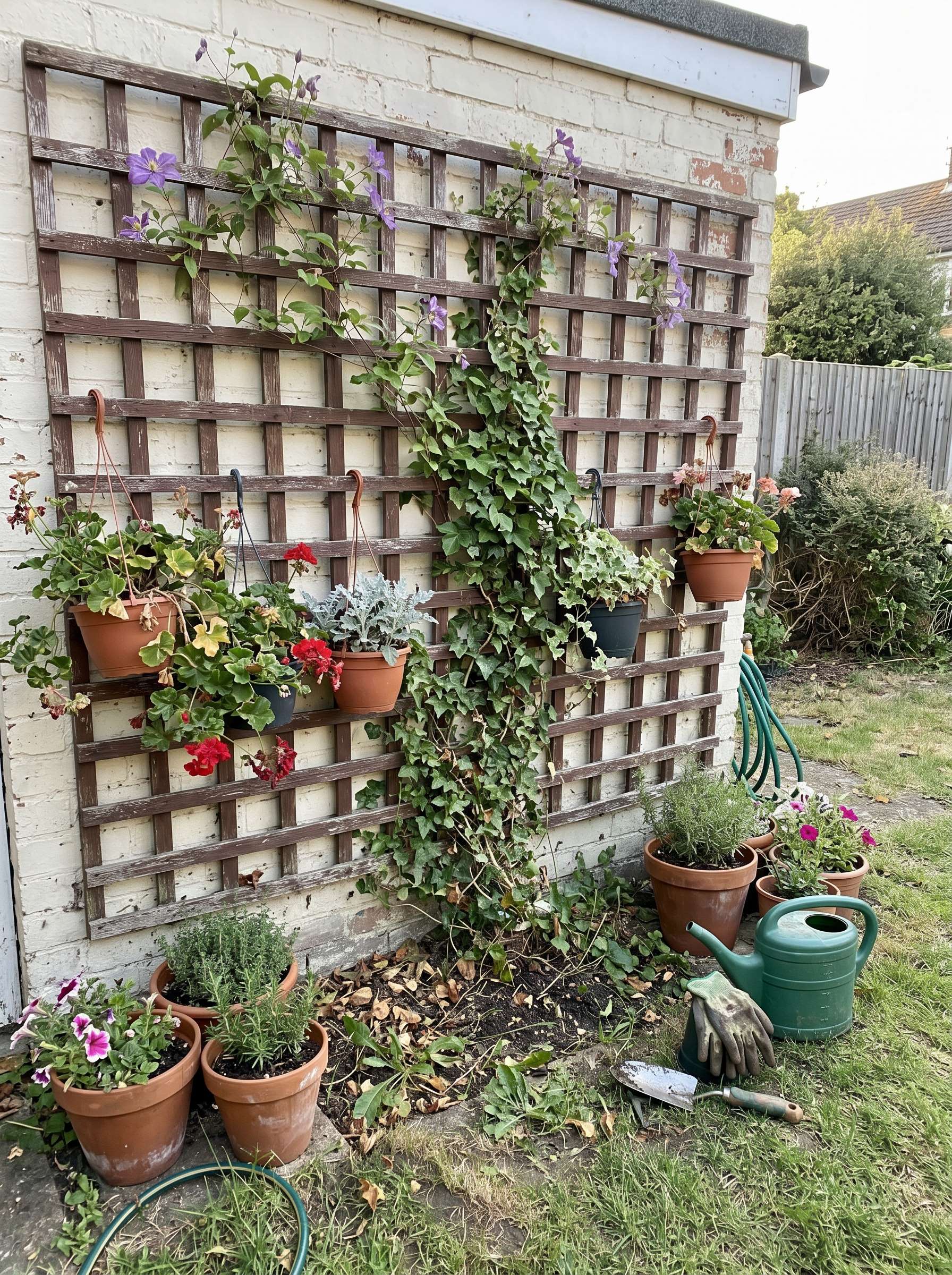
11. Lattice Panels with Hanging Flora
Lattice gets a bad reputation when left bare, but it excels at screening utility corners while maintaining airflow.
Frame a 4×6-foot pressure-treated lattice sheet with 2×4 posts anchored in galvanized post spikes. Paint the structure dark olive green or charcoal. Hang three S-hooks across the crossbars to hold hanging baskets of trailing ivy or petunias.
12. Weather-Resistant Canvas Curtains
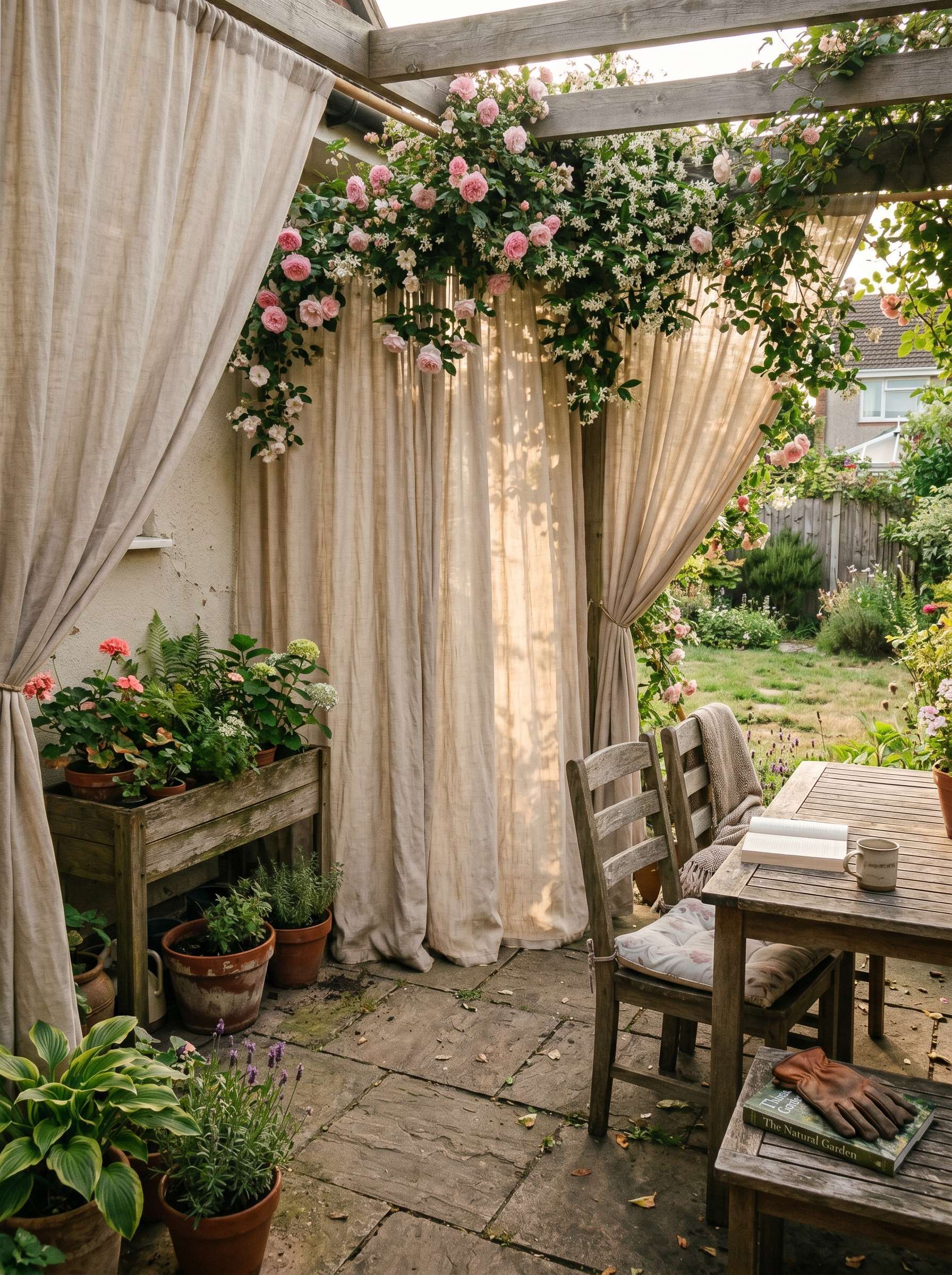
On covered porches or pergolas, architectural clutter like metal downspouts or exposed conduits can be masked with fabric.
Install an exterior-grade stainless steel tension rod between two support posts. Hang heavy-duty solution-dyed acrylic canvas curtain panels (such as Sunbrella fabric). When drawn back with leather ties, they frame your seating area gracefully; when pulled closed, they hide utility poles and block low evening sun.
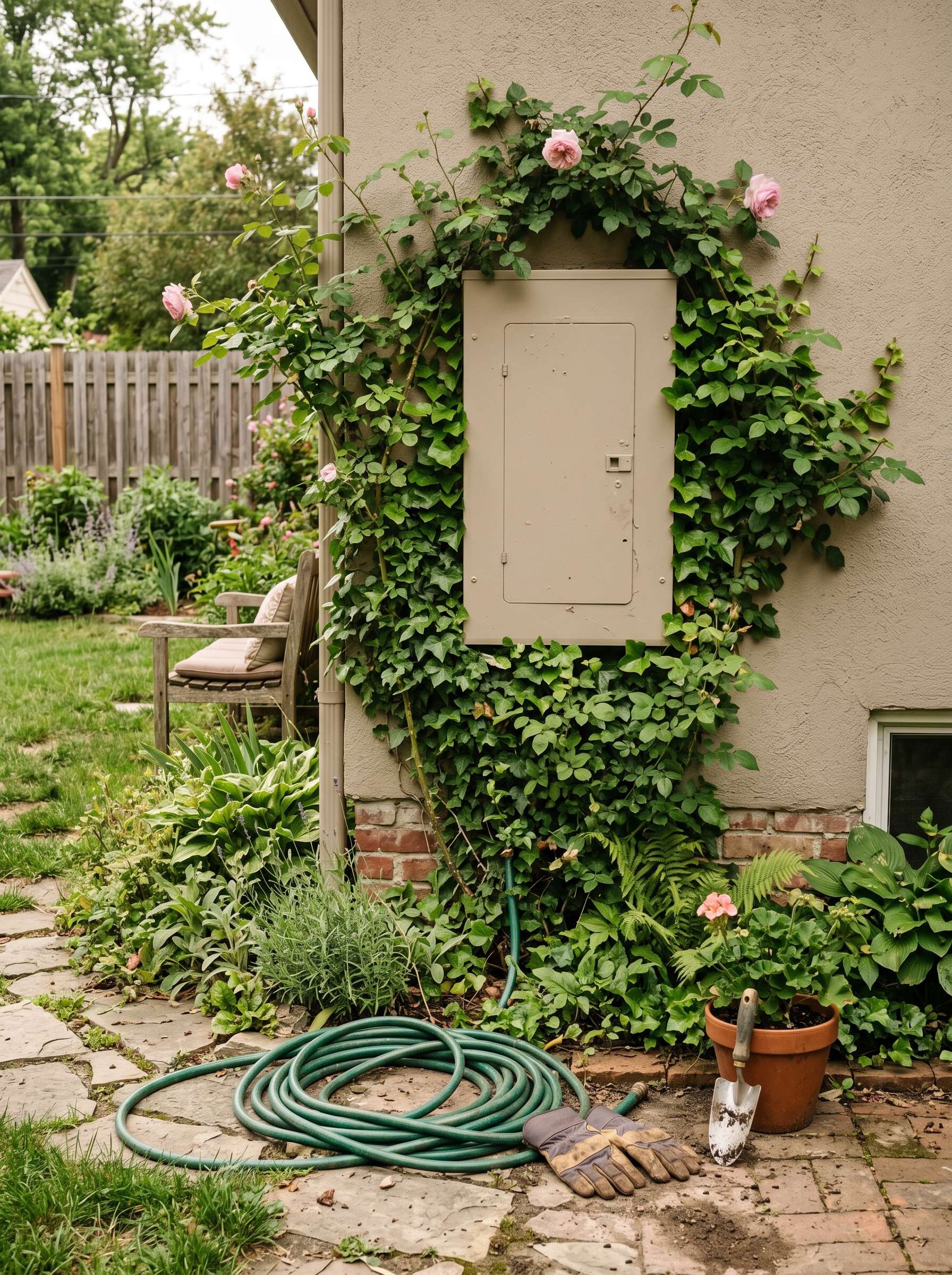
13. Color-Matched Paint Camouflage
If you can’t screen an ugly metal breaker box or PVC pipe due to tight space, make it match its backdrop.
Scuff the metal or plastic surface with 120-grit sandpaper, apply a coat of exterior bonding primer, and paint the utility object the exact color of your exterior siding or brick. It sounds overly simple, but matching the color eliminates contrast, making the item virtually vanish from a quick glance.
14. Dry-Stack Low Stone Wall
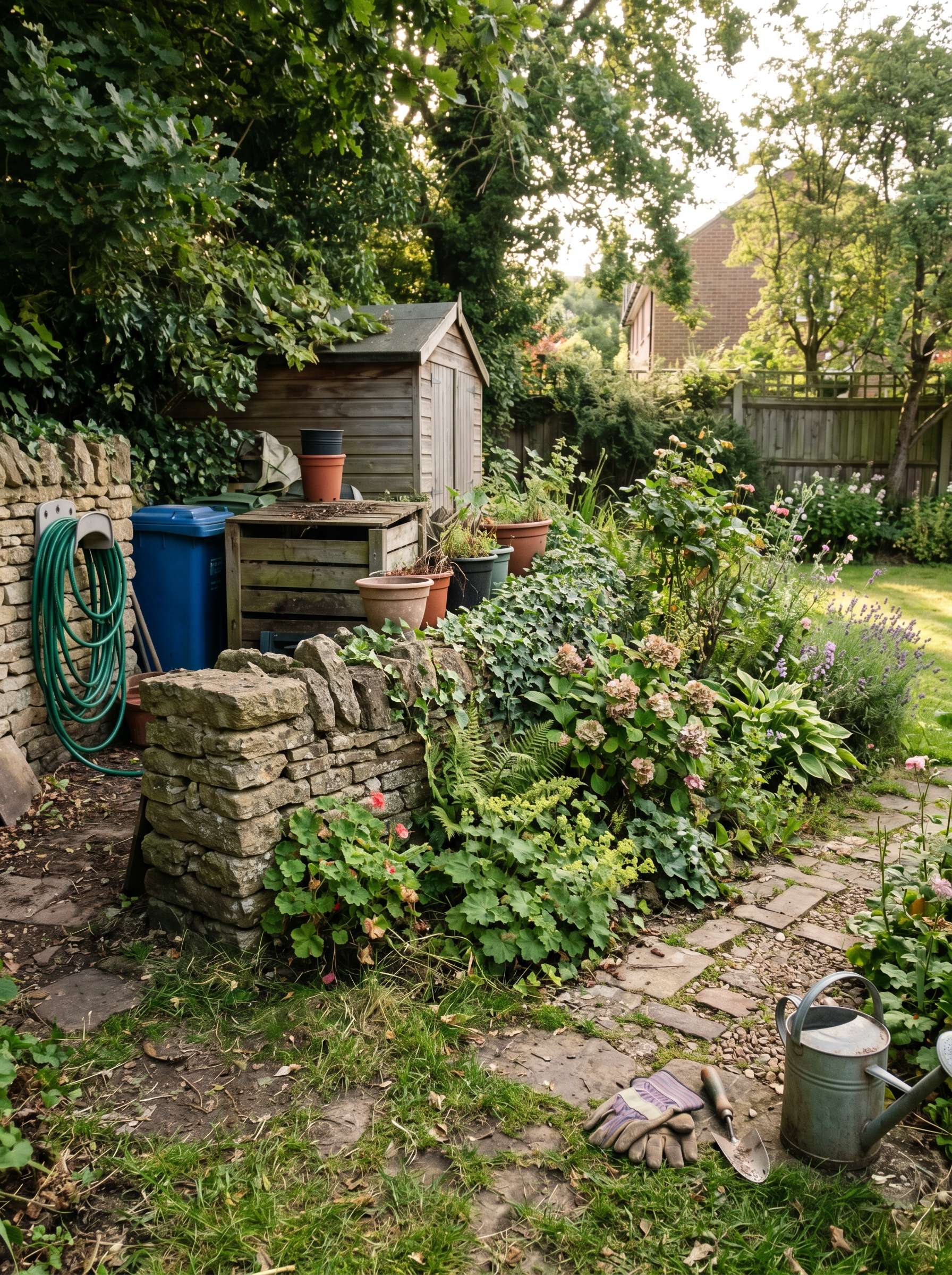
Building a 2-foot dry-stacked fieldstone wall in front of a compost bin or woodpile creates a clean, permanent architectural boundary.
You don’t need mortar. Dig a 4-inch trench, pack it with crushed gravel for a level base, and stack flat fieldstones, tapering the wall slightly inward as you go up for structural stability. It hides ground clutter while adding a classic, handcrafted element to your garden beds.
15. Strategic Space Zoning
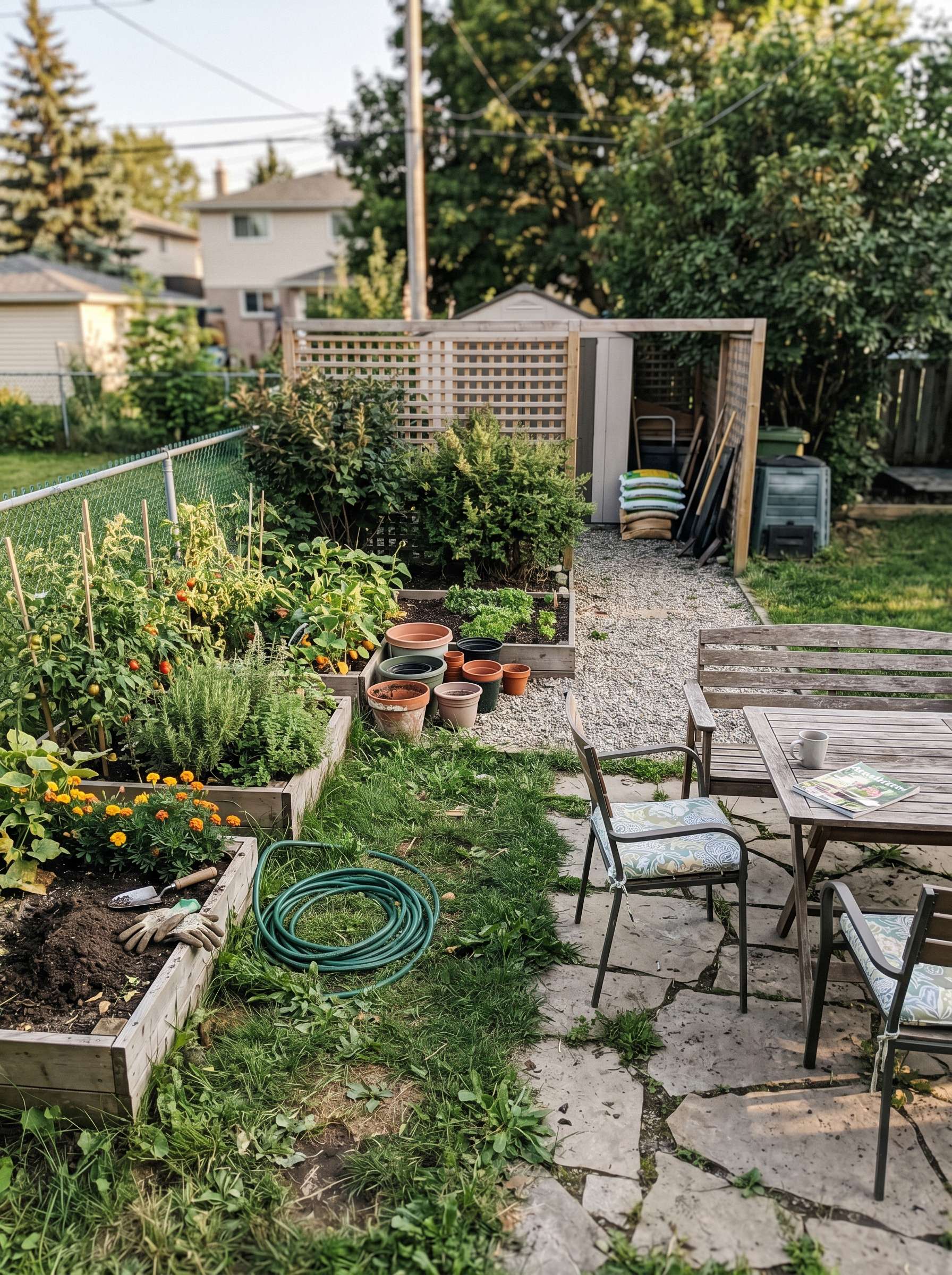
Instead of trying to hide every minor utility piece, shift how your layout directs traffic. Create distinct outdoor “rooms” using visual anchors like a outdoor rug, a fire pit set, or an overhead pergola.
Position your main seating furniture facing away from your home’s service corners. By giving human eyes a high-contrast focal point—like a lush potted centerpiece or glowing fire table—the brain naturally filters out background noise like meters and bins.
PRO TIP
Your eye always goes to the brightest, most detailed, or most comfortable-looking area first.
If you create one strong “wow zone,” everything else becomes background noise.
Design smart—not harder.
Premium Upgrades & Long-Term Maintenance
| Recommended Product | Why You Need It | Estimated Price | Action |
|---|---|---|---|
| [Weather-Resistant Outdoor Storage Bench] | Provides hidden storage while improving the overall backyard design | $80 – $200 | [Check Price on Amazon ↗] |
| [Exterior Wood Sealer & Protector] | Helps protect screens, trellises, and wood structures from weather damage | $15 – $35 | [Check Price on Amazon ↗] |
| Disclosure |
|---|
| Disclaimer: As an Amazon Associate, we earn a small commission from qualifying purchases at no extra cost to you. |
FAQs
Using plants, trellises, or repurposed pallets is the most affordable method.
No. Always allow airflow to prevent overheating and damage.
Fast-growing climbers can cover areas in 4–8 weeks.
Yes—most are temporary and movable.
Vertical solutions like plant walls and tall planters.
Seasonal Maintenance Calendar
Spring: Install screens, plant climbers
Summer: Trim growth, check airflow areas
Fall: Clean storage units, repaint wood
Winter: Protect plants, repair structures
Common Mistakes to Avoid
- Blocking ventilation areas
- Overcrowding plants
- Ignoring weather damage
- Choosing high-maintenance plants
- Forgetting drainage
Final Thoughts
If there’s one thing I’ve learned, it’s this:
A beautiful garden isn’t about having perfect things—it’s about hiding the imperfect ones smartly.
Once you start seeing your backyard like a designer, everything changes.
You stop fighting the space… and start working with it.
And honestly? That’s when your garden finally starts to feel like yours.

Aagam – Founder of SpruceTouch
Hi, I’m Aagam — the creator behind SpruceTouch. I’m a home and garden enthusiast who shares practical ideas for backyard design, garden projects, patio decor, and small outdoor spaces. Through SpruceTouch, I focus on simple and budget-friendly ways to improve outdoor living spaces.