Genius Ways to Landscape a Dry Yard Using Tough, Beautiful Shrubs
If you’re tired of watching your water bill skyrocket every summer while your landscaping slowly turns brown and crisp, you are definitely not alone. Over the next few minutes, we’re going to walk through some of the toughest, most resilient woody plants that can handle intense sun and minimal watering without looking like a sad, dead stick.
I’ve spent the last twenty-odd years digging in the dirt, trying to find the exact balance between “looks like a lush oasis” and “doesn’t need me carrying a hose around every single evening.” Trust me, I’ve had my fair share of heartbreaking summers where expensive nursery plants shriveled up into brittle, sad little statues because our local water restrictions kicked in early.
It took a lot of dead green investments, messy yard phases, and wasted weekends before I finally learned which species actually mean it when the tag says “low water.”
A few of these ideas honestly worked much better than I expected, and they’ve completely changed how I approach the hottest corners of my property. Let’s look at what actually survives.
Quick Picks (Top 5)
The absolute beginner-friendly pick: Bluebeard (Caryopteris). It’s virtually impossible to kill once established and gives you stunning late-summer color.
The highest visual impact: Purple Hop Bush. The deep burgundy foliage contrasts beautifully with standard green lawns.
The low-budget superstar: Cotoneaster. You can find tiny, inexpensive starter pots that spread rapidly to cover ugly bare soil.
The fastest quick visual win: Pineapple Sage. It grows incredibly fast in a single season, smells amazing, and shrugs off intense heat waves.
The ultimate “set it and forget it” choice: Oleander (just keep it away from pets and kids since it’s toxic).
1. The Silvery Resilience of Russian Sage
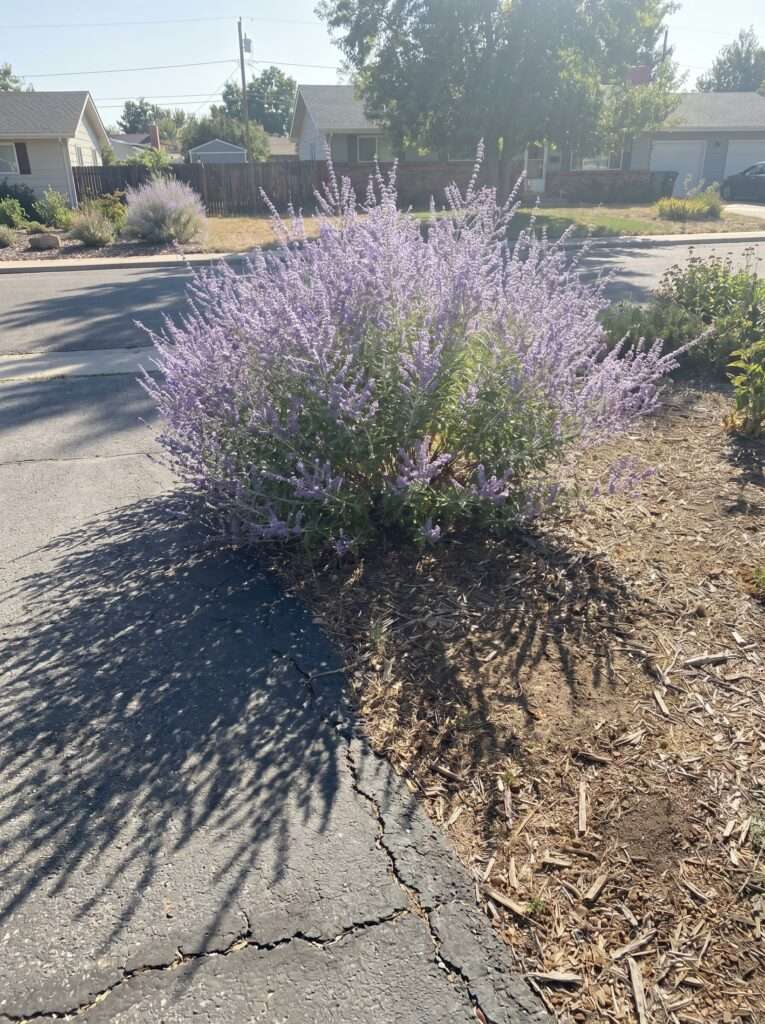
There is a specific spot right against my driveway where the asphalt radiates heat like an oven all afternoon long. For years, everything I planted there literally baked to death within a month. Then I put in Russian Sage.
This plant thrives on neglect and absolute heat punishment. It features fine, silvery-grey stems and soft lavender-blue flower spikes that sway beautifully in the wind.
The secret to keeping it looking full and dense rather than leggy and floppy is hard pruning. I learned this the hard way: if you don’t cut it back to about six inches from the ground in early spring, it turns into a sprawling, woody mess that splits right down the center when a heavy rain hits. Give it the harshest sun you have, and completely ignore it with the garden hose.
2. Rockrose for Those Ugly, Baking Slopes
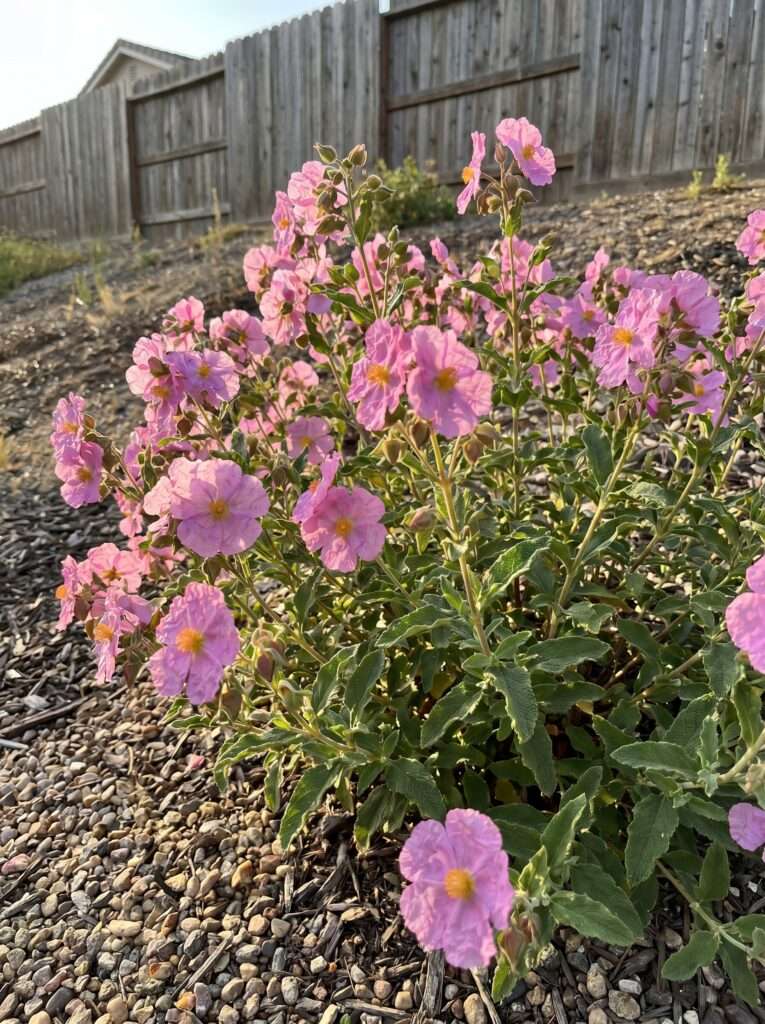
If you have a sloped area where water immediately runs off before soaking in, Rockrose (Cistus) is an absolute lifesaver. I planted a row of these on a steep bank behind my garage where the soil is mostly gravel and poor clay. The delicate, paper-thin pink or white blossoms look incredibly fragile, but the plant itself is as tough as nails. It forms a low, dense mound of rough green foliage that binds the soil beautifully.
If you are expanding your outdoor features to balance out these dry slopes, you might also look into adding some water features for small spaces to bring a little balance and soothing movement to your yard.
One thing most people ignore is that Rockrose hates wet feet during the winter months. If its roots sit in soggy, cold mud, it will rot out before the spring even arrives. It needs excellent drainage far more than it needs rich nutrients or frequent watering.
3. Texas Ranger for True Desert Endurance
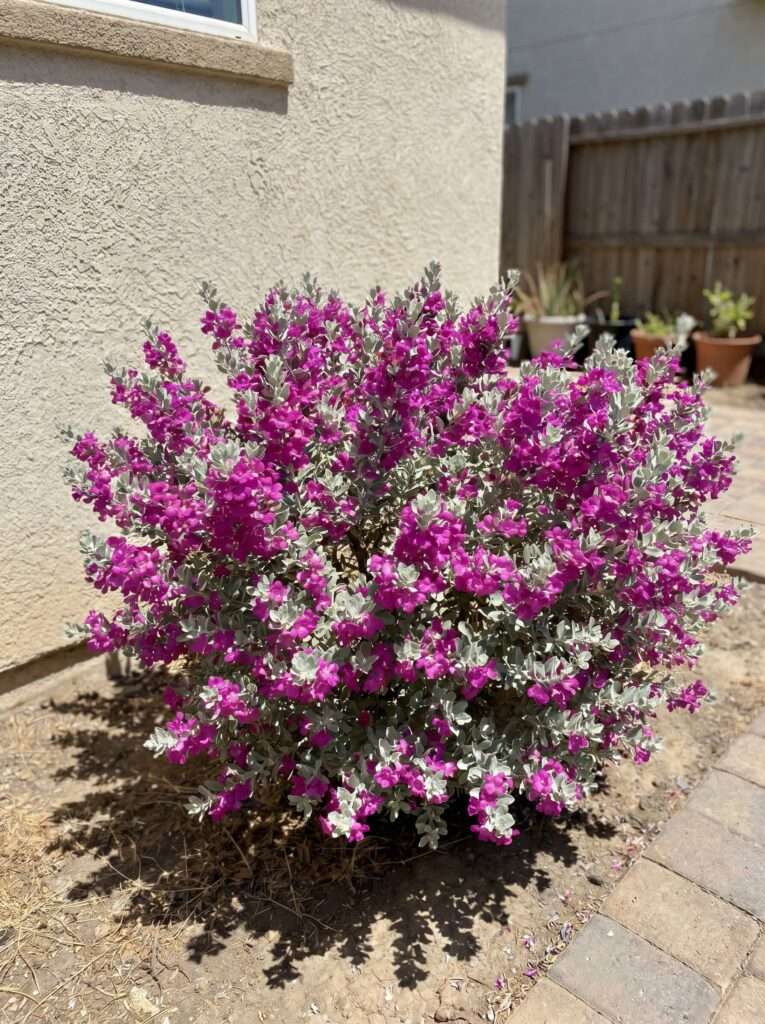
Don’t let the name fool you; you don’t have to live deep in Texas to appreciate the absolute durability of the Texas Ranger (Leucophyllum frutescens). I first noticed this shrub while visiting a friend out West, and I was amazed by how its silvery leaves seemed to glow under the harsh midday sun.
When humidity rises or a summer rain finally hits, the entire bush bursts into a dense cloud of vibrant purple or magenta blossoms.
But here’s the kicker: if you overwater this plant or put it in rich, highly fertilized potting soil, it loses its beautiful silver sheen and turns an uninspired, dull green. It actually prefers lean, alkaline, poor soil. It’s the ultimate lazy gardener’s dream because the less you tend to it, the better it looks.
4. Bluebeard for Late-Summer Surprise
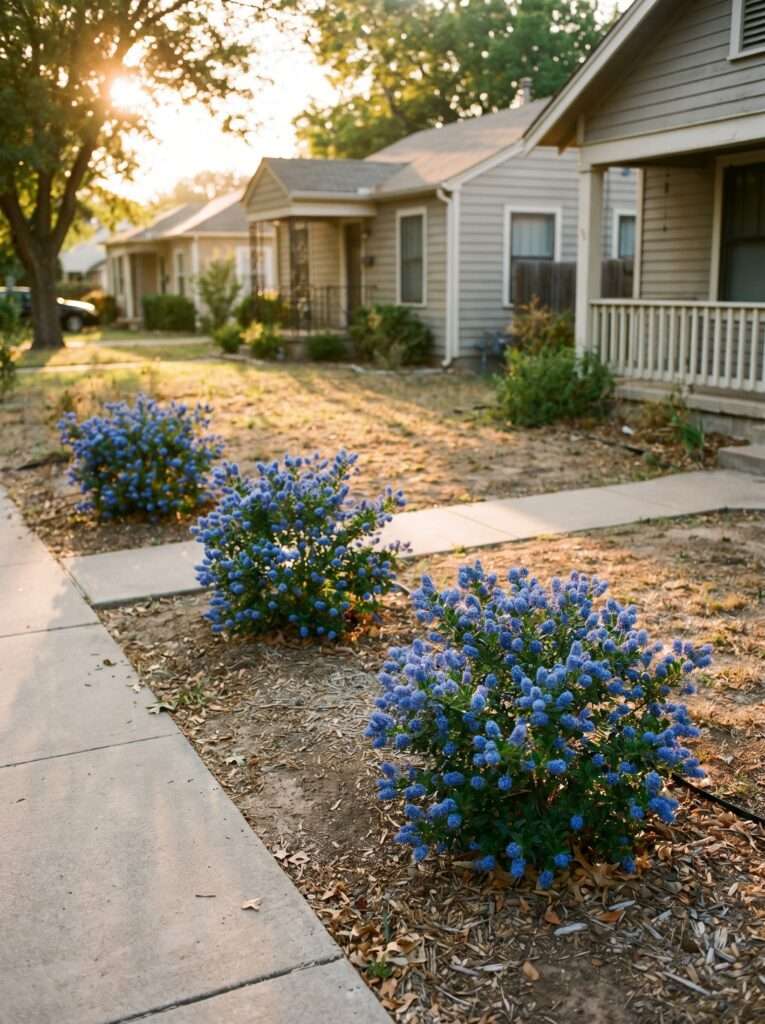
Most yards look incredibly tired and washed out by late August. That is exactly when Bluebeard (Caryopteris x clandonensis) steps up to do the heavy lifting. It spends the early spring and summer looking like a quiet, neat, mounded green shrub.
Then, right when every other plant is throwing in the towel from the heat, it explodes into clouds of deep, electric-blue flowers that bees absolutely adore.
I put three of these along my front walkway, and my neighbors constantly stop to ask what they are. This worked better than expected because it stays compact and doesn’t try to take over the entire walkway. Just ensure it gets a full six to eight hours of direct sunlight, or the blue colors will look faded and dull.
Common Mistake: Buying drought-tolerant shrubs and assuming you don’t need to water them at all during the first few weeks. Even the toughest desert native requires regular, deep watering for its first full growing season to establish a deep root system. If you let them dry out completely the week you plant them, they will die.
5. Glossy Abelia for Subtle Elegance
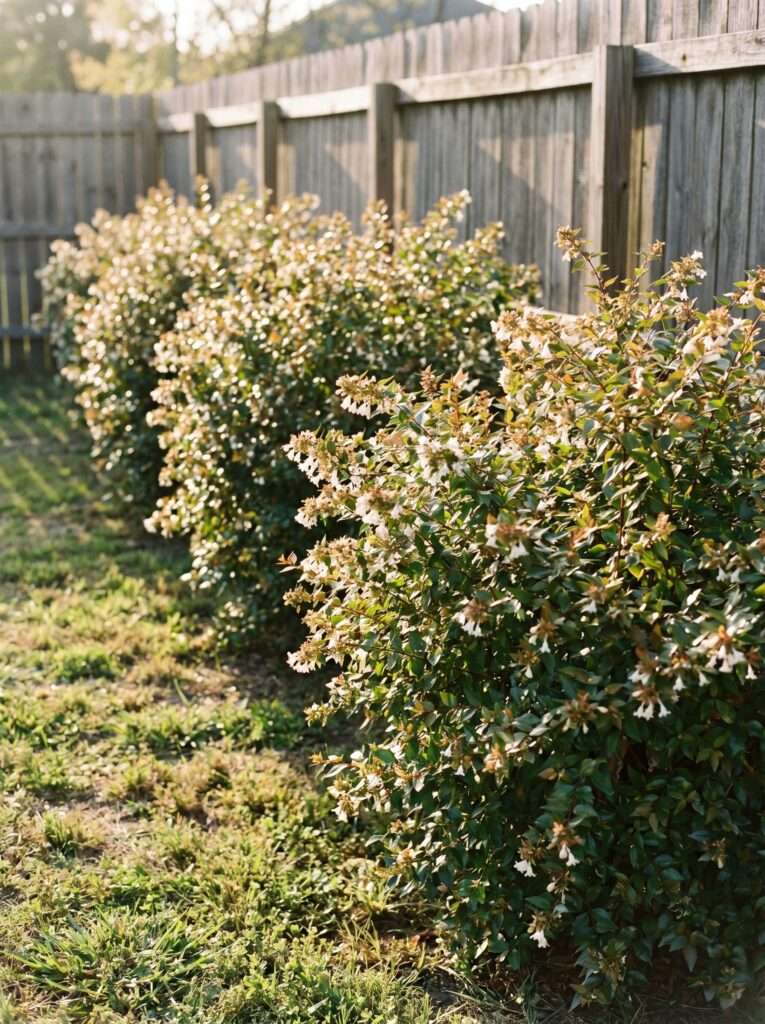
If you want something that looks a bit more traditional and lush rather than wild or desert-like, Glossy Abelia is your best bet. It has these beautiful, shiny little leaves that take on a bronzy hue in the autumn, and it produces tiny, bell-shaped white and pink flowers all summer long.
I use it as a soft privacy screen along my side property line.
What surprised me most about Abelia is how well it handles occasional periods of severe drought once its roots are settled. It might drop a few inner leaves if it goes months without a drop of rain, but it bounces right back the moment it gets a drink. It provides a clean, manicured look without demanding a constant drip irrigation system.
6. Butterfly Bush for Constant Motion
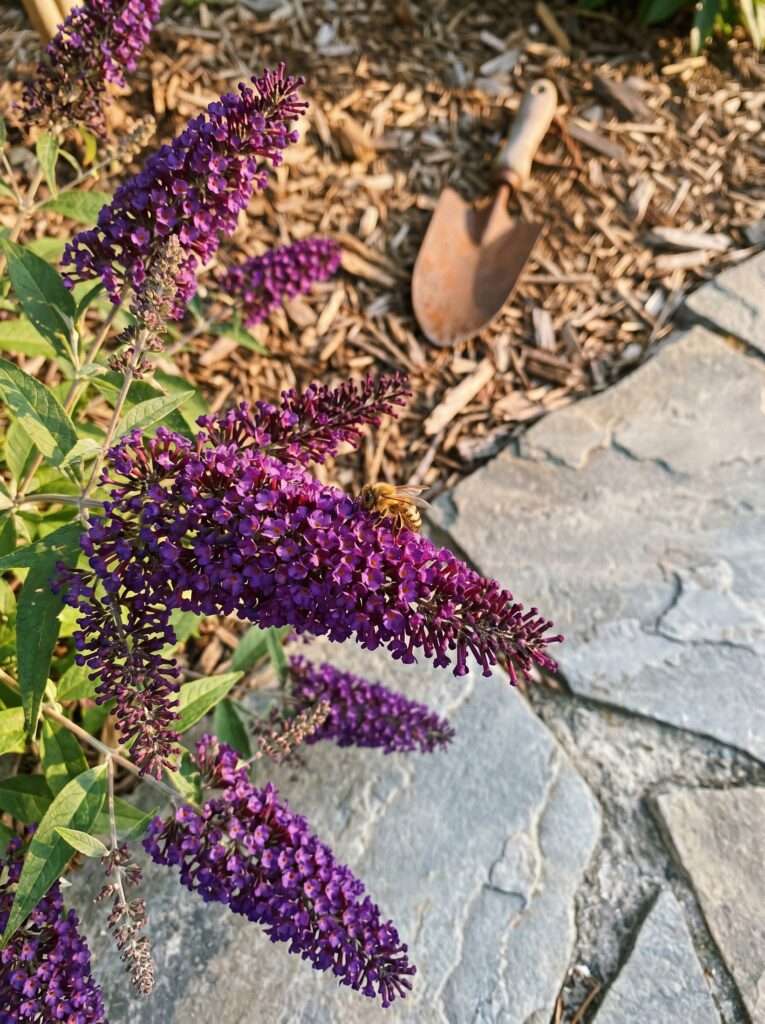
Now, a quick warning on this one: make sure you check your local regulations, as some older varieties of Butterfly Bush (Buddleja) can be invasive in specific states. If you’re in the clear, or if you purchase one of the newer sterile dwarf varieties, they are absolute magnets for pollinators and tolerate dry spells incredibly well. I planted a dwarf dark-purple variety right near my back patio seating area.
Having a resilient shrub nearby is perfect if you are hanging out on the deck, especially if you’ve put in the weekend effort to build a modern boho slatted privacy screen for patios to block out the neighbors.
I learned this the hard way: if you don’t deadhead the faded flower spikes, the bush starts to look incredibly raggedy and brown by mid-summer. Taking five minutes every weekend to snip off the dead flower cones keeps the plant producing fresh, colorful blooms all the way until the first hard frost.
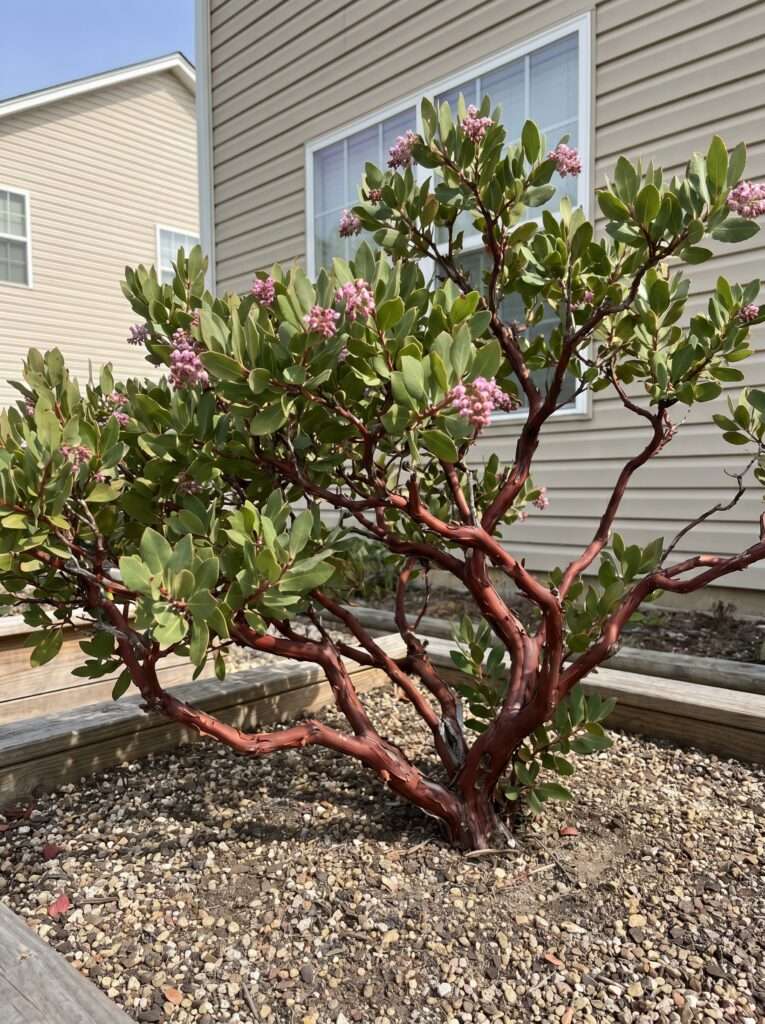
7. Manzanita for Stunning Winter Structure
Manzanita is a legendary plant out on the West Coast, but more gardeners across the country should be utilizing its unique varieties. It features smooth, polished, mahogany-red bark that looks like a piece of living sculpture in the middle of a garden bed.
The leaves are thick and leathery, designed perfectly by nature to prevent water loss during dry spells.
This looked great online, but I realized early on that Manzanita absolutely demands perfect drainage. If you plant it in heavy, compacted clay soil that holds water like a bucket, it will die almost instantly. I had to build up a raised planting mound filled with a mix of coarse sand, gravel, and native soil just to keep mine happy. The effort was completely worth it for that beautiful red bark in the dead of winter.
8. False Indigo for Massive Deep Roots
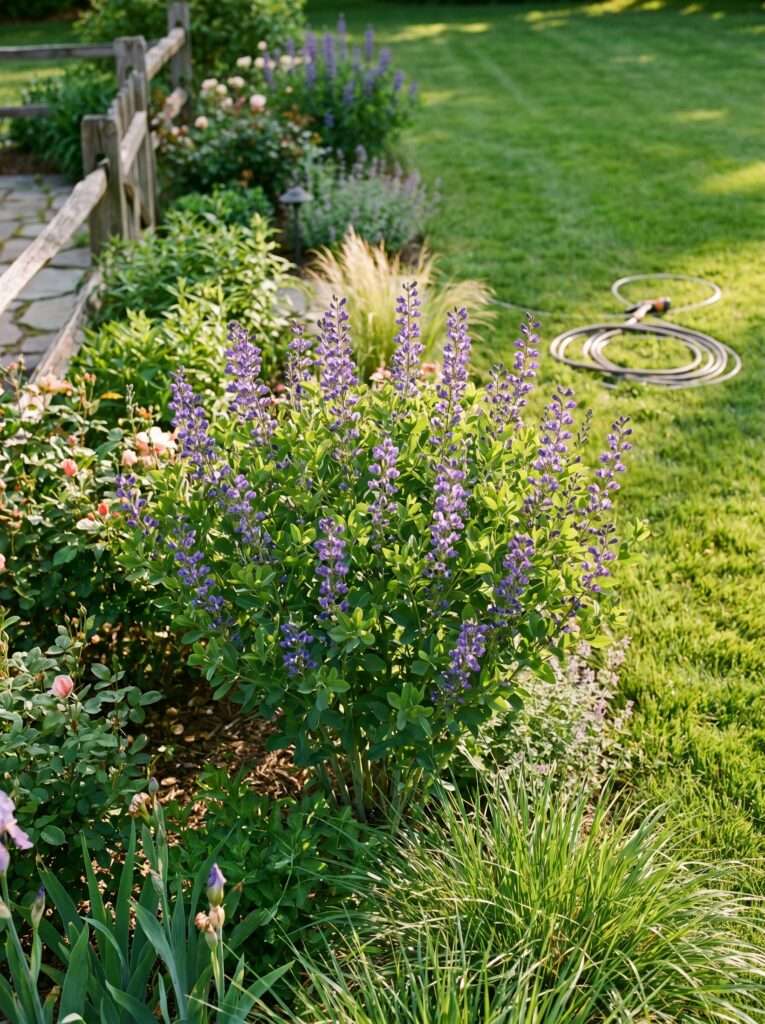
False Indigo (Baptisia) behaves somewhat like a perennial but grows into a massive, woody, shrub-like presence by the middle of the spring season. It produces gorgeous spikes of deep indigo-blue or purple flowers that look a lot like lupines.
The reason this plant can survive long stretches of drought is its incredible root system. It grows a massive, deep taproot that reaches way down into the subsoil to find moisture when the surface layer is bone dry.
But wait, there’s a catch: because of that deep taproot, False Indigo absolutely hates being moved. Once you plant it, you need to leave it alone. I tried moving one that had been in the ground for three years, and it took a massive toll on the plant—it took another two seasons just to recover its vigor. Pick your spot carefully and let it stay there permanently.
Small Pro Tip: When planting in dry areas, don’t just dump mulch over the top soil. Create a shallow, saucer-shaped depression in the soil around the base of the shrub. This acts as a natural basin that catches rainwater and funnels it directly down to the root ball where it’s needed most, rather than letting it run off across the yard.
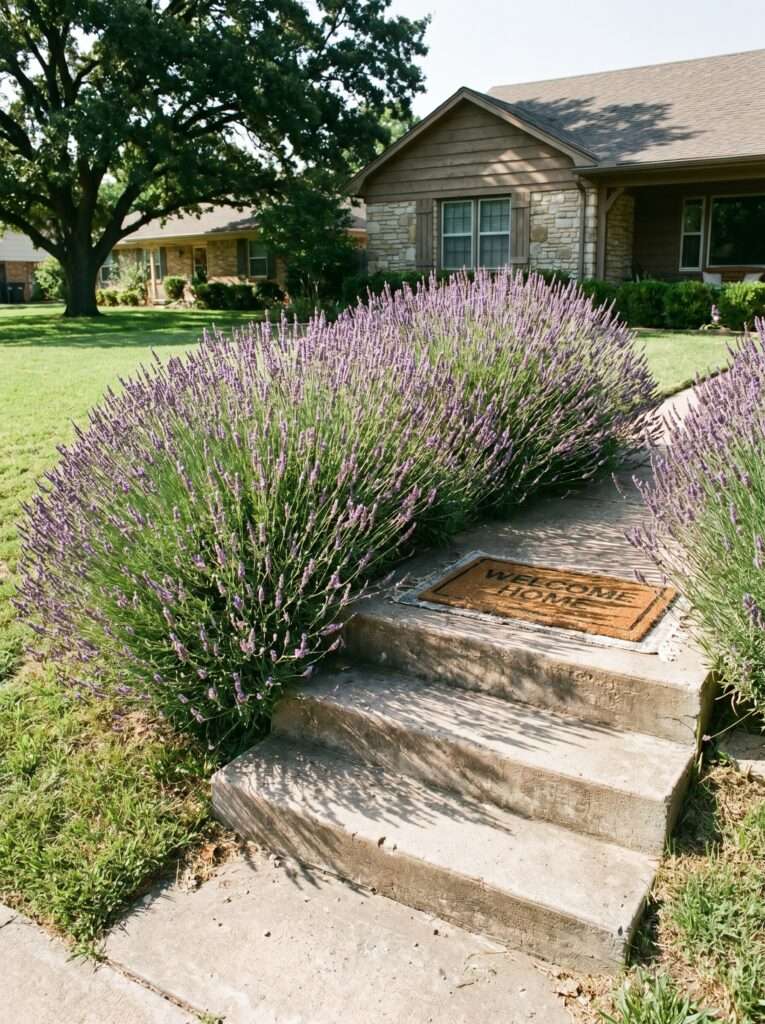
9. Lavender for Sunny Walkway Edges
No drought-tolerant plant list is truly complete without mentioning classic Mediterranean lavender. While many people think of it purely as a herb, larger varieties like Grosso or Phenomenal grow into substantial, beautiful woody shrubs over time. I’ve lined my sunny front porch steps with them, and walking past them every day when the afternoon sun hits the oil in the leaves is an incredible experience.
Because lavender yields such an abundance of fragrant stems every summer, it’s the perfect candidate to harvest alongside your kitchen crops; learning how to dry and store herbs is a great way to keep that summer essence around all through the cold months.
The best part? Deer and rabbits will completely ignore them because of the intense fragrance. If you struggle with critters eating your landscaping down to the ground every spring, replacing those vulnerable plants with tough lavender varieties will save you a massive amount of frustration.
10. Smoke Bush for Deep Drama
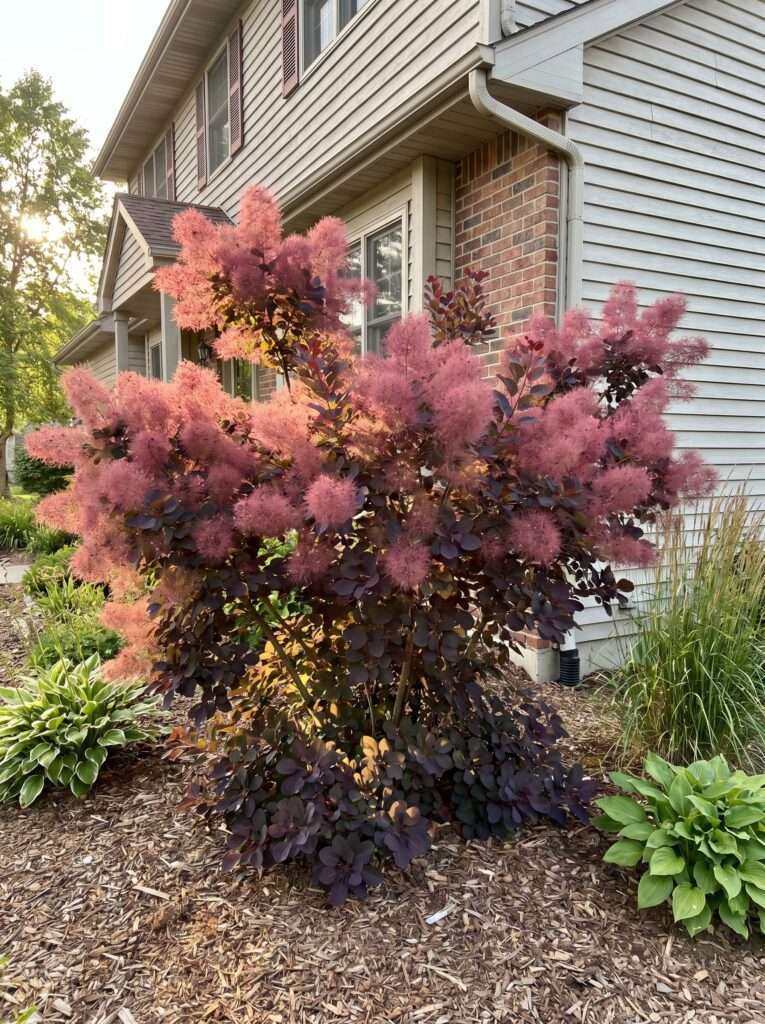
If you want to add a serious pop of unique color to your yard without relying entirely on flowers, look into a Smoke Bush (Cotinus coggygria). The Royal Purple variety features stunning, deep wine-red leaves that hold their color incredibly well through the peak of summer heat.
In mid-summer, it produces these large, fluffy, pinkish-purple flower panicles that genuinely look like puffs of smoke floating over the foliage.
It handles dry, poor soils with absolute ease once established. One thing to keep in mind is its potential size; it can grow into a very large shrub or small tree if left unpruned. I trim mine back fairly aggressively every winter to keep it at a manageable six-foot height so it doesn’t completely block the light coming through my dining room window.
11. Yucca for Structural Texture
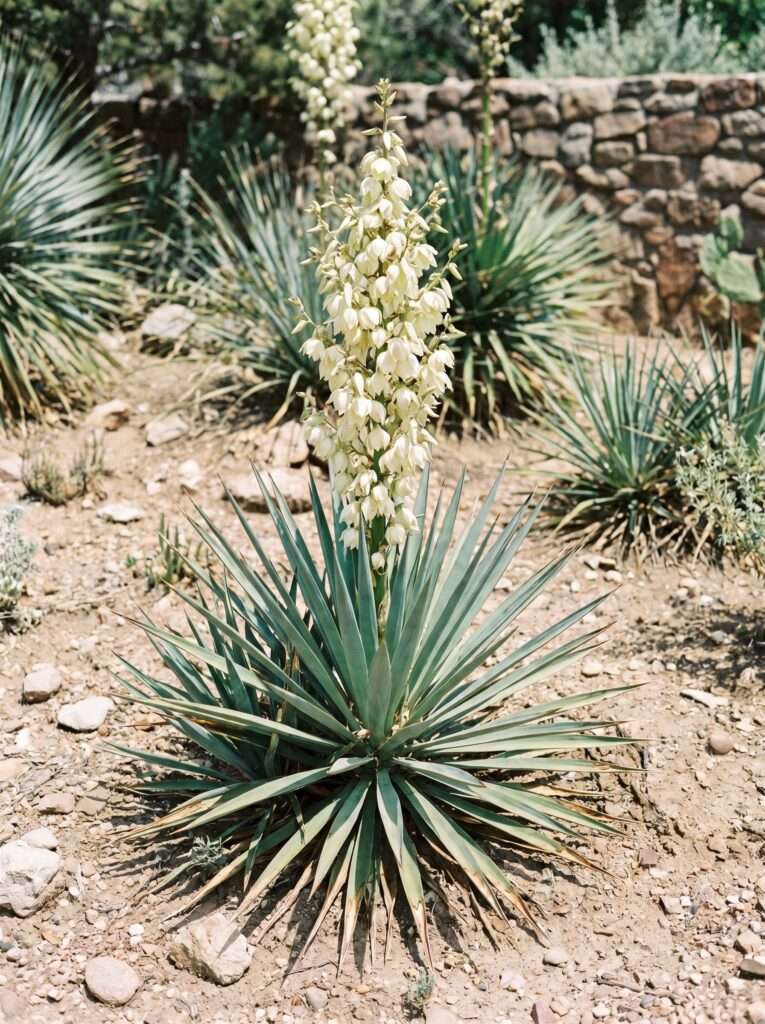
For a completely different texture that breaks up the soft look of standard leafy bushes, I love using Adams Needle Yucca. It features stiff, sword-like evergreen leaves that rise up in a dramatic rosette shape.
In the middle of the summer, it sends up a massive, dramatic flower stalk loaded with creamy white, bell-shaped blooms that tower over the rest of the garden bed.
It is practically indestructible. I have one planted in a patch of ground that is mostly sand and crushed concrete where nothing else could survive, and it thrives out there without a single drop of supplemental water. Just be careful where you plant it; those pointy leaf tips can easily poke you if it’s placed too close to a narrow walkway or a child’s play area.
12. Ninebark for Year-Round Interest
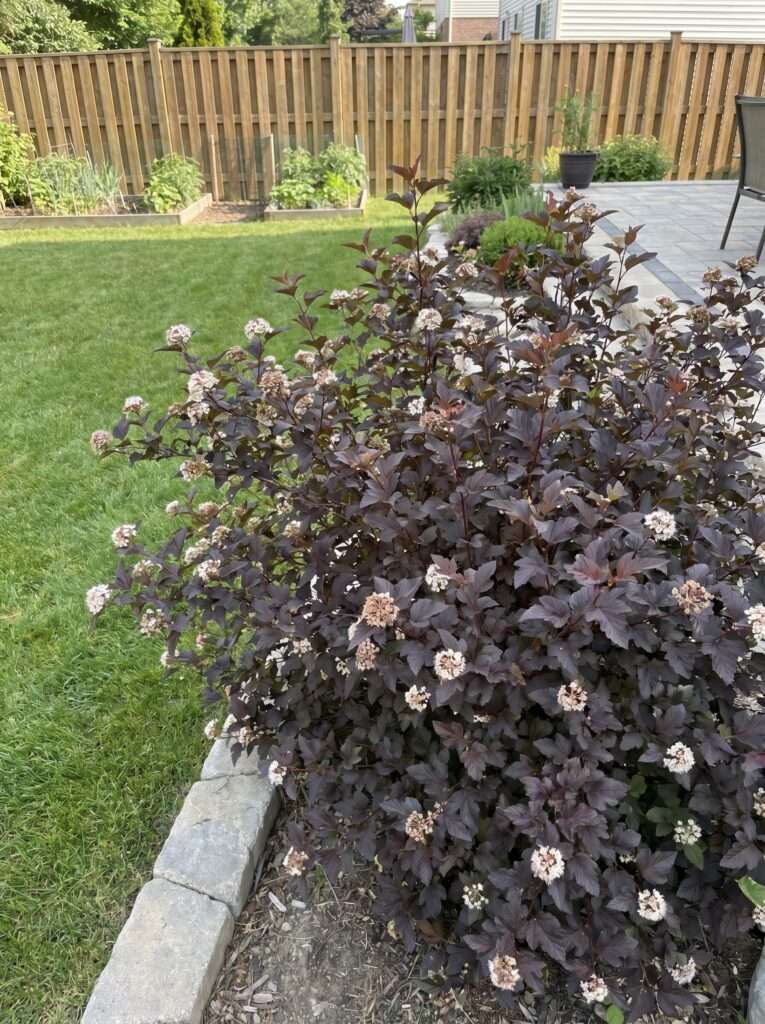
Ninebark (Physocarpus opulifolius) is a native North American shrub that has become a staple in my garden design. Varieties like ‘Diabolo’ offer deep purple foliage, while ‘Amber Jubilee’ brings warm tones of orange and gold to your space.
It gets its name from its fascinating, peeling bark that flakes off in layers, providing excellent visual texture during the cold winter months when the leaves are gone.
It handles dry summer stretches beautifully once its root system adapts to the native soil. It does produce lovely clusters of white flowers in late spring, but the real reason to plant it is the durable, colorful foliage that holds up against intense sun without scorching or turning crispy at the edges.
What Actually Helped: Grouping all my drought-tolerant plants together in a single garden zone rather than mixing them in with water-loving species. This technique is called hydrozoning. It stops you from accidentally overwatering your dry-loving shrubs while trying to keep your thirsty flowers happy.
13. Mugo Pine for Evergreen Reliability
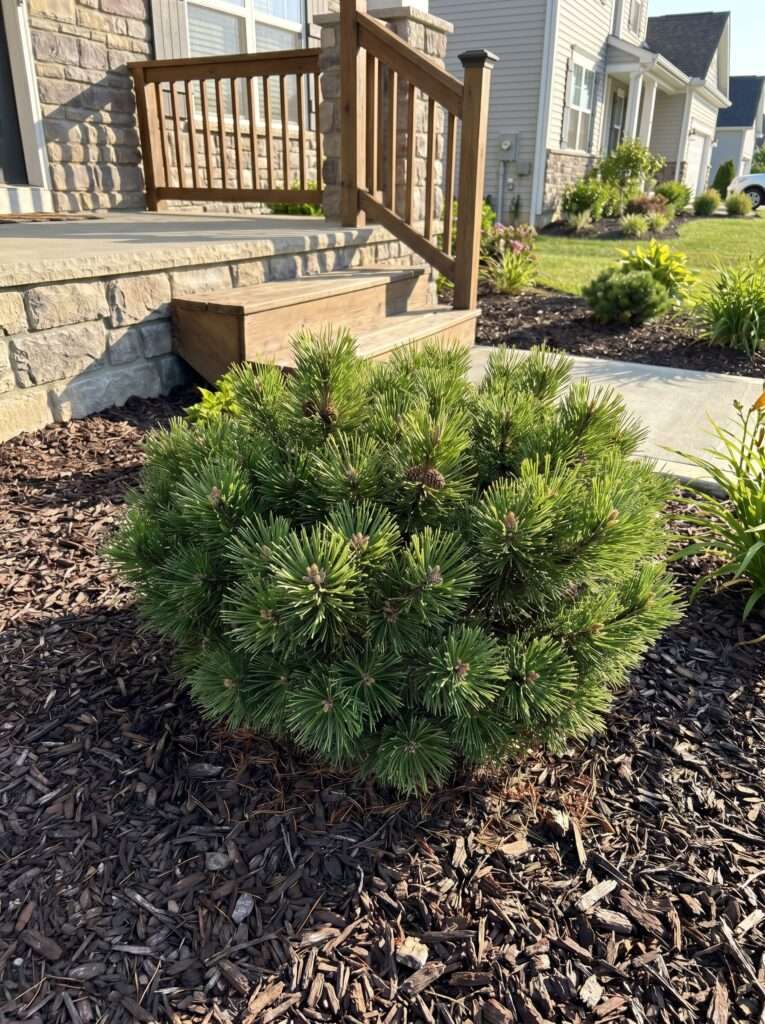
When looking for drought-tolerant options, don’t overlook small, mounded conifers. The Mugo Pine is a slow-growing, tough-as-nails evergreen that adds reliable green structure to your yard all twelve months of the year.
It handles dry, sandy, and rocky soils without dropping a needle.
I use a couple of dwarf Mugo Pines to anchor the corners of my front garden beds. They require almost zero maintenance, no pruning, and stay neatly contained. They provide a wonderful visual anchor that keeps the front yard looking structured and alive even in the middle of winter when everything else has died back to the ground.
14. Winterberry Barberry for Striking Accents
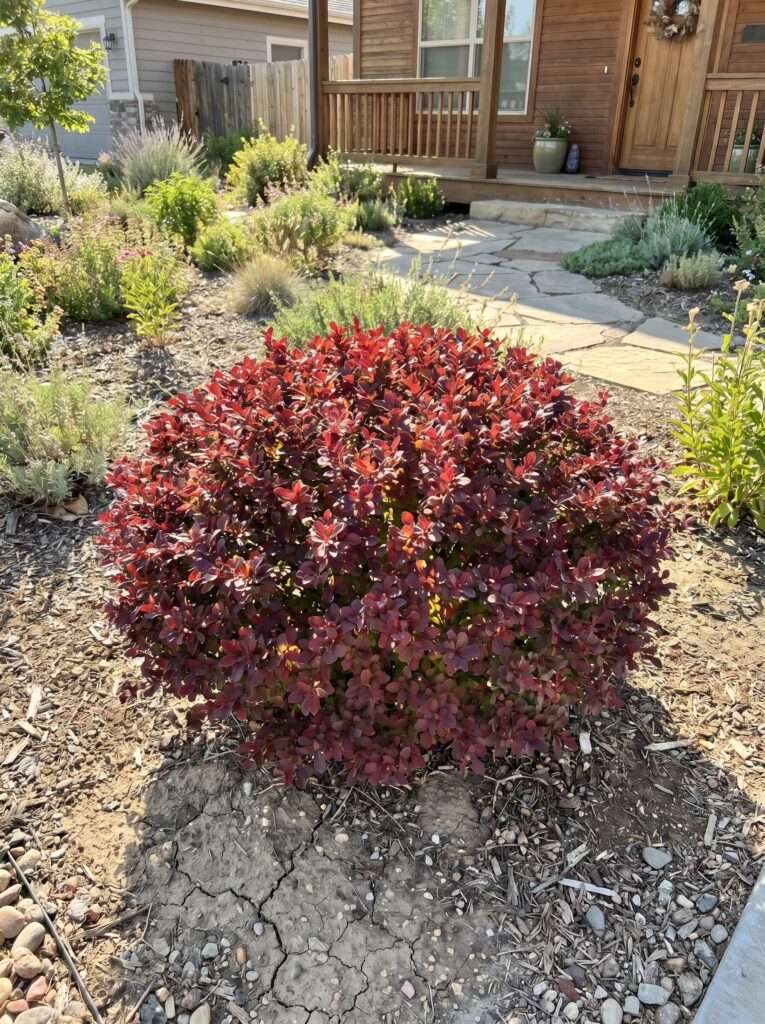
While you need to be mindful of standard barberry varieties in areas where they can be invasive, the cultivated dwarf dark-leaf varieties offer incredible color resilience in dry conditions. They feature deep crimson or deep gold leaves that look stunning when paired next to lighter green grasses or silver perennials.
The tiny thorns on the branches make them completely deer-proof, which is a massive benefit if your local deer herd treats your backyard like an all-you-can-eat buffet. It requires very little water once established and holds its deep coloration best when planted in absolute full, burning sun.
How to Start (Simple Plan)
Transitioning a garden bed over to water-wise shrubs doesn’t have to be a massive, expensive weekend project. If you’re looking to invest in the right gear before you start digging, check out my breakdown of gardening tools that are worth every penny so you don’t waste cash on things that snap on your first tough root.
- Step 1: Check the Drainage. Dig a hole about 12 inches deep in your chosen spot and fill it completely with water. If the water doesn’t drain away completely within an hour or two, you need to mix in plenty of coarse gravel or sand to improve soil aeration before planting.
- Step 2: Plant Slightly High. When placing your new shrub in its hole, make sure the top of the plant’s root ball sits about an inch above the surrounding soil level. This simple trick prevents water from pooling around the main stem, which causes rot.
- Step 3: Create a Basin and Mulch. Build up a small ring of soil around the outer edge of the planting hole to trap rainwater. Fill the area with a thick two-to-three-inch layer of natural wood mulch, making sure to keep the mulch from directly touching the main wooden bark of the shrub.
- Step 4: The Initial Water Schedule. For the first month, water the plant deeply twice a week. For the second month, cut back to once a week. After that, only water during severe three-week heatwaves with zero rain.
Things That Didn’t Work for Me
Over the years, I’ve made plenty of messy mistakes while trying to establish drought-tolerant planting layouts. Here are three specific things that completely failed in my personal experience:
- Over-fertilizing at planting time: I used to dump heavy amounts of rich organic fertilizer and compost into the holes of my native and dry-loving shrubs, thinking it would give them a great head start. It did the exact opposite. It forced soft, rapid green growth that required tons of water to sustain, causing the plants to collapse the moment a hot dry spell arrived. These plants prefer lean soil.
- Using fine, shredded dyed mulch: I once covered a dry garden bed with fine, heavily dyed black mulch because it looked clean online. It ended up matting together into a solid, crusty layer that blocked light rains from reaching the soil below. It also heated up the ground way too much. I now stick exclusively to coarse, natural arborist wood chips.
- Planting too close together: When you buy small, cheap starter pots from the nursery, it’s easy to crowd them together to make the bed look full quickly. My Russian Sage and Ninebark quickly grew into each other, blocking air circulation and creating a damp, mildewy mess at the base during early spring. Give them the space the plant tag recommends; they fill out faster than you think.
FAQ Section
It generally takes a full growing season for a shrub to establish its root system. You cannot plant a new shrub, walk away, and expect it to survive a dry summer immediately. Water it deeply during its first year; by year two, it can handle dry conditions on its own.
Yes, most of the options listed here, like Ninebark, False Indigo, and Russian Sage, are incredibly cold-hardy down to northern zones. Just make sure to double-check your specific USDA growing zone before purchasing.
Not necessarily. A drip system can make the first year of establishing roots much easier, but once these shrubs are mature, regular rainfall is usually more than enough to keep them happy without extra irrigation systems.
This is almost always a sign of overwatering or poor soil drainage. When these specific plants get too much water at their roots, they exhibit the same symptoms as a dehydrated plant because their roots are suffocating and rotting under the soil.
It’s usually best to leave them alone until late winter or early spring. The old stems and dried flower heads help protect the crown of the plant from freezing temperatures and provide valuable food and shelter for winter birds.
Interestingly, while outdoor desert plants hate stagnant moisture, dealing with dry air indoors presents the exact opposite issue for your houseplants. If you struggle with that layout, you can use a few simple indoor plant humidity hacks to keep your tropical greenery from getting crispy edges during the winter.
Most ideas in this article come from years of real gardening experience and testing different plant layouts at home. Results may vary depending on your specific climate zone, soil type, and regular garden maintenance.

Aagam – Founder of SpruceTouch
Hi, I’m Aagam — the creator behind SpruceTouch. I’m a home and garden enthusiast who shares practical ideas for backyard design, garden projects, patio decor, and small outdoor spaces. Through SpruceTouch, I focus on simple and budget-friendly ways to improve outdoor living spaces.