Turning Your Patio Into an Outdoor Living Room: A Realistic Budget Guide
A patio doesn’t need to be large, expensive, or professionally designed to feel like another living room. Sometimes, all it needs is a comfortable place to sit, a little shade, a few plants, and enough lighting to make it enjoyable after sunset. Yet many homeowners have patios that are barely used because they feel more like an empty concrete space than an inviting extension of the house.
The biggest mistake is assuming that creating an outdoor living room means purchasing an expensive sectional sofa, installing a pergola, or replacing the entire patio floor. Those upgrades can certainly look beautiful, but they aren’t necessary to make an ordinary backyard patio more comfortable. A thoughtful furniture arrangement, a defined seating area, and a few carefully chosen details can make a noticeable difference without turning the project into a major expense.
The best way to approach a budget patio makeover is to work with what is already there. An older concrete slab, a small wooden deck, or an awkward rectangular patio can all become useful outdoor living spaces. The important thing is to decide how you want to use the area before purchasing anything. You might want a quiet morning coffee corner, a place for family conversations, or a flexible space for weekend gatherings. Each purpose calls for a slightly different layout.
One relatively simple way to make an existing patio feel more like an indoor living room is to anchor the seating arrangement with a Low-Pile Polypropylene Outdoor Area Rug. It visually separates the conversation area from the surrounding patio, adds color to an otherwise plain surface, and gives furniture a more intentional arrangement. Choose a size that allows at least the front legs of your seating to rest on it. For uncovered patios, look for a rug designed for outdoor exposure and make sure it does not interfere with drainage or create a tripping hazard.
Affiliate Disclosure: As an Amazon Associate, SpruceTouch earns from qualifying purchases. This post may contain affiliate links, which means we may earn a commission at no additional cost to you.
1. Start by Deciding How You Want to Use Your Patio
Before moving furniture or buying decorations, spend a little time thinking about what the patio should actually do for your household.
An outdoor living room can serve several purposes, but trying to accommodate everything in one small area often makes it feel cluttered.
Consider these three questions:
- Will you primarily relax here? Prioritize comfortable chairs, a small coffee table, shade, and soft lighting.
- Will you entertain family and friends? Arrange the seats so people can comfortably face one another, with enough space for drinks and snacks.
- Will you use it for several activities? Divide the space into practical zones rather than filling it with one oversized furniture arrangement.
For example, a family with a 12 × 16-foot concrete patio might prefer a main conversation area near the house and a small dining corner toward the garden. Someone with a narrow 8 × 10-foot patio might get better results from two lounge chairs and a compact side table.
The goal is to make the space useful without filling every available square foot.
Measure the patio before shopping
Take measurements of the patio’s length and width. Also note the position of doors, steps, railings, outdoor outlets, and any walkways that people regularly use.
I recommend making a simple overhead sketch. You don’t need design software. A piece of graph paper is enough to show where the furniture might go.
You can even use painter’s tape to mark the approximate dimensions of a proposed sofa, chairs, and coffee table on the patio floor. This gives you a better idea of how much walking space remains before you spend money.
For particularly small spaces, take a look at Backyard Ideas for Small Spaces: Make the Most of Every Square Inch. It offers additional ways to make limited outdoor areas more functional.
2. Create an Inexpensive Outdoor Seating Layout
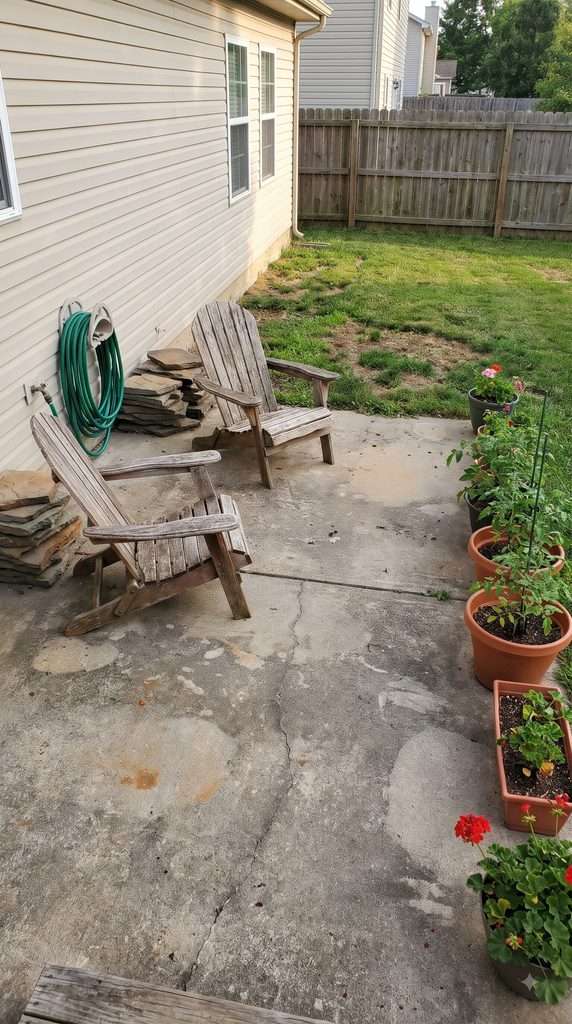
Furniture arrangement is one of the most important parts of turning a patio into an outdoor living room.
You don’t need a complete matching furniture collection. In fact, a few separate pieces can sometimes create a more relaxed and personal appearance than a large, bulky patio set.
The trick is to arrange the seating around conversation rather than lining every chair against the walls.
Here are four practical arrangements worth considering.
A simple loveseat and two-chair arrangement
This is a particularly useful arrangement for medium-sized patios.
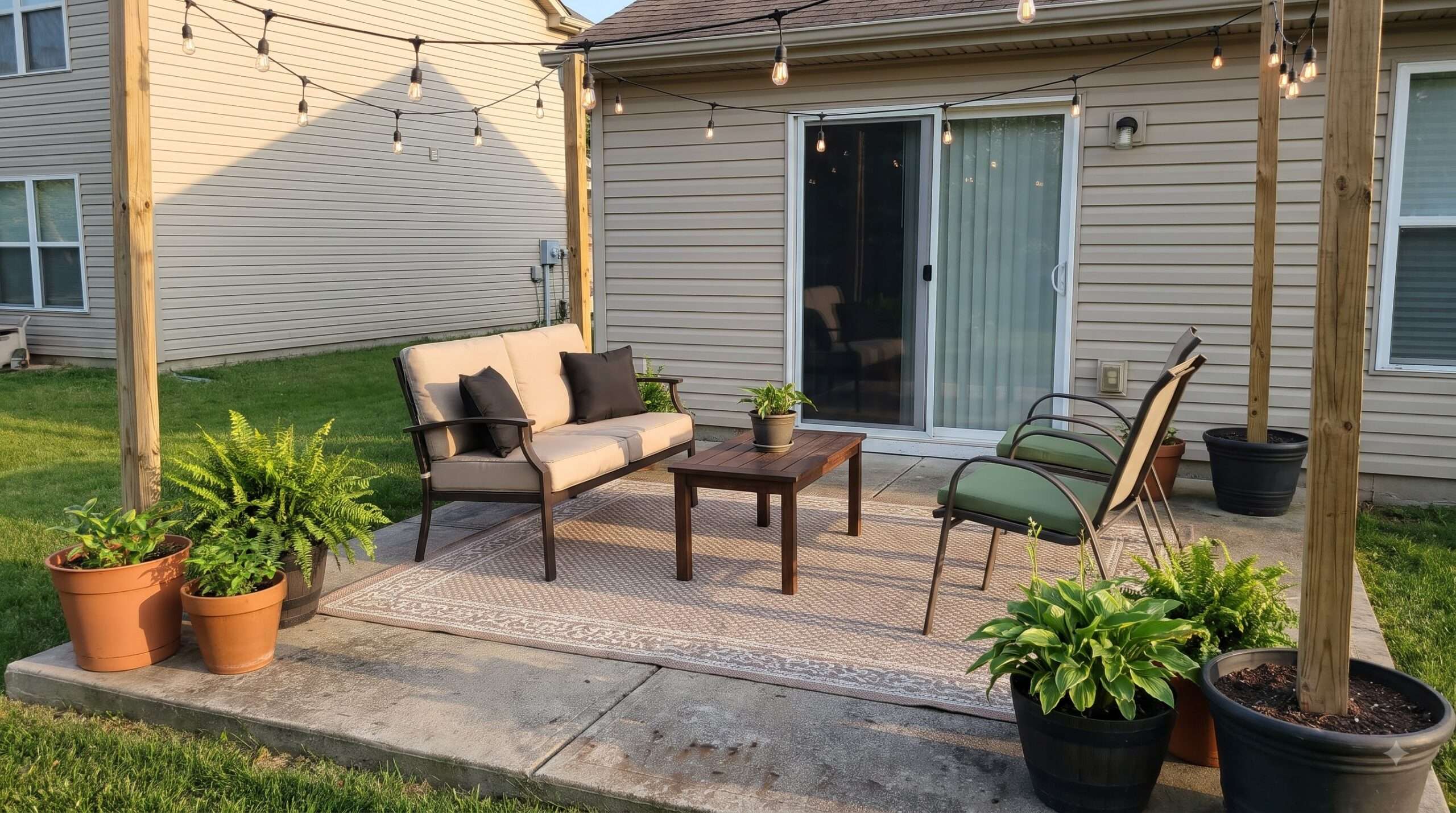
Position a loveseat along one side and place two individual chairs opposite it. A small coffee table in the center gives everyone somewhere to place a drink, book, or snack.
The arrangement naturally encourages conversation because people face one another instead of sitting in a straight line.
For a budget version, consider using a secondhand loveseat and two existing outdoor chairs. They don’t need to match perfectly. Similar cushion colors or a shared accent color can bring everything together.
Two chairs with a compact side table
For a narrow patio, two comfortable chairs may be all you need.
Place them slightly toward one another rather than directly against a wall. Add a compact round table between them, and leave the remaining floor space open.
This works particularly well beside a back door, near a garden entrance, or in an unused corner.
It’s also one of the most inexpensive outdoor seating layouts because you don’t need to purchase an entire furniture set.
An L-shaped conversation corner
An L-shaped seating arrangement works when you have a patio corner that otherwise feels empty.
Place a loveseat along the longer side and an individual chair or outdoor bench along the shorter side. The arrangement creates a comfortable conversation space while keeping the middle of the patio relatively open.
For a small patio, avoid deep sectional furniture that projects too far into the walking area.
A bench along the patio edge
A wooden bench can be an affordable alternative to a conventional outdoor sofa.
Position it along the edge of the patio, preferably where it doesn’t obstruct doors or garden access. Add washable outdoor cushions and a small side table.
This arrangement is especially useful when you occasionally need additional seating for guests.
If you enjoy creating dedicated garden corners, you may also like 17 Cozy Seating Nooks: Build Your Dream Garden Corner in One Weekend.
Choose furniture that fits your actual budget
When buying new furniture, prioritize frame condition, comfortable seat depth, replacement cushion availability, and weather suitability.
Aluminum-frame furniture is generally easy to move, while resin-wicker styles can give a patio a softer, traditional appearance. Wooden furniture can also work beautifully, but its finish and maintenance requirements depend on the wood and exposure.
For homeowners who need several seating pieces at once, a Compact All-Weather Patio Conversation Set with Cushions can simplify the process. Look for a manageable two-to-four-person arrangement rather than automatically choosing a large sectional.
Before buying, check the assembled dimensions, seat height, frame material, cushion specifications, and whether the cushions are removable.
One important budget tip: don’t replace perfectly usable furniture just because its finish looks dated. Cleaning metal frames, tightening loose hardware, and refreshing cushions can be far cheaper than purchasing an entirely new set.
3. Make Old Patio Furniture Look More Comfortable
A patio can have perfectly functional furniture and still feel uncomfortable.
Often, the problem is not the furniture itself but the condition of its cushions, the lack of back support, or the absence of small surfaces where people can put their belongings.
Start with what you already own.
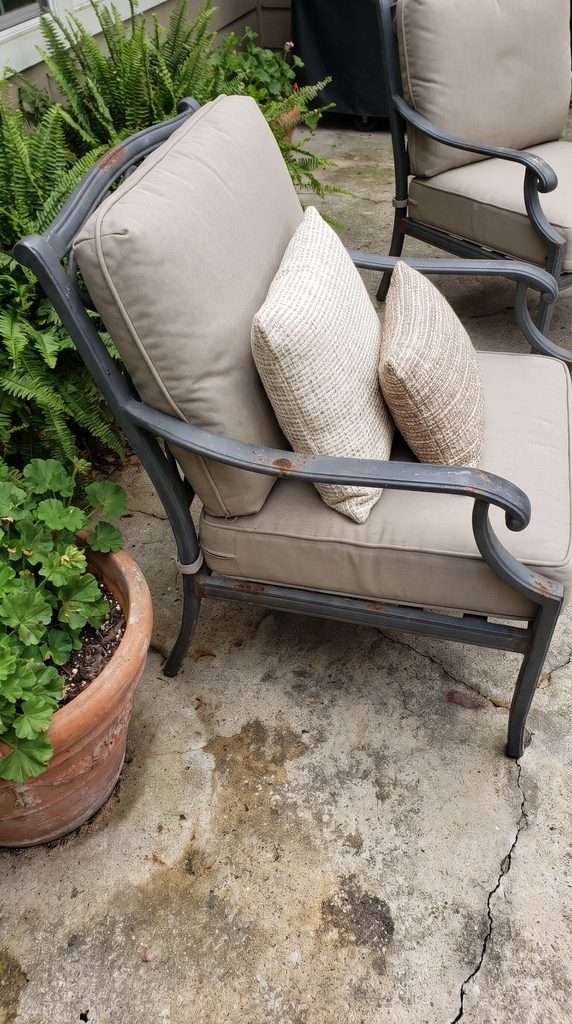
Wash removable cushion covers according to their care labels. Inspect seams and zippers, and check whether foam inserts have become flattened or waterlogged. If the frames are sound, concentrate your spending on the parts that people actually touch.
A fresh cushion color can change the entire appearance of older patio chairs. Warm beige, muted olive, charcoal, terracotta, and soft blue all work well with natural wood, concrete, and greenery.
A set of Fade-Resistant Outdoor Chair Cushion Covers is particularly useful when the existing cushions have decent inserts but their fabric looks worn.
Choose fabric specifically intended for outdoor exposure, and check its UV and water-resistance claims. Removable, washable covers can also make cleaning easier.
You can keep the rest of the arrangement simple. Two coordinated pillows, a small outdoor coffee table, and a lightweight throw that you bring outside only when needed are often enough.
A practical detail worth remembering: Outdoor cushions don’t become waterproof simply because they’re advertised as weather-resistant. Extended rain exposure and trapped moisture can shorten their useful life. Keep removable cushions dry when possible, especially during prolonged wet weather.
4. Use Shade to Make the Patio More Comfortable
An outdoor living room needs to be comfortable at the time you actually want to use it.
A beautiful seating arrangement won’t be particularly useful if the afternoon sun makes the chairs too hot.
Fortunately, there are several ways to add shade without constructing a permanent roof.
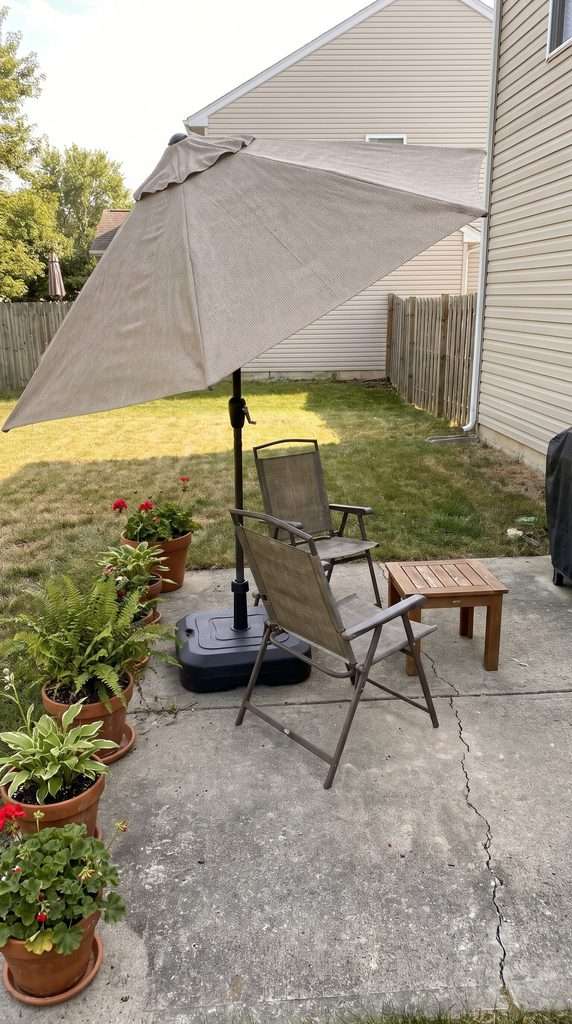
Use a freestanding patio umbrella
A patio umbrella is one of the most flexible shade options.
You can position it over a loveseat, conversation area, or small outdoor table. Some models tilt, making it easier to adjust the shaded area as the sun moves.
For this type of setup, a Tilting Outdoor Patio Umbrella with Weighted Base is a practical purchase to consider.
Pay attention to the canopy dimensions, pole compatibility, base requirements, and the manufacturer’s recommended base weight. A larger umbrella isn’t automatically better if your patio doesn’t have enough room to position it safely.
Close and secure the umbrella whenever strong winds are expected. Never rely on the canopy being heavy enough to remain stable during gusty conditions.
Try a simple shade sail
Shade sails are another possibility when you have suitable attachment points.
They can provide shade over a rectangular patio without taking up additional floor space. However, the attachment points and hardware need to be appropriate for the wind loads involved.
Avoid attaching a tensioned sail to weak fencing or decorative structures that were never designed to support it.
Use plants for a softer appearance
Tall container plants can provide a sense of enclosure and visual relief from direct sunlight, although they won’t replace proper overhead shade.
Place planters near exposed seating corners, but avoid blocking paths or creating a crowded arrangement.
For more ways to make an outdoor area comfortable during hot weather, explore 15 Genius Ways to Keep Your Patio Cool Even in Extreme Summer Heat.
5. Add Plants to Make the Patio Feel Like an Extension of the Garden
One reason indoor living rooms feel comfortable is that they have a balance of furniture, color, texture, and decorative details.
You can recreate some of that feeling outdoors with plants.
You don’t need an elaborate landscaping project. A few well-positioned containers can make an ordinary concrete patio feel connected to the surrounding garden.
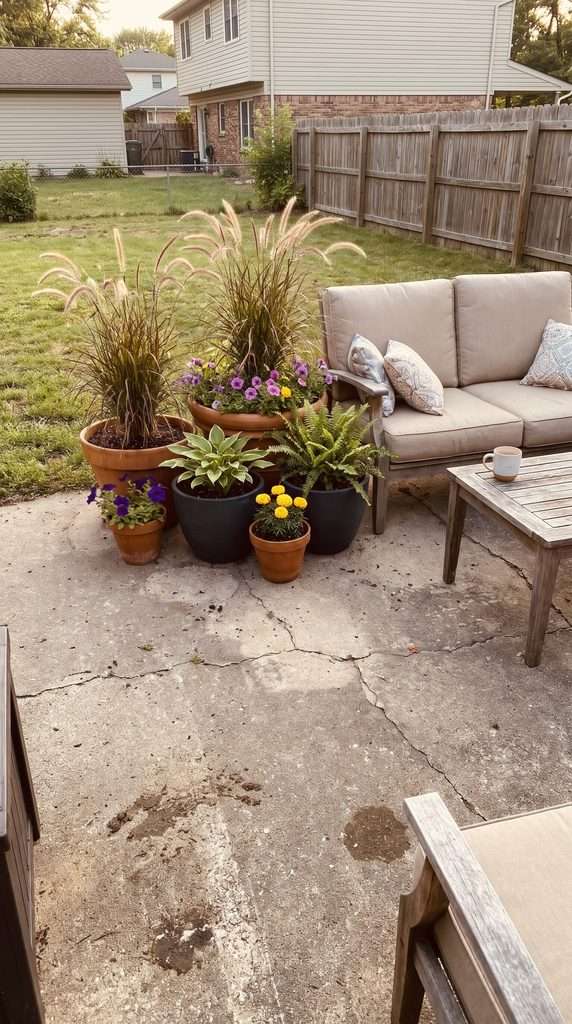
Group planters in different heights
Rather than distributing small pots randomly, try grouping two or three containers near one corner.
Use different heights to create a more natural arrangement. A taller planter can hold an ornamental grass, while smaller containers can accommodate flowering annuals or foliage plants.
Choose plants according to the amount of sunlight that particular spot receives.
For example:
- Sunny patios can accommodate suitable sun-loving annuals and ornamental grasses.
- Partially shaded patios may work well with begonias, coleus, or other shade-tolerant plants.
- Deeply shaded patios need plants adapted to lower light rather than varieties that require several hours of direct sunshine.
Check your local growing zone and seasonal conditions before selecting plants for permanent containers.
Use plants as natural visual dividers
If the patio feels too exposed, place taller containers along one side.
This creates a softer boundary without building a permanent fence. It can also make a small seating area feel more private.
For additional inspiration, your existing How to Divide Your Backyard Into Outdoor Rooms Without Making It Feel Cramped explains how to create separate outdoor zones while maintaining an open appearance.
Reuse containers before purchasing new ones
Old ceramic pots, larger plastic containers, and suitable reclaimed planters can all help reduce costs.
Just make sure that containers have adequate drainage and are suitable for outdoor use. A beautiful decorative pot that holds standing water can cause problems for many plants.
I would rather see three well-maintained plants in useful containers than ten small decorative pots crowded around the furniture.
6. Use Lighting to Create an Outdoor Living Room After Sunset
Lighting is one of the most noticeable finishing touches when you turn a backyard patio into a living space.
During the daytime, furniture and plants establish the arrangement. In the evening, lighting helps define the atmosphere.
However, you don’t need expensive landscape lighting or professionally installed fixtures.
Hang warm-white café lights
Outdoor café lights are useful because they provide a soft glow across the seating area.
You can install suitable lights along an existing covered patio structure or use properly designed outdoor-rated supports.
A Warm-White Outdoor LED Café String Light Set is a good option when you want consistent evening lighting without installing multiple permanent fixtures.
Before purchasing, check the length, bulb replacement options, connection limits, outdoor-use rating, and manufacturer’s installation instructions.
For electrically powered lighting, use products designed for the intended outdoor application. Use appropriate outdoor outlets and GFCI protection, follow the manufacturer’s installation instructions, and avoid running cords where furniture legs, doors, standing water, or foot traffic can damage them.
Add a few solar path lights
Solar lights can be useful around the perimeter of the patio or along the route from the lawn to the seating area.
They won’t necessarily provide enough illumination for reading or detailed tasks, but they can make the surrounding space easier to navigate.
Don’t make every corner equally bright
A good outdoor seating arrangement doesn’t need to be illuminated like a parking area.
Concentrate your main lighting around the chairs and table, then use softer accent lighting around planters or along the patio edge.
For more detailed inspiration, see 18 Best Cozy Patio Lighting Ideas for Evenings Outdoors.
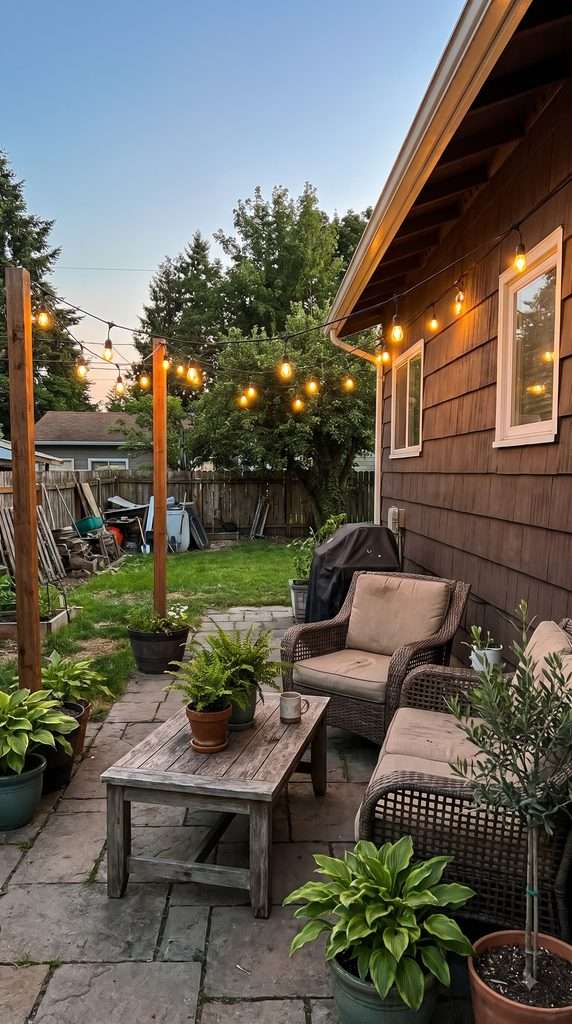
7. Add a Small Coffee Table and Useful Surfaces
A living room feels incomplete when there is nowhere to put a drink, book, or remote control.
The same applies to an outdoor seating area.
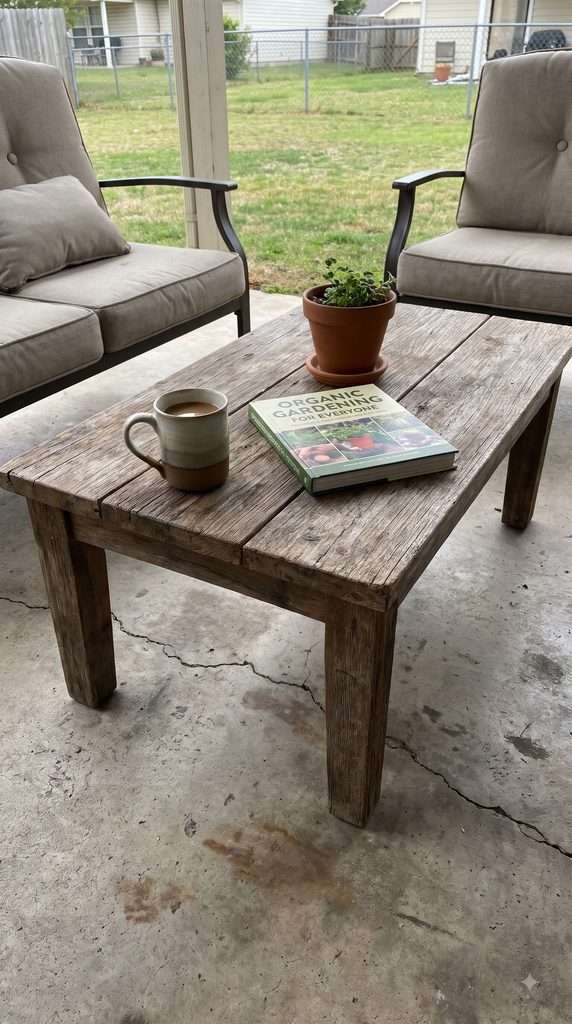
A coffee table doesn’t need to be expensive or particularly decorative. It simply needs to be the right size and suitable for outdoor conditions.
You could use:
- A small weather-resistant wooden table.
- A compact metal side table.
- A sturdy outdoor stool.
- A refurbished table from an existing indoor furniture collection, provided its materials and finish are suitable for the intended exposure.
For a narrow patio, two small side tables may be more useful than one large coffee table.
Try to keep tables within comfortable reach of the seats without restricting people’s movement.
Avoid using indoor furniture outdoors indefinitely unless its materials and finishes can withstand moisture, sunlight, and temperature changes.
8. Organize the Patio So It Stays Comfortable
One of the easiest ways to make a patio look unfinished is to leave cushions, gardening supplies, toys, and miscellaneous items scattered around the seating area.
Outdoor living spaces need practical storage just like indoor rooms.
A small storage area can make an enormous difference, especially when the patio is used by children, pets, or several family members.
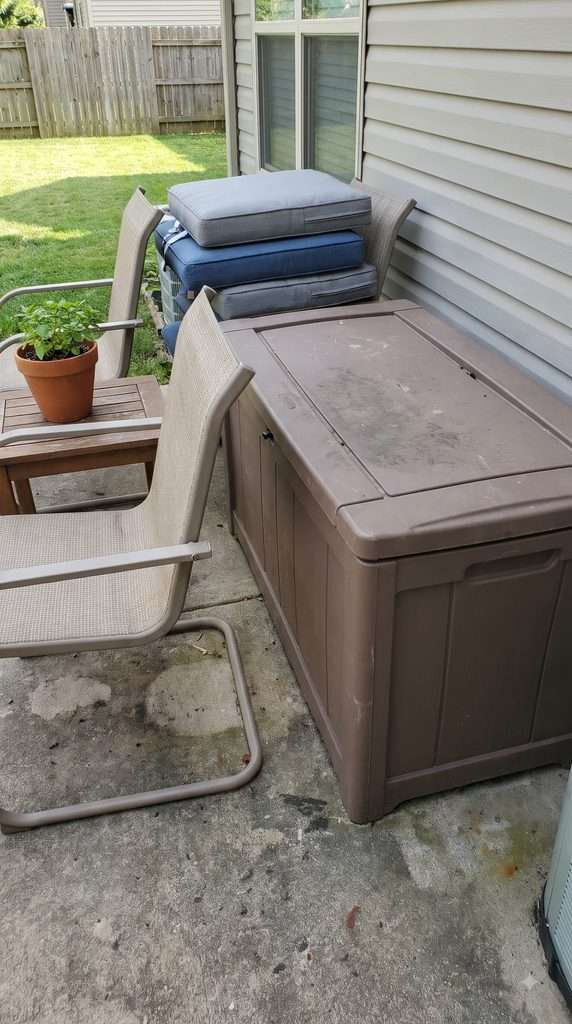
A Weather-Resistant Outdoor Deck Storage Box can provide space for removable cushions, garden accessories, outdoor games, and other lightweight items.
Before buying, check its dimensions, drainage arrangements, ventilation, lid mechanism, and whether the manufacturer permits any load-bearing use. Don’t use an ordinary storage box as a bench unless it is specifically designed and rated for seating.
You can also make a simple storage corner using existing shelving in a covered patio area.
Keep frequently used items accessible and store seasonal decorations elsewhere.
The less visual clutter you have around the seating area, the more like an outdoor living room it will feel.
9. A Realistic Budget for Your Patio Makeover
The best budget patio makeover guide should help you decide where to spend money and where to save it.
I recommend dividing the project into three levels.
The following are illustrative spending targets for decorating and furnishing an existing usable patio, not quotes or guaranteed current retailer prices. They exclude major paving work, structural construction, and professional installation.
| Budget level | Suggested spending | What to prioritize |
|---|---|---|
| Basic refresh | $100–$200 | Existing furniture, cushions, simple lighting, reused planters |
| Comfortable makeover | $200–$500 | Outdoor rug, better seating, cushions, lighting, plants |
| More complete makeover | $500–$1,000+ | New conversation set, shade, rug, storage, lighting and accessories |
A more substantial construction project is an entirely different expense. Professional patio installation, new foundations, permanent covers, and structural improvements can increase the budget significantly.
Example: Refreshing a patio for approximately $300
Here’s how a homeowner might allocate a modest budget when most of the existing furniture is still usable.
| Project | Example allocation |
|---|---|
| Outdoor rug | $60 |
| Replacement cushion covers | $45 |
| String lights | $35 |
| Planters and plants | $45 |
| Small side table | $35 |
| Cleaning and miscellaneous supplies | $20 |
| Remaining contingency | $60 |
| Total | $300 |
These are planning allocations, not verified product prices. Actual costs will vary by retailer, quality, location, and season.
The important point is that you don’t need to purchase everything at once.
Start with the improvements that solve the biggest problems. A patio with comfortable seating, usable shade, and a clean floor is already more functional than one filled with decorative accessories but nowhere comfortable to sit.
10. Common Patio Makeover Mistakes to Avoid
Even a relatively inexpensive project can become frustrating when purchases are made without considering the actual space.
Here are some mistakes worth avoiding.
Buying oversized furniture. A large sectional might look attractive online, but it can overwhelm a narrow patio. Measure the space and consider how people will walk around the furniture.
Choosing a rug that’s too small. A tiny rug floating in the center of a large seating arrangement can make everything feel disconnected. Whenever possible, allow the front legs of the furniture to sit on the rug.
Ignoring the weather. Some decorative fabrics and natural materials need protection from rain and direct sunlight. Choose products according to the exposure they will receive.
Adding too many planters. Plants should complement the seating arrangement rather than compete with it. Keep enough room for doors, walkways, and furniture access.
Forgetting practical lighting. Decorative lights may look attractive, but you also need enough illumination to navigate steps and uneven surfaces safely.
Making expensive permanent changes too soon. Before committing to a pergola, new deck, or major floor renovation, try the layout using movable furniture and temporary accessories.
Decorating before cleaning. Dirt, mildew, old leaves, and neglected furniture can make even new accessories look out of place. Clean and inspect the existing patio before deciding what needs replacing.
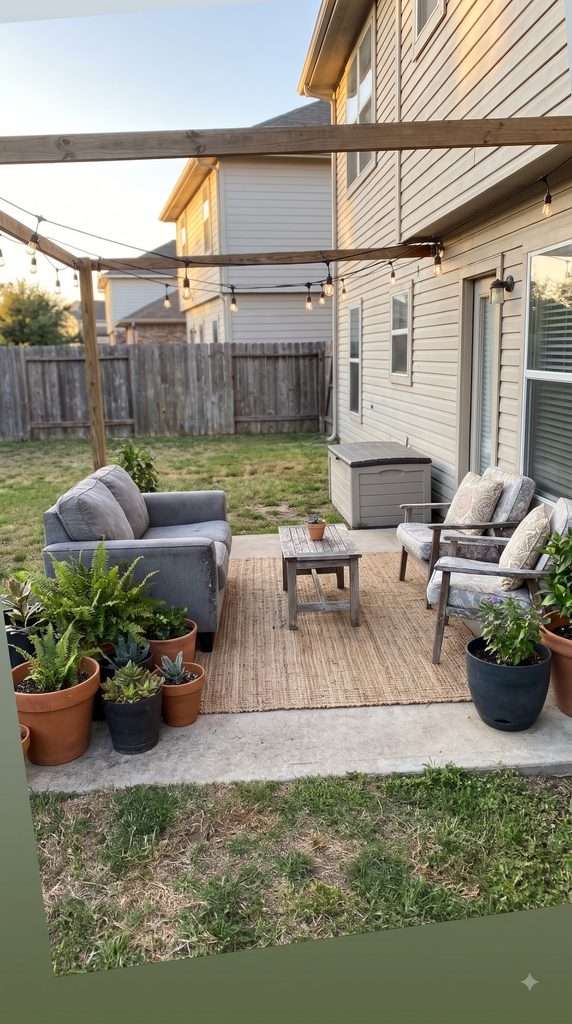
11. A Simple Weekend Plan to Turn Your Patio Into an Outdoor Living Room
You don’t have to complete every improvement in one day. Breaking the work into manageable stages makes it easier to stay within your budget.
Friday evening: Measure and plan
Measure the patio and sketch the proposed furniture arrangement. Decide which pieces you already have and what actually needs replacing.
Saturday morning: Clean and rearrange
Remove unnecessary items, sweep the floor, clean the furniture, and inspect any loose or damaged components. Position the seating before adding accessories.
Saturday afternoon: Add the main features
Place the rug, arrange cushions, position the coffee table, and set up suitable shade. Group your existing planters around the seating area.
Sunday morning: Finish the details
Install appropriate lighting, organize outdoor storage, and adjust the furniture to keep comfortable walking routes.
Sunday evening: Test the arrangement
Spend some time sitting in the finished space. Check whether the chairs are comfortable, the lighting is useful, and there is enough room to move around.
This final step matters. A patio should work for everyday life rather than simply look attractive in photographs.
Frequently Asked Questions
Start by cleaning the existing surface, rearranging your furniture, and defining a seating area with an outdoor rug. Refresh existing cushions, add suitable plants, and introduce affordable lighting. Reusing furniture before purchasing new pieces is one of the easiest ways to control costs.
Two comfortable chairs with a small side table are excellent for narrow patios. A compact loveseat and two chairs can work in a slightly larger space. Look for furniture that fits the available footprint without blocking doors or walking paths.
Use an outdoor rug, comfortable cushions, warm lighting, and a few planters. Adding a small coffee table and arranging chairs around it can help the patio feel more like an actual living room rather than an empty concrete slab.
An appropriately sized outdoor rug is one of the simplest options. Other possibilities include suitable exterior concrete paint or removable deck tiles. Choose according to the existing surface, drainage, exposure, and slip resistance. Don’t cover drainage points or hide damaged areas that need repair.
Try tall container plants, a freestanding privacy screen designed for outdoor use, or an appropriately installed shade structure. Position taller elements near exposed seating areas while keeping walkways open.
Absolutely. Clean and rearrange the existing chairs, reuse a suitable table, refresh old cushion covers, and add plants and lighting. A coordinated arrangement often makes older furniture feel more intentional.
Choose removable covers designed for outdoor exposure, follow their care instructions, and store cushions in a dry location during prolonged rain or when they aren’t in use. Weather-resistant fabric should not automatically be treated as completely waterproof.
No. An outdoor rug is optional, but it can help visually define a seating area, especially on plain concrete or paving. Make sure the rug suits the weather exposure and doesn’t create a trip hazard at doors or walking routes.
Conclusion: Make Your Patio Comfortable Before Making It Expensive
Turning your patio into an outdoor living room is less about purchasing an entirely new furniture collection and more about making the existing space work better.
Start with comfortable seating, a practical layout, and a little shade. Then introduce plants, lighting, and storage according to how you use the area.
You can complete the transformation gradually, purchasing only the pieces that genuinely improve comfort and functionality.
My biggest recommendation is to avoid trying to decorate every corner. Give the seating arrangement enough breathing room, leave the walking paths clear, and make the patio somewhere you naturally want to spend time.
A simple, well-arranged patio can become one of the most useful spaces around the house without requiring a costly renovation.
Transparency Note: This article draws on researched home-improvement guidance, established outdoor furnishing practices, and practical design considerations. Product recommendations have not been presented as personally tested products. Adapt furniture, materials, shade, and maintenance choices to your patio dimensions, local climate, and manufacturer’s instructions.

Aagam – Founder of SpruceTouch
I’m Aagam, a home and garden enthusiast who enjoys growing, building, and improving outdoor spaces. I focus on practical backyard projects, garden ideas, and simple DIY solutions that are useful in real homes. Through SpruceTouch, I share what I’ve learned, what worked, what didn’t, and the small details that can make an outdoor project easier.