
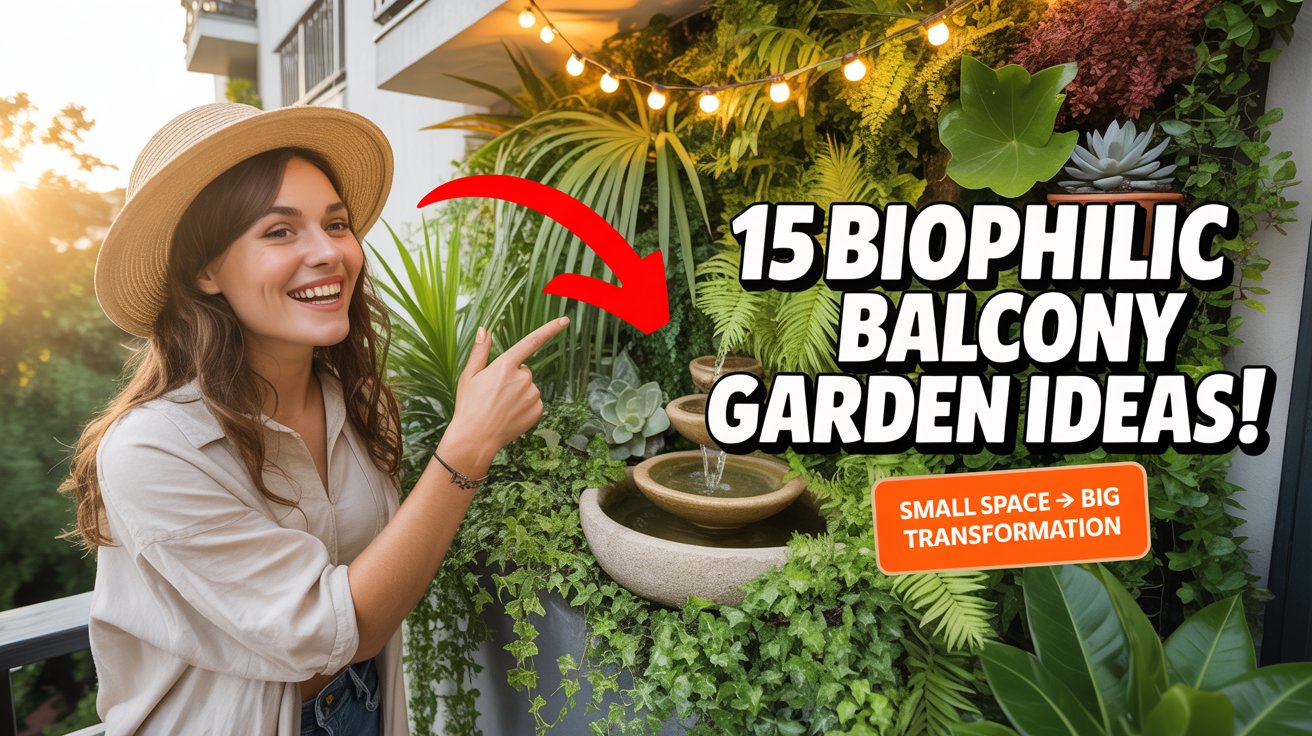
A couple of years ago, I had a balcony that looked… honestly, kind of sad. A few struggling pots, dusty railings, and zero personality. It wasn’t relaxing—it felt like wasted space.
Then I stumbled into the idea of biophilic design—bringing nature into your living space in a way that feels natural, calming, and alive. Not just plants… but experience.
The shift was dramatic. My balcony became my morning coffee spot, my evening unwind zone, even my mini escape after long workdays.
And here’s the secret: it’s not about adding more plants. It’s about choosing the right ideas that mimic how nature actually feels.
Below, I’m sharing the exact ideas that made the biggest difference—practical, budget-friendly, and tested in real small spaces.
Quick Selection Table (Top Picks)
| Idea | Best For | Budget Level | Effort | Impact |
|---|---|---|---|---|
| Vertical Jungle Wall | Small spaces | Medium | Medium | ⭐⭐⭐⭐⭐ |
| Hanging Herb Garden | Beginners | Low | Easy | ⭐⭐⭐⭐ |
| Natural Wood Deck Tiles | Cozy vibes | Medium | Easy | ⭐⭐⭐⭐⭐ |
| Balcony Water Feature | Relaxation | Medium | Medium | ⭐⭐⭐⭐⭐ |
| Shade-Loving Plant Corner | Low sunlight | Low | Easy | ⭐⭐⭐⭐ |
1. Create a Vertical Jungle Wall (Even in Tiny Balconies)
A vertical garden was the first real upgrade that made my balcony feel alive. Instead of crowding the floor with pots, I used wall space—and suddenly everything felt bigger and greener.
Start simple: buy a metal grid panel or even repurpose an old wooden frame. Attach small planters, coco pots, or recycled bottles. Nurseries often sell inexpensive wall planters, but honestly, local markets or even online deals can save you a lot.
The trick is layering. Mix trailing plants like pothos with bushier ones like ferns. This creates depth—like a mini forest wall. Keep watering manageable by grouping plants with similar needs.
One mistake I made early? Overcrowding. Plants need airflow, or you’ll end up with mold and pests. Keep small gaps—it actually looks better too.
Over time, this becomes your balcony’s “main character.” Everything else builds around it.
2. Hang a Floating Herb Garden Near the Railing
There’s something deeply satisfying about stepping outside and picking fresh herbs. Even a tiny balcony can handle this.
Use railing planters or hang small pots with jute rope. Basil, mint, coriander—they grow fast and forgive beginner mistakes. Local nurseries are usually cheaper than big garden stores, and seeds cost almost nothing.
Place them where they get morning sun. Herbs don’t like harsh afternoon heat (especially in warmer climates), so positioning matters more than quantity.
One real-life tip: rotate pots every few days. I learned this the hard way when one side of my herbs turned leggy and weak.
Avoid the mistake of planting too many herbs in one container—they compete for nutrients quickly.
3. Add Wooden Deck Tiles for Instant Warmth
If your balcony floor is plain concrete, this one change will blow your mind. Wooden deck tiles instantly make the space feel warm and natural.
You can find interlocking tiles online or in local hardware markets. They’re easy to install—no tools needed. Even renters can use them.
The magic is in how it changes the feeling. Plants suddenly pop more. Sitting outside feels intentional, not temporary.
Just make sure there’s proper drainage underneath. Cheap tiles without spacing can trap water and cause issues later.
Also, avoid super dark wood in very hot climates—it heats up quickly.
4. Design a “Nature Corner” With Mixed Textures
Instead of spreading everything out, create one dense, cozy plant corner. It mimics how plants grow in nature—clustered, layered, slightly wild.
Combine different heights: floor pots, stool-level plants, and hanging ones above. Add natural elements like stones, driftwood, or bamboo.
You don’t need expensive decor. I’ve used old bricks, broken pots, even pieces of wood from local shops. It’s more about feel than perfection.
Mistake to avoid: making it too symmetrical. Nature isn’t perfect—and your balcony shouldn’t be either.
This corner becomes your “escape spot.”
5. Install Soft Outdoor Lighting for Evening Calm
Biophilic design isn’t just visual—it’s sensory. Lighting plays a huge role.
Use warm LED string lights or solar lanterns. Avoid harsh white lights—they kill the mood instantly.
Wrap lights around railings or hang them loosely above seating. You don’t need perfection; a slightly messy look feels more natural.
Budget tip: local markets often sell affordable fairy lights that work just as well as expensive brands.
Mistake: over-lighting. Too many lights ruin the calm vibe. Keep it subtle.
🌟 PRO TIP
Layer light, plants, and texture—not just plants.
Most people focus only on greenery, but the real magic comes from combining elements. A simple plant corner with warm lighting and wood textures will feel 10x more natural than a balcony packed with random pots.
6. Use Hanging Planters to Free Up Space
Hanging planters are a game-changer for small balconies. They draw the eye upward and create that lush, cascading look.
Macrame hangers are popular, but even simple hooks with plastic pots work fine. Focus on trailing plants—they create movement.
Hang them at different heights to avoid a flat look. This adds visual depth instantly.
Mistake: hanging too low. You’ll keep bumping into them (trust me, it gets annoying fast).
Keep maintenance easy by grouping plants with similar watering needs.
7. Add a Small Water Feature (The Secret Upgrade)
This one feels like cheating—it transforms everything instantly.
A small tabletop fountain or DIY water bowl creates gentle sound, which makes the space feel alive.
You don’t need expensive setups. Even a ceramic bowl with a mini pump works.
Place it near seating—it becomes your relaxation anchor.
Mistake: ignoring maintenance. Stagnant water = mosquitoes. Keep it clean.
8. Reuse Old Containers for Planters (Budget Hack)
You don’t need fancy pots. Some of my best planters came from old buckets, tins, and containers.
Paint them or leave them rustic—it adds character.
Drill proper drainage holes (important). Without this, roots rot quickly.
This is perfect if you’re building your garden slowly without spending much.
Mistake: using containers that overheat (thin metal in strong sun).
9. Create a Mini Privacy Green Wall
Use tall plants like bamboo or areca palm to create privacy.
It blocks harsh views and makes your balcony feel like a hidden retreat.
Even budget-friendly nursery plants can do the job if grouped closely.
Mistake: choosing plants that grow too big for the space.
Trim regularly to maintain shape.
🌿 10. Add a Compact Seating Nook
A garden without a place to sit feels incomplete.
Use foldable chairs or even a floor cushion setup.
Keep it flexible—small spaces need adaptability.
Mistake: overcrowding with bulky furniture.
Let plants remain the focus.
🌟 GROWING SECRET
Group plants by sunlight, not aesthetics.
It’s tempting to arrange plants based on looks, but survival comes first. Always observe where sunlight hits during the day, then place plants accordingly. This alone can double your success rate.
11. Use Shade-Loving Plants for Low-Light Balconies
If your balcony doesn’t get much sun, don’t fight it—work with it.
Go for snake plants, ferns, peace lilies. They thrive in indirect light.
They’re also low-maintenance, perfect for busy routines.
Mistake: overwatering. Shade plants need less water than you think.
Let soil dry slightly between watering.
12. Layer Plants for a “Forest Feel”
Instead of random placement, think in layers—tall, medium, low.
This mimics real ecosystems and looks instantly more natural.
Use stools or crates to elevate certain plants.
Mistake: keeping everything at one level. It looks flat and boring.
Depth is everything.
13. Add Natural Textures (Stone, Bamboo, Clay)
Biophilic design isn’t just plants—it’s materials.
Use clay pots, bamboo sticks, or small stones.
These elements make your space feel grounded and organic.
Mistake: mixing too many styles. Keep it consistent.
Choose 2–3 materials max.
14. Build a $50 Balcony Garden Setup (Value King)
If you’re starting from scratch, here’s a realistic breakdown:
- ₹1000–1500 for basic plants
- ₹1000 for containers (or free DIY)
- ₹1000 for soil + fertilizer
- ₹1000–1500 for lighting or decor
That’s it. You don’t need luxury items.
Focus on essentials first—plants + layout. Decor can come later.
Mistake: spending too much early. Grow gradually.
15. Plan for Seasonal Rotation (2026 Trend)
The biggest upgrade you can make? Change your plants with seasons.
Summer: heat-tolerant plants
Winter: leafy greens or flowers
This keeps your balcony fresh all year.
You can even grow edibles—if you’re into that, you’ll love this guide on fast-growing vegetables you can harvest quickly from your garden.
Mistake: sticking with the same plants year-round.
Nature changes—your balcony should too.
❓ FAQs
1. What is biophilic design in a balcony?
It’s about creating a natural, calming environment using plants, natural materials, and sensory elements like light and water.
2. How many plants are enough?
Focus on placement, not quantity. Even 5–10 well-placed plants can transform a space.
3. What’s best for beginners?
Start with herbs and low-maintenance plants like snake plant or pothos.
4. How do I maintain a balcony garden easily?
Group plants by watering needs and use self-watering pots if possible.
5. Can I grow vegetables on a balcony?
Yes—and if you’re interested, pairing this setup with small-space greenhouse ideas can extend your growing season beautifully.
📅 Seasonal Maintenance Calendar
Spring: Repot plants, add new growth, fertilize
Summer: Water frequently, provide shade
Monsoon: Ensure drainage, prevent root rot
Winter: Reduce watering, protect sensitive plants
⚠️ Common Mistakes to Avoid
- Overwatering (most common killer)
- Ignoring sunlight patterns
- Overcrowding plants
- Choosing style over plant health
- Skipping drainage holes
🌿 Final Thoughts
A biophilic balcony isn’t built overnight—and honestly, that’s the best part.
You add one plant, then another. You tweak things, move stuff around, learn what works. Slowly, it becomes yours.
And one day, without realizing it, you step outside… and it just feels right.
Not perfect. Not Pinterest-perfect.
But alive. 🌱

Aagam – Founder of SpruceTouch
Aagam is a home and garden enthusiast who shares practical ideas for backyard design, garden projects, patio decor, and small outdoor spaces. Through SpruceTouch, he focuses on simple and budget-friendly ways to improve outdoor living spaces.