17 Best Hummingbird Flowers to Bring Flying Jewels to Your Yard
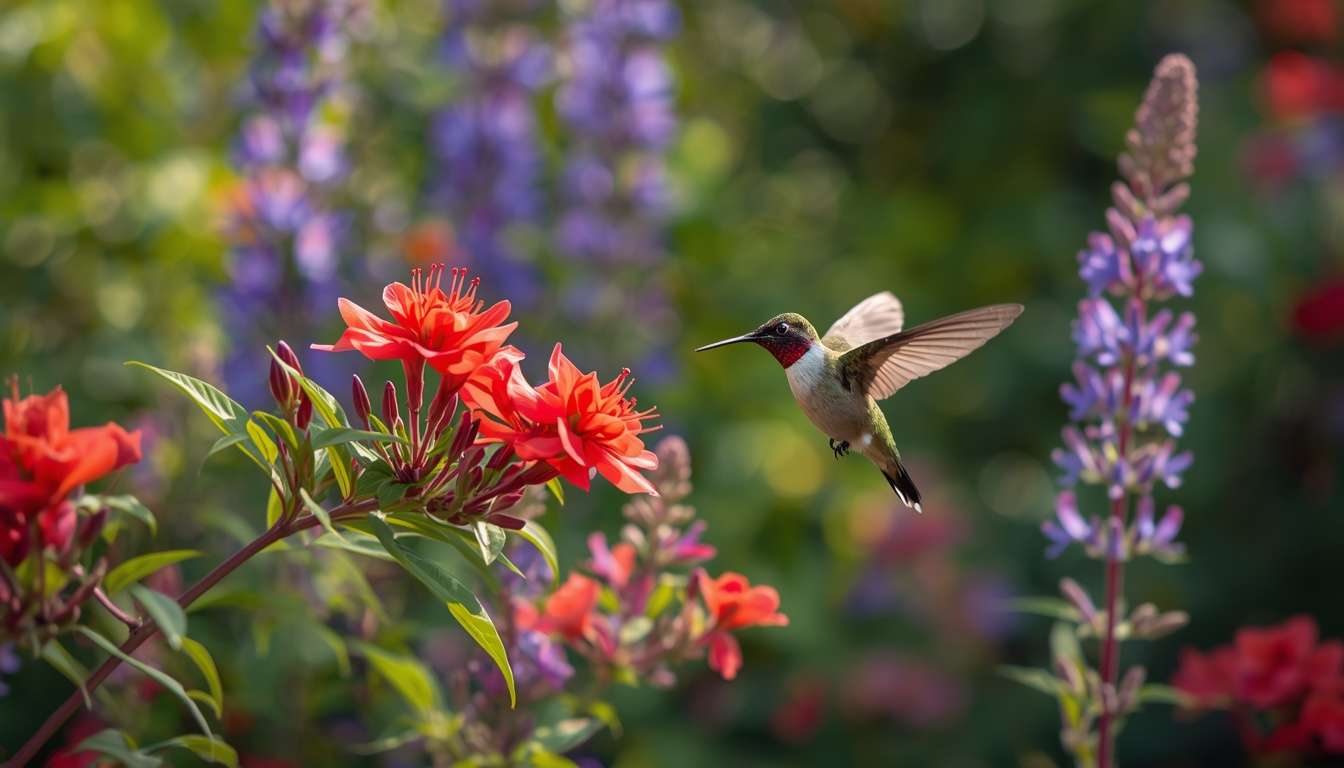
Hummingbirds are tiny, but once they discover a garden with plenty of flowers, they can become one of its most entertaining visitors. One minute, the yard is quiet; the next, a little bird is hovering beside a bright red flower, drinking nectar before darting toward another bloom. It is exactly the kind of activity that makes a garden feel alive.
The secret to attracting hummingbirds isn’t simply filling a flower bed with red flowers. These birds need a dependable supply of nectar, and different plants bloom at different times. A garden with early-spring flowers, summer blossoms, and late-season nectar sources has a better chance of remaining useful throughout the growing season.
That is why I would approach a hummingbird garden as a collection of flowering plants rather than relying on one particularly attractive variety. Native flowers are especially valuable because they are adapted to local growing conditions and can support other wildlife, too. You’ll find choices for different climates, sunlight conditions, soil types, and garden sizes in this guide.
Affiliate Disclosure: As an Amazon Associate, SpruceTouch earns from qualifying purchases. This post may contain affiliate links, which means we may earn a commission at no additional cost to you.
One practical thing to consider before planting is how you’ll water your flowers during dry spells, especially when several plants are growing together or you have containers near your front entrance. A Drip Irrigation Kit for Raised Garden Beds and Flower Borders can help deliver water more consistently to the root area, reducing the need to water each plant individually. It is particularly useful for larger flower beds, although a simple watering can works perfectly well for a small garden.
The 17 Best Hummingbird Flowers for Your Garden
These flowers include native perennials, flowering vines, shrubs, regional favorites, and a few container-friendly options. I’ve arranged them to cover different growing conditions and flowering seasons rather than treating every plant as suitable for every US garden.
1. Eastern Red Columbine (Aquilegia canadensis)
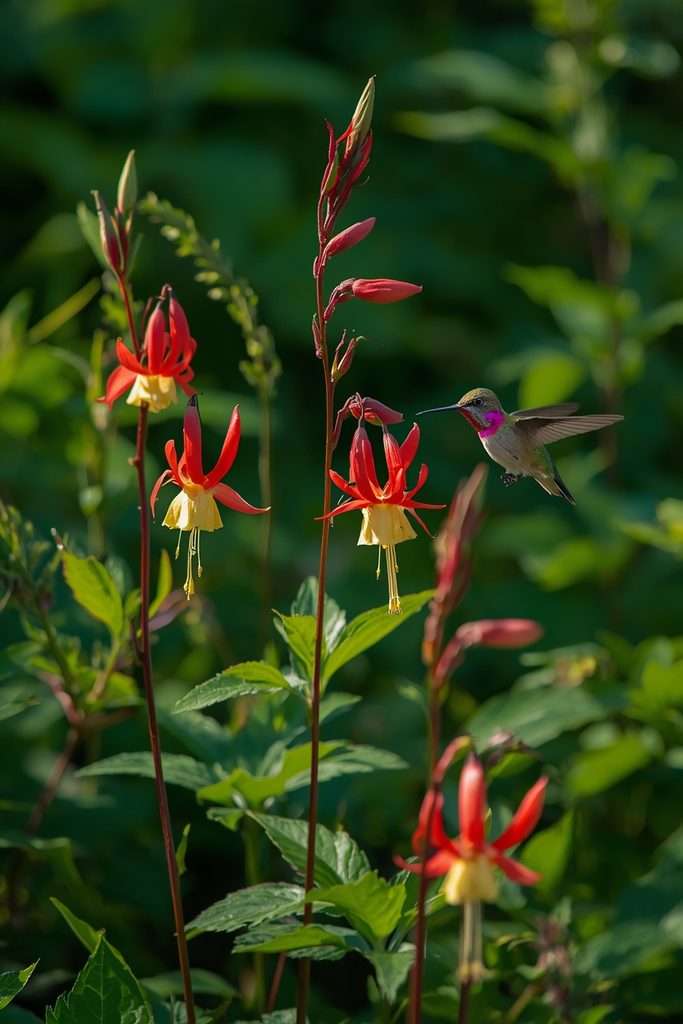
Eastern red columbine is one of the most useful flowers for a hummingbird garden because it provides nectar relatively early in the growing season. Its distinctive red and yellow flowers hang downward, creating a natural feeding spot for hummingbirds with long bills.
This North American native perennial is particularly suitable for eastern and central US gardens. It grows nicely in partial shade, although it can also tolerate sunnier locations when the soil stays reasonably moist.
I particularly like its appearance along woodland edges, beneath small trees, and near shaded front-yard borders. It also works in smaller gardens because it doesn’t need a large planting area.
- Bloom time: Spring to early summer.
- Sunlight: Partial shade to sun.
- Soil: Moist, well-drained soil.
- Best placement: Woodland borders, cottage gardens, and partially shaded front yards.
- Growing tip: Allow some seed heads to mature if you want the plant to self-seed naturally.
2. Scarlet Bee Balm (Monarda didyma)
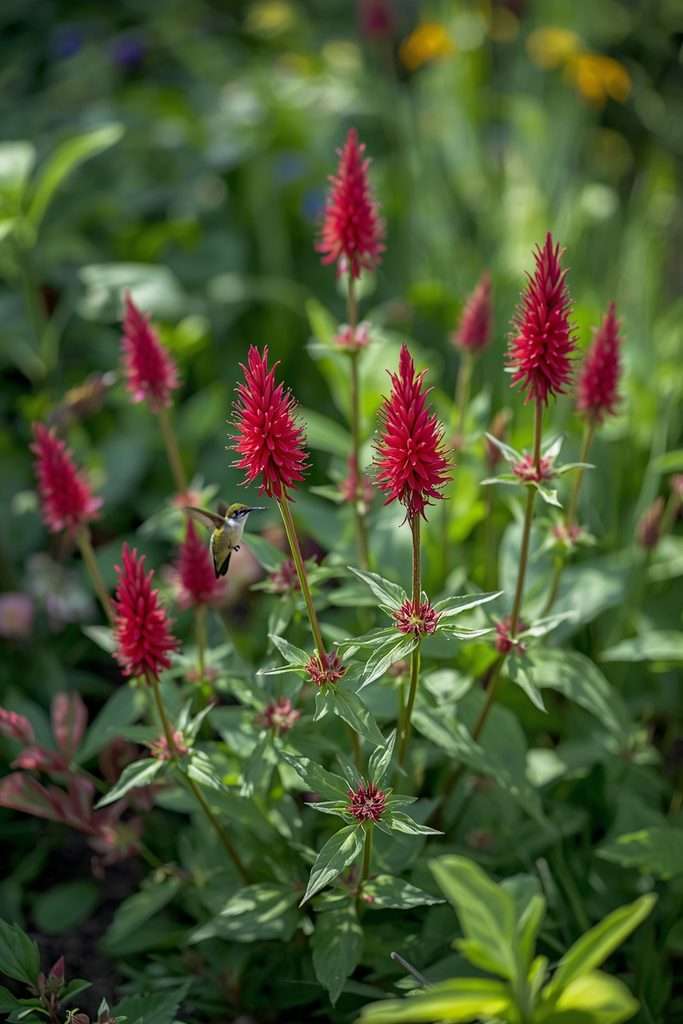
If you want a flower bed that immediately catches attention, scarlet bee balm is worth considering. Its unusual flower heads look like little crowns of red tubular blooms, and hummingbirds can visit the individual flowers for nectar.
Bee balm is a North American native perennial that suits many eastern and northeastern gardens. It generally prefers full sun to partial shade and soil that retains some moisture without becoming waterlogged.
One of its advantages is that it brings several kinds of pollinators into the garden. Bees and butterflies also visit its flowers, making it a useful addition to a wildlife-friendly planting.
There is one drawback worth knowing: powdery mildew can become an issue, particularly where plants are crowded or airflow is poor. Give it enough room and choose a variety suitable for your local conditions.
- Bloom time: Summer.
- Sunlight: Full sun to partial shade.
- Soil: Moist, well-drained soil.
- Best placement: Pollinator borders, cottage gardens, and sunny foundation beds.
- Growing tip: Divide established clumps when they become crowded.
3. Wild Bergamot (Monarda fistulosa)
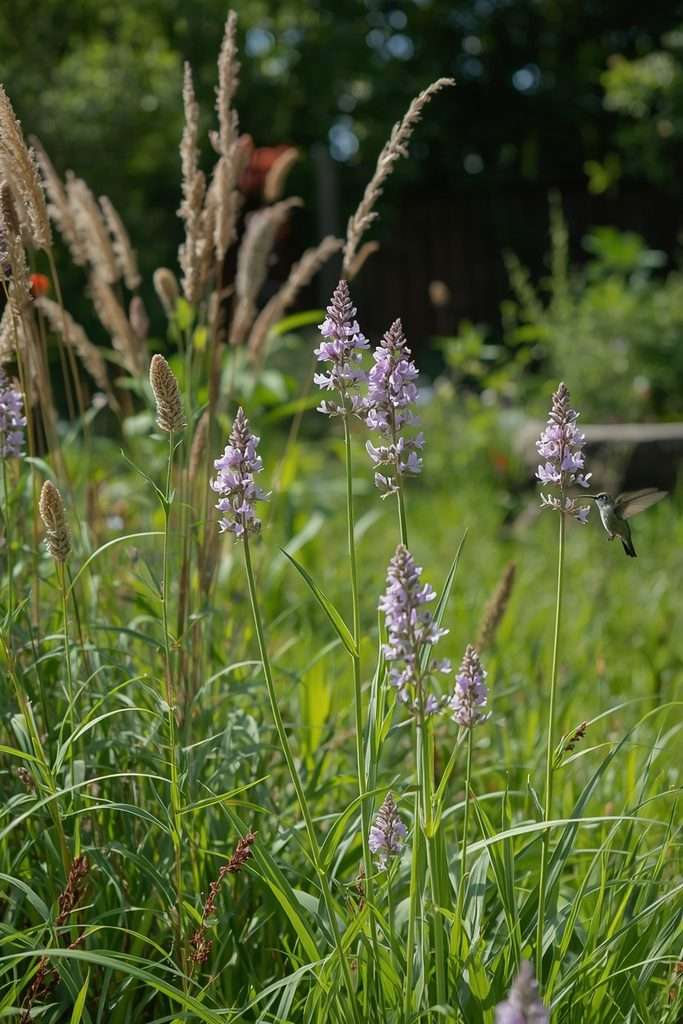
Wild bergamot is a lovely option when you want to attract hummingbirds without relying entirely on red flowers. Its lavender-pink flower clusters are attractive, nectar-producing blooms that hummingbirds regularly visit.
Unlike scarlet bee balm, wild bergamot is generally better suited to drier growing conditions once established. It grows naturally across much of North America and works particularly well in prairie-style gardens, naturalized borders, and low-maintenance flower beds.
I would combine it with other native flowering perennials rather than planting it as an isolated specimen. A few groups of plants create a more noticeable display and provide a useful feeding area.
This is also a good choice for gardeners who prefer a slightly relaxed, natural appearance rather than perfectly arranged flower beds.
- Bloom time: Summer.
- Sunlight: Full sun to partial shade.
- Soil: Well-drained, average to relatively dry soil.
- Best placement: Prairie gardens, wildlife borders, and sunny backyard beds.
- Growing tip: Avoid overcrowding, especially in humid climates where foliage diseases can develop.
4. Cardinal Flower (Lobelia cardinalis)
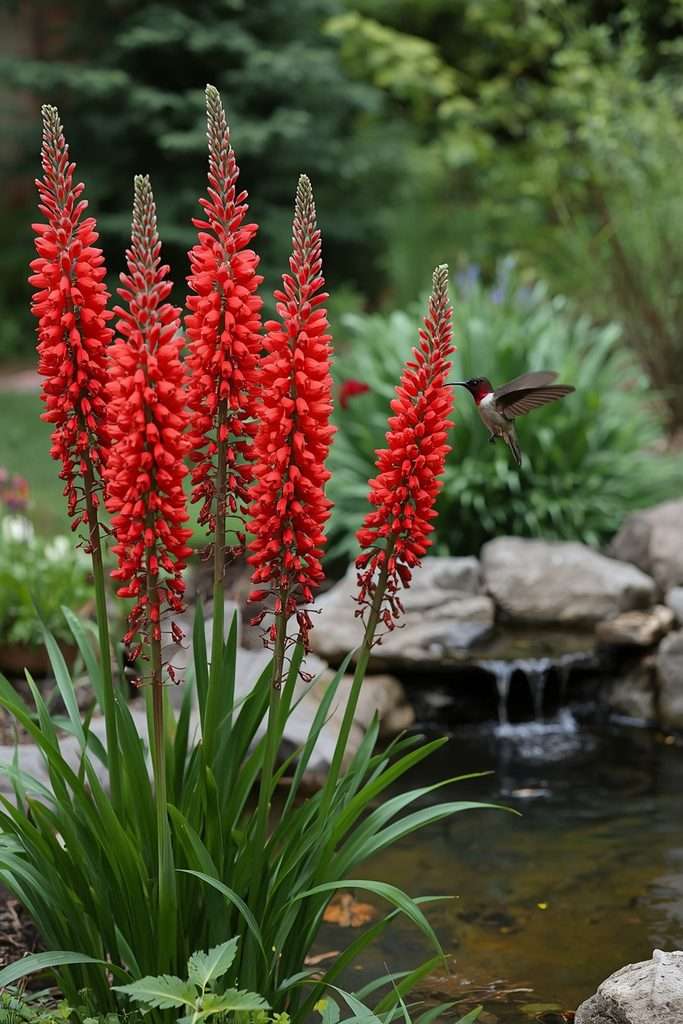
Cardinal flower is one of the most striking choices on this hummingbird flowers list. Its tall spikes of brilliant red tubular flowers are difficult to overlook, and hummingbirds are particularly well adapted to feeding from them.
It is a native perennial found across much of eastern North America. Unlike many flowers that prefer dry, sunny borders, cardinal flower appreciates consistently moist soil.
That makes it an excellent choice for the edges of rain gardens, damp garden beds, and places where other flowering plants may struggle.
The plant can be somewhat particular about drying out, especially during hot weather. A location with morning sunlight and some afternoon protection can be helpful in warmer regions.
- Bloom time: Late summer into fall, depending on location.
- Sunlight: Full sun to partial shade.
- Soil: Consistently moist, fertile soil.
- Best placement: Rain gardens, pond edges, and moist flower borders.
- Growing tip: Don’t allow young plants to dry out during their establishment period.
5. Coral Honeysuckle (Lonicera sempervirens)
If you have an empty fence, garden arch, or wooden trellis, coral honeysuckle can turn that unused space into a flowering hummingbird destination.
This native North American vine produces clusters of elongated red-orange flowers that are especially attractive to nectar-feeding birds. It generally blooms in spring and may continue flowering into summer, depending on growing conditions.
Coral honeysuckle is a much better choice than planting invasive Japanese honeysuckle. The two are different species, and Japanese honeysuckle can spread aggressively and overwhelm desirable vegetation.
Give coral honeysuckle a suitable climbing structure and enough sunlight for good flowering. It can be trained along fences and supports without needing the enormous space required by some vigorous flowering vines.
A Heavy-Duty Metal Garden Trellis for Climbing Flowering Vines is a useful addition when growing it against a wall or within a compact backyard. Choose a support securely fixed in place and large enough for the mature plant.
- Bloom time: Spring and summer, sometimes with additional flowering later.
- Sunlight: Full sun to partial shade.
- Soil: Well-drained soil.
- Best placement: Fences, arches, pergolas, and vertical garden spaces.
- Growing tip: Plant the roots in a suitable sunny spot while allowing the vine to climb a sturdy support.
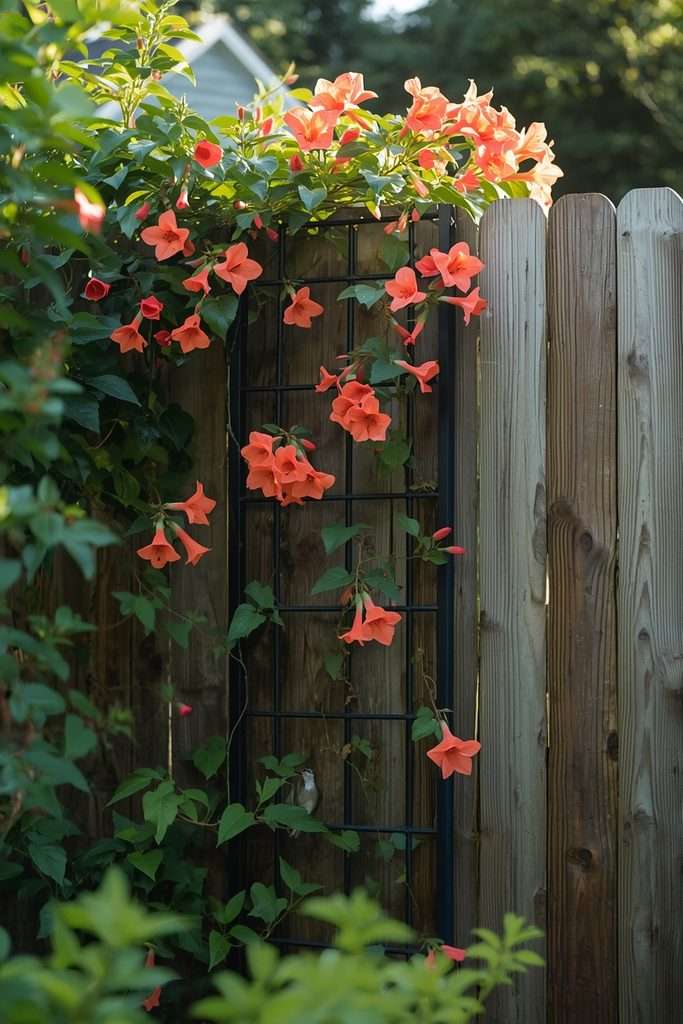
6. Foxglove Beardtongue (Penstemon digitalis)
Not every hummingbird-friendly flower needs to be bright red. Foxglove beardtongue is a good example of a native perennial with pale, bell-shaped tubular flowers that can attract hummingbirds.
Its upright flower stalks make it particularly useful in mixed perennial borders. The white blooms also provide a nice visual contrast against darker flowering plants such as bee balm and cardinal flower.
It is adaptable to different garden settings and can tolerate a range of soil conditions, provided drainage is reasonable. Full sun generally encourages good flowering, although some afternoon shade can be helpful in hotter locations.
For gardeners who prefer a natural-looking front yard, beardtongue works well between native grasses and other regional perennials.
- Bloom time: Late spring to early summer.
- Sunlight: Full sun to partial shade.
- Soil: Average, reasonably well-drained soil.
- Best placement: Native plant borders and mixed perennial beds.
- Growing tip: Choose locally appropriate Penstemon species because different beardtongues have different regional preferences.
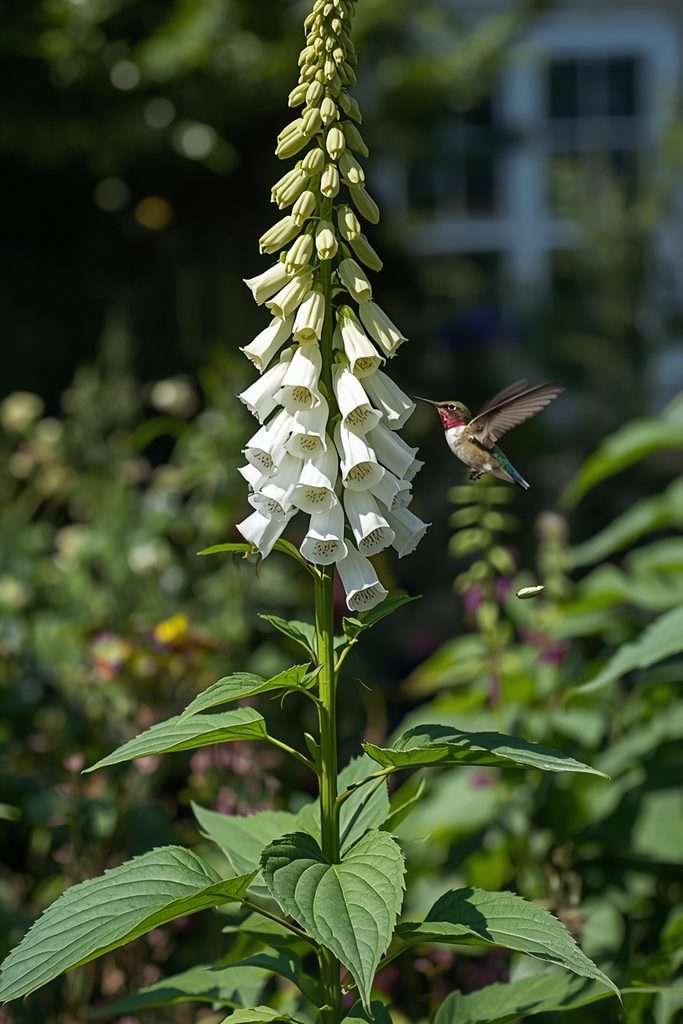
7. Scarlet Sage (Salvia coccinea)
Scarlet sage is an excellent option for gardeners who want plenty of flowering color during the warmer months. Its slender stems carry numerous red tubular blooms that provide opportunities for hummingbirds to feed.
It is native to parts of the southeastern United States and is particularly useful in warm-climate gardens. In colder areas, it is usually treated as an annual rather than a reliably hardy perennial.
One reason I would include it in a front-yard garden is its relatively light, airy growth. It doesn’t have the heavy appearance of some large flowering shrubs and can fit between other annuals and perennials.
It also works well in informal garden borders where flowers are allowed to grow in natural-looking groups.
- Bloom time: Summer through fall.
- Sunlight: Full sun to partial shade.
- Soil: Well-drained, moderately fertile soil.
- Best placement: Front-yard borders, annual flower beds, and warm-climate gardens.
- Growing tip: Remove damaged stems and spent flower spikes when needed to maintain fresh growth.
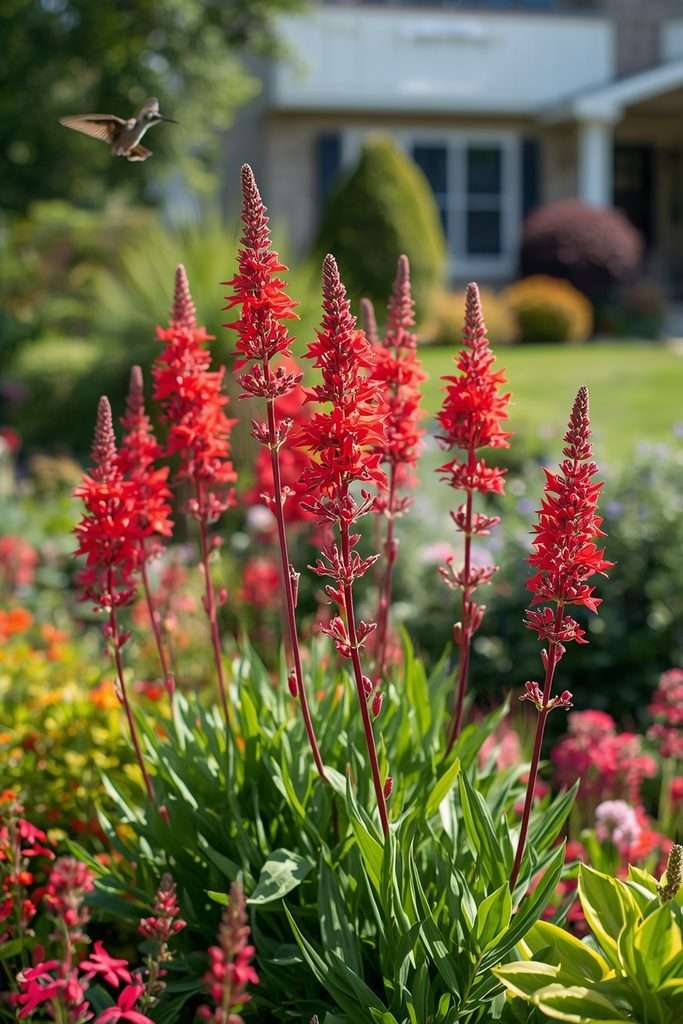
8. Hummingbird Mint (Agastache Species)
Hummingbird mint is a particularly interesting group of flowering plants because different Agastache species offer different flower colors, heights, and growing requirements.
Some produce lavender and purple flower spikes, while others have bright orange, reddish, or pink tubular blossoms. Many are popular with hummingbirds and other nectar-feeding pollinators.
For dry or drought-prone gardens, certain western species, including sunset hyssop (Agastache rupestris), are worth investigating. Anise hyssop (Agastache foeniculum) is another useful choice for suitable regions.
These plants generally appreciate sunny conditions and well-drained soil. They can work beautifully in a cottage-style border, gravel garden, or mixed pollinator planting.
One important detail: don’t assume every plant sold as hummingbird mint is native to your area. Check the botanical species and choose one suitable for your region.
- Bloom time: Summer into fall, depending on species.
- Sunlight: Full sun.
- Soil: Well-drained soil; many species dislike sitting in excessive moisture.
- Best placement: Dry flower beds, pollinator gardens, and sunny borders.
- Growing tip: Avoid excessive watering once drought-tolerant varieties are established.
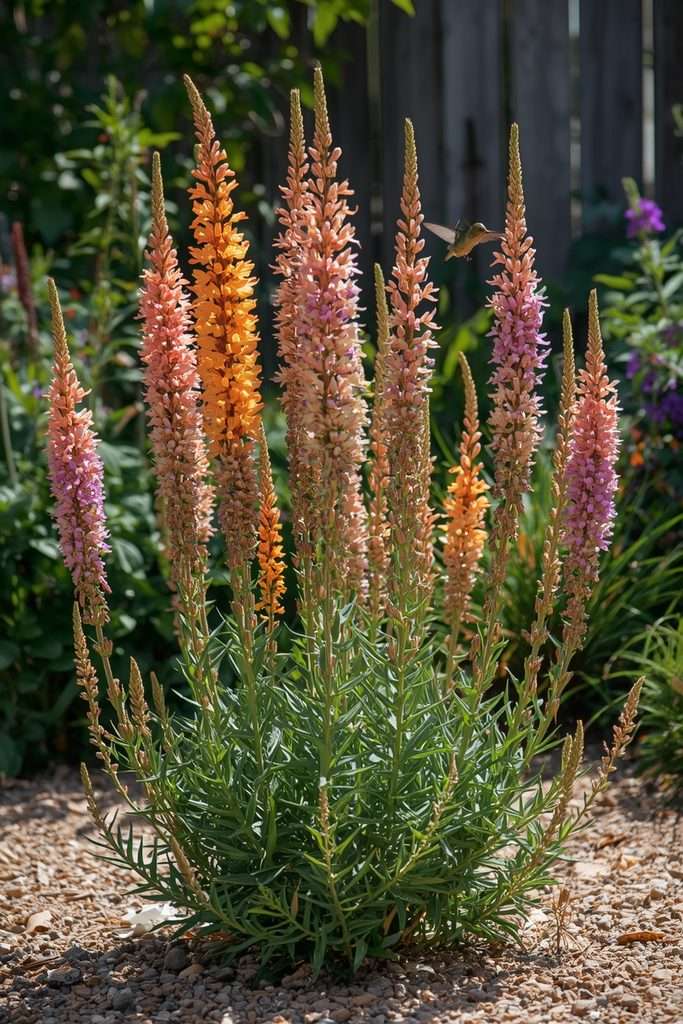
9. Jewelweed (Impatiens capensis)
Jewelweed is a lovely choice for a garden corner that stays damp and partially shaded. Its orange, sometimes spotted flowers hang delicately from the stems, providing an accessible nectar source for hummingbirds.
It is a North American native annual that often grows naturally along streams, woodland edges, and other moist locations.
Unlike plants that need several hours of strong sunshine, jewelweed can handle a shadier environment. This makes it useful when you’re trying to create a hummingbird-friendly space beneath trees or alongside a moist garden border.
It can self-seed quite freely when growing conditions are suitable. That is helpful when you want a naturalized planting, but gardeners with formal borders may prefer to remove unwanted seedlings.
- Bloom time: Summer through fall.
- Sunlight: Partial shade to shade.
- Soil: Moist to wet soil.
- Best placement: Woodland gardens, shaded pond edges, and damp corners.
- Growing tip: Allow a few healthy seed pods to mature if you want natural reseeding.
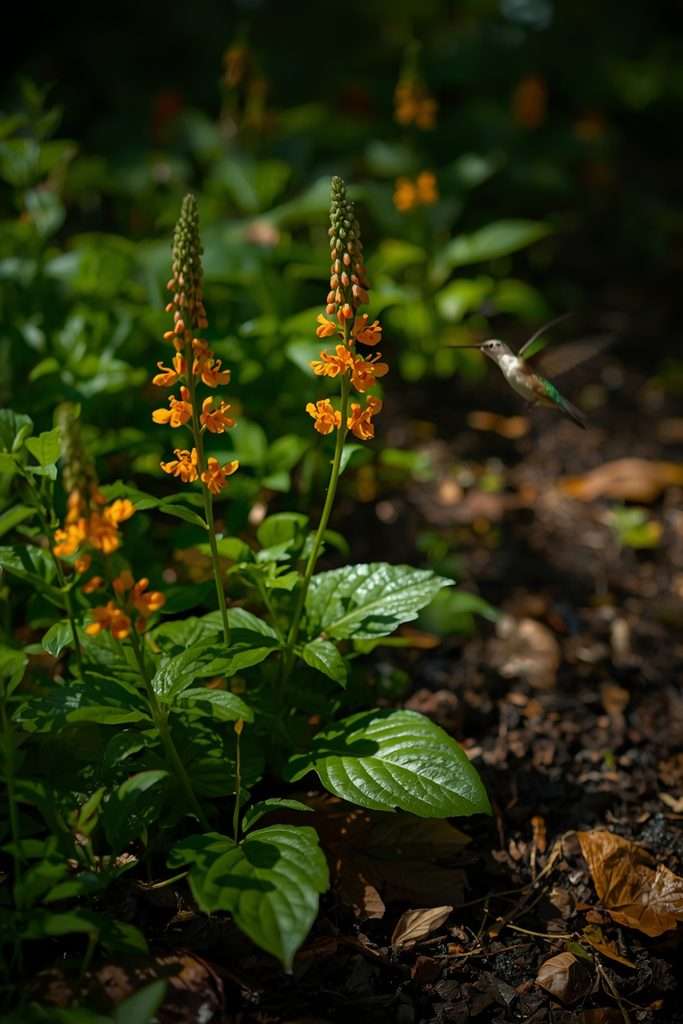
10. Fire Pink (Silene virginica)
Fire pink is one of those native wildflowers that looks almost too delicate to be real. Its vivid red petals have distinctive fringed edges, and its tubular flowers are an interesting nectar source for hummingbirds.
It is native to parts of eastern and central North America and can be a good addition to naturalized gardens and woodland-edge plantings.
Unlike some tall flowering plants, fire pink has a relatively modest appearance. It can be placed near the front or middle of a mixed flower bed without dominating the surrounding plants.
I would combine it with other native perennials that flower at different times. That way, the garden retains interest after the fire pink blooms begin to fade.
- Bloom time: Spring to summer, depending on location.
- Sunlight: Full sun to partial shade.
- Soil: Well-drained soil.
- Best placement: Native wildflower beds, woodland edges, and rock gardens.
- Growing tip: Provide good drainage and avoid keeping its roots excessively wet.
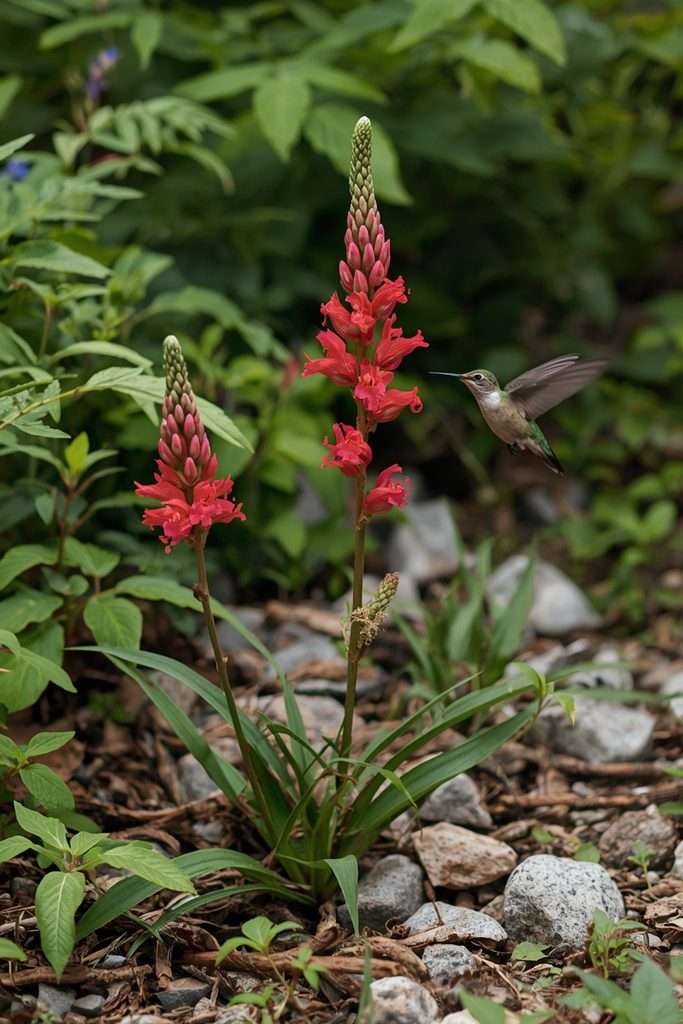
11. Red Buckeye (Aesculus pavia)
If you have enough room for a small flowering tree or large shrub, red buckeye deserves consideration.
This southeastern North American native produces upright clusters of reddish flowers in spring. Its flowering period can overlap with the arrival of migrating hummingbirds, making it a useful early-season nectar source.
Unlike many small flowering perennials, red buckeye adds height and structure to the landscape. It can create an attractive focal point near a front-yard lawn or along the edge of a larger garden.
It tolerates a range of light conditions, from partial shade to full sun, although it generally benefits from adequate soil moisture.
There is one important caution: buckeye seeds are poisonous if eaten, and its plant material should not be treated as edible. Choose its location thoughtfully, particularly where young children or pets play.
- Bloom time: Spring.
- Sunlight: Full sun to shade, depending on local conditions.
- Soil: Moist, well-drained soil.
- Best placement: Larger front yards, woodland edges, and mixed shrub borders.
- Growing tip: Allow enough space for its mature size and avoid placing it where fallen seed pods create a problem.
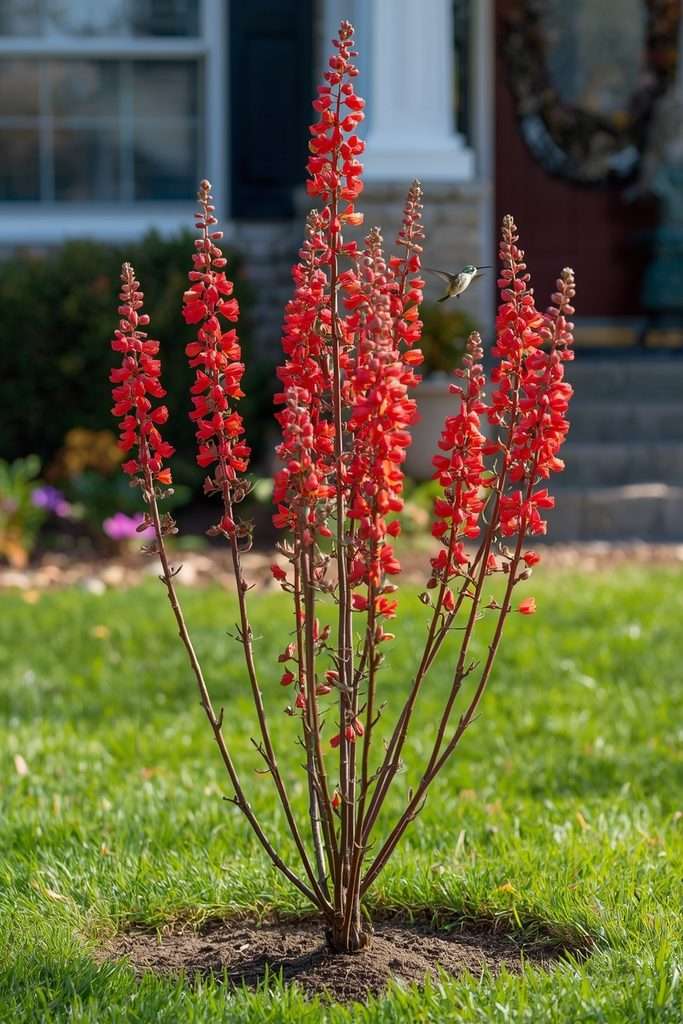
12. Red Flowering Currant (Ribes sanguineum)
For gardeners in the Pacific Northwest and suitable western regions, red flowering currant is a wonderful shrub to consider.
It produces drooping clusters of pink to reddish flowers during spring. These blooms offer an early-season nectar source, which is particularly useful in gardens where summer flowers haven’t started opening yet.
The shrub also provides structure. Rather than filling the whole border with low-growing flowers, you can place red flowering currant behind smaller perennials to create several planting layers.
It is best suited to climates that match its regional growing requirements. Hot, humid locations elsewhere in the country may not provide the conditions it prefers.
This is one of the plants that can make a hummingbird garden look attractive even when no birds are visiting.
- Bloom time: Late winter to spring, depending on climate.
- Sunlight: Full sun to partial shade.
- Soil: Well-drained soil.
- Best placement: Western native plant gardens, shrub borders, and naturalized front yards.
- Growing tip: Check local water and summer-temperature requirements before planting.
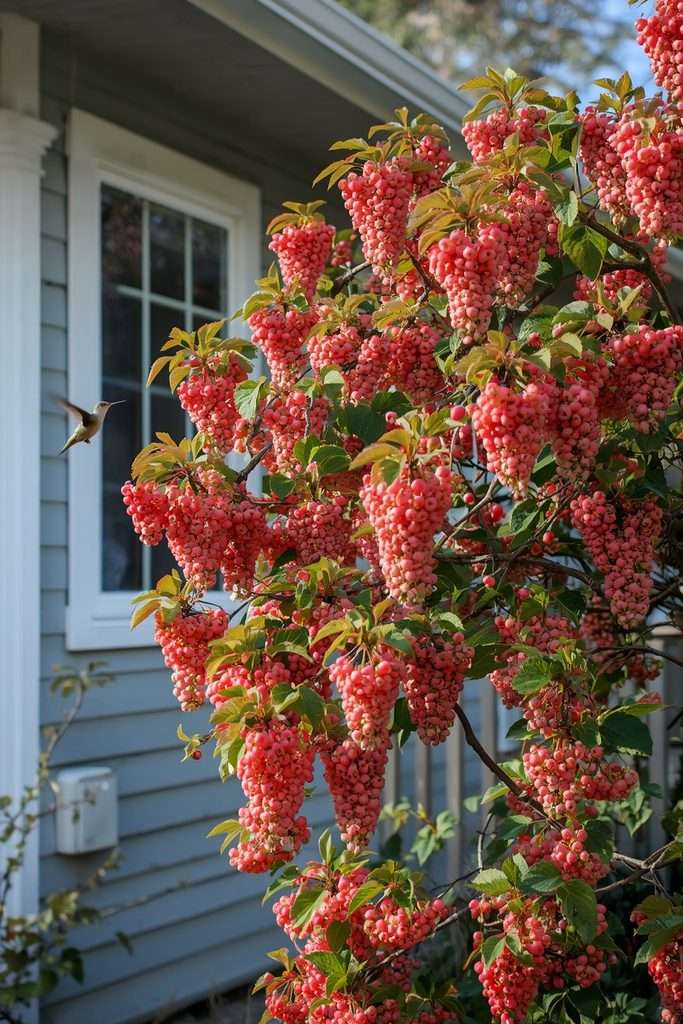
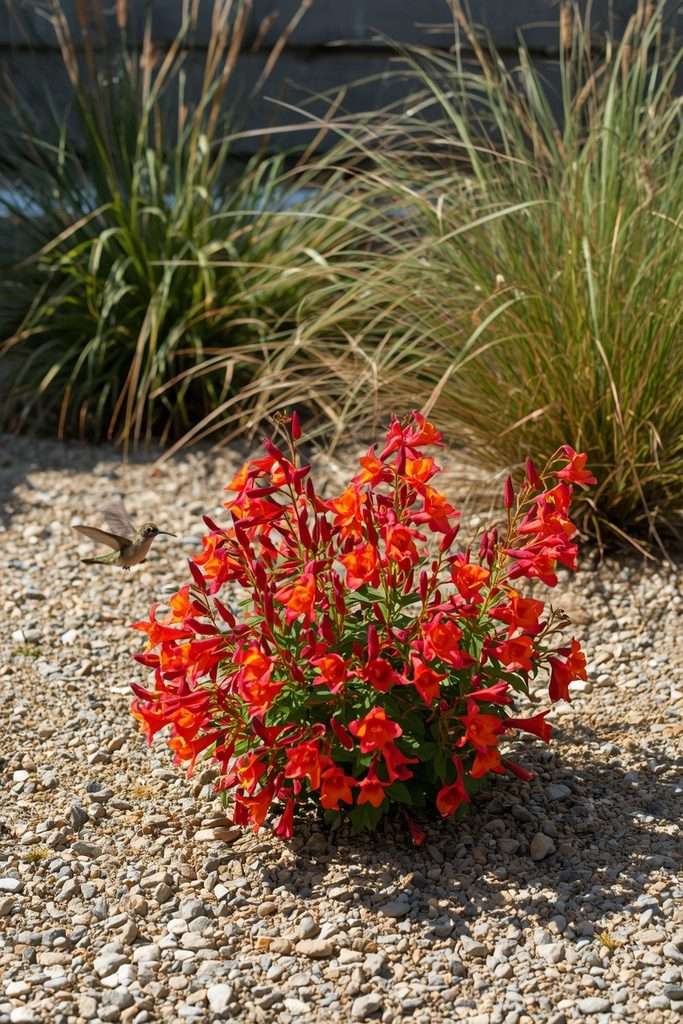
13. California Fuchsia (Epilobium canum)
California fuchsia is particularly useful when you want hummingbird flowers that continue blooming later in the growing season.
This western North American native produces bright red-orange tubular flowers, often just when many other drought-tolerant plants are beginning to slow down.
It is a strong option for sunny western gardens, including suitable dry and Mediterranean-style landscapes. Once established, many varieties tolerate relatively dry conditions.
Another advantage is the variety of growth habits available. Some selections spread as low groundcovers, while others form small mounds or more upright plants.
I would place it near a patio or a frequently used garden path. The flowers are easy to appreciate at close range, and the late-season color helps keep the landscape interesting.
- Bloom time: Summer through fall.
- Sunlight: Full sun.
- Soil: Well-drained soil.
- Best placement: Western native gardens, dry borders, and sunny slopes.
- Growing tip: Trim back old growth when appropriate for your variety to encourage fresh seasonal growth.
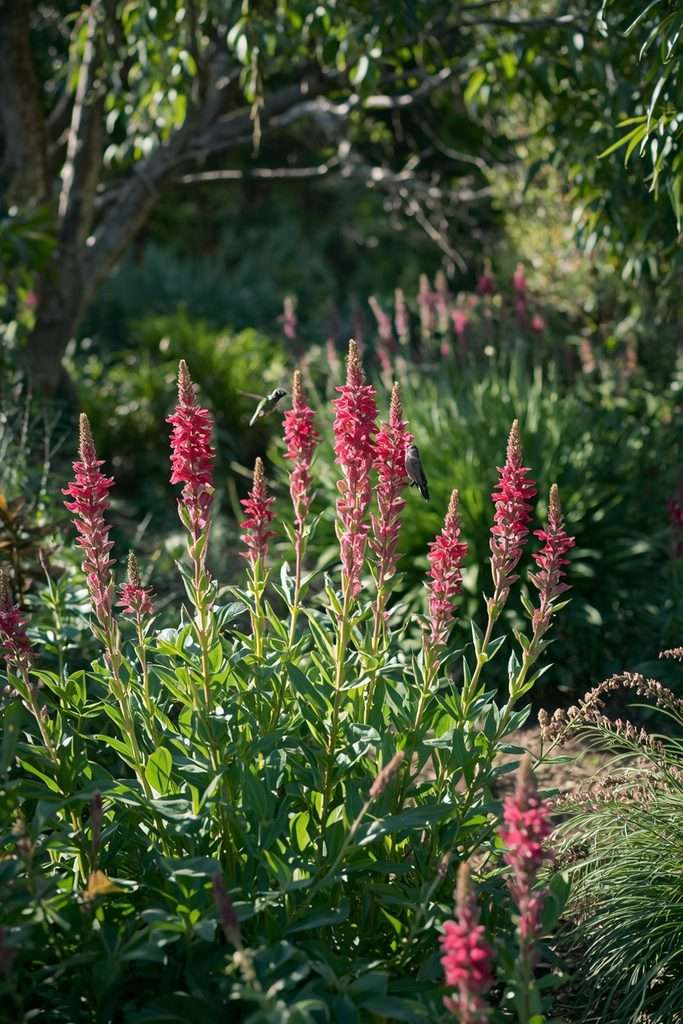
14. Hummingbird Sage (Salvia spathacea)
Hummingbird sage is a western native plant that is especially appealing for gardeners who want to create a more natural landscape.
Its reddish-magenta tubular flower spikes rise above broad green leaves, creating an attractive contrast. The flowers are particularly valuable to hummingbirds in suitable western gardens.
Unlike many sun-loving salvias, hummingbird sage can grow in partial shade and woodland-edge conditions. This gives you another option for areas that don’t receive direct sunshine throughout the day.
It spreads through underground rhizomes and can gradually form a patch, so allow enough room for its natural growth habit.
It is a particularly useful plant to combine with other California natives rather than mixing it randomly into a garden designed for a very different climate.
- Bloom time: Winter to spring, depending on climate and local growing conditions.
- Sunlight: Partial shade to filtered sun.
- Soil: Well-drained soil.
- Best placement: California native gardens, shaded borders, and woodland edges.
- Growing tip: Avoid excessive summer irrigation once established.
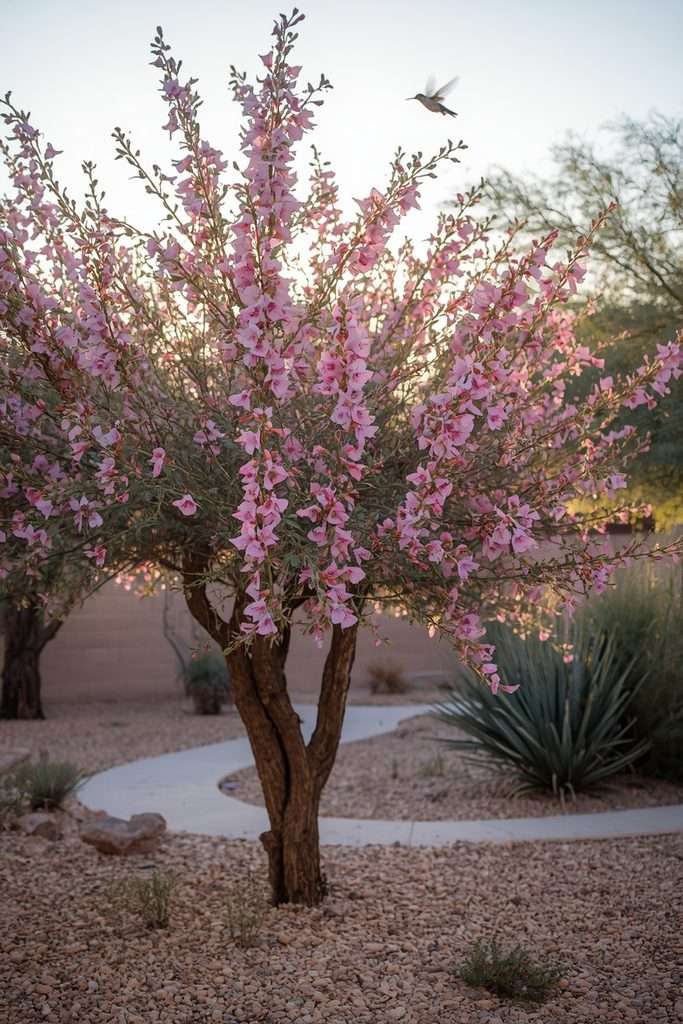
15. Desert Willow (Chilopsis linearis)
For hot and dry regions of the southwestern United States, desert willow is a beautiful alternative to traditional flowering trees.
Despite its name, it is not a true willow. It is a small, often multi-stemmed tree that produces attractive trumpet-shaped flowers in shades of pink, lavender, and purple.
Those blossoms can attract hummingbirds, while the tree’s relatively open appearance makes it suitable for landscapes where a dense canopy would feel overwhelming.
It is particularly useful in low-water landscapes once established, provided it has appropriate drainage and growing conditions.
Desert willow is not the right choice for every climate. It is better suited to warmer southwestern locations than cold, consistently wet areas.
- Bloom time: Late spring through summer, sometimes extending longer.
- Sunlight: Full sun.
- Soil: Well-drained soil.
- Best placement: Southwestern front yards, dry landscapes, and sunny backyard borders.
- Growing tip: Avoid overly wet soil and give the mature tree enough space to develop naturally.
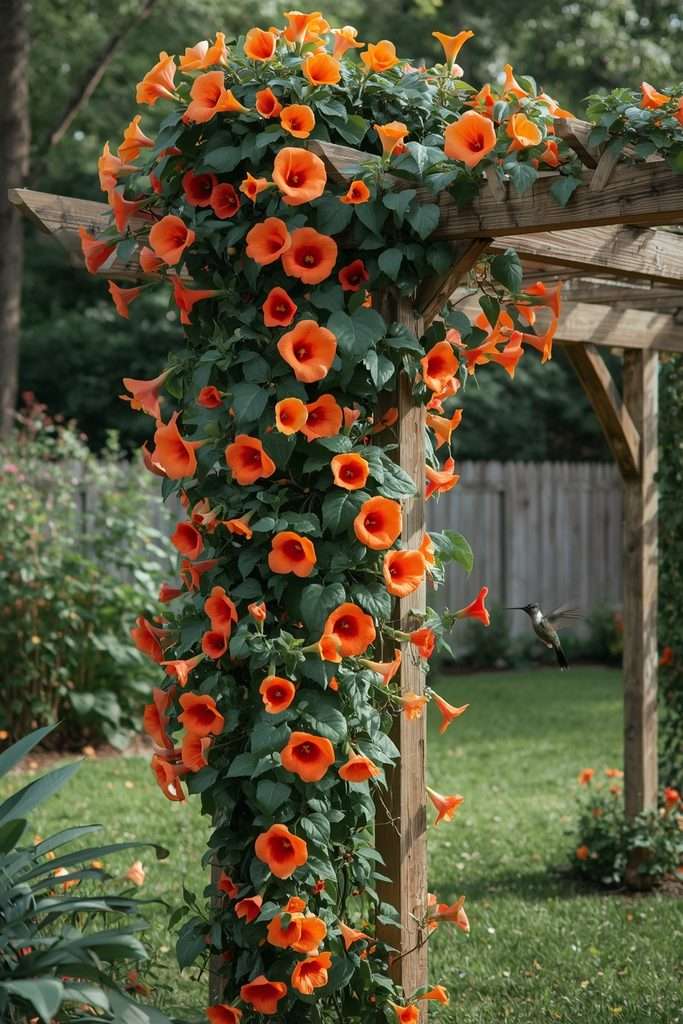
16. Trumpet Creeper (Campsis radicans)
If you want a dramatic flowering vine, trumpet creeper is one of the most recognizable hummingbird plants.
Its large orange-red trumpet-shaped blossoms appear during summer and provide an accessible nectar source. The flowers can turn an otherwise plain garden structure into a colorful focal point.
However, this plant comes with an important warning: it is vigorous. It can spread through underground shoots and may become difficult to manage in a small garden.
I would reserve trumpet creeper for larger properties where the plant can be controlled and trained away from gutters, siding, windows, and structures that shouldn’t be covered by aggressive growth.
A sturdy support is essential. A lightweight decorative trellis may not be suitable for a mature, heavy vine.
- Bloom time: Summer.
- Sunlight: Full sun to partial shade.
- Soil: Adaptable soil with reasonable drainage.
- Best placement: Large backyard fences and strong freestanding supports.
- Growing tip: Monitor suckers and prune responsibly to keep the vine within its intended growing area.
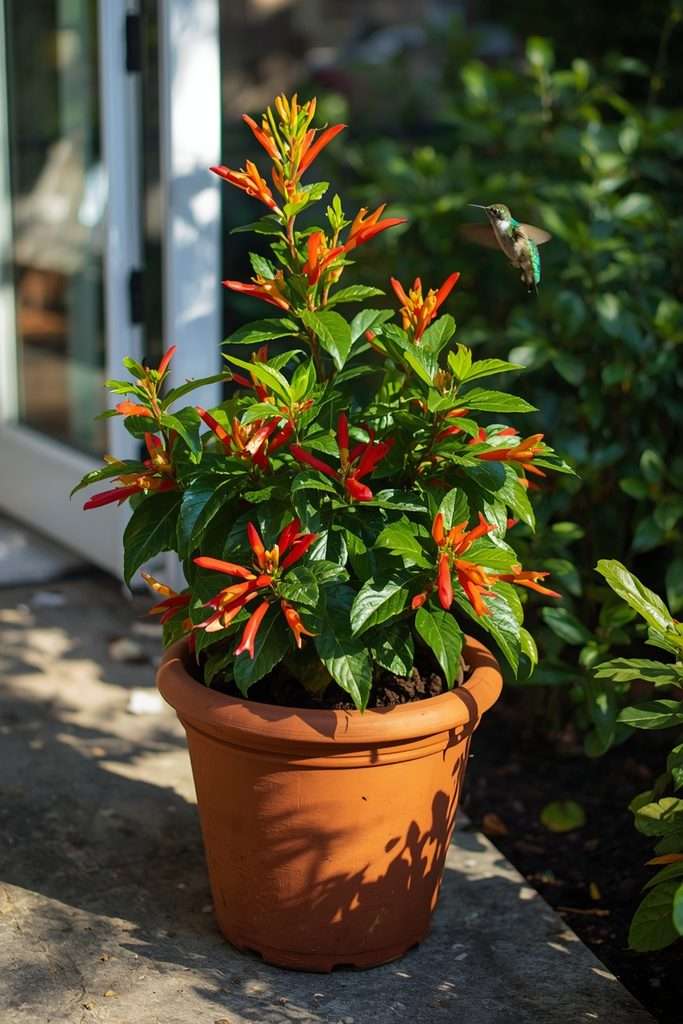
17. Cigar Plant (Cuphea ignea)
Cigar plant is an interesting option for gardeners who want to experiment with container flowers and colorful smaller garden displays.
It produces numerous narrow red-orange tubular flowers that resemble tiny cigars. Hummingbirds can visit these blooms for nectar, and the plant can flower over an extended period in suitable warm conditions.
Unlike the native perennials in this list, cigar plant is generally grown as an annual or tender perennial in much of the United States. It is better suited to warm climates and protected containers in cooler regions.
Its compact growth makes it useful around patios and front entrances, particularly where planting space is limited.
For gardeners who don’t have room for a large flower bed, it can provide an additional nectar source without requiring a permanent garden installation.
- Bloom time: Summer through fall in suitable conditions.
- Sunlight: Full sun to partial shade.
- Soil: Moist but well-drained potting mix.
- Best placement: Patio containers, sunny balconies, and warm-climate flower borders.
- Growing tip: Protect the plant from cold temperatures and prevent containers from drying out excessively.
How to Choose the Best Hummingbird Flowers for Your Front Yard
A hummingbird-friendly front yard doesn’t need to look like a wild meadow. You can create a neat, attractive landscape while still providing useful nectar sources.
The trick is choosing plants according to the available space, sunlight, and maintenance requirements.
Here are some combinations worth considering.
For a small front yard
Choose compact plants that won’t overwhelm the entrance or block windows.
Good choices include eastern red columbine, fire pink, scarlet sage, and suitable compact Agastache varieties.
Plant them in small groups rather than scattering individual flowers throughout the yard. This creates a more noticeable color display and makes the planting look intentional.
For a sunny front yard
Consider scarlet bee balm, wild bergamot, hummingbird mint, and California fuchsia where climate conditions allow.
These plants give you a combination of flower heights and colors. They also make it easier to create a layered flower border along a walkway or driveway.
For a front yard with a fence
Coral honeysuckle is an excellent option for vertical planting.
A vine-covered fence can create a natural backdrop for smaller flowering plants, while the tubular flowers provide an additional nectar source.
Avoid trumpet creeper in confined front yards because its vigorous spreading habit can create unnecessary maintenance.
For a dry or water-conscious front yard
Choose regionally suitable hummingbird mint, California fuchsia, or desert willow.
These plants are particularly useful in appropriate western and southwestern climates. They should not be treated as universal drought-tolerant substitutes for plants adapted to wetter eastern regions.
For more landscaping inspiration, you can also explore these budget-friendly front yard landscaping ideas and adapt the planting arrangements to include nectar-producing flowers.
How to Keep Your Hummingbird Garden Blooming From Spring Through Fall
One of the biggest mistakes beginners make is selecting several beautiful plants that all bloom during the same few weeks.
The result is a spectacular flower bed for a short period, followed by a garden with very little nectar available.
Instead, choose plants with different flowering periods.
Here is a practical seasonal planting guide.
| Season | Flowers to consider | Main benefit |
|---|---|---|
| Late winter to spring | Red flowering currant, hummingbird sage, columbine | Early nectar sources |
| Late spring to early summer | Beardtongue, coral honeysuckle, bee balm | Builds feeding opportunities |
| Summer | Wild bergamot, Agastache, scarlet sage, trumpet creeper | Main-season flowering |
| Late summer to fall | Cardinal flower, California fuchsia, jewelweed, Cuphea | Extends the flowering season |
Blooming periods will vary with climate, elevation, weather, and the particular variety you grow.
The important thing is to have something flowering throughout the period when hummingbirds visit your region.
Audubon’s hummingbird gardening guidance and university extension recommendations also emphasize planting groups of nectar-producing plants with staggered bloom times rather than depending on a single flower variety.
How to Create a Hummingbird-Friendly Garden Beyond Flowers
Flowers are the main attraction, but a truly useful hummingbird garden needs more than nectar.
Hummingbirds also need water, shelter, perches, and small insects.
Here are some practical ways to improve the overall space.
1. Plant flowers in small groups
Instead of planting one cardinal flower, one bee balm, and one salvia in completely separate corners, consider growing several plants together.
Grouped planting makes flowering areas easier to locate and creates a more substantial nectar display.
It also makes your garden look more cohesive.
2. Keep a shallow water source nearby
Hummingbirds need opportunities to drink and bathe. They often use water droplets, fine sprays, and shallow water sources.
A traditional deep birdbath isn’t always the most useful choice for these small birds.
A Shallow Bird Bath with a Textured Basin and Gentle Mister is a useful product to consider for a hummingbird garden. Choose a stable model with shallow bathing areas, and add a few small stones where appropriate to provide different water depths.
Keep the water clean and refresh it regularly. A gentle spray or moving-water feature can make the setup more appealing.
3. Avoid unnecessary pesticides
This is particularly important.
Nectar isn’t the only food hummingbirds need. They also eat small insects and spiders, which provide essential nutrients.
Using broad-spectrum insecticides can reduce the natural insect supply in your garden. Some chemical applications can also directly harm wildlife.
Instead of automatically spraying when you notice a few insects, identify the actual problem first.
A healthy garden can support a reasonable insect population without requiring every leaf to look perfect.
You can find more ideas for managing a wildlife-friendly garden in our guide to pollinator-friendly garden layouts.
4. Leave a few natural perches
Hummingbirds need places to rest between feeding visits.
A few small branches, established shrubs, and suitable trees can provide these resting spots.
You don’t need to leave the whole yard untidy. Simply avoid removing every small branch or aggressively cutting back all the shrubs.
A garden with layered vegetation is often more useful than a completely exposed flower bed.
5. Keep some spider webs in appropriate places
This is an easy detail to overlook.
Hummingbirds use spider silk when building their tiny nests. They also eat spiders and other small insects.
You don’t need to preserve webs near doorways or busy walkways, but there is no reason to remove every web from sheltered garden shrubs.
6. Add flowering shrubs and trees
Perennials provide colorful flower beds, but shrubs and small trees bring another dimension to the garden.
Plants such as red buckeye and red flowering currant provide spring flowering opportunities, while desert willow can be useful in suitable warm, dry regions.
They also add height and structure, helping create a layered garden rather than a collection of isolated flowers.
For a broader approach to wildlife planting, see our guide to keystone plants that support US wildlife gardens.
Growing and Maintaining Hummingbird Flowers Successfully
Even attractive nectar-producing flowers won’t perform well if their basic growing requirements are ignored.
A cardinal flower planted in dry gravel, for example, is unlikely to thrive. Similarly, a desert willow placed in constantly wet soil may struggle.
The easiest way to avoid these problems is to match each plant to its natural preferences.
Pay attention to sunlight
Before purchasing plants, observe the area where you intend to grow them.
Does it receive direct morning sunlight? Does it stay shaded throughout the afternoon? Is it exposed to intense summer hea t?
Use that information to guide your selection.
For example, wild bergamot and many Agastache varieties suit sunny locations, while jewelweed and hummingbird sage offer options for more shaded environments in their appropriate regions.
Water according to the plant
There isn’t one watering schedule that works for all 17 flowers.
Cardinal flower appreciates consistently moist soil, while established California fuchsia and many hummingbird mints prefer better-drained conditions and less frequent watering.
For larger garden borders, a Digital Soil Moisture Meter for Garden Beds and Containers can help you monitor moisture in difficult-to-judge areas. It is particularly useful when growing plants with different watering requirements.
However, you don’t need an electronic tool for every flower bed. Checking the soil by hand is often sufficient for ordinary home gardening.
For a more detailed explanation of deep watering and common beginner mistakes, read our guide to the deep-soak watering method.
Give flowering plants enough space
Crowded plants compete for sunlight, water, and nutrients.
They can also experience poor airflow, increasing the risk of foliar problems.
Follow the spacing instructions for your selected varieties and consider their mature widths, not just how small they look when purchased.
Prune when necessary
Some flowering plants benefit from occasional trimming, while others are better left to develop their natural shape.
Remove damaged stems and branches when needed, and avoid cutting away every spent flower head if the plant provides seeds or other wildlife value.
A pair of Bypass Pruning Shears for Deadheading and Light Garden Pruning can be useful for cleanly removing small unwanted stems and tidying flowering perennials.
Keep blades sharp and clean, and avoid pruning at a time that would remove developing flower buds.
Be thoughtful about fertilizer
More fertilizer doesn’t automatically mean more flowers.
Start with healthy soil and choose plants suited to that soil. Excessive nitrogen can encourage leafy growth at the expense of flowering in some plants.
Adding suitable compost before planting can improve soil structure, but fertilizer should be based on actual plant requirements and soil conditions.
Can You Grow Hummingbird Flowers in Pots and Small Spaces?
Absolutely. You don’t need a large backyard to create a useful nectar garden.
A few well-chosen containers can attract hummingbirds, particularly when placed near a patio, balcony, or sunny front entrance.
Some good container choices include:
- Cuphea: A useful warm-season flowering plant with small tubular blooms.
- Scarlet sage: Adds upright color and can flower for an extended period.
- Compact Agastache: Suitable varieties provide colorful flower spikes and can work in sunny containers.
- Suitable Penstemon varieties: Some compact beardtongues can grow successfully in containers with appropriate drainage.
For a hanging arrangement, a Hanging Basket Planter with Coco Coir Liner can provide a simple way to display flowering plants around a porch or patio.
Remember that hanging baskets dry out faster than many in-ground flower beds. Check their moisture regularly, particularly during hot summer weather.
A useful arrangement is to place two or three containers together at different heights while keeping the flowers visible and accessible.
Common Mistakes to Avoid When Planting a Hummingbird Garden
Even a garden filled with attractive flowers may not provide the best habitat when the plants and surrounding conditions aren’t suitable.
Here are a few mistakes worth avoiding.
Planting only red flowers: Red is an attractive color for hummingbirds, but they also visit tubular flowers in orange, pink, purple, and other colors. Focus on nectar availability rather than color alone.
Choosing plants without checking their regional suitability: A western desert flower may struggle in a humid northeastern garden. Native species adapted to your local region are generally a sensible starting point.
Planting everything in full sun: Some excellent hummingbird plants, including jewelweed and hummingbird sage, prefer shadier conditions.
Ignoring mature plant size: Vigorous vines such as trumpet creeper can quickly become difficult to manage in small gardens.
Using unnecessary pesticides: Reducing the insect population can remove an important food source for hummingbirds.
Expecting flowers to attract birds immediately: A newly planted garden needs time to establish. Hummingbird activity also depends on the species in your region, seasonal migration, and the surrounding habitat.
Frequently Asked Questions About Hummingbird Flowers
Some particularly useful choices include scarlet bee balm, cardinal flower, coral honeysuckle, red columbine, California fuchsia, and suitable Agastache varieties. Native plants that produce tubular, nectar-rich flowers are a good starting point.
Hummingbirds are especially attracted to bright red, orange, and pink flowers, but they don’t exclusively feed from these colors. They also visit purple, white, and other flowering plants when nectar is available.
Eastern red columbine, scarlet sage, compact Agastache, and suitable Penstemon varieties are good options. Coral honeysuckle is another useful choice when you have a fence or garden support for vertical growth.
Yes. Cuphea, scarlet sage, and compact hummingbird mint varieties can grow in containers. Choose appropriately sized pots with drainage holes and monitor watering during hot weather.
The best planting time depends on your region and the plant’s requirements. Many gardeners establish perennials in spring or fall when conditions are suitable. Choose a mix of early-, mid-, and late-season bloomers to provide nectar throughout the growing season.
Yes. In addition to flower nectar, hummingbirds need small insects and spiders, fresh water, suitable resting places, and protected nesting habitat. A garden with flowering plants, shrubs, and clean water offers more than a garden containing flowers alone.
A properly maintained feeder can supplement natural nectar sources, particularly during periods when flowering plants are scarce. However, it should not replace a garden with diverse nectar-producing plants and natural insect food.
Keep feeders clean, replace nectar frequently in hot weather, and avoid adding dyes or unnecessary additives.
Final Thoughts
Creating a hummingbird-friendly yard is less about finding one spectacular flower and more about choosing plants that work together.
Start with a few varieties suited to your sunlight and soil conditions. Add some early-season flowers, a few summer bloomers, and plants that continue flowering into fall.
For a small garden, coral honeysuckle, scarlet sage, and compact hummingbird mint can make a lovely combination. For a larger landscape, consider adding cardinal flower, bee balm, and appropriate native shrubs or trees.
Most importantly, don’t forget the natural habitat around the flowers. A few shrubs, clean water, and a healthy supply of insects can make your garden more useful to visiting hummingbirds.
The best hummingbird garden is one that looks beautiful to you while providing something valuable to the wildlife around your home.
Transparency Note: This article draws on university extension recommendations, native-plant resources, and established gardening practices. The 17 plants have different regional and growing requirements, so select varieties appropriate to your local climate. The recommendations should not be interpreted as claims of personal product testing.

Aagam – Founder of SpruceTouch
I’m Aagam, a home and garden enthusiast who enjoys growing, building, and improving outdoor spaces. I focus on practical backyard projects, garden ideas, and simple DIY solutions that are useful in real homes. Through SpruceTouch, I share what I’ve learned, what worked, what didn’t, and the small details that can make an outdoor project easier.