
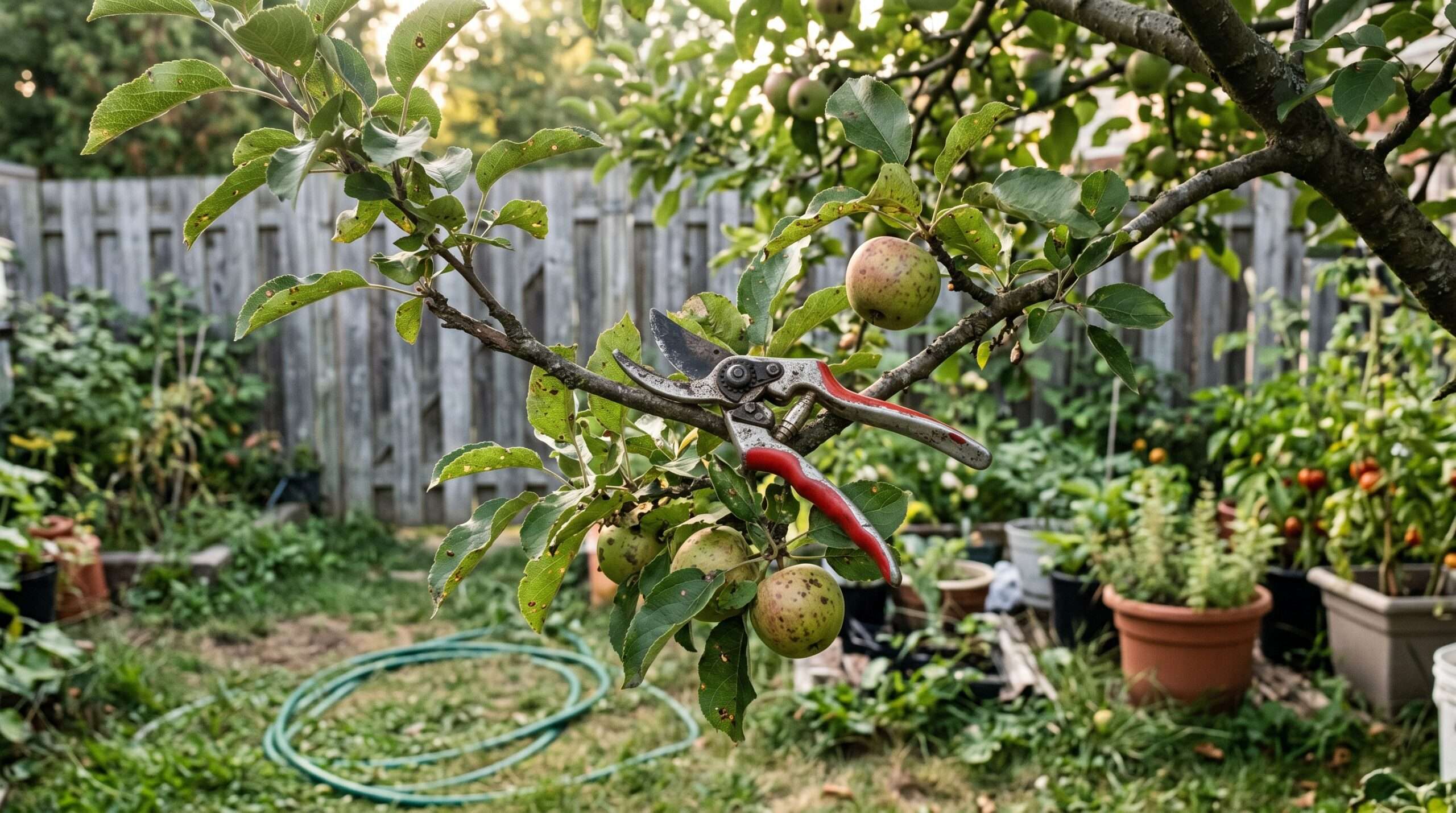
Late Summer Pruning: How to shape fruit trees in August (Common Mistakes).
Most beginners think pruning is strictly a late-winter chore, something you do while shivering in a heavy coat while the trees are totally bare. If you snip off a branch in August, you’re breaking some sacred rule, right? Half the time, avoiding the shears in late summer actually makes your fruit trees harder to manage the following spring.
You see, winter pruning triggers explosive, chaotic growth because the tree has all its energy stored up in the roots, just waiting to burst. August pruning does the exact opposite—it slows things down, lets light into the canopy, and helps the tree focus on ripening this year’s crop instead of growing ten feet of useless water sprouts.
But if you go out there with a pair of rusty loppers and start hacking away blindly, you can seriously damage your harvest or expose the bark to nasty sunburn. I learned this the hard way about twelve years ago with a young Honeycrisp apple tree that I practically scalped in late August, leaving the main trunk completely exposed to a brutal heatwave.
In this deep-dive guide, we are going to look at exactly how to shape your fruit trees during the dog days of summer without ruining your crop, the mistakes you absolutely need to avoid, and how to tell if your tree is actually crying out for a trim.
The August Pruning Dilemma: Why the Internet Keeps Giving You Mixed Advice
If you spend five minutes searching gardening forums, you will find two completely opposite camps. One side swears that touching a tree in August will kill it, while the other says you should prune everything all year round. It’s enough to make you want to throw your shears in the shed and leave the backyard to the weeds.
The problem is that most online articles don’t distinguish between training a young tree and maintaining a mature, fruit-bearing one.
But here’s where it gets tricky:
In August, the tree is operating on limited energy. It has spent the spring and early summer building leaves, pushing out shoots, and sizing up its fruit. If you remove too much leafy canopy right now, you rob the tree of its food factories.
The fix is actually simpler than you think: summer pruning isn’t about structural overhaul. It’s about housekeeping, air circulation, and light penetration.
Signs You Are Doing It Wrong (Or Waiting Too Long)
Your fruit trees talk to you, though usually, they just look increasingly messy until you take notice. If you walk out to your backyard orchard—even if that just means two trees along your driveway—and notice any of these signs, your late-summer routine needs a serious adjustment.
The Center of Your Tree Looks Like a Dark Jungle
If you peer into the middle of your peach or apple tree and it’s so dark you can’t see the main trunk, you have a major sunlight problem. Fruit needs direct sun to develop sugars and color up properly. A dense canopy also traps morning dew, which is an open invitation for fungal diseases like powdery mildew or brown rot.
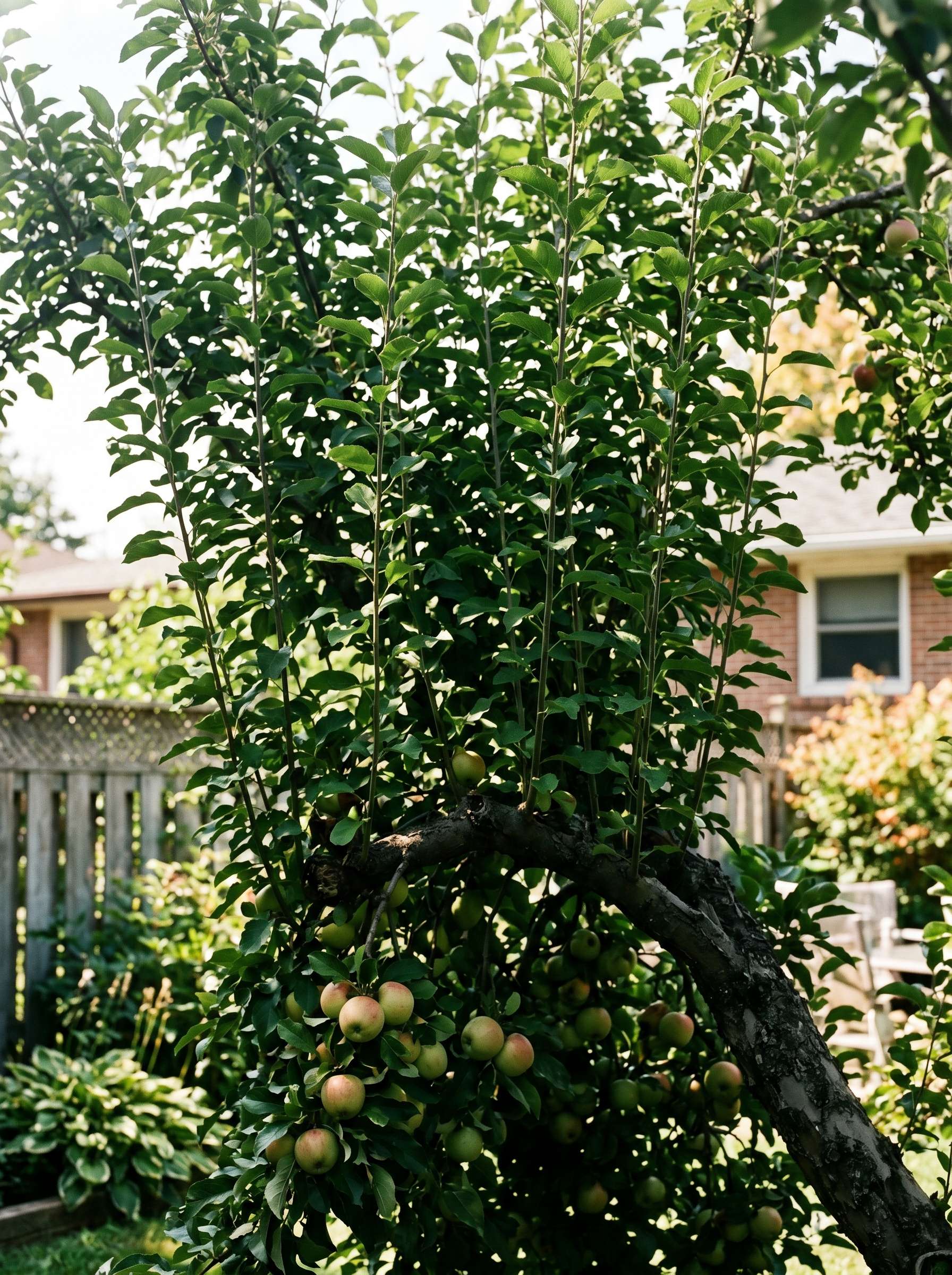
Water Sprouts are Racing for the Sky
Water sprouts are those perfectly straight, vertical branches that shoot up from the main limbs. They look like whips and grow incredibly fast. They don’t produce fruit; they just steal water and nutrients from the branches that actually matter. If your tree looks like it has a crew cut of vertical sticks at the top, you skipped your summer maintenance.
Fruit is Small, Pale, and Dropping Early
When a tree spends all its energy trying to maintain a massive, overgrown canopy, the fruit gets left behind. If your apples or plums are staying tiny, look pale, or are dropping off the tree before they are even close to ripe, the tree is overwhelmed. It has too many mouths to feed.
Branches are Audibly Cracking Under the Weight
We’ve all seen it—a heavy crop of peaches bending a branch until it literally snaps off the trunk. Waiting until winter to prune means you missed the chance to shorten those long, weeping limbs before the fruit got too heavy. A broken limb leaves a jagged, unhealable wound that invites wood-boring beetles.
New Growth is Sprouting at the End of August
If you see soft, lime-green leaves popping up at the very end of August or early September, you pruned either too late or too aggressively. This tender new growth won’t have time to harden off before the first frost hits, meaning the winter cold will kill those tips anyway, wasting the tree’s precious resources.
The Root Cause: Why Summer Pruning Works Differently
To understand why August shaping is so critical, we have to look at how a tree manages its energy throughout the changing seasons. In the spring, a massive surge of nutrients travels upward from the root system. This is triggered by warming soils and longer days, telling the tree to grow as fast as possible.
When you cut a branch in February, the roots don’t know that branch is gone. Come spring, they send up the full amount of energy intended for that missing limb, resulting in a chaotic explosion of leafy growth right around the cut.
In August, however, the tree’s growth cycle is winding down. The roots are no longer pushing energy upward; instead, the leaves are sending sugars downward to be stored in the root system for winter survival.
One thing most people miss is how this affects the tree’s internal thermostat. When you make a clean, selective cut in late summer, you are permanently removing that growth potential for the rest of the year. The tree doesn’t have the energy to fight back with an army of water sprouts. It simply accepts its new, smaller shape and channels its remaining daily energy into sweetness for the ripening fruit.
Airflow is another massive environmental factor during the late summer months, especially in humid regions of the US like the Midwest or South. A dense, unpruned canopy creates a microclimate of stagnant, humid air right around the fruit. By opening up small windows in the canopy now, you allow the late summer breezes to dry out the interior leaves after a rainstorm, cutting your disease risk in half without using a single chemical spray.
A Realistic Comparison: What You Want vs. What to Avoid
Imagine two fruit trees standing side by side on a typical suburban patio or lawn.
On the left is the unmanaged tree: it’s a chaotic mass of dark green leaves, with long, whip-like branches arching wildly over the fence. The inner branches are bare and brittle because no sunlight has reached them in three months. The fruit hidden inside is small, green, and covered in a dusty grey fungus.
On the right is the summer-managed tree: it looks clean, organized, and slightly open. You can see dappled sunlight flickering all the way through the branches onto the ground below. The fruit is hanging on sturdy, short wood, soaking up the afternoon sun and turning a rich, deep color. The structure looks balanced, stable, and completely under control.
Common Confusion: Clearing Up the Summer vs. Winter Myth
The single biggest piece of misinformation passed around beginner gardening circles is that summer pruning will “bleed” the tree to death. People see a little sap weeping from an August cut and completely panic, thinking they’ve ruined their backyard orchard.
Let’s bust this myth right now: a healthy tree will not bleed to death from a few summer snips. In fact, trees often seal wounds faster in the warm summer months than they do during the dead of winter, provided the cuts are clean and the tree isn’t severely drought-stressed.
Another point of confusion is mistaking a lack of water for a need to prune. When August heatwaves hit, fruit tree leaves will sometimes wilt or turn slightly yellow. A lot of folks assume the tree is too heavy and start cutting off branches to “lighten the load.”
If your tree is suffering from severe heat stress, taking a pair of shears to it will only shock the root system further. You need to fix your hydration before you even think about shaping. Learning about watering plants correctly during intense summer dry spells is the foundation of all good orchard care; you cannot prune your way out of dry soil.
The Real Solution: How to Safely Shape Your Trees in August
Let’s talk about what actually works when you are standing out there in your boots with your tools ready. Forget the ultra-precise geometrical diagrams you see in textbooks. Real trees don’t grow in perfect 90-degree angles, and your backyard isn’t a commercial research orchard.
The first rule of August pruning is the 10% Rule. Never remove more than 10 to 15 percent of the total canopy during the summer. Anything more than that will cause two major problems: it will sunburn the bark of the interior limbs, and it will trigger the tree into a panicked state of late-season growth.
Start by looking exclusively for the Three Ds: Dead, Damaged, or Diseased wood. These get taken out completely, no matter what time of year it is. If you see a branch that was cracked by a summer storm or one that is clearly dead and brittle, clip it back to healthy wood immediately.
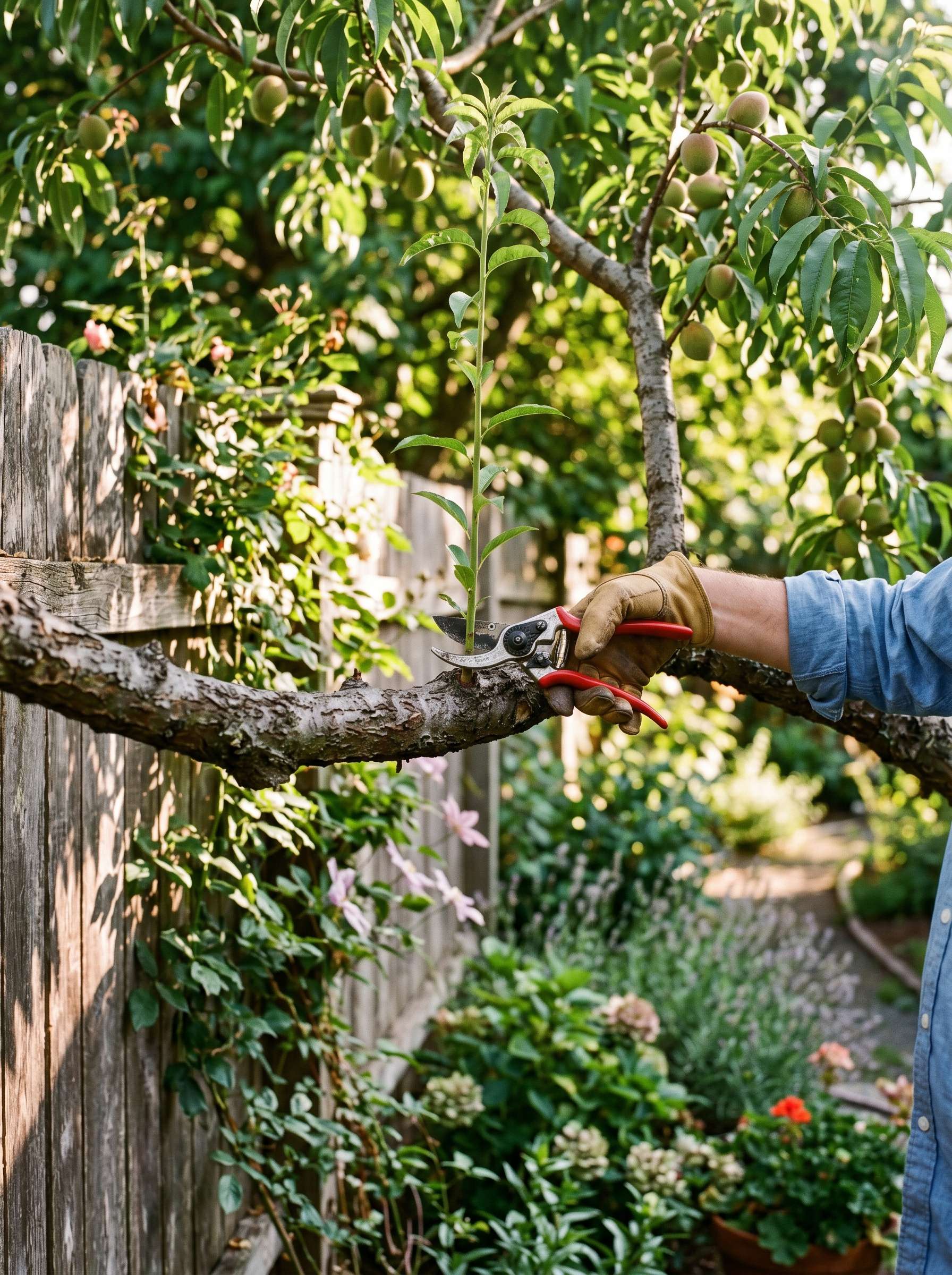
Once the three Ds are out of the way, focus entirely on the vertical water sprouts we talked about earlier. These are the straight sticks pointing directly up at the sky.
I learned this the hard way: if you leave these vertical shoots alone, they will grow another two feet by October and completely block out the sun next spring. Take your hand pruners, follow the sprout down to its base where it connects to the main branch, and make a clean flush cut. Don’t leave a stub, but don’t cut into the bark collar either.
Next, look for crossing branches. If two branches are rubbing against each other in the wind, one of them has to go. That constant rubbing creates an open wound in the bark, which acts as a highway for pests and disease spores. Choose the weaker, less productive of the two and remove it.
Always look at where the buds are pointing before making a cut on a lateral branch. If you want a branch to grow outward rather than inward toward the crowded center, look for a bud that is pointing toward the outside of the tree. Make your cut about a quarter of an inch above that outward-facing bud at a slight angle. This ensures that next spring, the new growth will move away from the center, keeping the canopy open and breezy.
Step-by-Step Fix for an Overgrown Summer Tree
If you are standing in front of a messy tree right now and don’t know where to start, take a deep breath and follow this exact sequence. Don’t overthink it.
Step 1: Clean Your Tools
Do not skip this. If you cut a diseased branch on a pear tree and then move over to your plum tree without cleaning your blades, you will spread the infection. Keep a spray bottle of rubbing alcohol or a 10% bleach solution handy. Spray the blades down and wipe them with a clean rag before you touch the tree, and repeat between every single tree you work on.
Step 2: Clear the Ground and the Base
Look around the base of the trunk. Remove any suckers growing directly out of the soil or from the very bottom of the trunk below the graft union. These suckers are growing from the rootstock, not the fruiting variety, and they will completely take over the tree if left unchecked. Clear away any fallen, rotting fruit from the ground while you’re down there to keep wasps and fungal spores at bay.
Step 3: Stand Back and Observe
Walk five feet back from the tree. Look at the overall shape. Is it leaning heavily to one side? Is the top completely blocking out the bottom? Identify the top three heaviest, most congested areas before you make a single cut. It’s much easier to plan your attack from a distance than when you are buried deep in the leaves.
Step 4: Thin the Top Canopy
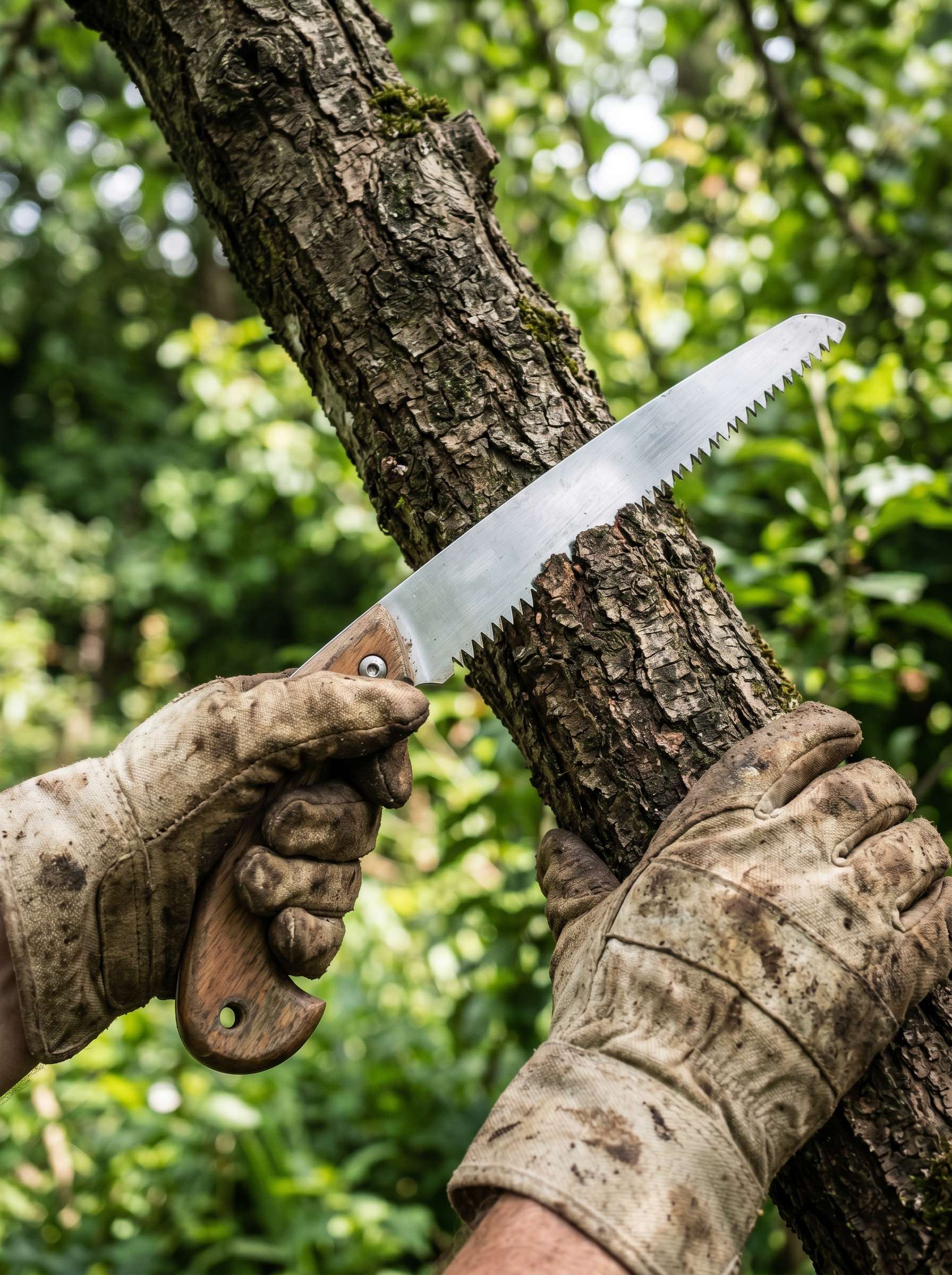
Using your loppers or a small folding pruning saw, remove the long, leafy tips at the very top of the tree that are casting a shadow over the lower fruiting branches. You want to bring the height down to a manageable level where you can actually reach the fruit next month without balancing precariously on the top rung of an old ladder.
Step 5: Final Inspection and Cleanup
Once you’ve made your select cuts, stand back one last time. You should see a noticeable difference in how light passes through the tree. Gather up all your trimmings immediately. Do not leave them sitting under the tree, as old summer trimmings are a prime breeding ground for pests. Toss them in your yard waste bin or check your composting at home pile if you know the wood is entirely disease-free.
How This Varies Across Different Growing Methods
A fruit tree planted directly in a vast suburban lawn behaves very differently than one crammed into a modern fabric container on a renter’s patio. You have to adapt your August strategy to the specific environment your plant is living in.
Container-Grown Fruit Trees
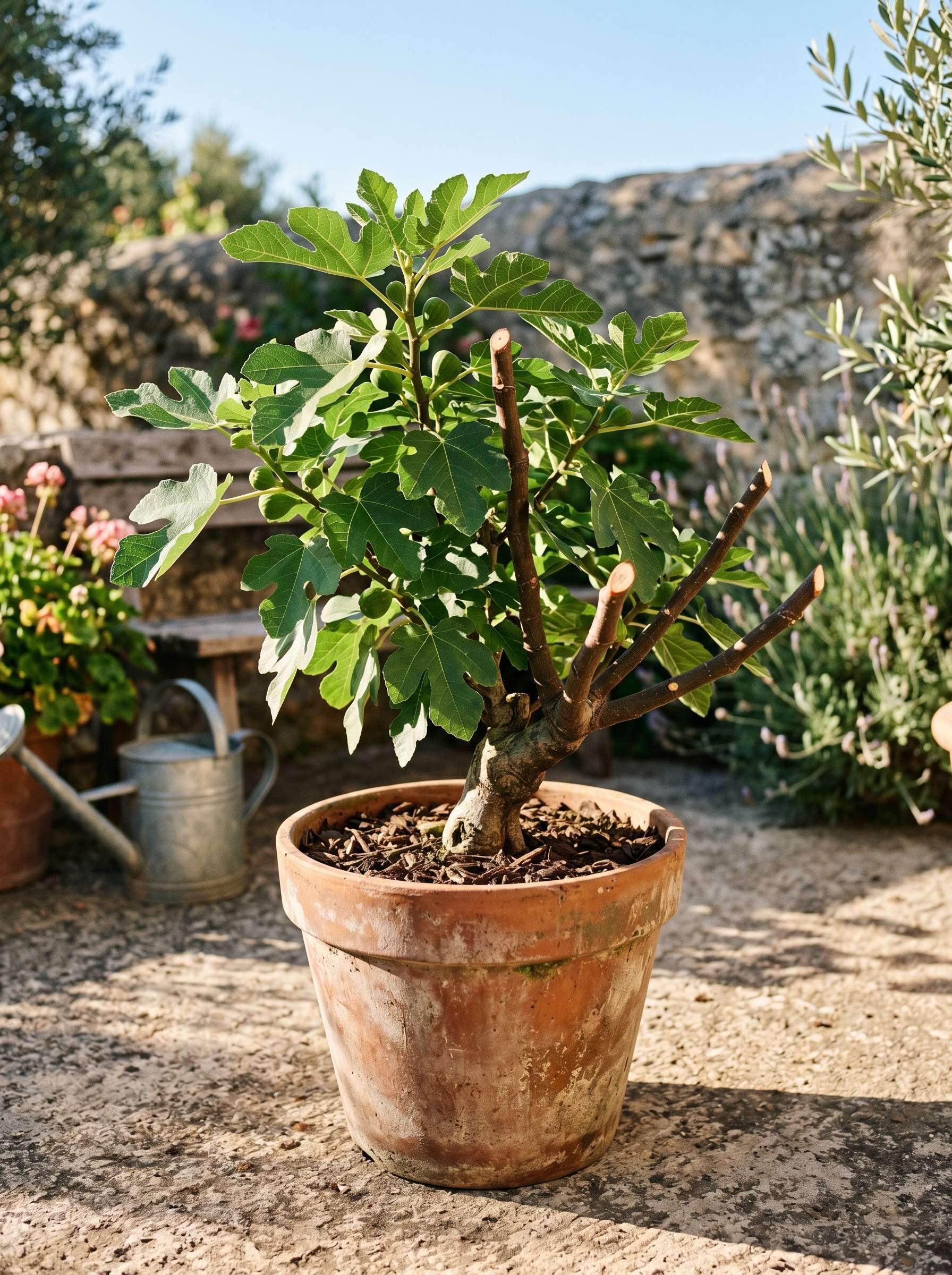
If you are growing dwarf varieties of figs, peaches, or apples in large pots, summer shaping is an absolute necessity. Space is limited, and the root system can only support a very specific amount of foliage. For containers, focus heavily on maintaining a compact, rounded shape.
You can be slightly more precise here, pinching back the soft tips of new outward branches to encourage a bushier habit. Watch the soil moisture like a hawk after pruning a container tree; with fewer leaves pulling water, the pot will dry out slightly slower than it did before the trim.
Raised Bed Orchards & Espalier Systems
Some gardeners plant dwarf fruit trees directly into deep raised beds or train them flat against a wall or fence using the espalier method. If you are running an espalier setup, August is your most important pruning window of the entire year.
Because the tree is forced to grow in a single two-dimensional plane, any vertical water sprouts will completely destroy the clean aesthetic within weeks. Tie down the main horizontal branches to your support wires, and cut every single vertical shoot back to about three leaves from the main stem. This forces the tree to develop short, stubby fruiting spurs along the horizontal lines for next year.
Traditional In-Ground Trees
For standard or semi-dwarf trees growing directly in the ground, your focus is purely structural stability and height control. You don’t need to worry about the cosmetic neatness that container gardeners obsess over. Let the tree look like a tree, but make sure it isn’t encroaching on your roofline or tangled up in overhead power lines.
Seasonal Factors and Regional Realities across the US
The calendar might say August, but August in northern Maine feels light-years away from August in southern Arizona. You have to adjust your pruning calendar based on where your feet are planted.
If you are gardening in the Pacific Northwest, your summers are relatively mild but your winters are incredibly wet. August pruning here is all about opening up the canopy to prevent the fungal diseases that thrive in the coming autumn rains. Get those water sprouts out now so the autumn wind can dry out the interior bark as quickly as possible.
Down in the hot, arid Southwest or the baking Central Valley of California, your main enemy is sunburn. Tree bark can actually get sunburned just like human skin if it is suddenly exposed to 105-degree afternoon sun after being shaded all summer.
If you are pruning in these blazing zones, be incredibly conservative. Keep enough exterior foliage to act as a natural umbrella for the main trunk and primary structural limbs, or be prepared to paint exposed trunks with a diluted, white interior latex paint to protect them from the sun.
For those of you in the Northeast and Midwest where winter temperatures routinely drop below zero, timing is everything. You must finish all summer shaping by the third week of August.
If you prune too late in these cold regions, the tree will try to push out soft new growth right before the cold hits. That tender growth will instantly freeze, turn black, and can allow dieback to travel deep into the main structural limbs during a hard January freeze. If you missed your mid-August window in the North, it is far safer to just leave the tree alone and wait until the late winter dormancy.
Real Mistakes I Made (So You Don’t Have To)
I am definitely not a perfect gardener. Over the past twenty years, I have made just about every stupid mistake you can think of, often because I was in a rush or trusted some unverified tip I read online.
The Great Peach Tree Scalping of 2011
I had an elberta peach tree that was absolutely loaded with fruit, but the canopy was incredibly dense. In an absolute fit of mid-August enthusiasm, I went out with my loppers and removed easily 40% of the leaves, thinking I was helping the peaches get more sun.
The sudden exposure scorched the skin of half the ripening peaches, turning them into leathery, rotted mush right on the branch. The trunk also suffered severe sunscald, which took three years to heal. Lesson learned: be gentle with the shears in summer.
Trusting a Rusty Pair of Shears
When I first started out, I used an old, dull pair of hand pruners that I inherited from my grandfather. Instead of making clean, crisp cuts, those blades would pinch and crush the stems, leaving ragged, frayed edges on the branches.
Every single cut I made on my plum tree that August turned into a sticky, oozing mess of sap that attracted every boring insect in the neighborhood. Invest in a decent pair of bypass pruners and keep them sharp enough to slice through paper.
Pruning During a Historic Drought
A few years back, we went through a brutal August heatwave with zero rain for six weeks. The soil was bone dry, and the trees were visibly stressed. For some reason, I decided that was the perfect weekend to clean up the water sprouts on my apple trees.
Removing foliage during a severe drought throws the tree’s internal water management system into total chaos. The trees dropped their remaining leaves early, the fruit stayed the size of golf balls, and the overall health of the orchard suffered for two full seasons. If the ground is cracked and dry, put the pruners away and grab the garden hose instead.
A Simple, Budget-Friendly Setup for Beginners
You do not need a garage full of expensive, specialized gas-powered equipment to keep a few backyard fruit trees in perfect shape. In fact, heavy power tools usually lead to over-pruning because they make it too easy to cut too much wood too fast.
Here is the exact, low-tech kit I recommend for anyone managing a small home orchard on a budget:
| Tool Type | Purpose | Estimated Cost (USD) | Why It Matters |
| Bypass Hand Pruners | Cutting small twigs and vertical sprouts up to 1/2 inch thick | $25 – $40 | Bypass blades act like scissors for clean, living cuts. Avoid anvil pruners, which crush wood. |
| Bypass Loppers | Cutting thicker interior branches up to 1.5 inches thick | $35 – $55 | The long handles give you the leverage needed to slice through tough wood without straining your wrists. |
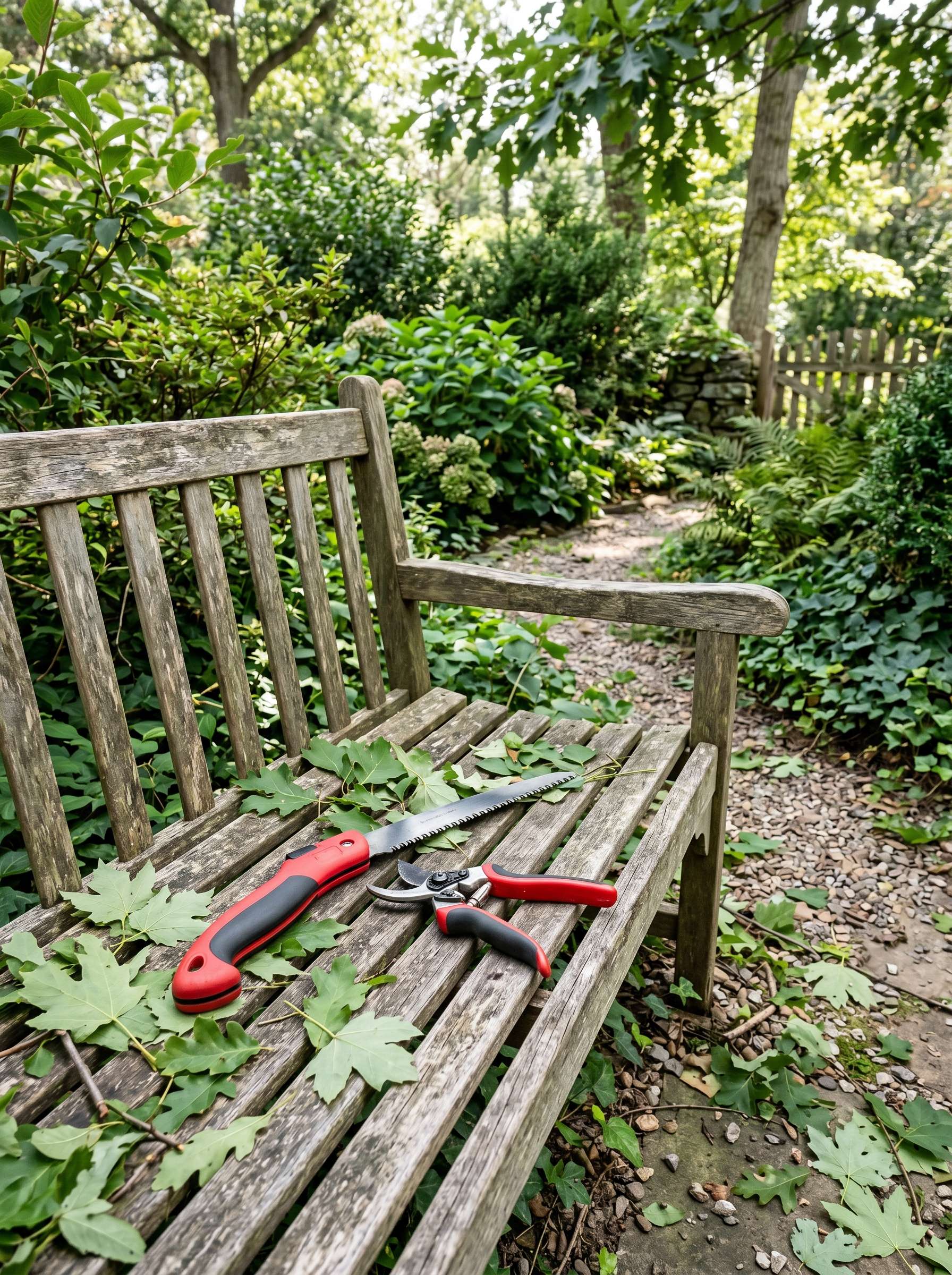
| Folding Pruning Saw | Removing thick structural limbs or dead wood | $18 – $30 | A small, curved saw blade cuts on the pull stroke, giving you incredible control in tight, crowded spaces. |
| Rubbing Alcohol (70%) | Sanitizing tool blades between trees | $3 – $5 | Prevents the invisible spread of bacterial and fungal infections across your entire garden. |
Avoid buying those cheap, unbranded tool sets you see in the discount bins at big-box stores. They use soft steel that dulls after three cuts, and the plastic latches will pinch your palms. Spend a few extra dollars on a reputable, solid brand with replaceable parts—a good tool should last you a decade if you keep it clean and oiled.
Frequently Asked Questions from Real Gardeners
Yes, August is actually one of the absolute best times to prune cherry trees. Cherries are incredibly susceptible to silver leaf disease and bacterial canker, both of which spread rapidly through open wounds during wet winter weather. Pruning them in the dry August heat allows the cuts to heal quickly before the autumn rains arrive.
Not if you stick to the 10% rule and only focus on water sprouts and crossing branches. Fruit trees produce their crops on older wood or specific fruiting spurs that developed last season. By removing the useless vertical water sprouts now, you are actually helping the tree direct its energy into developing stronger flower buds for next spring’s blossoms.
No, do not use those black tar-like pruning paints. Modern arboriculture research has proven that wound sealers actually trap moisture and fungal spores inside the cut, speeding up wood rot rather than preventing it. A clean, angled cut made with sharp, sanitized tools will heal itself naturally far better than anything you can buy in a can.
It’s highly unlikely. A small amount of sap weeping from a fresh summer cut is completely normal, especially for stone fruits like peaches, plums, and cherries. The tree uses this sap as a natural defense mechanism to seal the wound and keep insects out. As long as the sap isn’t accompanied by dark, foul-smelling bacterial ooze or sunken bark, your tree is just doing its job.
Never put fresh fruit tree trimmings right back under the parent tree. If those branches contain any trace of powdery mildew, scab, or pest eggs, you are creating a perfect circle of reinfection for next spring. If you want to build up your soil health safely, read a comprehensive soil health guide or use well-rotted, commercial compost that has been heated enough to kill off pathogens.
Your trees won’t drop dead tomorrow, but they will become increasingly difficult to manage over time. The interior of the canopy will become an unproductive, dark zone devoid of leaves or fruit, and your harvest will move higher and higher up the tree until you need a massive ladder just to pick a single apple. Your risk of fungal diseases will also climb significantly each passing year.
Expanding the Vision: How Orchard Care Fits into Your Whole Yard
Once you get a handle on managing the structural shape of your fruit trees, you start seeing your entire property differently. You realize that a garden isn’t just a collection of isolated plants; it’s an interconnected system where everything affects everything else.
The sunlight that you let through your apple tree canopy today doesn’t just benefit the fruit—it changes the light dynamics for the ground cover below. If you are working on a broader landscape plan, perhaps incorporating elements of a classic cottage garden design, those dappled spots under your open fruit trees become prime real estate for shade-tolerant herbs or delicate perennial flowers.
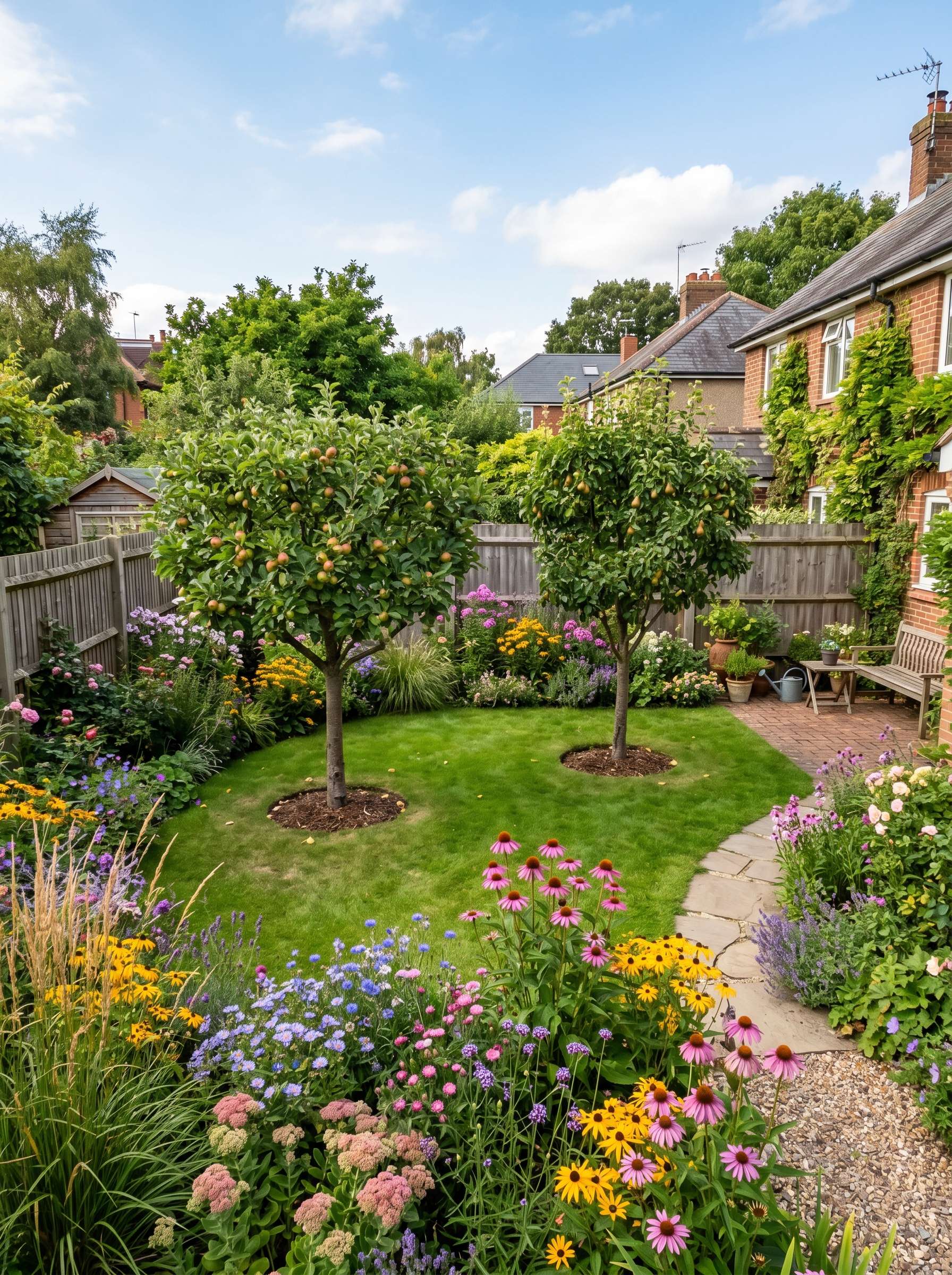
Similarly, the health of your trees is intimately tied to the overall biodiversity of your neighborhood. A tree that isn’t choked by dense, stagnant growth will produce healthier blossoms in the spring, attracting a wider array of native pollinators.
If you are interested in transforming your yard into a haven for local ecology, choosing the right companion plants around your orchard footprint is essential. Integrating some of the top beginner gardening tips regarding native species can turn a basic backyard food plot into a thriving, self-sustaining ecosystem that keeps destructive pests under control naturally.
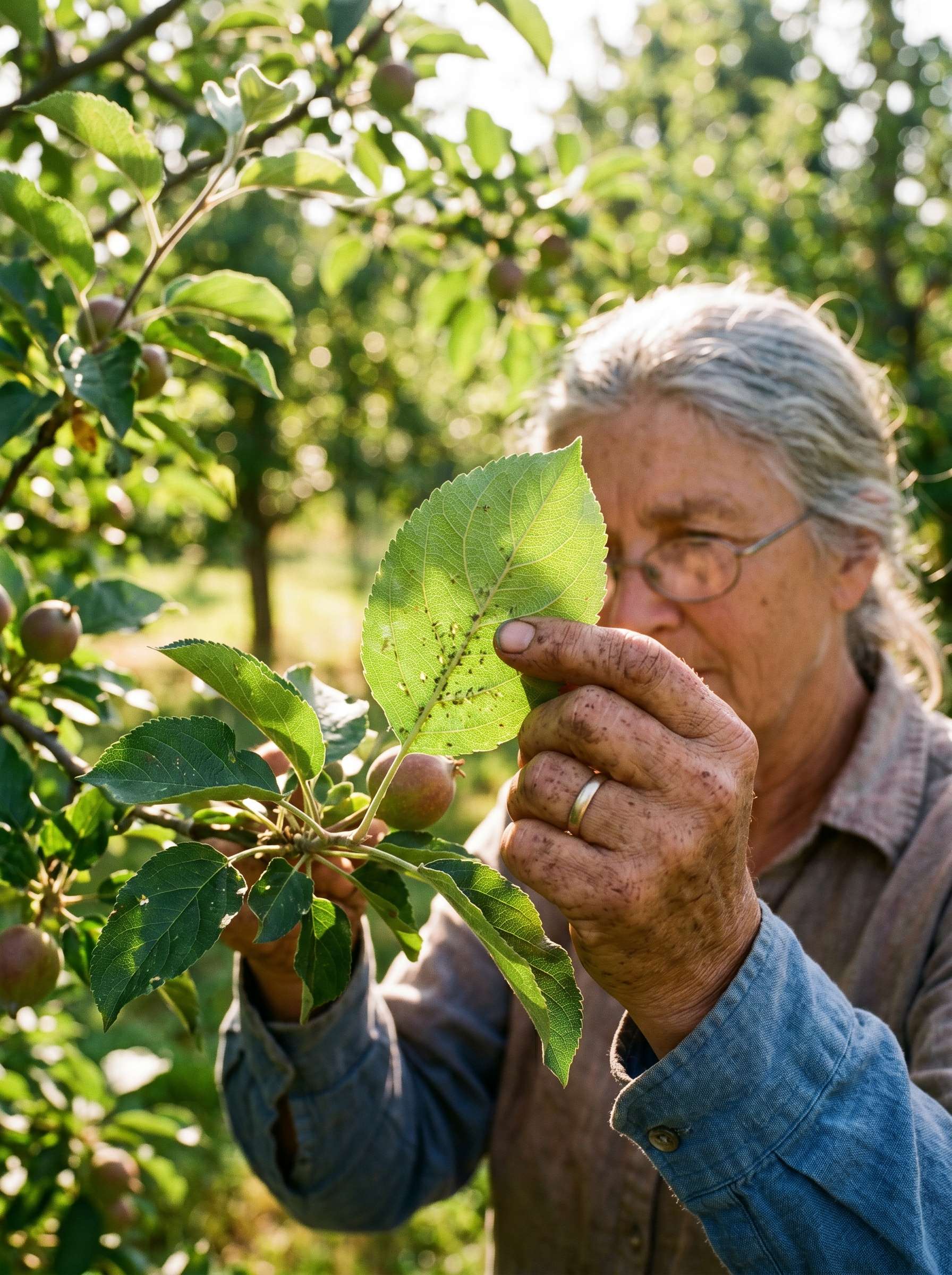
At the end of the day, summer pruning isn’t something you should stress over or fear. Plants are remarkably resilient organisms that have been dealing with broken branches, browsing deer, and rough weather for millions of years. A few minor mistakes with your hand pruners aren’t going to destroy all your hard work overnight.
Once you understand what’s actually causing the problem—how the tree moves its energy and why light needs to reach the center of the canopy—fixing the mess gets much easier. Grab your shears, make sure they are clean and sharp, and go spend an hour getting to know your trees. Your harvest next autumn will thank you for it.
Most advice in this article comes from years of hands-on gardening experience and trial-and-error in real home gardens. Results can vary depending on your local climate, soil conditions, and specific fruit tree varieties. Always observe your plants closely and adjust your care routines to match your unique growing environment.

Aagam – Founder of SpruceTouch
I’m Aagam, a home and garden enthusiast who enjoys growing, building, and improving outdoor spaces. I focus on practical backyard projects, garden ideas, and simple DIY solutions that are useful in real homes. Through SpruceTouch, I share what I’ve learned, what worked, what didn’t, and the small details that can make an outdoor project easier.