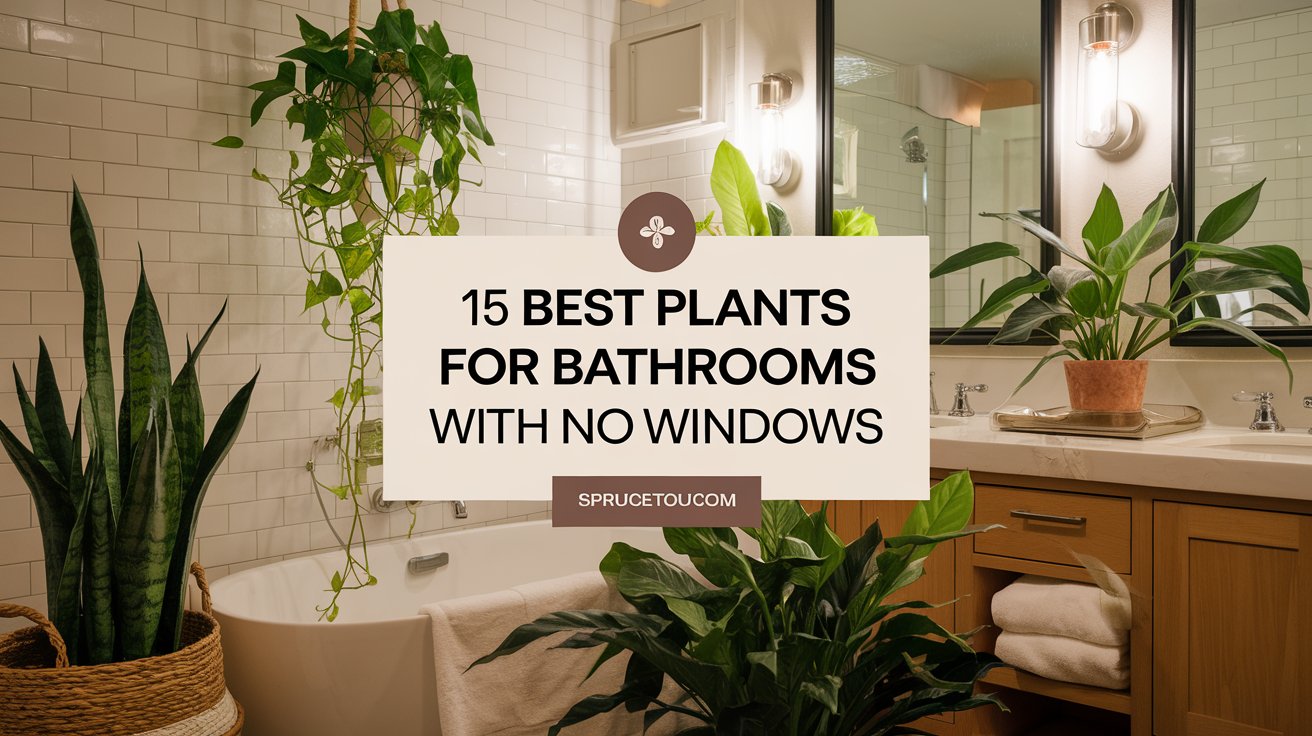
15 Best Plants for Bathrooms With No Windows
You’re about to discover 19 “indestructible” plants that don’t just survive in windowless bathrooms—they actually thrive in them. We’ll cover everything from moisture-loving ferns to the architectural giants that handle total darkness like champs.
I’ve been getting my hands dirty in the garden for nearly 20 years, but my biggest challenge was always my windowless guest bath. I’ve tested dozens of setups over the years, and trust me, I’ve killed more “easy” plants than I care to admit before finding the ones that can actually handle the steam and the shadows.
For a long time, my bathroom felt like a cold, tiled box. I tried a high-maintenance orchid once (total disaster), and it made me realize that bathroom gardening isn’t about skill—it’s about matching the plant to the humidity.
If you’re ready to stop looking at empty corners and start seeing a lush sanctuary, let’s get into it.
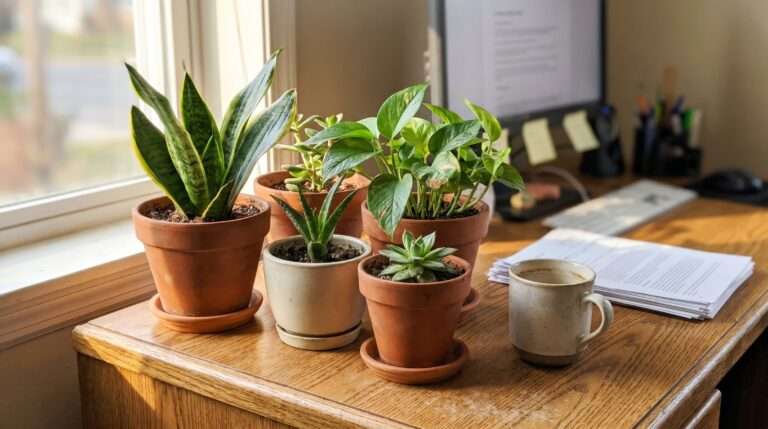
1. Snake Plant (Sansevieria)
If I had to recommend just one plant for a no-window bathroom, it would hands-down be the snake plant. These plants are survivors—they tolerate neglect, low light, and irregular watering. In fact, they’ll likely thrive more if you leave them alone rather than fuss over them.
Why it works: Snake plants are unique because they can perform a specific type of photosynthesis (CAM) that allows them to tolerate incredibly low light levels. They also act as natural air purifiers, helping to filter toxins and freshen up small spaces like bathrooms.
Real-life use case: The upright, sword-like leaves bring a modern, architectural feel. I’ve had one sitting in my guest bathroom for over a year now, and it looks as good today as when I first placed it there.
Practical Tip: Check the soil with your finger; if it’s even slightly damp, walk away. In a windowless room, water evaporates much slower. I only water mine about once every three weeks.
Mistake to avoid: Whatever you do, don’t get water in the “cup” or center of the leaves. It sits there in the humid air and causes the base to rot before you even realize there’s a problem.
2. ZZ Plant (Zamioculcas zamiifolia)
The ZZ plant is another MVP for low-light bathrooms. With its glossy, deep-green leaves, it adds richness and shine to an otherwise dull corner. I learned this the hard way: more light actually makes these grow slower and turn a pale green. They love the shadows.
Why it works: ZZ plants are practically indestructible because of their “bulbs” (rhizomes) under the soil. They store water like a camel. I love placing mine on a shelf above the toilet—it gives that forgotten corner a polished, stylish vibe.
Real-life use case: Guests often comment on mine and assume it’s fake because it looks that perfect. It creates a high-end look without the high-end effort.
Practical Tip: Every month or so, take a damp microfiber cloth and wipe the dust off the leaves. Since there’s no wind in a bathroom, dust settles and blocks what little light the plant is trying to absorb.
What I noticed: In windowless rooms, the ZZ plant stays very compact. It won’t grow wild, which is actually great for small bathrooms.
3. Pothos (Epipremnum aureum)
Pothos is hands-down one of the easiest plants to grow indoors, even in windowless bathrooms. Its trailing vines make it especially fun to style—hang it in a macrame planter or let it spill down from a high shelf.
Why it works: It’s a literal weed in the tropics. It’s adapted to climb trees under heavy canopies, so your ceiling is just another “canopy” to it. The heart-shaped leaves are charming and instantly soften hard bathroom lines.
Real-life use case: I have one draped over the curtain rod of my shower (the non-functional side!). The humidity from the daily showers keeps the leaves huge and vibrant.
Practical Tip: If the vines start looking thin with long gaps between leaves, it’s “reaching” for light. This worked better than I expected: swap it with a plant from a brighter room for one week every month to “recharge” it.
One mistake I made: Letting the vines sit in standing water on a shelf. The vines can actually rot if they stay pressed against a wet surface for too long.
But here’s the thing: Even “no-light” plants need some energy. If your bathroom stays pitch black 24/7, even a plastic plant will get dusty. Try to leave the bathroom light on for 6–8 hours a day, or better yet, use a cheap soil health guide to ensure your potting mix isn’t becoming a swamp.
4. Peace Lily (Spathiphyllum)
If you’re craving a flowering option, the peace lily is a winner. Known for its graceful white blooms, it handles low light like a pro.
Why it works: Peace lilies are forest-floor plants. They are used to getting zero direct sun. In a bathroom, the humidity mimics the tropical floor perfectly.
Real-life use case: In my powder room, mine even flowers a couple of times a year. It acts as a natural “canary in the coal mine”—if I forget to water, it wilts.
Practical Tip: Use filtered water. I noticed the leaf tips turn brown and crispy if you use straight tap water because they are sensitive to fluoride.
5. Boston Fern
Boston ferns are lush, feathery, and thrive in the exact environment most bathrooms offer: humid and cozy.
Why it works: Ferns breathe through their fronds. While most rooms are too dry, the steam from your morning shower is like a spa day for this plant.
Real-life use case: I moved my Boston fern into my windowless guest bath during a particularly dry summer—it completely revived after struggling in my living room.
Practical Tip: Keep the soil consistently moist but not soggy. I like to give mine a “shower” once a week by literally putting it in the tub and letting the water run through it to wash away beginner gardening mistakes like salt buildup.
One mistake I made: Placing it right next to a heating vent. The dry air from the vent will turn a fern into a pile of brown needles in forty-eight hours.
Pro Tip: If your fern looks a bit “thin,” give it a haircut! Trimming the old, brown fronds at the base encourages the center to push out new, bright green growth.
6. Cast Iron Plant (Aspidistra)
The cast iron plant lives up to its name—tough as nails and nearly impossible to kill. It actually prefers the dark.
Why it works: It’s slow-growing and has very low metabolic needs. It doesn’t “demand” light; it just sits there looking elegant.
Real-life use case: I’ve seen it styled beautifully in tall planters beside bathroom cabinets, where it adds graceful height and movement.
Practical Tip: Don’t over-fertilize. Because it grows so slowly in low light, it doesn’t need much food. Once a year in the spring is plenty.
7. Spider Plant
Spider plants are fun, quirky, and perfect for bathrooms. Their striped leaves arch beautifully, and they produce little baby “spiderettes” that dangle like charms.
Why it works: They are incredibly efficient at absorbing moisture from the air. Watering plants correctly is easier here because the humidity does half the work for you.
Real-life use case: They’re great for beginners—forgiving of missed watering and tough in almost any conditions.
Practical Tip: If the tips turn brown, it’s usually the chlorine in the water. Try letting your watering can sit out overnight before using it on your spider plant.
8. Lucky Bamboo
Lucky bamboo is technically not bamboo at all, but it looks stylish and thrives in low-light bathrooms.
Why it works: It grows in water, so there’s no soil to get moldy in a damp bathroom. It’s nearly maintenance-free.
Real-life use case: I keep mine in a tall glass vase with pebbles, and it instantly makes my bathroom feel like a spa.
Practical Tip: Change the water every two weeks to prevent algae growth. If the leaves start turning yellow, it’s likely getting too much light or the water has too many chemicals.
I learned this the hard way: Just because a plant loves humidity doesn’t mean it loves being wet. In a windowless room, the soil stays damp for much longer than in a sunny window. Always double-check before you pour.
9. Calathea (Prayer Plant)
If you want drama, calatheas deliver. Their vibrant, patterned leaves look hand-painted.
Why it works: They hate direct sunlight (it bleaches their colors). The dim, humid environment of a bathroom is their version of paradise.
Real-life use case: Mine sits right on the counter. Watching the leaves “pray” and fold up at night is a great reminder of how alive these plants really are.
Practical Tip: This worked better than I expected: if your bathroom gets too cold, the Calathea will pucker up. Keep it away from drafty doors.
10. Parlor Palm (Chamaedorea elegans)
The parlor palm is a classic choice that never goes out of style. Compact and graceful, it looks beautiful in tight bathroom corners.
Why it works: These were popular in Victorian times because they could survive in dark, unheated rooms. Your modern bathroom is luxury to them.
Real-life use case: I’ve kept one in my master bath for years. Its soft, feathery fronds create a sense of calm.
Practical Tip: Watch out for spider mites. They love the dense fronds of palms. A quick spray of water in the shower once a month keeps the leaves clean and pest-free.
11. Air Plants (Tillandsia)
For something a little quirky, try air plants. These little wonders don’t need soil at all—just humidity and occasional soaking.
Why it works: They take in nutrients and water through their leaves. The steam from your shower is literally their food.
Real-life use case: I love mounting them on driftwood in the guest bath. They require almost no maintenance beyond a weekly soak.
Practical Tip: After you soak them, make sure they dry upside down. If water gets trapped in the base, they will rot from the inside out.
12. Chinese Evergreen (Aglaonema)
Chinese evergreens are another underrated gem for bathrooms with no windows. They come in a variety of patterns, from silver speckles to red-tinted leaves.
Why it works: They are incredibly tolerant of fluorescent lighting, which is what most windowless bathrooms rely on.
Real-life use case: I’ve had success keeping mine on the floor near the shower—the steam keeps it happy without much extra work.
Practical Tip: The darker the leaf, the less light it needs. If you have a totally windowless room, go for the solid green or silver varieties rather than the bright pink ones.
Common Mistake: Buying a plant and immediately repotting it. Plants in windowless rooms are already stressed by the light change. Let them sit in their nursery pots for at least a month before moving them into decorative ones.
13. Maidenhair Fern
Maidenhair ferns may look delicate, but they love bathrooms. The constant humidity keeps their lacy fronds from drying out.
Why it works: In the wild, they grow near waterfalls and damp rock faces. A steamy bathroom is the closest thing your home has to a waterfall.
Real-life use case: Place them on a vanity or shelf where you can appreciate their fine texture up close.
Practical Tip: Never let the soil dry out. Not even once. If a Maidenhair fern goes bone-dry, the leaves will turn to crisp in hours. If this happens, composting at home is your best bet for the remains, so keep that soil damp!
14. Dracaena
If your bathroom has a bit more floor space, dracaenas are a great way to add height. Their tall, upright growth creates a bold statement.
Why it works: They are slow-growers that don’t mind a little neglect. They store water in their thick stems, making them very resilient.
Real-life use case: Style them in tall planters for a modern vibe. I use one to hide the ugly plumbing behind a pedestal sink.
Practical Tip: If the leaves get “droopy,” it’s usually a sign of overwatering. In a no-window room, they need very little water.
15. Orchids (with Grow Light)
Orchids may seem like high-maintenance divas, but with the right setup, they can thrive in windowless bathrooms.
Why it works: They are epiphytes, meaning they love the air. The humidity in a bathroom is exactly what their aerial roots are looking for.
Real-life use case: I’ve kept a white phalaenopsis orchid on my bathroom counter for years. With a little LED grow light, it blooms beautifully.
Practical Tip: Forget the “ice cube” trick. Give them a good soak in the sink once a week and let them drain completely. Ice cubes are too cold for tropical roots!
Step-by-Step: My “Windowless Success” System
If you want these plants to live for years (not just weeks), follow this routine:
- The Light Cycle: Leave your bathroom light on for 8 hours. If you can, replace your standard bulb with a “Daylight” balanced LED.
- The Rotation: Every 4 weeks, swap your bathroom plant with one from a sunny room for a weekend. It’s like a “sunlight vacation.”
- The Humidity Hack: After you shower, leave the door closed for 15 minutes. This traps the steam and lets the plants drink it in.
- The Soil Check: Never water on a schedule. Always use the “finger test.” If the top 2 inches are dry, only then do you water.
Things That Didn’t Work for Me
- Succulents: I tried to make “cute” succulent trays in the bathroom. They turned into mushy, stretched-out monsters within a month. They need intense sun, period.
- Lavender: I wanted that spa scent, but lavender needs huge amounts of airflow and direct sun. It just molded in the damp bathroom air.
- Over-misting: I thought I was helping, but misting leaves in a room with no ventilation just led to leaf spot and fungal issues. Let the shower steam do the work.
Small Things That Make a Big Difference
- Group your plants: They create their own micro-climate.
- Use pebbles: Put a tray of pebbles with a bit of water under pots to boost humidity without wetting the roots.
- Pebble Polish: Use smooth river stones on top of the soil to prevent “fungus gnats” which love damp bathroom soil.
- Go Vertical: Use the space over the door for a trailing Pothos.
FAQ
No plant can live in total darkness forever. They need at least 6–8 hours of artificial light (like your vanity lights) to survive.
Usually half as often as you would in a room with a window. The lack of sun means the plant isn’t “sweating” out the water as fast.
In a bathroom, this is almost always overwatering. The soil is staying too wet for too long.
A “Daylight” LED bulb (5000K-6500K) is much better than a warm yellow bulb, but a dedicated grow light is best for flowering plants like orchids.
For desert plants like cacti, yes. For everything on this list, the humidity is actually a benefit.
Gardening in a windowless room is about patience. These plants won’t grow at light speed, and that’s okay. The goal isn’t to create a commercial nursery; it’s to create a space that feels alive. Start with one “unkillable” snake plant, see how it reacts to your routine, and adjust as you go. Your bathroom spa is waiting.

Aagam – Founder of SpruceTouch
Hi, I’m Aagam — the creator behind SpruceTouch. I’m a home and garden enthusiast who shares practical ideas for backyard design, garden projects, patio decor, and small outdoor spaces. Through SpruceTouch, I focus on simple and budget-friendly ways to improve outdoor living spaces.