Dark Cottagecore Trend: How to use moody plants for 2026 curb appeal.
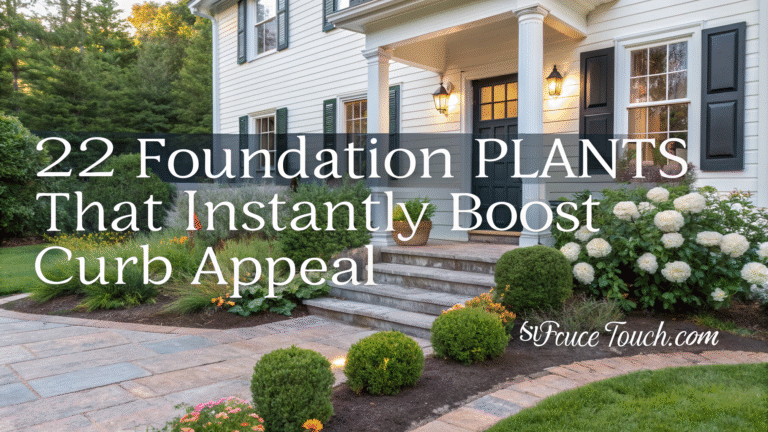
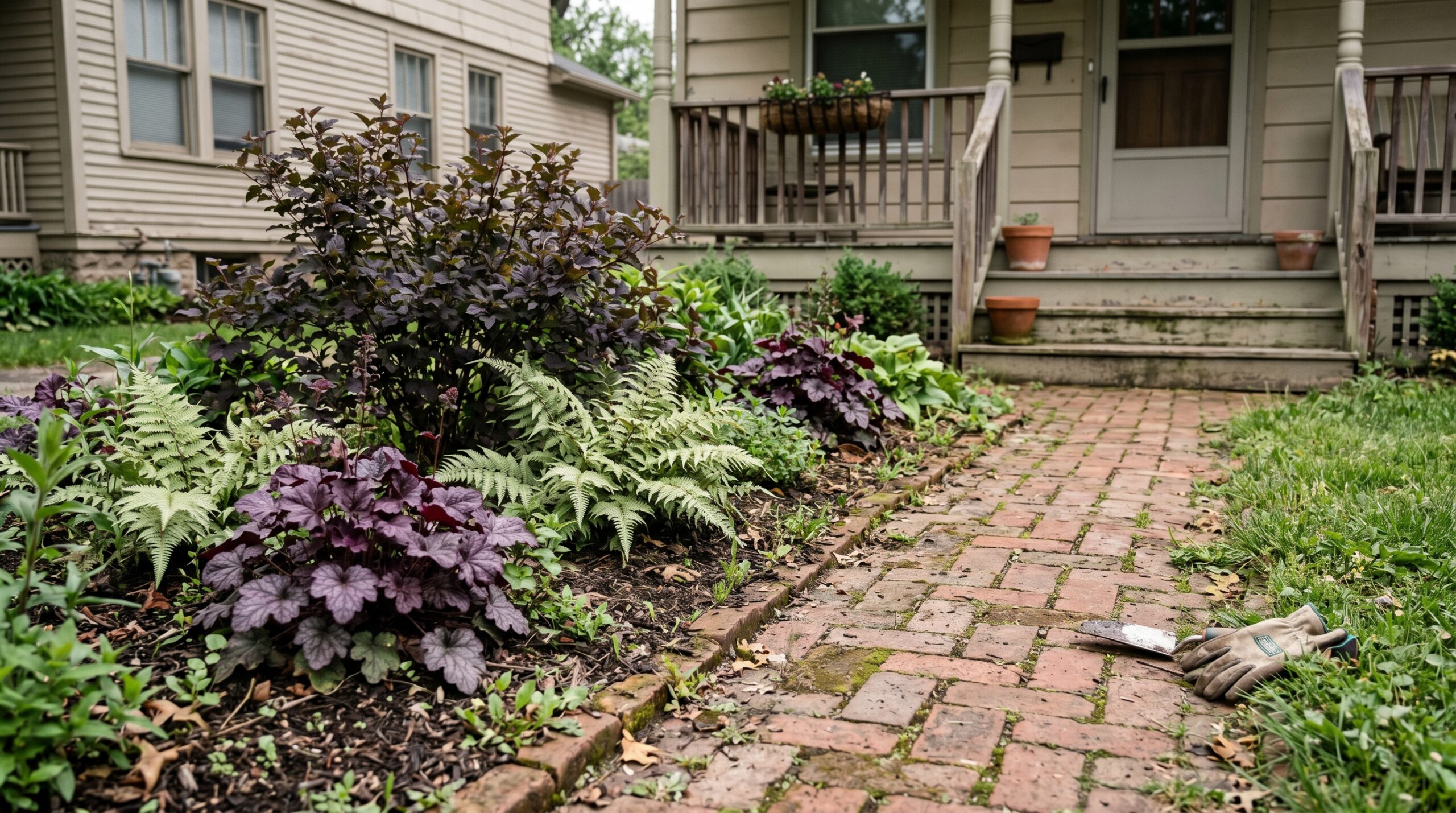
If you’ve spent any time looking at front yards lately, you’ve probably noticed everything is starting to look a bit… identical. There’s a lot of pristine white vinyl fencing, perfectly sheared boxwoods, and neat little rows of red begonias. It’s clean, sure, but it lacks soul. That’s exactly why the shift toward a darker, moodier cottagecore aesthetic has taken off for 2026 curb appeal. It’s all about creating a front garden that feels ancient, slightly mysterious, and deeply layered, right at your doorstep.
I’ve been playing around with plants for nearly two decades now, and my own style has definitely evolved from “plant whatever is on sale at the big box store” to something far more intentional. A few years ago, I tried leaning hard into the traditional bright pastel cottage look, but it felt too high-maintenance and cheerful for my actual personality. When I started swapping out standard pinks and bright yellows for deep plums, velvety blacks, and tarnished silver foliage, the whole vibe of my house changed. It suddenly had character.
But I learned the hard way that you can’t just buy every dark plant in the nursery catalog and throw them in the ground together. My first attempt at a moody border looked less like a romantic, mysterious estate and more like a sad, burnt patch of weeds from the highway. Without the right balance of light, texture, and structure, dark plants simply disappear into the shadows or look dead from a distance.
Let’s talk about how to actually make this heavy, atmospheric look work for your front yard without making your neighbors think your house is abandoned.
The Shift to the Dark Side
There is a massive difference between a messy garden and a moody one. When people hear “dark cottagecore,” they often picture an overgrown, spooky house from a movie. But in reality, the prettiest moody gardens are deeply rooted in classic design principles—they just use a completely different color palette.
Instead of focusing on neon greens and hot pinks, we’re looking for deep burgundies, midnight purples, bruised chocolates, and the kind of muted greens you see in an old forest after a heavy rain.

One thing most people ignore when they start picking out plants is how light interacts with dark foliage. If you place a near-black plant in a spot that gets heavy afternoon shade, it will vanish. You won’t see the leaf shape or the texture; it’ll just look like a hole in your landscaping.
I’ve found that the secret is putting these dark beauties where the morning or late afternoon sun can backlit them. When the sun hits the leaves of a ‘Black Lace’ elderberry from behind, those dark fronds glow like stained glass.
Building the Framework with Woody Shrubs
You need structure first. If you just plant a bunch of dark perennials, your front yard will look completely flat for half the year. I always tell people to start with the woody plants that will hold the space down even in the dead of winter.
For a true moody front yard, my absolute favorite framework plant is the Ninebark, specifically varieties like ‘Diabolo’ or ‘Summer Wine’. They have this gorgeous, peeling bark that looks incredibly rustic, and the leaves are a deep, wine-red that holds its color well through the summer heat.
But here’s the kicker: you can’t just plant three ninebarks in a row and call it a day. You need to contrast that heavy, dark foliage with something that brings out its depth.
I love pairing dark shrubs with fine-textured, silvery plants or pale green ferns. If you’re looking for more ideas on setting up structure, you might want to look at my guide on cottage garden privacy shrubs to see how to layer things for a natural, living wall effect that still feels private and enclosed.
| Shrub Variety | Foliage Color | Best Use Case |
|---|---|---|
| Ninebark ‘Diabolo’ | Deep Purple | Back of border anchor |
| Black Lace Elderberry | Near-Black, Lacy | Focal point near door |
| Smoky Smokebush | Muted Plum/Grey | Softening hard corners |
Another spectacular choice for curb appeal is the ‘Black Lace’ elderberry. The leaves look almost like a Japanese maple—very delicate and finely cut—but it’s incredibly tough. In the early summer, it produces these massive, flat clusters of soft pink flowers that contrast beautifully with the dark leaves.
It looks ancient and established within just two seasons, which is exactly what you want when trying to build that lived-in, timeless cottage look.
Playing with Perennials that Love the Shadows
Once you have your big structural shrubs in place, you can start filling in the middle layers with perennials. This is where you can get really playful with textures.
I’m a huge fan of Hellebores (often called Lenten Roses). They bloom incredibly early in the year—sometimes while there’s still snow on the ground here—and some varieties come in shades of deep slate gray, metallic purple, and almost pure velvet black.
I learned this the hard way: do not plant dark hellebores right against dark mulch.
If you do, you won’t even notice they’re blooming. I spent forty bucks on three gorgeous ‘New York Night’ hellebores a few years ago, planted them in a dark corner, and forgot they were there because they blended perfectly into the soil.
Now, I always underplant them with a bright green moss, creeping sedum, or a pale gravel path to make those moody blooms pop.

Speaking of paths, how you navigate through your front yard matters just as much as the plants themselves. A concrete sidewalk completely kills the moody cottage vibe.
If you’re thinking of updating your walkways to match this new style, check out my thoughts on diy garden paths stone vs mulch where I explain why I stopped using wood chips and moved toward something with a bit more permanent, old-world character.
The Magic of Textural Contrast
The biggest mistake I see beginners make with the dark cottagecore look is buying ten plants that all have the exact same leaf shape and color. If everything is a medium-sized, dark green-purple leaf, your garden bed will look like a big blob of mud from the street. You need extreme contrast in leaf size and texture to make the dark colors readable.
For example, try putting a broad-leafed, moody perennial right next to a very fine, airy grass or fern.
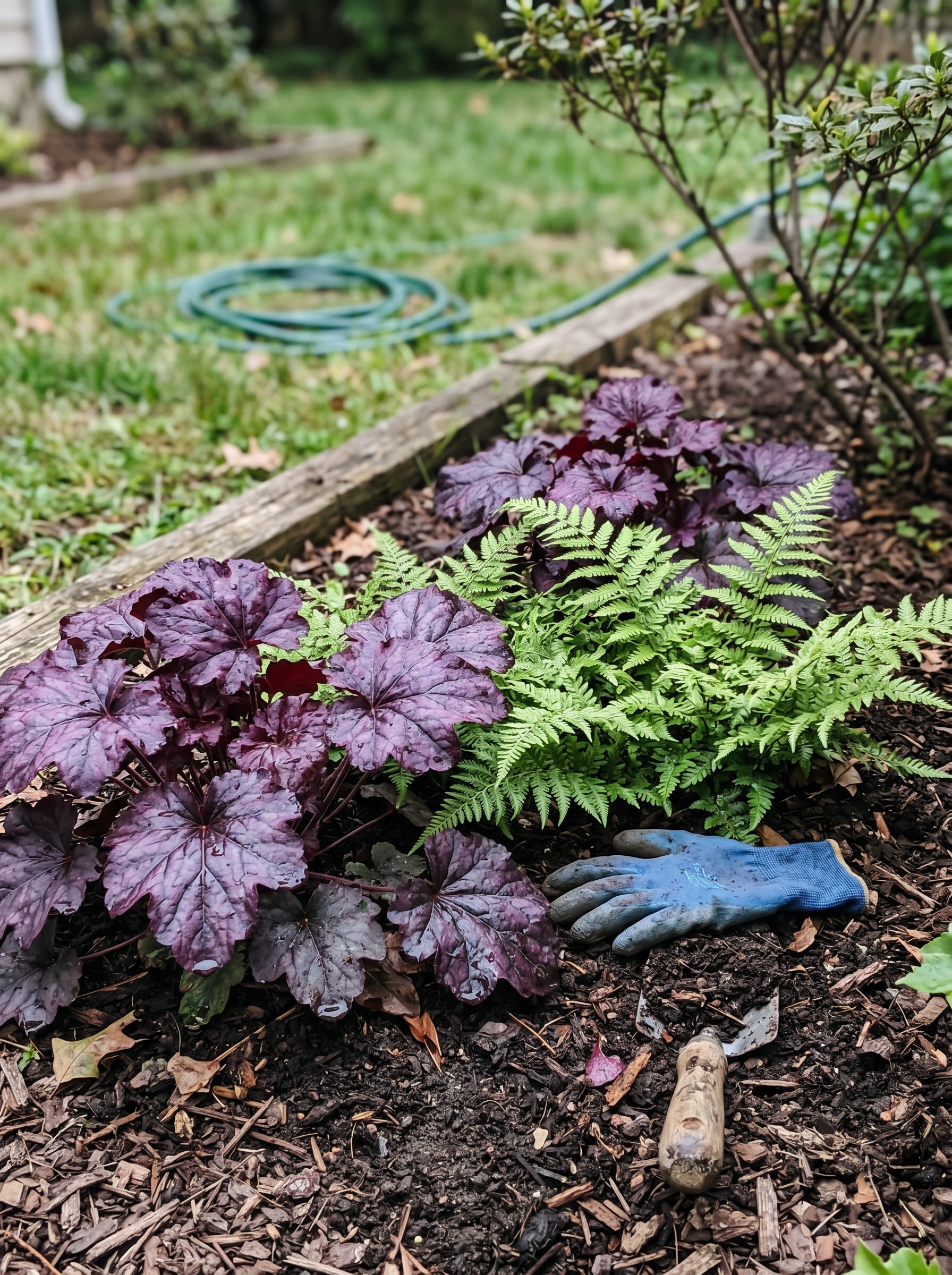
- Heuchera (‘Coral Bells’): Varieties like ‘Obsidian’ or ‘Midnight Rose’ have large, glossy, rounded leaves that act like little mirrors, catching the light even though they are dark.
- Actaea simplex (‘Black Negligee’): This plant has tall, jagged, dark purple foliage that shoots up long, fragrant white flower spikes late in the summer.
- Hakonechloa (‘Aureola’ Japanese Forest Grass): A splash of weeping chartreuse grass right at the base of a dark plant prevents the design from looking gloomy.
This surprised me honestly: the brightest chartreuse or gold foliage actually makes the dark plants look darker. It sets a baseline for the eye.
When you place a bright neon-green fern next to a deep plum Heuchera, both plants look twice as intense as they would on their own. It’s all about that push and pull between light and shadow.
Designing for Street-View Impact
When you’re designing a backyard, you’re creating a private space for your own eyes. But the front yard is public theater. It needs to look good from 30 feet away as someone drives by, and it needs to look good from 3 feet away as someone walks up to your front door.
Most gardening blogs never mention this: dark colors recede from a distance. If your entire front yard is dark purple, your house will look smaller and further away than it actually is.
To fix this, use your moody plants as framing devices rather than a solid wall.
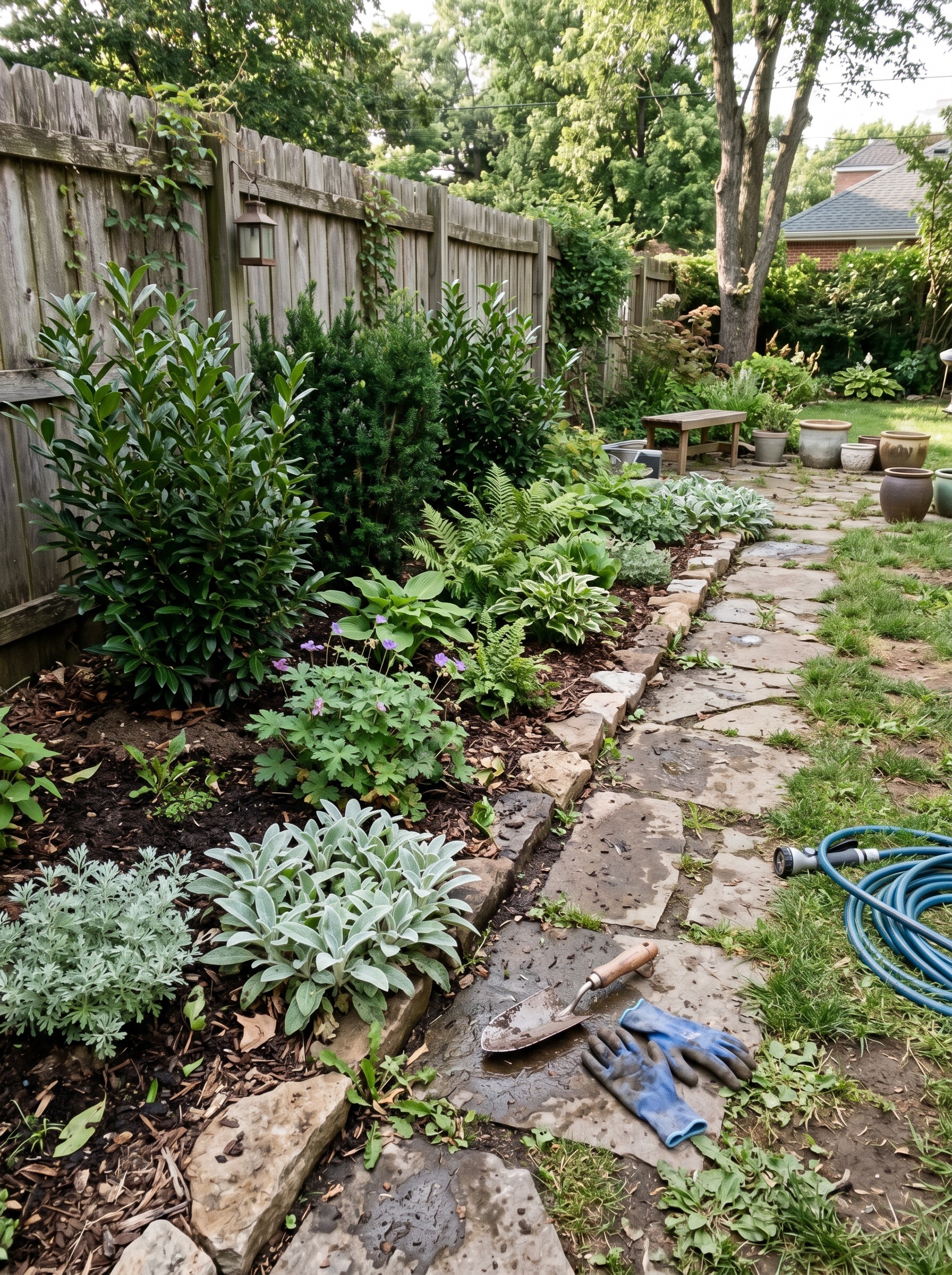
Populate the edges of your porch steps with dark containers. Line your walkway with alternating patches of silver-leafed lamb’s ear and dark-leafed sedum like ‘Back in Black’. This creates a rhythmic pattern that guides the eye toward your front door without overwhelming the senses.
If you are planting in May, you’re in the sweet spot for getting these perennials established before the brutal summer heat hits. If you’re looking for a timeline on how to sequence your planting for the best results later in the year, check out my may gardening strategy summer harvest breakdown, which covers how to maximize growth during this pivotal month.
What Actually Works: The Three-Layer Moody Border Setup
If you want to try this look without redesigning your entire yard, pick one small garden bed near your entrance or along a walkway. Here is a simple, foolproof layout that works in most US zones (typically zones 5–8) and provides that rich, dark cottage look throughout spring, summer, and fall.
Step 1: The Anchor (Back Layer)
Plant one ‘Black Lace’ Elderberry or ‘Diabolo’ Ninebark slightly off-center at the back of the bed. If you have a small space, keep it pruned to a manageable shrub size. This gives you your height and dark background.
Step 2: The Mid-Layer Textures (Middle Layer)
Flank the shrub with three ‘Black Negligee’ Actaea plants on one side, and a clump of bleeding hearts (Dicentra spectabilis) on the other. The bleeding hearts will bring that classic, vintage cottage feel, while the Actaea adds the tall, dark architectural lines.
Step 3: The Ground Huggers (Front Layer)
Along the very front edge of the bed, alternate between ‘Obsidian’ Heuchera (for dark, glossy, broad leaves) and a silver-leafed plant like Brunnera ‘Jack Frost’ or standard Lamb’s Ear. This creates a bright, reflective border that keeps the dark plants from melting into the lawn.
Things That Didn’t Work for Me
I’ve made a lot of messes in my pursuit of the perfect garden. When I first got into the dark cottagecore aesthetic, I went a bit overboard and made some classic mistakes that cost me time, money, and a lot of dead plants. Here are a few things I will never do again:
Planting “Black” Annuals in Direct, Baking Afternoon Sun
I fell in love with those nearly black petunias (‘Black Velvet’) and planted them in a baking-hot, west-facing brick planter right by my garage. By July, they didn’t look romantic or moody; they looked crispy and fried.
Dark colors absorb heat much faster than light colors. In intense sun, the petals literally cook themselves. Keep your ultra-dark flowering annuals in spots that get a break from the harsh afternoon heat.
Ignoring the Soil’s Visual Color
I used to buy that heavy, dyed black mulch because I thought it would make my front yard look sleek and uniform. It was a disaster with moody plants. The dark purples and burgundies completely disappeared against the black mulch.
The garden just looked like a big pile of dirt from the street. I switched back to a natural, weathered hardwood mulch that cures to a soft, grayish-brown. It provides just enough contrast for the dark foliage to actually be visible.
Overcrowding the Plants for an “Instant” Forest Look
Cottage gardens are supposed to look full, but I used to pack things in so tightly that air couldn’t circulate. One damp June, half my dark-leafed ninebarks got hit with powdery mildew because they were choked out by neighboring plants. It looked awful—just a white, fuzzy mess over my beautiful dark leaves. Give things space to breathe; they will fill out faster than you think.
If you struggle with spacing your layouts so they look full but still healthy, take a look at my guide on pollinator friendly layouts attract bees to see how I balance plant density with good airflow and wildlife management.
The Subtle Role of Pollinators in a Moody Garden
One thing people worry about when shifting away from bright yellows and pinks is that they’ll lose their garden visitors. They think bees and butterflies only want the neon stuff. But I’ve found that many dark-foliage plants are absolute magnets for pollinators.
The dark-leafed stonecrop sedums (like ‘Matrona’ or ‘Midnight Velvet’) produce massive flat heads of pink flowers in late August that will be absolutely covered in bumblebees for weeks.
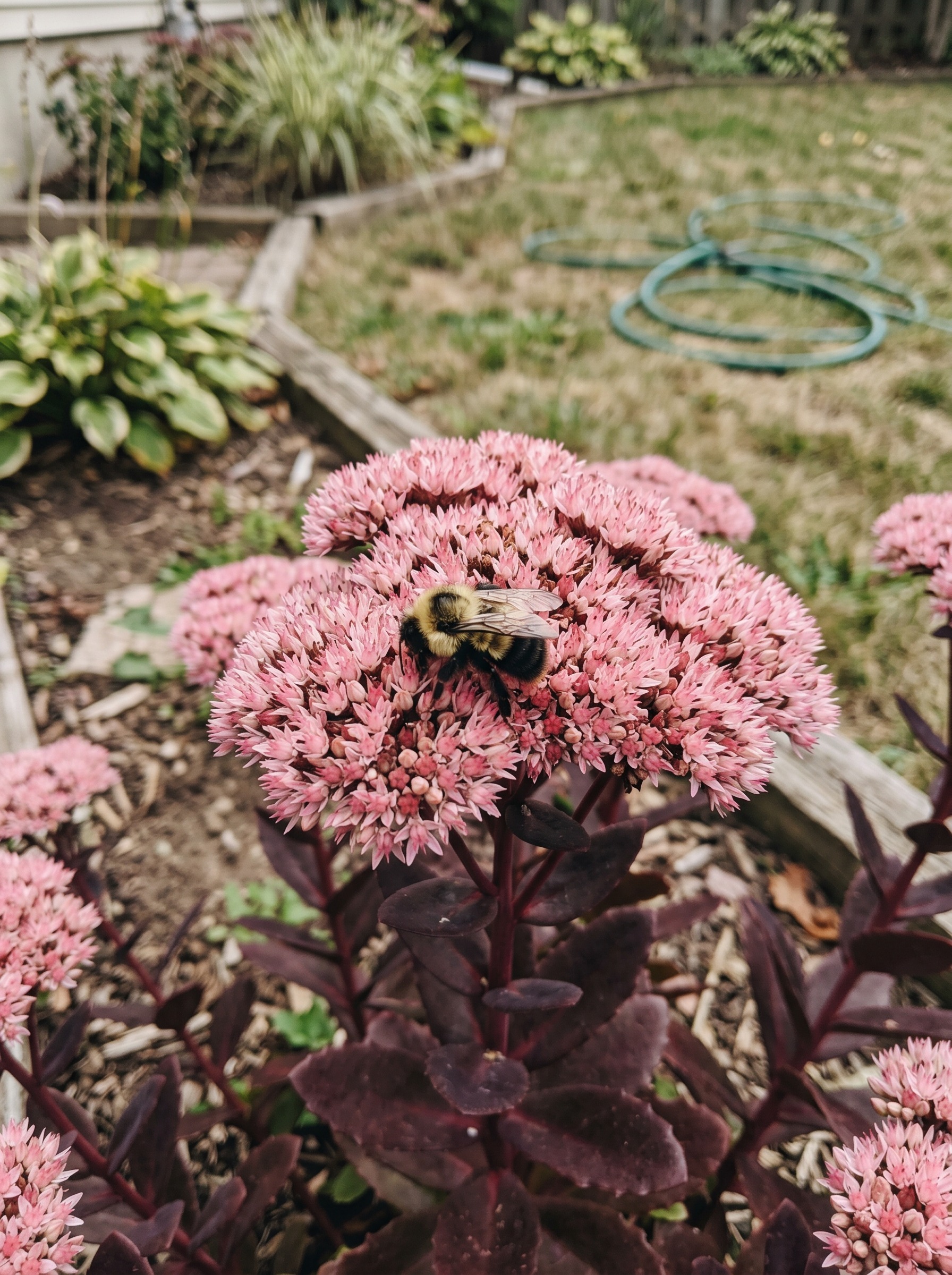
The contrast of bright yellow bees buzzing around deep purple leaves is honestly one of the most beautiful things in my front yard. It breaks up the stillness of the dark aesthetic and makes the garden feel alive rather than stagnant.
You aren’t sacrificing ecology for style here; you’re just changing the backdrop.
Small Things That Make a Big Difference
Sometimes you don’t need a massive budget or a weekend-long planting marathon to change the entire feel of your front yard. Here are a few tiny, low-effort tweaks I’ve done over the years that instantly elevated the moody, historical look of my space:
- Swap out shiny new hardware: Replace bright brass or shiny chrome porch lights and house numbers with matte black, oil-rubbed bronze, or tarnished copper. It grounds the space immediately.
- Let the moss grow: Stop scrubbing the moss out of your brick walkways or stone borders. That green velvet between stones is free cottage character.
- Use rusty metal elements: An old iron trellis, a weathered watering can left near the steps, or a rusted plant support adds an instantly lived-in, antique feel that complements dark foliage beautifully.
- Incorporate dark glazed pottery: If you don’t want to dig up your soil, just drop a couple of deep navy, charcoal, or forest green glazed ceramic pots on your porch steps and fill them with airy green ferns.
Container Gardening for the Reluctant Gardener
If you’re renting, or if you just don’t have the energy to dig up a massive front border, containers are your best friend. You can get that high-contrast, moody look on a front porch with just three well-chosen pots.
The trick is to use the “Thriller, Spiller, Filler” method, but adapt it for our dark cottagecore color palette.
For a thriller, use something tall and structural like a ‘Purple Fountain Grass’ or a dark Cannas lily with striped burgundy leaves.
For the filler, drop in some deep plum coral bells or some ruffled dark pansies.
And for the spiller, let a black sweet potato vine or ‘Blackie’ lysimachia tumble over the edge of the pot. It takes twenty minutes to put together, and it completely redefines your entrance.

But wait, there’s a catch with containers: they dry out much faster than the ground. Because dark pots absorb more sunlight, the soil inside can bake quickly. I make sure to use larger pots than I think I need—more soil volume means it holds moisture longer, saving you from having to water twice a day in July.
Keeping It Real: The Imperfect Garden
I think the main reason I fell in love with the dark cottagecore style is that it’s incredibly forgiving. If you have a perfectly manicured, symmetrical modern landscape, a single weed or a dead branch sticks out like a sore thumb. It demands perfection.
But a moody cottage garden thrives on a little bit of chaos.
If a plant flops over a bit, or if some autumn leaves linger under the shrubs into the spring, it just adds to the atmosphere. It looks like nature is slowly reclaiming the space, which is the exact romantic notion we’re trying to capture.
So don’t stress if your edges aren’t perfectly straight or if your plants don’t grow exactly like the ones in the magazine photos. Nature isn’t symmetrical, and the most inviting front yards are always the ones that look like a human being actually spends time tending them, getting their hands dirty, and letting things grow a little wild.
FAQ
Not inherently, but they do have specific light requirements. Many dark-leafed plants need a good amount of sun to keep their deep color. If you plant a dark ninebark or purple smoke bush in deep shade, the leaves will often revert to a muddy, washed-out green. Always check the light requirements for your specific variety.
It’s all about execution. An overgrown, unkempt yard can deter buyers, but a well-designed, layered garden with deep colors looks intentional and high-end. The key is maintaining clean pathways and ensuring your front door remains visible and welcoming rather than completely hidden by dark brush.
If your front yard gets almost no sun, look toward ‘Chocolate Shogun’ Astilbe (deep bronze-purple leaves with pink flowers), dark-leafed Heucheras like ‘Midnight Rose’, and certain deep green ferns like the Autumn Fern, which has beautiful coppery-red fronds when new growth emerges.
In my experience, no. Pests are usually attracted to stressed plants or specific plant families, regardless of leaf color. In fact, many dark-leaved cultivars of native plants (like Ninebark and Elderberry) are just as tough and pest-resistant as their wild, green counterparts.
This is why structural shrubs and hardscaping matter. Use plants with interesting bark, like the peeling texture of Ninebark or the twisty branches of a Harry Lauder’s Walking Stick. Evergreen dark shrubs, like certain hollies or boxwoods, also help maintain the garden’s shape when the perennial leaves die back.
Avoid dyed black mulch, as dark plants will disappear against it. Instead, choose a natural, double-shredded cedar or hardwood mulch that ages to a soft, neutral gray-brown. This provides a clean backdrop that makes both dark foliage and bright green accents stand out.
Moving Forward with Your Space
At the end of the day, gardening is just a long series of experiments. Some things will thrive, some things will die, and most things will require you to shift them around a couple of times before they look exactly right.
Don’t feel like you need to buy fifty new plants this weekend to transform your front yard. Start with one small corner, swap out a few common green plants for something with a richer, darker tone, and see how the light hits it. You might find that a little bit of shadow is exactly what your yard was missing. Once you understand how these deeper colors behave in your specific climate and light, things usually get much easier.
Most advice in this article comes from years of real gardening experience and trial-and-error in home gardens. Results may vary depending on your specific climate zone, soil health, and local growing conditions. Always check your local agricultural extension for region-specific planting dates and invasive species warnings.

Aagam – Founder of SpruceTouch
I’m Aagam, a home and garden enthusiast who enjoys growing, building, and improving outdoor spaces. I focus on practical backyard projects, garden ideas, and simple DIY solutions that are useful in real homes. Through SpruceTouch, I share what I’ve learned, what worked, what didn’t, and the small details that can make an outdoor project easier.