
15 Ideas for a Lush, Temporary Cottage Garden That Won’t Lose Your Security Deposit
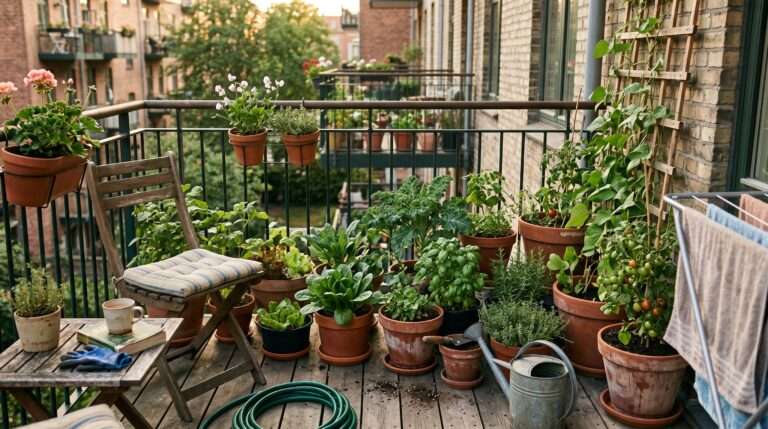
For years, I thought cottage gardening required a sprawling, white-picket-fenced yard in New England with endless dirt to dig up. When I spent two years renting a second-floor apartment with nothing but a concrete slab balcony, I thought my dirty-fingernail days were over. I tried forcing a few massive plastic pots out there, but it just looked like a sad plant graveyard and felt nothing like the romantic, overflowing English escapes I actually wanted.
After about fifteen years of testing layouts, trialing varieties, and figuring out what survives in tight quarters, I finally cracked the code on small-space cottage styling. You don’t need an acre of ancient loamy soil to get that dense, humming-with-bees look. You just need to change how you use vertical planes, hidden anchors, and movable textures.
My first attempts were honestly pretty embarrassing—I spent way too much money on giant perennial delphiniums that promptly blew over in a minor windstorm and shattered their stalks. I also ruined a perfectly good wooden bench with water stains because I didn’t think about drainage.
A few of these ideas honestly worked much better than I expected, and they’re all fully reversible when lease-end rolls around.
QUICK VALUE SECTION
- Best Overall Beginner Win: The Nested Terracotta Cluster (Instant depth without heavy lifting).
- Highest Visual Impact: Tension-Rod Climbers (Creates a wall of green without drilling holes).
- Cheapest Transformation: Thyme-Stuffed Crates (Cheap vintage vibe that smells amazing).
- Space-Saving Champion: Over-Rail Saddle Planters (Gets plants off the floor entirely).
- Easiest for Fast Color: Annual Cosmos in Fabric Bags (Wild, floppy cottage look in weeks).
MAIN CONTENT (CORE IDEAS)
1: The Layered Terracotta Staircase Cluster
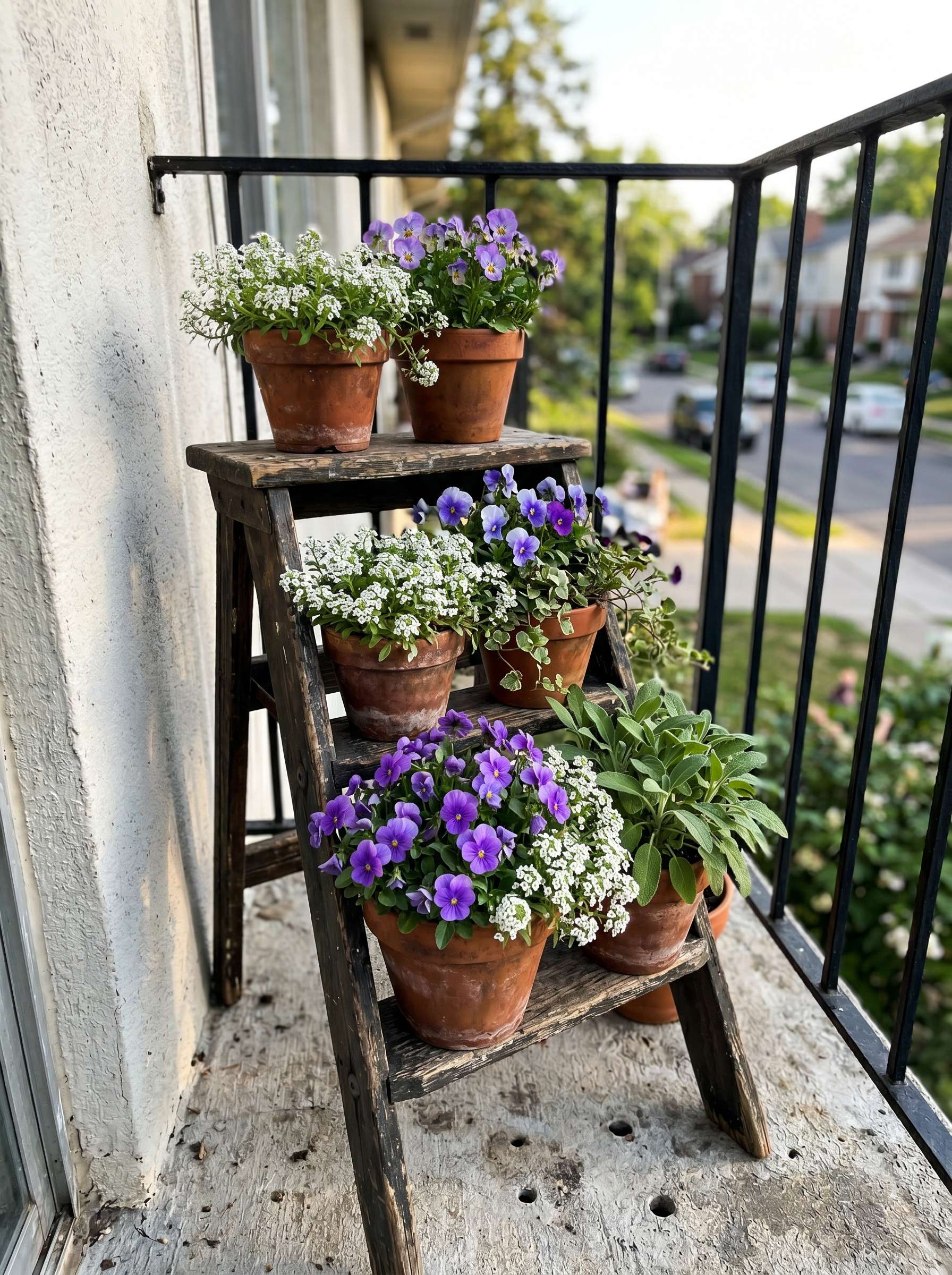
One mistake I see people make constantly on small patios is lining pots up in a single, straight file line like soldiers. It looks cold and sterile. Instead, I started scavenging old wooden step stools or low benches from thrift stores and packing them tight with varying sizes of aged terracotta pots.
Start with one large, heavy pot at the base for stability, then stagger two or three medium pots slightly behind and above it, and finish with a couple of small pots tucked on top or to the sides. The uneven heights are what create that classic tiered, cottage-border look.
By lifting some pots up and keeping heavy ones low, you create that dense, stepped-up layer look that defines classic English borders. Populate them with floppy annuals like sweet alyssum and dwarf foxgloves. The porous clay lets the roots breathe, which is a lifesaver if you tend to overwater when you’re bored.
2: No-Drill Tension Rod Clematis Walls
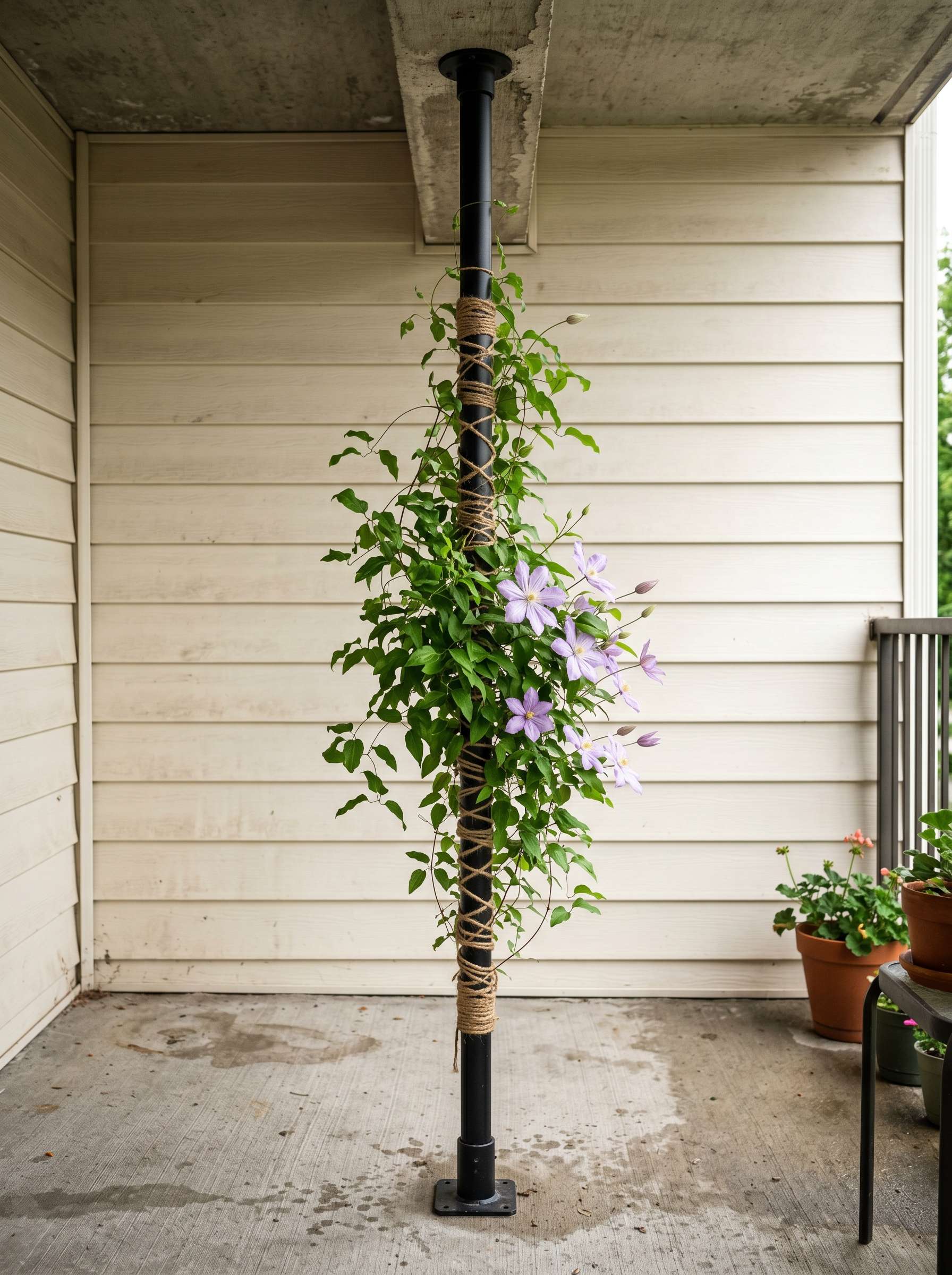
When you rent, you can’t exactly go drilling trellis brackets into the exterior brick or vinyl siding without getting a nasty letter from management. My workaround was using heavy-duty, spring-loaded black shower curtain rods wedged vertically between the balcony floor and the concrete ceiling above.
I wrapped rough jute twine around the rods to give the plants something to grip. Within two months, my climbing clematis had completely obscured the ugly apartment siding. The best part? When I moved, the whole setup popped out in thirty seconds flat with zero holes left behind.
3: Vintage Wooden Apple Crates for Loose Herbs
There is something inherently romantic about old, stamped wooden crates, and they happen to be the perfect depth for growing loose, floppy culinary herbs. I line them with cheap landscape fabric to keep the soil from washing out of the cracks, then pack them with trailing rosemary, English thyme, and curly parsley.
They sit beautifully on the floor right by the kitchen door. One thing most people ignore is that herbs need just as much drainage as anything else, so make sure to poke plenty of holes through that fabric lining before adding your dirt.

4: Fabric Grow Bags Hidden Inside Willow Baskets
I love the health benefits of fabric grow bags—they air-prune roots so your plants never get root-bound, which is common in small spaces. But let’s be honest: those black or gray felt bags look incredibly ugly and industrial on a cozy porch.
My trick is to buy cheap, deep willow or seagrass laundry baskets from discount home stores and tuck the filled grow bags right inside them. You get all the superb drainage and root health of fabric, but the outward appearance is pure, rustic cottage charm. I used this setup to grow gorgeous, deep red heirloom tomatoes that looked like they belonged in a country field rather than a third-floor balcony.

5: The Galvanized Wash Tub Salad Bar
If you want that farm-cottage aesthetic instantly, find an old galvanized metal wash tub at a garage sale. Drill about ten half-inch holes in the bottom—don’t skip this, or your plants will drown in a week—and fill it with a rich potting mix.
I plant mine with a dense mosaic of leaf lettuces, radishes, and chives. It looks like a lush green tapestry and provides fresh salads for months. But here’s the kicker: galvanized metal can get incredibly hot in direct July sun, so make sure this sits in a spot that gets morning sun and afternoon shade so you don’t cook the roots.

6: Railing-Mounted Window Boxes Facing Inward
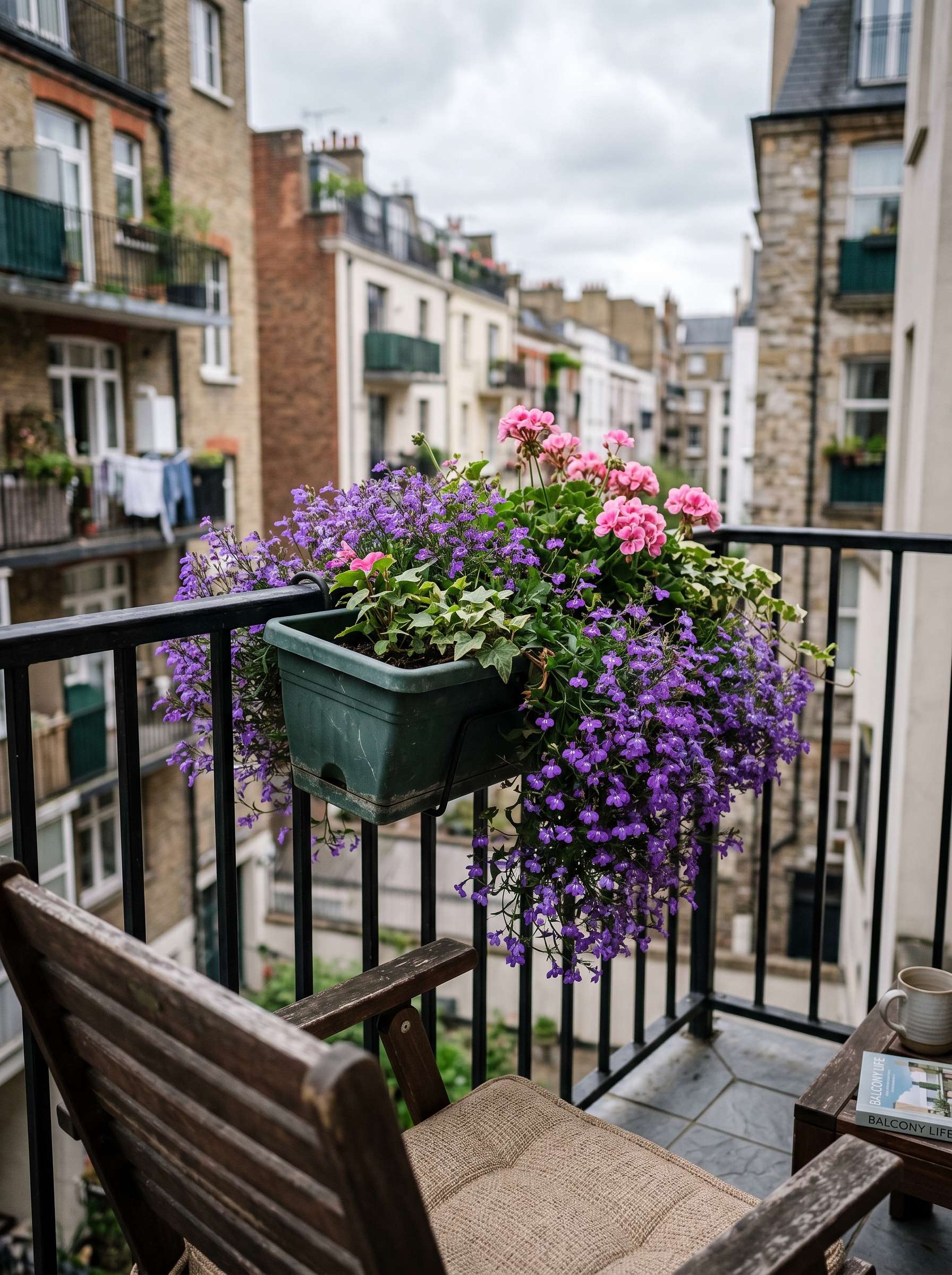
Most people hang their window boxes facing out toward the street for curb appeal. When you have a tiny rental balcony, hang them facing inward toward your seating area. This surrounds you with blooms at eye level when you’re sitting out there with your morning coffee.
I populate these inward-facing boxes with trailing petunias, lobelia, and pelargoniums. Because they hang on the metal railing, they take up zero precious square footage on the floor, leaving plenty of room for a small bistro chair.
7: The Self-Watering Upside-Down Bucket Trick
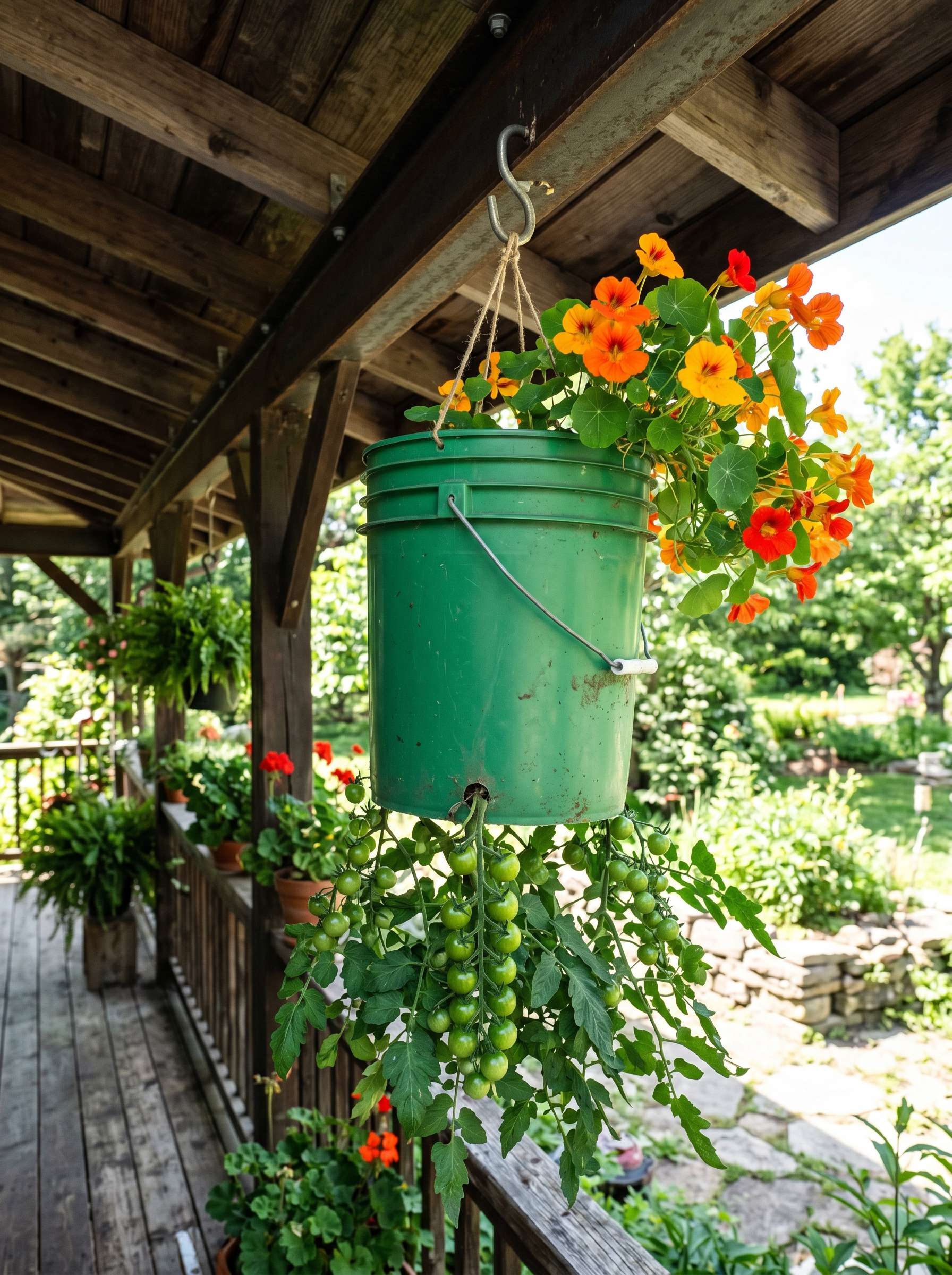
I learned this the hard way: small hanging baskets dry out in about four hours when the summer wind hits an apartment building. After losing three beautiful fuchsias to dehydration, I started using small five-gallon buckets modified with a bottom drainage hole to grow trailing cherry tomatoes and nasturtiums downward, while planting small marigolds in the open top.
It creates a column of hanging growth that stays damp much longer than standard coco-coir liners. It’s an incredibly efficient use of vertical space that keeps the floor completely clear.
Small Pro Tip
If you are using multiple terracotta pots on a rental balcony, always place thin cork or plastic coaster discs underneath them. Air needs to circulate beneath the pots, or you will end up with dark, circular mildew rings on the landlord’s concrete or wood deck that are nearly impossible to scrub off before inspection day.
8: Freestanding Privacy Screens Made of Pallets
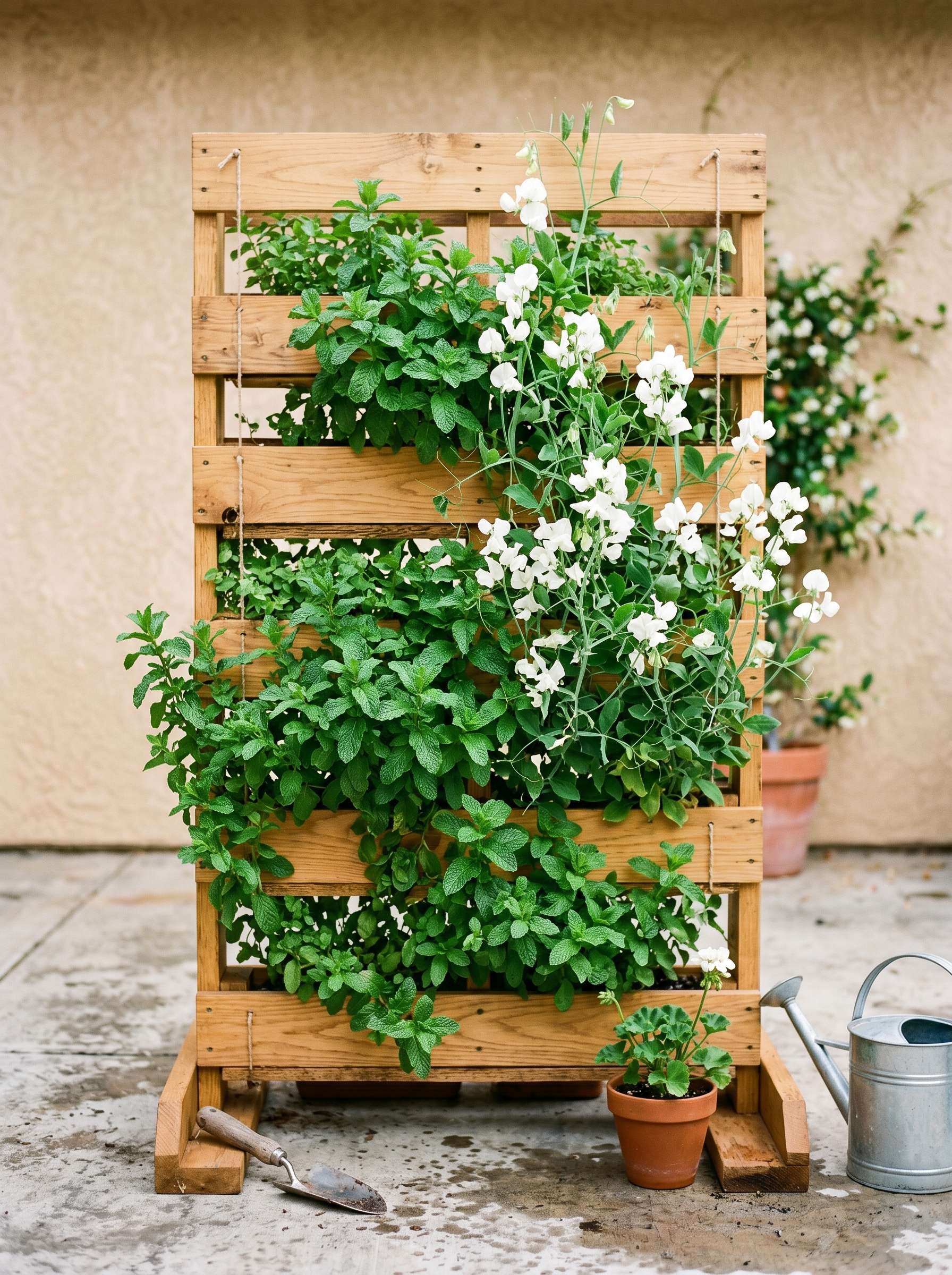
If your apartment patio faces a busy parking lot or a noisy neighbor, you need a barrier that feels organic rather than hostile. I took a heat-treated wooden shipping pallet (look for the “HT” stamp so you know it’s safe), stood it vertically on its side, and attached simple wide wooden feet to the bottom so it stands independently.
I slipped small plastic planters into the internal slats, filling them with sweet peas and mint. Within a few weeks, you get a solid wall of fragrant greenery that completely blocks the view of the dumpster down below.
9: Dwarf Hydrangeas in Heavy Resin Pots
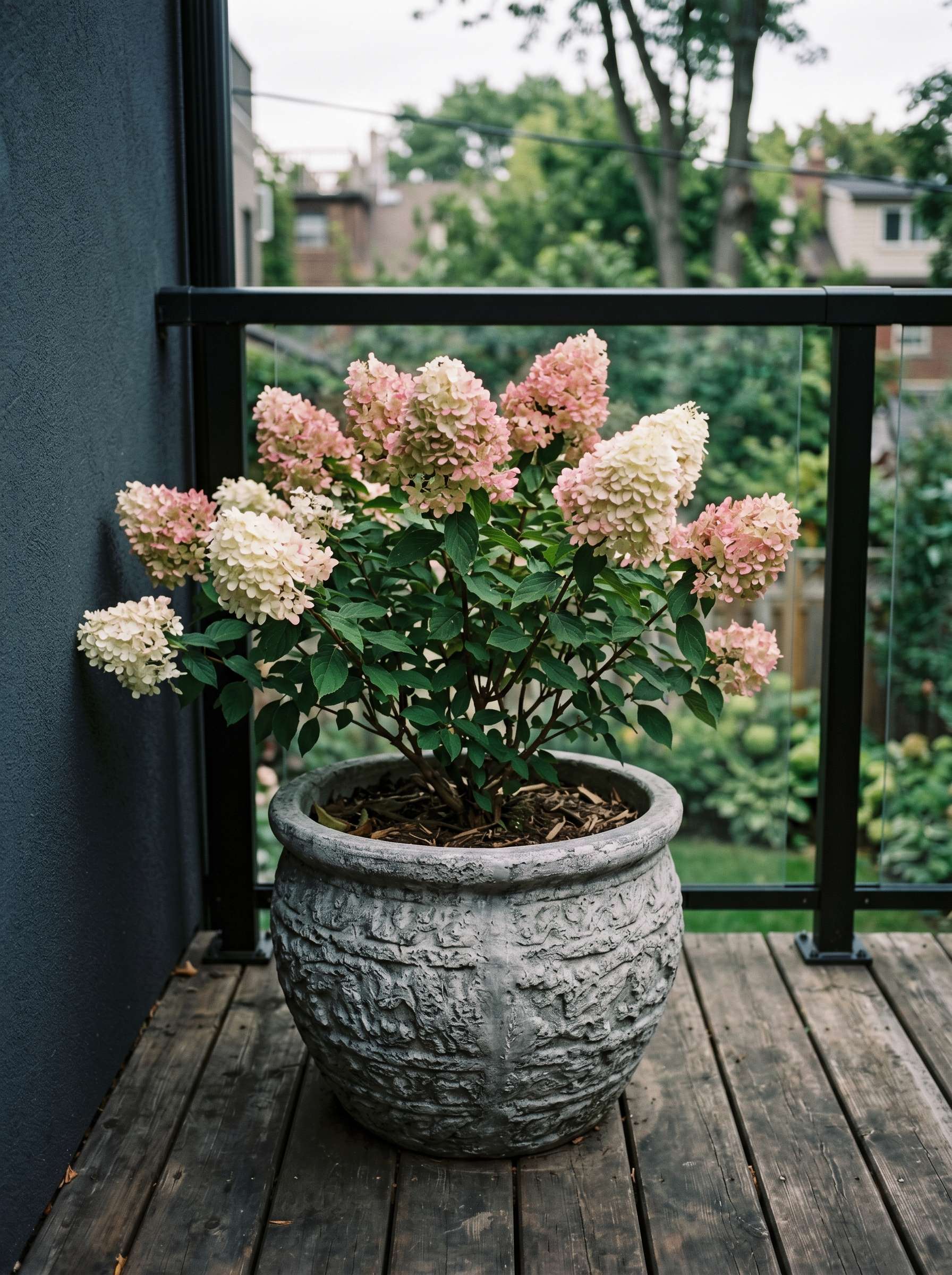
You don’t have to give up on classic cottage shrubs just because you live in an apartment. Breeders have come out with incredible dwarf hydrangea varieties like ‘Little Quick Fire’ or ‘Bobo’ that stay under three feet tall.
The secret here is to avoid heavy concrete or stone containers—you’ll break your back moving them when your lease is up. Instead, use high-quality faux-stone resin pots. They look exactly like heavy weathered granite but weigh almost nothing when empty. They protect the hydrangea roots through the winter without cracking from frost.
10: The Fairy-Light Solar Mason Jar Trellis
Cottage gardens should feel magical at night, not just during the day. I took a cheap wire grid trellis—the kind you can simply lean against a wall without fastening—and used zip ties to hang four old glass mason jars from it.
Inside the jars, I stuffed waterproof solar-powered string lights, then planted fast-growing annual vines like black-eyed Susan vine at the base of the trellis. During the day, the vines climb the wire; at night, the hidden jars glow softly through the leaves, creating a beautiful moody atmosphere that makes the small space feel twice as large.

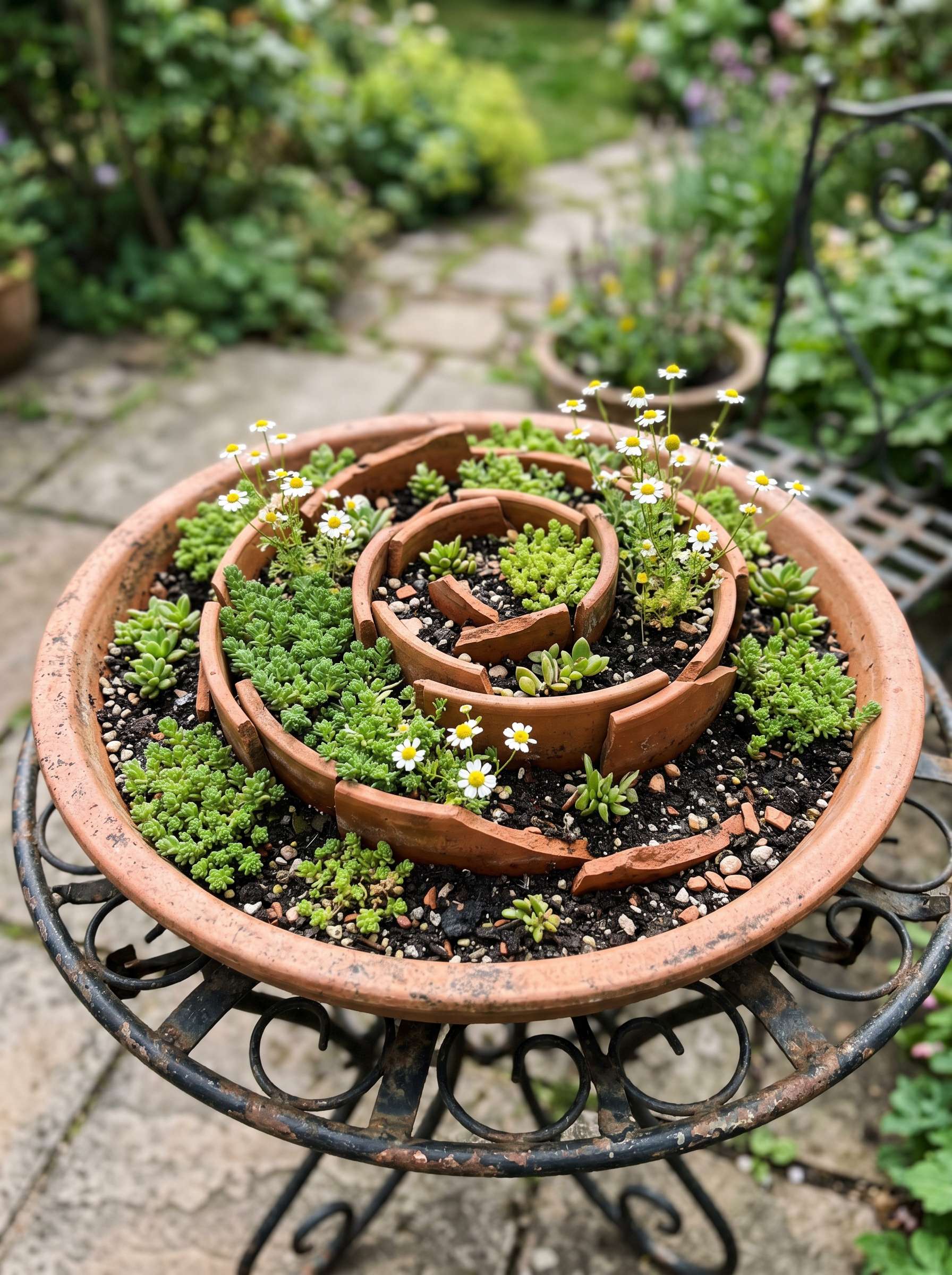
11: Desktop Herb Spirals Using Broken Pots
If you only have room for a small table on your patio, you can still create a micro-landscape. I take cracked or broken terracotta pots that most people would throw away and nestle the broken shards into a wider, shallow bulb pan to create a mini spiral terrace.
I fill the tiny tiers with drought-tolerant rock garden plants like sedum, creeping thyme, and miniature varieties of chamomile. It looks like an ancient stone wall that has been shrunk down to fit right next to your coffee mug.
Common Mistake
Don’t use standard garden soil in your balcony containers. I know it’s tempting to grab a bag of cheap topsoil or dig some dirt up from a nearby field, but it will compact down like concrete inside a pot within three waterings. Your plants will suffocate. Always invest in high-quality, lightweight potting mixes containing perlite or vermiculite to ensure root aeration.
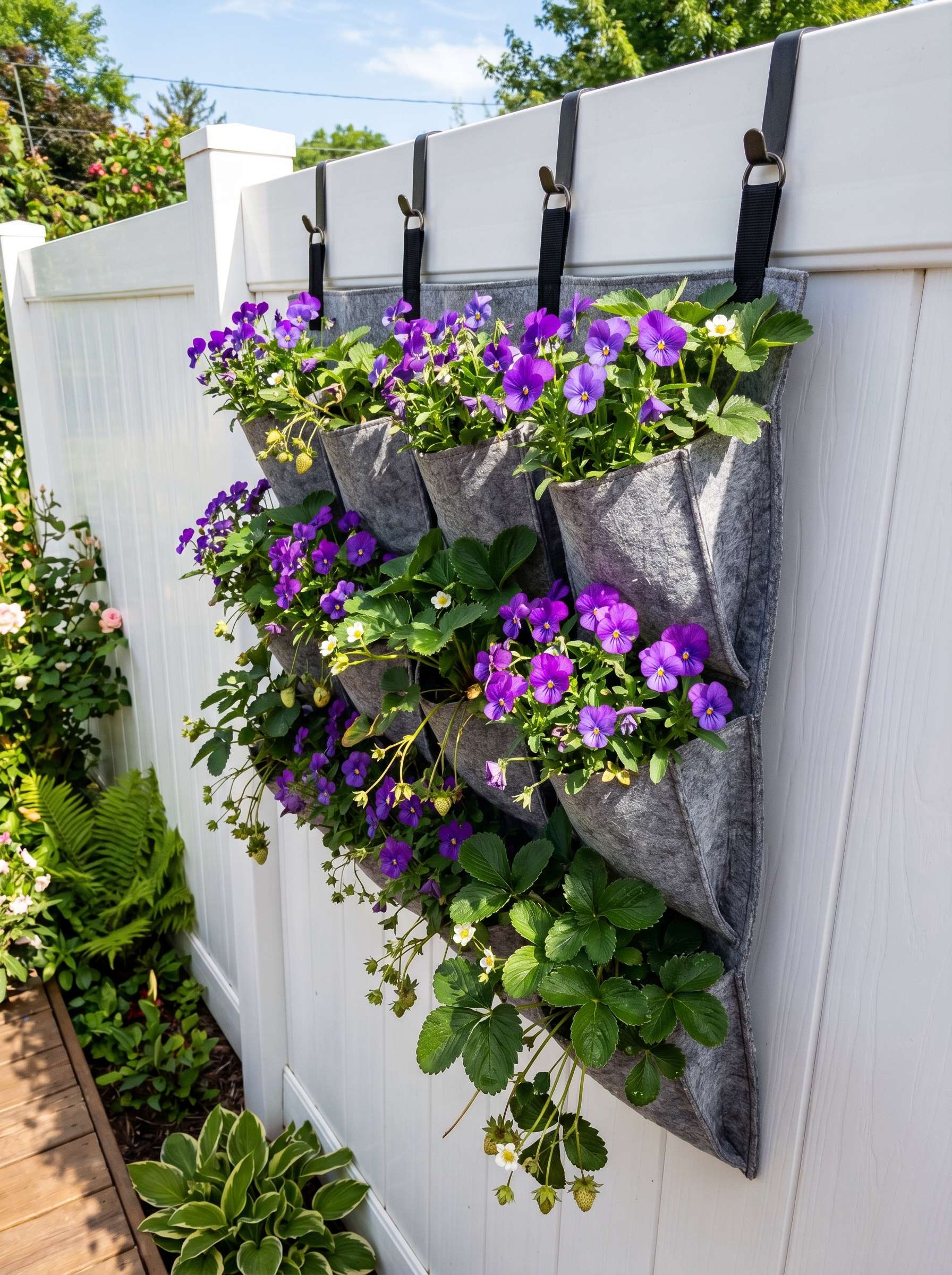
12: Hook-and-Loop Fabric Pocket Planters
If your patio is surrounded by a solid, ugly concrete wall or vinyl partition, look for fabric vertical pocket organizers that can hang over the top edge using flat metal wreaths hooks. The individual felt pockets are perfect for growing small, shallow-rooted flowers like pansies, alpine strawberries, and violas.
One thing to keep in mind: the back of these pockets can trap moisture against the wall, so I always line the backside of the fabric with a sheet of heavy plastic trash bag to protect the landlord’s paint from bubbling.
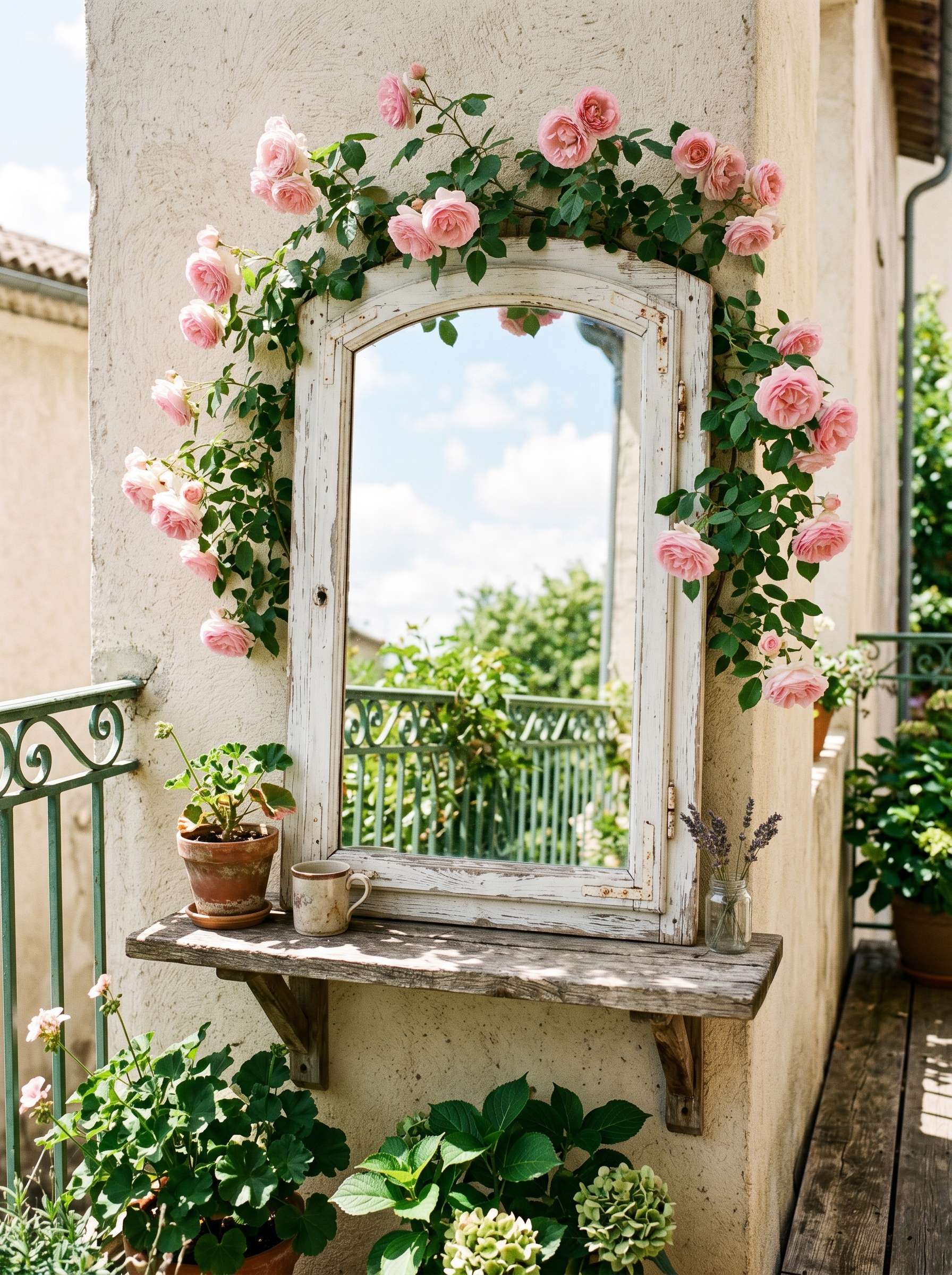
13: Mirror Illusion Trellises for Visual Depth
A classic trick used in tiny English courtyard gardens is hanging an old, weathered window frame fitted with a mirror instead of glass on a dark wall. I set up a vintage wooden window frame with a mirrored backing on a sturdy plant stand against the back wall of my balcony, then grew light pink climbing roses around the frame in a large tub.
When you look toward the dark corner, the mirror reflects the light and the movement of the plants, instantly tricking your brain into thinking there’s another secret garden hidden just beyond the wall.
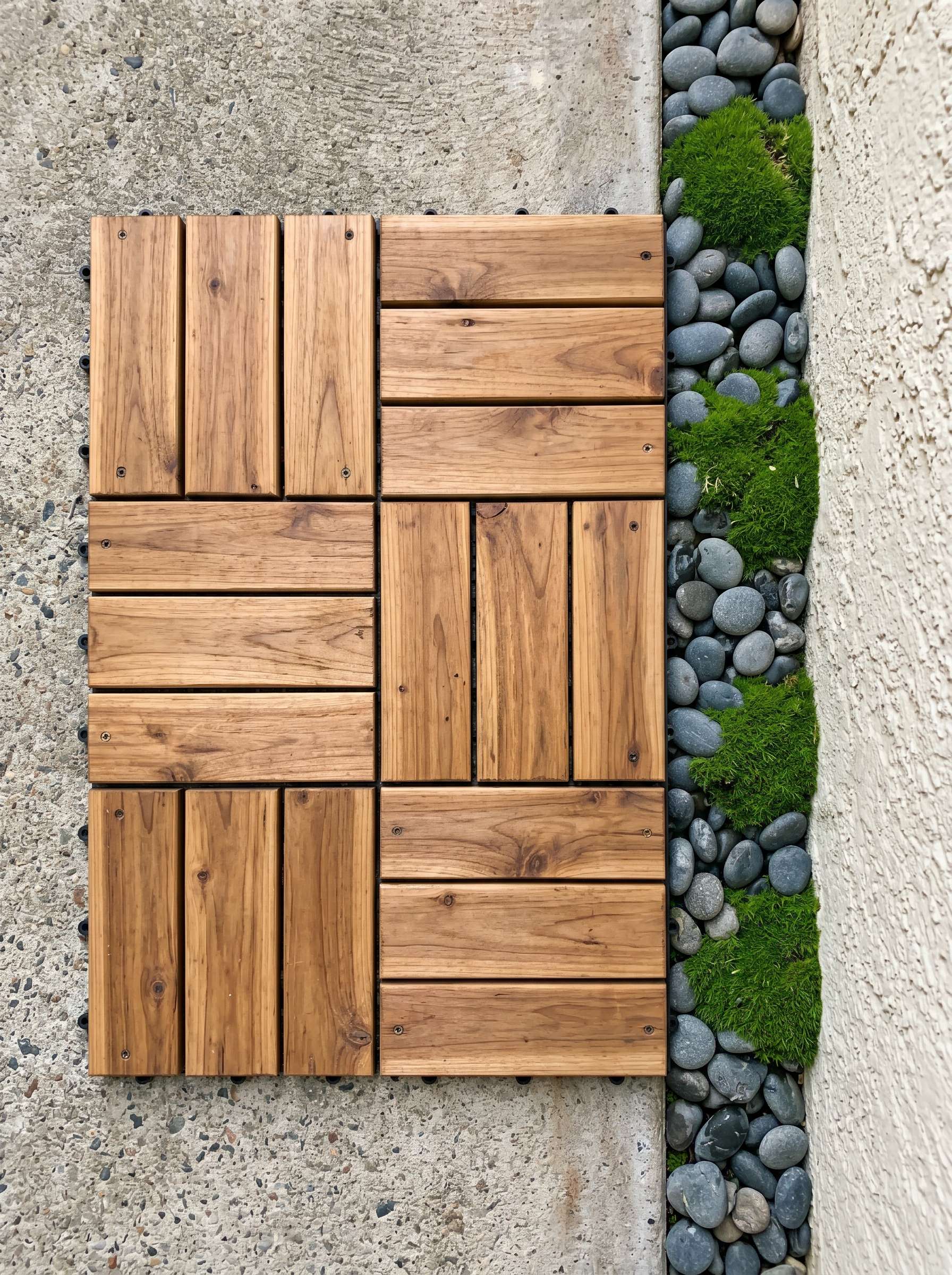
14: Ground-Level Moss and River Rock Pathways
Even if your base is plain grey concrete, you don’t have to live with that cold industrial texture. I picked up a few interlocking cedar deck tiles from a local hardware store to create a small walking path across the center of my balcony.
Along the edges where the tiles met the building wall, I packed smooth river stones and small shallow trays of Irish moss. Walking out there barefoot feels like stepping directly into a woodland path rather than onto a high-rise concrete slab.
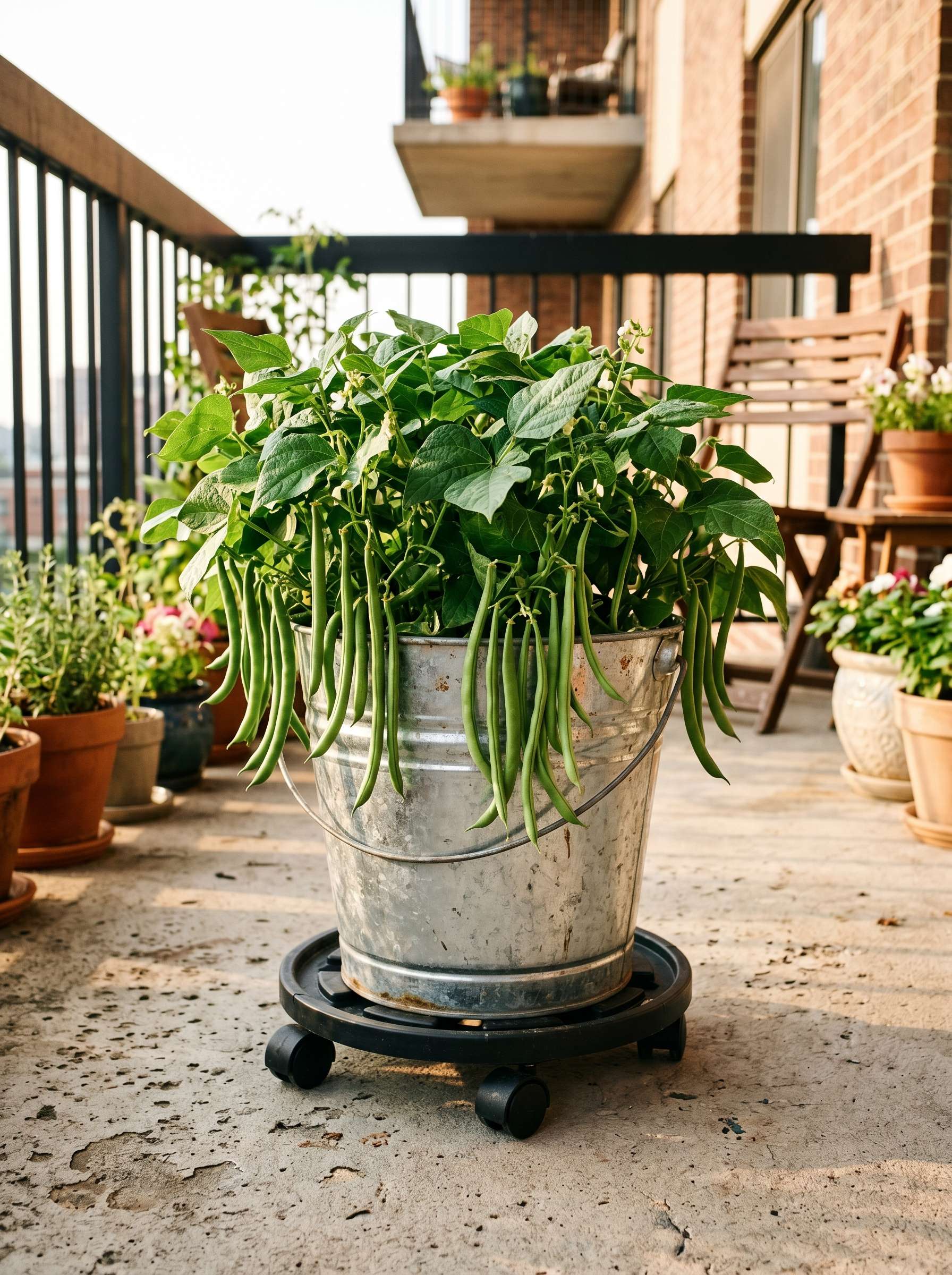
15: Mobile Bush Beans in Vintage Galvanized Buckets
If you want to grow actual food but are worried about shifting shade patterns from neighboring buildings, put your crops on wheels. I take vintage galvanized metal sap buckets, plant them with compact bush bean varieties like ‘Provider’ or ‘Blue Lake’, and place the buckets inside cheap rolling plant dollys.
As the sun moves across the sky throughout the summer, I can effortlessly wheel my crops around the patio to follow the light beams, maximizing my harvest without cluttering the center of the space.
The core ideas listed above give you a solid foundation to build out your space. Notice how none of these require permanent anchors? That’s the secret to successful rental gardening. You build structural bulk using removable, modular elements that stack, roll, or lean.
But wait, there’s a catch: when you pack this many plants into a tight space, you create a humid microclimate. That’s fantastic for the plants, but it can also attract small pests like spider mites or aphids if there isn’t enough airflow. Make sure you don’t pack your containers so tight against each other that wind can’t pass between the leaves.
When you’re dealing with limited soil volumes in containers, keeping your plants healthy requires a slightly different approach than growing directly in the ground. You’ll want to check out our basic beginner gardening tips to get a handle on how different plant types interact when grown close together.
Because containers lose nutrients every single time you water them, staying on top of your soil mix is critical; read through our comprehensive soil health guide to learn how to keep your container potting medium from becoming depleted midway through the blooming season.
Watering is another major pain point for small-space pot gardens. Over-saturation can rot roots in plastic containers, while terracotta pots dry out overnight. Learning the art of watering plants correctly will save you dozens of dollars in replaced annuals. If you find your schedule is too busy for daily maintenance, you can always pivot toward using low-maintenance garden ideas that utilize hardy perennials and self-watering reservoirs instead of delicate, thirsty flowers.
How to Start (Simple Plan)
Don’t try to buy fourteen pots and twenty plants all in one weekend trip to the nursery. You’ll get overwhelmed, run out of trunk space, and end up with a chaotic mess. Instead, follow this simple weekend sequence:
Here’s the three-phase approach in short:
- Phase 1 — Footprint: Measure your space and buy three varying-sized containers.
- Phase 2 — Foundation: Fill them with a lightweight potting mix (never plain topsoil).
- Phase 3 — Planting: Add one vertical climber, one bushy filler, and one trailing spiller to each grouping.
- Step 1: Measure your balcony’s weight limits and sun exposure. Count how many hours of direct sunlight hit the floor daily.
- Step 2: Purchase three containers of varying heights (one tall, one medium, one low and wide). Stick to a single material theme like weathered terracotta or dark resin to keep it cohesive.
- Step 3: Fill them with a premium container mix blended with a handful of slow-release organic fertilizer granules.
- Step 4: Buy your first three plants using the “Thriller, Filler, Spiller” rule: one tall striking focal plant (like a dwarf foxglove), one bushy filler plant (like sweet basil or geranium), and one trailing plant to spill over the edge (like English ivy or trailing lobelia).
Things That Didn’t Work for Me
- The Cheap Plastic Hanging Basket Catastrophe: I once bought six cheap plastic hanging baskets with built-in attached water saucers. The saucers didn’t drain properly, and after a heavy storm, the soil turned into toxic stinky mud that rotted the roots of my prize fuchsias within forty-eight hours. Now I only use baskets with open drainage holes.
- Overcrowding the Mint: I thought it would look incredibly lush to plant three different varieties of mint together in a wide, shallow trough container. Within one season, the spearmint completely strangled out the chocolate mint and peppermint, sending thick woody roots through the bottom drainage holes and cementing itself to my patio floor. Grow mint alone in its own designated pot!
- Buying Sun-Loving Delphiniums for a North-Facing Balcony: In my early days, I fell in love with the classic towering blue delphiniums you see in English estate gardens. I bought three of them for a balcony that only received two hours of direct morning sun. They grew thin, pale, stretched out like weird alien tentacles, fell over from their own weight, and never produced a single blue flower bud.
FAQ SECTION
Most modern apartment balconies are rated to handle at least 40–60 pounds per square foot. However, to stay safe, avoid heavy solid concrete, stone, or thick ceramic pots. Stick to lightweight resin, fiberglass, or fabric grow bags, and use loose, airy potting soil rather than heavy garden dirt.
Standard small pots dry out fast. If you travel frequently, look into self-watering inserts or simple terracotta watering spikes. You fill an old wine bottle with water, flip it upside down into the clay spike, and it slowly seeps moisture into the soil over three to four days while you’re away.
Annuals like cosmos, petunias, and lobelia will naturally die off when the first hard frost hits, which is totally normal. Hardy perennials like dwarf hydrangeas or clematis can stay outside, but you should wrap the exterior of their pots in burlap or bubble wrap to insulate the roots from freezing winds.
Avoid tall, brittle plants with single stalks like hollyhocks or standard delphiniums. Instead, choose low-profile, flexible, or trailing plants that bend with the wind rather than breaking, such as sweet alyssum, creeping thyme, ornamental sweet potato vine, and compact marigolds.
This is a quick way to get an angry knock on your door. Always use deep plastic water saucers beneath every pot to catch excess runoff. When watering, apply water slowly until it just begins to seep into the saucer, rather than pouring it in all at once and causing an overflow.
Setting up a small-space garden isn’t about achieving instant perfection from a magazine cover. It’s a slow process of trial and error to see what specific microclimates your balcony creates. Start with a couple of ideas first, see how the wind and sun treat them, and adjust your layout as you go.

Aagam – Founder of SpruceTouch
I’m Aagam, a home and garden enthusiast who enjoys growing, building, and improving outdoor spaces. I focus on practical backyard projects, garden ideas, and simple DIY solutions that are useful in real homes. Through SpruceTouch, I share what I’ve learned, what worked, what didn’t, and the small details that can make an outdoor project easier.