18 Best Plants To Grow Along Fence Lines For A Beautiful Backyard
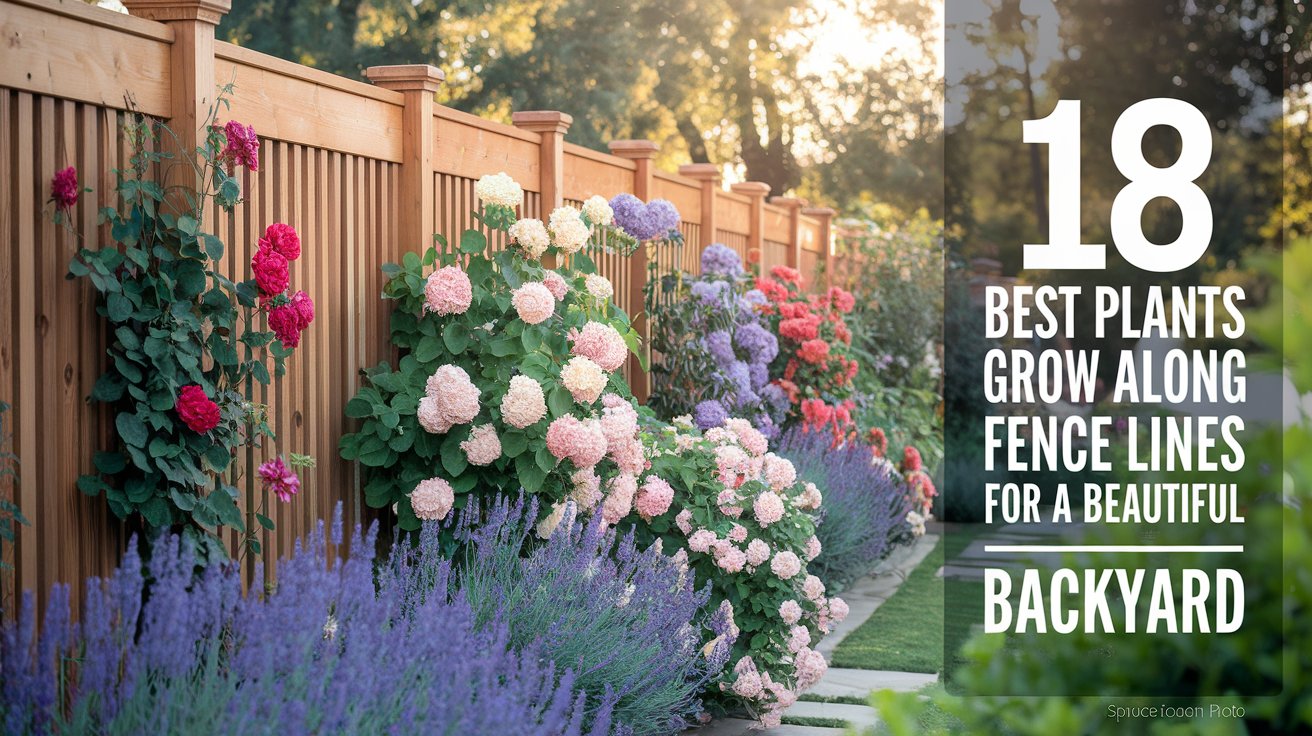
You are about to discover how to turn a boring wooden or chain-link barrier into a lush, living tapestry using 18 proven plant varieties.
I’ve spent nearly two decades testing dozens of setups—from vertical climbers in tight spaces to massive shrub borders—to see what actually survives the “fence microclimate.”
When I first started, my fence line was a muddy mess of weeds and bare wood that made my yard feel like a box. I tried planting too close to the panels, and the lack of airflow killed my first batch of roses.
I’ve made the mistakes so you don’t have to. Let’s get into the best picks for your space.
One thing I always do before planting anything along a fence is check the soil instead of guessing. I’ve found that using a [Soil pH Tester Kit] helps me understand whether the area is better suited for roses, hydrangeas, lavender, or other plants, and making small soil adjustments early has consistently led to healthier growth and better blooms.
Disclosure: This post contains affiliate links. If you make a purchase through these links, I may earn a small commission at no extra cost to you.
1. Climbing Roses – The Romantic Classic
There’s something undeniably magical about a fence covered in roses. I planted my first climbing rose nearly 15 years ago, and it taught me everything I know about vertical structure. These aren’t just plants; they are architectural elements that soften the harshest property lines.
Why it works: Unlike bush roses, climbers have long, flexible canes designed to be trained. They maximize vertical space without eating up your entire lawn.
Real-life use case: Perfect for masking an old, weathered wooden fence that you aren’t ready to replace yet.
Practical Tip: Don’t just let them grow straight up. To get the most flowers, train the main canes horizontally along the fence. This “stress” triggers the plant to send up vertical flowering shoots all along the branch.
Small mistake to avoid: Never use thin string to tie them; it can cut into the canes. Use soft garden twine or strips of old t-shirts.
2. Hydrangeas – Big Blooms, Big Impact
Hydrangeas are one of my go-to plants for fence lines because they instantly bring drama and fullness. In my experience, they are the “heavy lifters” of the garden border.
Why it works: Their broad leaves provide excellent low-level privacy, covering the gap between the ground and the bottom of the fence.
Real-life use case: Use them along a north-facing fence line where other sun-loving flowers struggle to bloom.
Practical Tip: If you’re planting Hydrangea macrophylla (the bigleaf kind), remember that they bloom on “old wood.” I learned this the hard way: if you prune them to the ground in winter, you won’t see a single flower next year.
Small mistake to avoid: Planting them too close. Give them at least 3 feet of space from the fence to allow for watering plants correctly and airflow.
3. Boxwood Hedges – Neat & Evergreen
If you want your fence to look polished all year, you can’t go wrong with boxwood. I call these “the tuxedo of the garden.”
Why it works: They provide a permanent green “anchor.” Even when everything else dies back in winter, your fence line still looks designed.
Real-life use case: Creating a formal border in a small urban backyard where clean lines are a priority.
Practical Tip: When shearing your boxwoods, always make the bottom slightly wider than the top. This ensures sunlight reaches the lower branches so they don’t go “bald” at the base.
What I noticed: After a heavy snow or rain, boxwoods can splay open. I usually wrap a bit of green fishing line around the middle to keep them tight and tidy.
4. Clematis Vines – Pops of Color
When I first tried clematis, I was amazed by how quickly it transformed my fence. It’s often called the “Queen of Climbers,” and for good reason.
Why it works: It uses tendrils to climb, meaning it won’t damage your fence like heavy woody vines might.
Real-life use case: Adding height to a chain-link fence without the bulk of a large shrub.
Practical Tip: Clematis needs a “cool foot.” I always plant a hosta or a thick layer of mulch at the base to keep the roots shaded while the vine climbs into the sun.
One mistake I made: Buying a “Group 3” clematis and not realizing I had to cut it nearly to the ground every February. Check your variety’s pruning group!
But here’s the thing: No matter how beautiful the plant is, if your soil health guide isn’t up to par, your fence line will always look “thin.” Always amend your soil with compost before planting a long row.
Proper spacing makes a bigger difference than most people expect, especially once shrubs and ornamental grasses mature. I usually lay everything out with a [100 ft Garden Measuring Tape] before digging so I can keep consistent spacing and avoid the overcrowding that often happens when plants are placed by eye alone.
5. Lavender – Fragrance & Pollinator Friendly
Lavender is one of those plants that makes you smile every time you walk past it. I’ve found it’s the ultimate “sensory” fence plant.
Why it works: It’s a natural deterrent for some pests while being a magnet for bees.
Real-life use case: A low-growing fence line along a walkway where you’ll frequently brush against the foliage to release the scent.
Practical Tip: Lavender hates “wet feet.” If your fence line collects water after rain, plant your lavender on a slight mound or add gravel to the planting hole to improve drainage.
This worked better than I expected: Pruning them back by one-third in late summer keeps them from becoming woody and “leggy” the following year.
6. Ornamental Grasses – Movement & Texture
If you’ve never planted ornamental grasses along a fence, trust me—they’re game changers. I love the “sound” they add to a garden when the wind catches them.
Why it works: They provide privacy height (4–6 feet) without the heavy maintenance of a hedge.
Real-life use case: Softening the look of a modern metal or vinyl fence.
Practical Tip: Don’t cut them back in the fall! The dried stalks provide beautiful winter interest and protection for birds. Wait until the first sign of green growth in spring.
Small mistake to avoid: Planting “Running” varieties. Stick to “Clumping” grasses like Karl Foerster, or you’ll be digging them out of your lawn for years.
7. Jasmine – Sweet-Scented Fence Cover
There’s nothing like walking into your backyard and being greeted by the scent of jasmine. In my 15 years of gardening, this remains my favorite “evening garden” plant.
Why it works: It’s a vigorous evergreen climber that provides a solid wall of green 365 days a year.
Real-life use case: Covering a chain-link fence to create a “living wall” that blocks the neighbor’s view.
Practical Tip: Use an Expandable Diamond Willow Trellis or stainless steel wires attached to the fence to give the jasmine a path to follow. It likes to twine!
What I noticed: In very cold winters, the leaves might turn a bronzy red. Don’t panic; it’s just the plant’s natural reaction to the cold, and it will green up again in spring.
💡 Pro Tip If you are planting along a wooden fence, leave a 6-inch gap between the plant and the wood. This allows for air circulation, which prevents rot on your fence and powdery mildew on your plants.
8. Hollyhocks – Tall & Cheerful
Hollyhocks are the skyscrapers of the cottage garden. Because they grow so tall, the fence acts as a natural support system for their heavy stalks.
Why it works: They offer high-impact color at eye level (and above!).
Real-life use case: Filling narrow garden beds where you don’t have room for wide shrubs.
Practical Tip: Hollyhocks are prone to “rust” (orange spots on leaves). I always plant shorter flowers in front of them to hide the bottom leaves, which usually look a bit ragged by mid-summer.
One mistake I made: Forgetting to stake them. Even with a fence nearby, a heavy summer storm can snap a 7-foot hollyhock in half. Tie them loosely to the fence rails.
9. Bamboo – Fast-Growing Privacy Screen
Bamboo is often misunderstood, but as a seasoned gardener, I’ve used it to solve privacy issues in record time.
Why it works: It grows faster than almost any other screening plant.
Real-life use case: Blocking a second-story neighbor’s view into your yard.
Practical Tip: STRICTLY use clumping varieties (like Fargesia). Running bamboo is an invasive nightmare that will travel under your fence and into your neighbor’s yard, causing legal headaches.
What I noticed: Bamboo is a heavy feeder. If the leaves start to turn yellow, it’s usually a nitrogen deficiency. A good mulch layer helps immensely.
10. Honeysuckle – Colorful & Fragrant
Honeysuckle is a childhood favorite that still holds a place in my expert-level garden today. It’s rugged, beautiful, and smells like honey.
Why it works: It’s incredibly hardy and can handle “neglect” better than most vines.
Real-life use case: Attracting hummingbirds to a kitchen window that faces the fence.
Practical Tip: Look for the Lonicera sempervirens (Trumpet Honeysuckle). It’s a native variety in many places and isn’t invasive like the Japanese variety.
Small mistake to avoid: Letting it get too tangled. Every 3 years, give it a “hard prune” to rejuvenate the growth from the base.
Here’s where most people go wrong: They plant everything in a single straight line. To make your fence line look “designer,” stagger your plants. Put the tall ones in the back and the shorter ones slightly forward to create a 3D effect.
Digging long planting trenches along a fence can quickly become tiring with a standard hand trowel. After trying a few tools over the years, I’ve had the best results using a [Long Handle Garden Spade], since it makes cleaner planting holes with less strain on my back, especially when working through compacted soil.
11. Butterfly Bush – Pollinator Magnet
If you love wildlife, butterfly bush (Buddleia) is a must-have. I’ve seen my fence line turn into a literal zoo of colorful wings just by adding two of these.
Why it works: It blooms on new wood, meaning you can cut it back hard and it will still reach 6-8 feet in one season.
Real-life use case: A “filler” shrub for the corners of your property where the fence meets.
Practical Tip: Deadhead (remove) the spent flowers regularly. This tricks the plant into producing new blooms until the first frost.
This worked better than I expected: Using a [Natural Deer & Rabbit Repellent] around the base in early spring, as the new shoots are very tasty to local wildlife.
12. Lilacs – Springtime Perfume
Lilacs are a classic for a reason. Their scent is the literal definition of spring.
Why it works: They are exceptionally long-lived. A lilac hedge can easily last 50+ years.
Real-life use case: Creating a “scented barrier” between you and a neighbor’s driveway.
Practical Tip: They need “sweet” (alkaline) soil. If you have pine trees nearby making the soil acidic, add a little garden lime around the base once a year.
One mistake I made: Planting them in the shade. Lilacs in the shade won’t die, but they will grow spindly and never produce those iconic flowers
⚠ Common Mistake Ignoring the “utility” aspect. Before digging along a fence line, always call your local utility company to mark underground lines. I once hit a cable line while planting a lilac, and it was a very expensive afternoon!
13. Wisteria – Cascading Elegance
Wisteria is a showstopper, but it requires a firm hand and a sturdy fence.
Why it works: Nothing beats the “waterfall” effect of wisteria blooms in the spring.
Real-life use case: High-end landscaping for a pergola attached to a fence.
Practical Tip: You must prune wisteria twice a year—once in summer and once in winter. This encourages “spur” growth, which is where the flowers come from.
What I noticed: Wisteria can actually crush a weak fence. Ensure your posts are set in concrete before letting this vine take over.
14. Forsythia – Early Spring Sunshine
Forsythia is the “alarm clock” of the garden. When these bloom, I know it’s time to start my composting at home routine.
Why it works: They provide a bright wall of yellow when everything else is still grey and dormant.
Real-life use case: An informal, wild-looking hedge along a back property line.
Practical Tip: Forsythia looks best when allowed to have a “fountain” shape. Avoid the urge to trim them into tight balls; let the branches arch naturally over the fence.
Small mistake to avoid: Pruning too late. If you prune in the fall, you’re cutting off next year’s flowers. Only prune immediately after they finish blooming in spring.
15. Viburnum – All-Season Beauty
Viburnum is the “utility player” of my garden. It does everything well, from flowers to berries to fall color.
Why it works: It’s incredibly tough. I’ve seen viburnum survive droughts and freezes that killed off “fancier” shrubs.
Real-life use case: A multi-functional hedge that provides privacy and feeds local birds.
Practical Tip: Plant two different varieties of viburnum near each other. Cross-pollination leads to much heavier berry production in the fall.
What I noticed: The “Snowball” variety is stunning but can attract aphids. Keep a close eye on the new growth in May.
Once everything is planted, I never skip mulching because it keeps moisture in the soil and reduces weeds before they become a problem. I usually spread a layer of [Organic Mulch or Pine Bark Mulch] around new plants, and I’ve noticed it also gives the entire fence line a cleaner, more finished appearance.
16. Knock Out Roses – Low-Maintenance Blooms
I used to be a “rose snob” until I tried Knock Outs. Now, they are a staple in every fence line I design for friends.
Why it works: They are self-cleaning (no deadheading required!) and highly resistant to black spot and mildew.
Real-life use case: A colorful side-yard fence line where you don’t have time for weekly maintenance.
Practical Tip: Even though they are “low maintenance,” they still need a “haircut” once a year. In early spring, cut them back to about 12 inches to keep the shrub dense and full.
One mistake I made: Planting them too close to a walkway. They still have thorns! Keep them at least 2 feet back from where people walk.
17. Hostas – Shade-Loving Fence Line Filler
If your fence line sits in shade most of the day, hostas are your best friend.
Why it works: They provide massive amounts of texture and ground cover, preventing weeds from popping up under the fence.
Real-life use case: Underneath large trees that grow along the property line.
Practical Tip: Divide your hostas every 3-4 years in the spring. You’ll get “free plants” to continue your fence line further down the yard.
Small mistake to avoid: Slugs love hostas. I use crushed eggshells around the base to create a “no-crawl zone” for them.
18. Evergreens – Year-Round Structure
Sometimes you just want a reliable, green backdrop all year long. Arborvitae or Leyland Cypress are the gold standard here.
Why it works: They act as a “sound barrier” and a 24/7 privacy screen.
Real-life use case: Blocking out the neighbor’s unsightly shed or a busy street.
Practical Tip: When planting a row of evergreens, don’t dig individual holes. Dig one long trench. This ensures all the roots have the same loosened soil to grow into, leading to a more uniform hedge.
What I noticed: These are prone to “browning out” in the center if they get too crowded. Space them according to their mature width, not their size at the garden center.
The “Real System” Garden Plan
If you want to do this right, don’t plant all 18 at once. Here is my 3-Year Fence Line Strategy:
- Year 1: The Anchors. Plant your Evergreens and Boxwoods. These define the “bones” of your garden.
- Year 2: The Verticality. Add your Climbing Roses, Jasmine, or Wisteria. Get your trellises in place now.
- Year 3: The Fillers. Add your Hydrangeas, Hostas, and Lavender to fill the gaps and add seasonal color.
- One simple upgrade that completely changed how my fence line looked after sunset was adding landscape lighting. A few well-placed [Solar Landscape Spotlights] highlight flowering shrubs and ornamental grasses without needing electrical wiring, making the garden feel just as inviting in the evening as it does during the day.
Things That Didn’t Work for Me
- Ivy: I once thought English Ivy would look “regal” on my fence. Five years later, it had tunneled under the fence, into the neighbor’s lawn, and was literally pulling the wooden pickets apart. Never again.
- Morning Glories: They are beautiful, but they produce a million seeds. I spent three years pulling “volunteer” morning glories out of my lawn. Stick to Clematis.
- Planting in “Dead Soil”: I once tried to plant along a new construction fence without adding compost. The soil was so compacted that nothing grew for two years. Always check for beginner gardening mistakes like poor soil prep.
Small Things That Make a Big Difference
- Mulch is King: A 3-inch layer of wood chips keeps moisture in and weeds out.
- Drip Lines: If you have a long fence, a $20 soaker hose hidden under the mulch will save you hours of watering.
- Lighting: Add a few solar uplights. It makes your fence-line plants look like a 5-star resort at night.
FAQ
Evergreens like Arborvitae or fast-growing vines like Star Jasmine are best. They provide year-round coverage that blocks sightlines.
Generally, plant shrubs half of their mature width plus 6 inches away from the fence. For a 4-foot wide shrub, plant it 2.5 feet from the fence.
Yes, but don’t let heavy woody vines like Wisteria attach directly. Use a free-standing trellis placed a few inches in front of the vinyl to prevent cracking.
Knock Out roses, Ornamental Grasses, and Boxwoods are incredibly “set it and forget it” once they are established.
Vines with “aerial roots” (like Ivy) can cause rot. Use “twining” vines like Clematis or Jasmine on a trellis to keep your wood safe.
Start small. Pick one section of your fence, choose three plants from this list, and adjust as you go. Gardening is a marathon, not a sprint—enjoy the process of watching your “blank canvas” come to life.
Keeping new fence line plants consistently watered is one of the biggest factors in helping them establish strong roots during their first season. I switched to an [Expandable Garden Hose with Spray Nozzle] because it’s lightweight, easy to maneuver around shrubs and flower beds, and the adjustable spray settings make watering delicate blooms much gentler.
This guide is based on my 15+ years of personal gardening experience. Results may vary depending on your specific climate zone and soil health.

Aagam – Founder of SpruceTouch
Hi, I’m Aagam — the creator behind SpruceTouch. I’m a home and garden enthusiast who shares practical ideas for backyard design, garden projects, patio decor, and small outdoor spaces. Through SpruceTouch, I focus on simple and budget-friendly ways to improve outdoor living spaces.