The 4-Hour DIY Garden Trellis Arch That Cost Me Less Than Retails.
Every spring, I look at the garden center catalogs and get a massive wave of sticker shock. It happened again a few weeks ago when I was drinking coffee on the back porch, staring at my bare tomato patch, thinking how nice a proper overhead arch would look covered in heavy green vines.
Then I saw the price tags online for pre-made metal garden arches. Three hundred dollars? Four hundred? For a flimsy piece of hollow iron that will likely rust through or tilt sideways the first time a summer thunderstorm sweeps across the county?
I decided right then that I wasn’t going to buy one. Instead, I drove down to the local farm supply store, loaded up a few basic utility materials, and built a massive, rock-solid walk-through trellis arch in less than four hours for a fraction of the cost.
If you have a pair of gloved hands, some basic tools, and an afternoon to spare, you can build something that will easily outlast those overpriced retail kits. Let’s talk about how to actually make it happen without losing your mind or breaking your budget.
The Big Idea Behind the Four-Hour Arch
Most people think building a garden arch requires serious carpentry skills or a welding torch. It doesn’t.
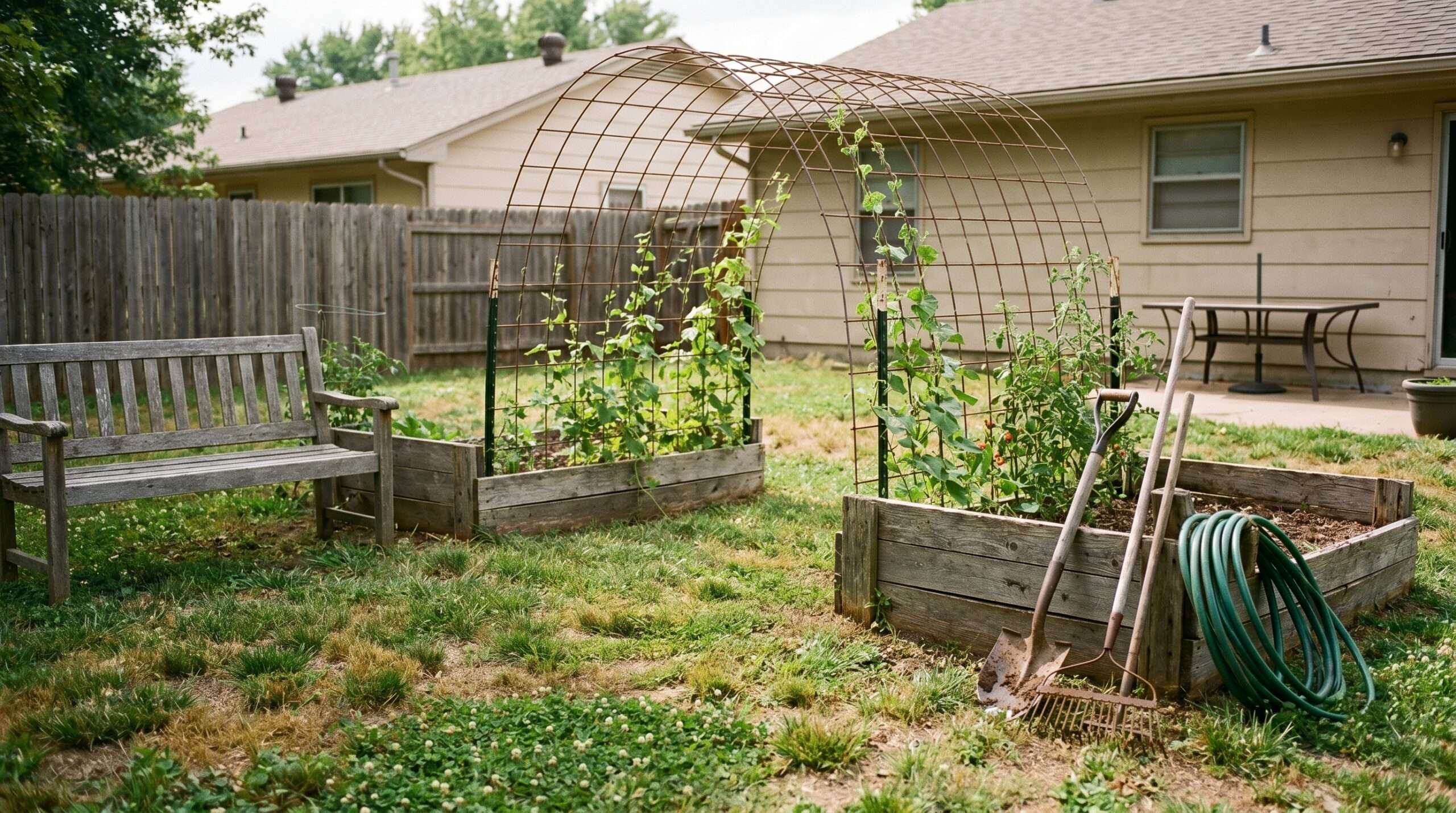
The secret weapon here is something farmers have used for decades: heavy-duty cattle panels. These are thick, galvanized steel wire grids designed to keep farm animals contained, which means they are incredibly rigid but possess just enough flexibility to bend into a perfect, sweeping archway.
When you support those panels with heavy wooden posts or steel T-posts, you get a structure that can support fifty pounds of heavy winter squash or climbing roses without bowing a single inch.
The best part? You don’t have to measure complex geometric curves or cut difficult angles to get that beautiful, rounded look.
But here’s the kicker: getting those panels home from the store is usually the hardest part of the entire project. They are typically sixteen feet long and four feet wide, which means they will not fit inside your standard crossover SUV.
I learned this the hard way during my first build years ago when I tried to strap a massive metal panel to the roof of an old sedan, only to have it catch the wind like a giant sail on the highway. Now, I always bring a truck, rent a cheap utility trailer for an hour, or bring a heavy pair of bolt cutters right to the store parking lot so I can chop them down to size before driving home.
Getting Your Materials Together Without Going Broke
Before you start digging holes or buying lumber, you need to make a quick run to the hardware store or a local farm supply shop. Don’t worry about finding a high-end specialty garden store—the regular stuff works best here.
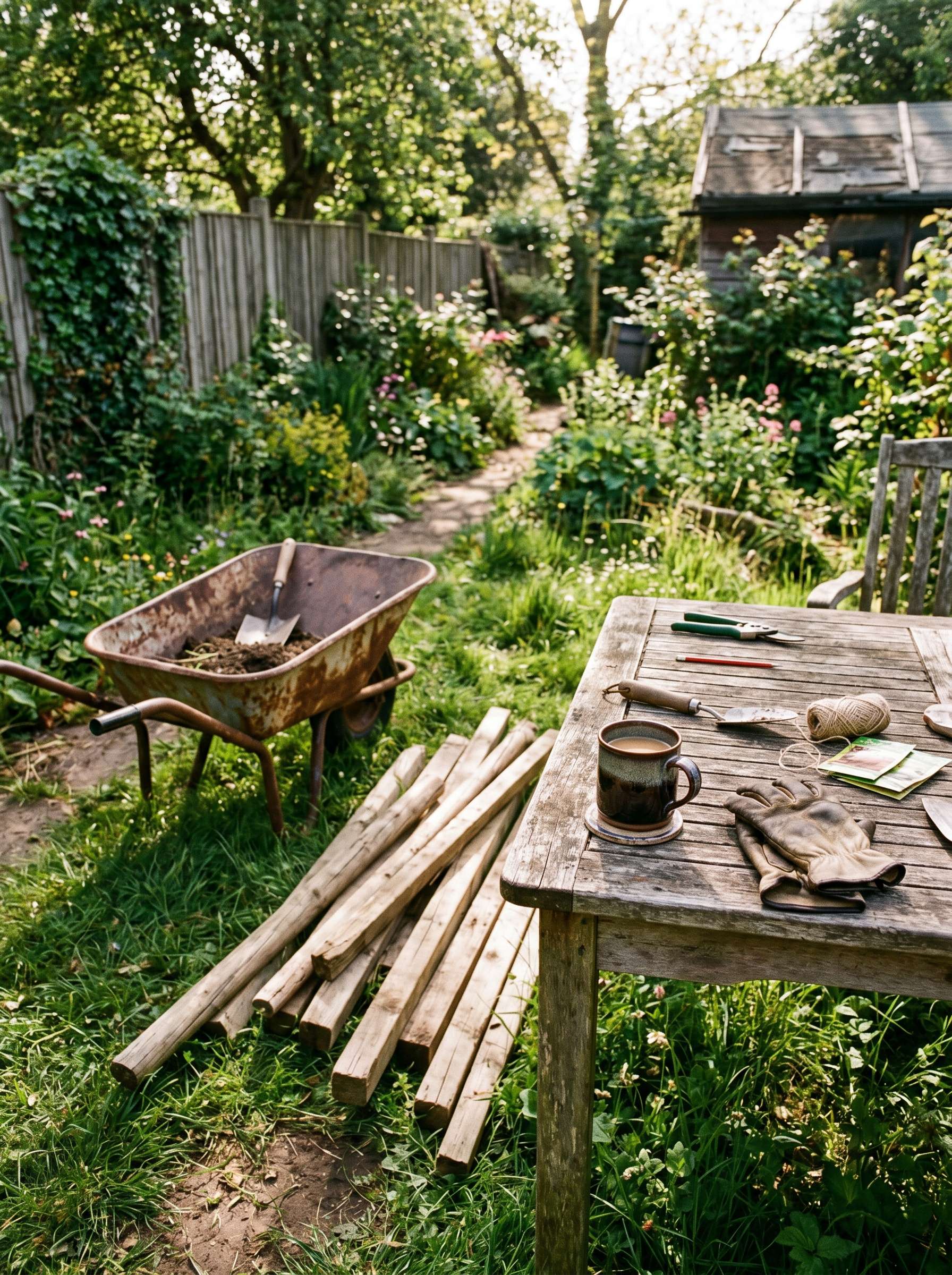
Here is exactly what I used for this build:
- Two galvanized steel cattle panels (16 feet long by 4 feet wide each)
- Four heavy-duty steel T-posts (6 feet or 7 feet tall)
- A box of heavy-duty zip ties or UV-resistant T-post clips
- A post driver or a heavy sledgehammer
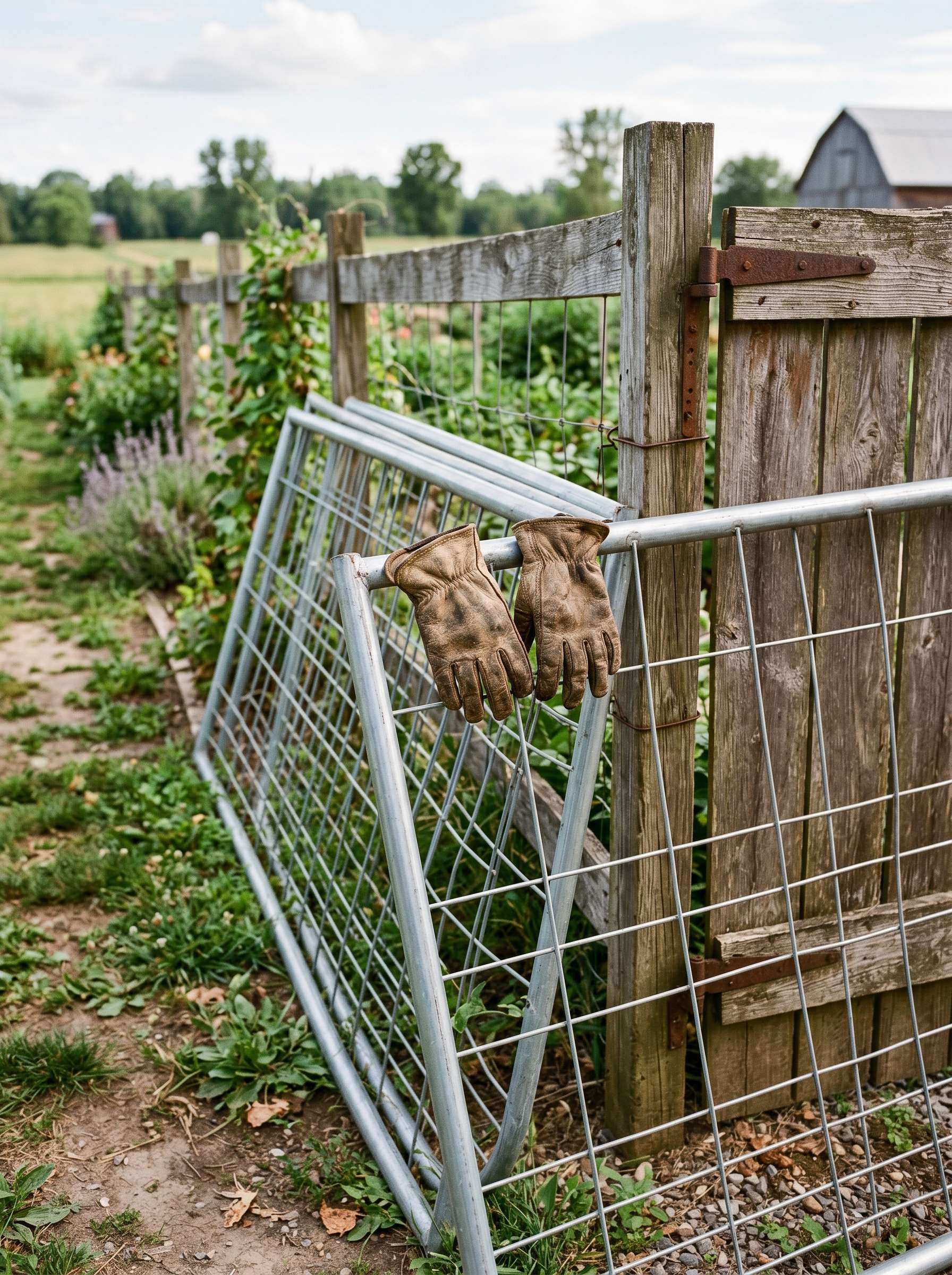
- A pair of thick leather work gloves (trust me on this one)
If you want a more finished, rustic look, you can swap out the steel T-posts for pressure-treated $4 \times 4$ wooden posts and heavy-duty fencing staples. That’s the route I took for my main walkway arch because I wanted it to match the look of my old DIY modern boho slatted privacy screen patio setup nearby.
Whichever post material you choose, the basic mechanics of assembling the arch remain exactly the same.
Step 1: Marking Your Footprint
One thing most people ignore when setting up an arch is the actual walking width. You see these gorgeous photos online of narrow pathways, but you have to remember that your plants are going to grow inward.
If you make your archway too narrow at the base, those sweet peas or pole beans will eventually choke out the path entirely. You’ll find yourself getting hit in the face with wet leaves every time you try to wheel a barrow through the garden.
I like to space my base posts exactly five feet apart across the pathway. This gives you plenty of shoulder room even when the vines are thick and lush in mid-July.
Take your tape measure and mark out a rectangle on the ground where your arch will sit. If you are using two panels side by side to create a deep, shady tunnel, your rectangle should be five feet wide and eight feet long.
If you only want a simple, narrow archway for a single climbing rose, you just need a four-foot-long footprint. Drop a handful of flour or place a few large stones on the grass to mark exactly where your four corner posts will go into the dirt.
Step 2: Driving the Posts Into the Ground
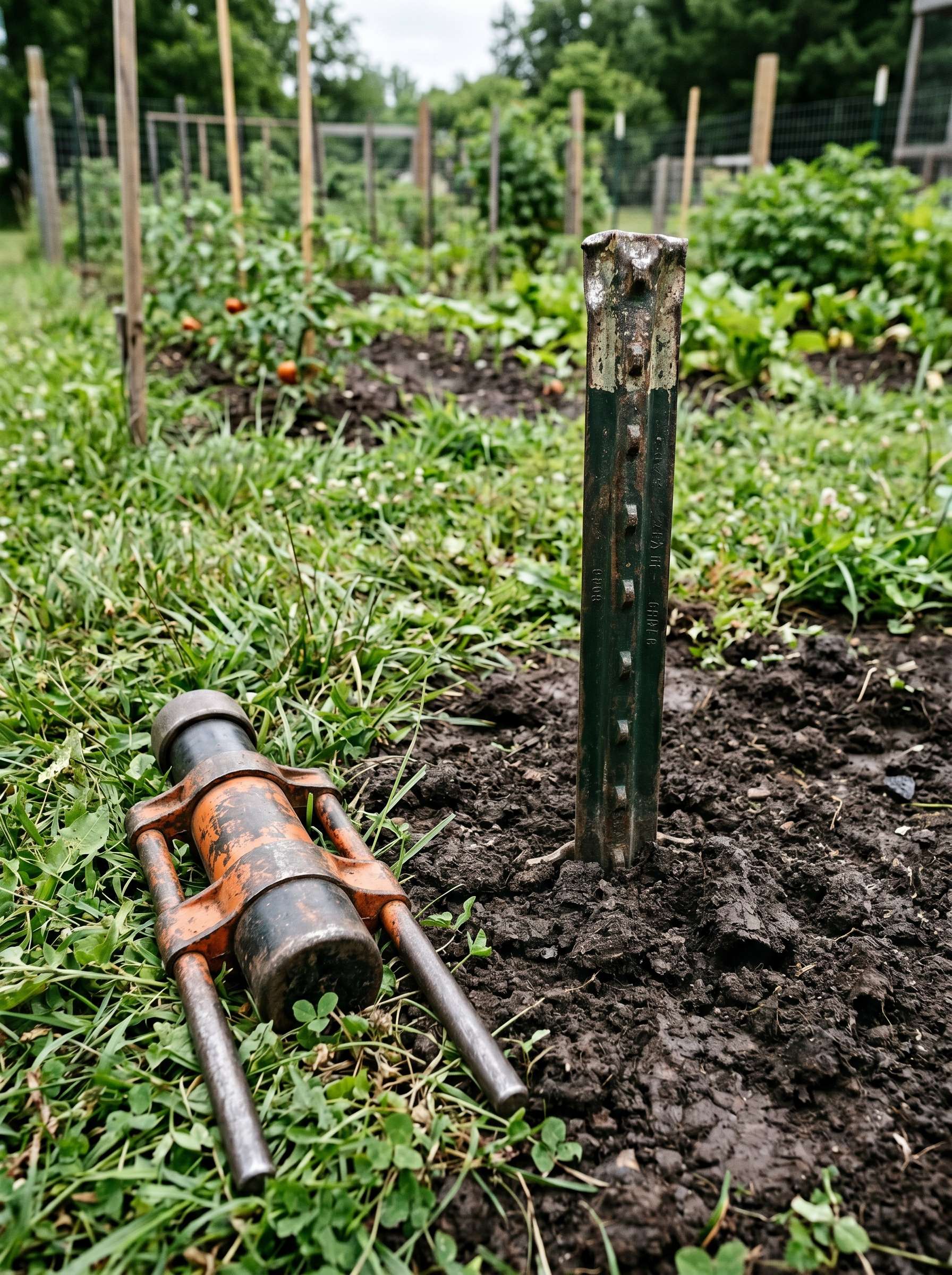
This is where the real workout happens. If you are using steel T-posts, slide your post driver over the top and pound them into the ground until the wide anchor plate at the bottom is completely buried below the soil line.
Make sure your posts are straight up and down. If they tilt outward or inward now, your final arch will look a bit wonky and won’t distribute the weight of the vines properly.
If you decide to use wooden $4 \times 4$ posts instead, you will need to dig down at least two feet using a post-hole digger. I don’t bother pouring concrete for these lightweight garden projects; instead, I just backfill the holes with the native soil mixed with a bit of crushed gravel, tamping it down with the back of a shovel every few inches until the post feels rock solid.
This is a great approach if you are trying to clean up an old garden corner, much like the process used when building a DIY low profile wooden deck over concrete patio space where stability matters without heavy foundation work.
Step 3: The Great Panel Bend
This step is significantly easier if you have a friend, a spouse, or a helpful neighbor standing by, but I’ve managed to do it entirely by myself more than once.
Put on your heavy leather gloves. Pick up your first cattle panel, stand it up vertically on one side of your marked posts, and brace the bottom edge against the inside base of the posts.
Slowly and carefully, walk the top of the panel over toward the opposite side, bending it into a tall, dramatic curve.
This surprised me honestly: the metal has quite a bit of spring-back tension. If your foot slips or you lose your grip, that big wire panel will snap back like a giant mousetrap, which is why having sturdy boots on and keeping your wits about you is so important.
Once you get the top bent over, push the opposite bottom edge of the panel down against the base of your far posts.
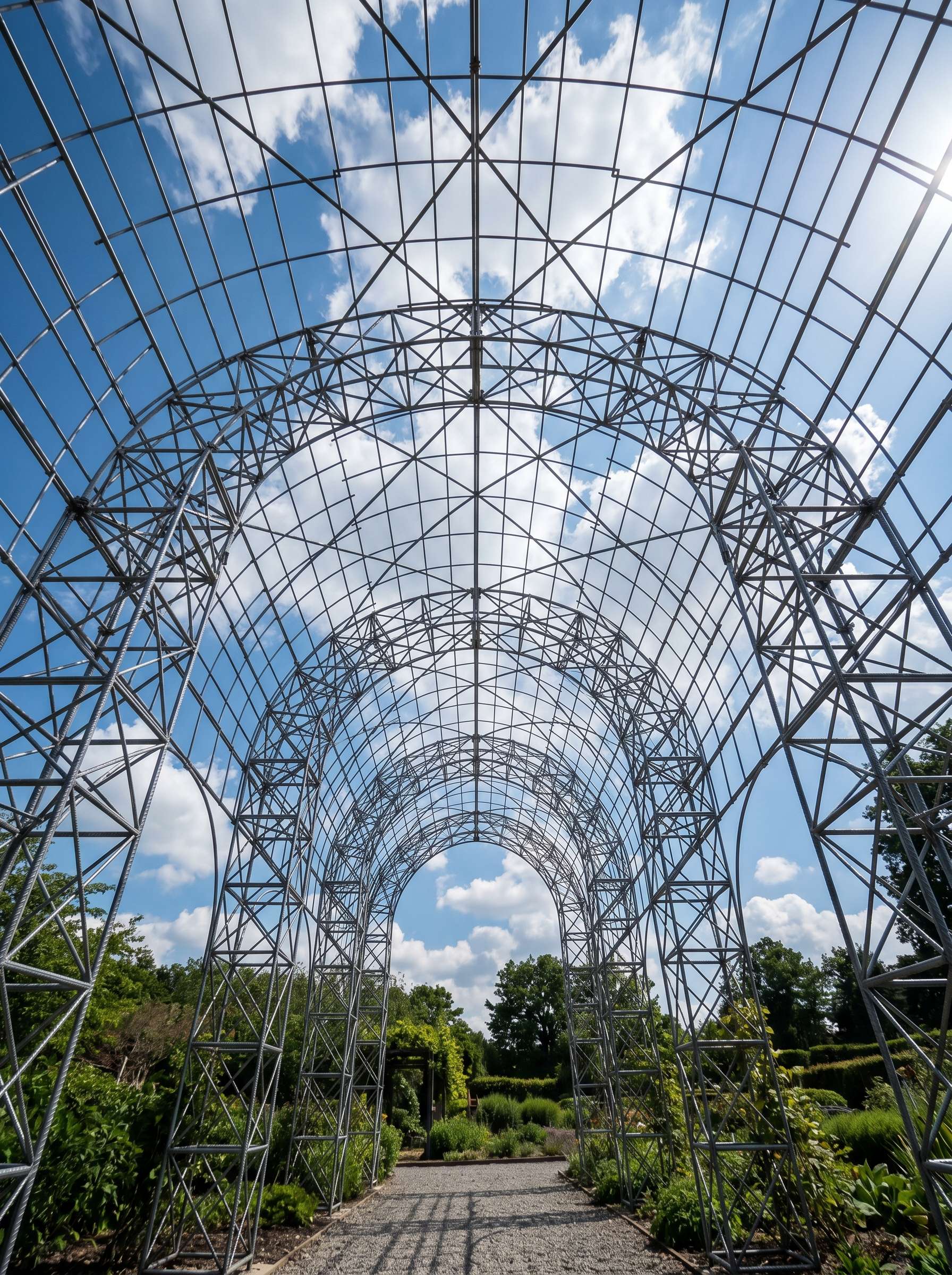
Suddenly, right there in front of you, you’ll see a beautiful, perfect geometric arch take shape. Hold it steady with your shoulder or have your helper grip the wires while you prepare your heavy-duty fasteners.
Step 4: Securing the Framework
With the panel bent into place between your posts, start securing the wire grid to the vertical supports. If you are using T-posts, wrap your heavy-duty zip ties or metal fence clips around the thick horizontal wires of the panel and clamp them tightly to the notches on the post.
Space your ties about twelve inches apart all the way up the length of the post. Don’t be stingy with the fasteners here; this connection point is what prevents the arch from shifting or blowing down when autumn winds start ripping through your neighborhood.
If you chose the wooden post route, grab your hammer and drive heavy steel fencing staples directly over the wire grid lines and deep into the wood.
Repeat this exact same process for the second cattle panel right alongside the first one. When both panels are secured to their respective posts, take some extra zip ties and stitch the middle seams where the two panels meet overhead.
This ties both halves together into a singular, incredibly rigid canopy that won’t wiggle or shimmy when you shake it.
What I Noticed After the First Season
After my first arch survived a couple of seasons, I started noticing how different plants interacted with the wire grid.
Most gardening blogs never mention this, but the heavy metal wire can get incredibly hot during peak summer heatwaves. Delicate, tender-stemmed annual vines like sweet peas can sometimes get a little scorched if they are pressed flat against the hot metal during a ninety-degree July afternoon.
But tougher perennial vines like hardy kiwi, climbing roses, or thick-skinned winter squashes don’t seem to mind the heat one bit. In fact, the metal grid gives their tendrils the perfect rough surface to grab onto without requiring you to constantly tie them up with twine.
If you are worried about summer heat frying your more delicate plants, a quick coat of light-colored, outdoor-grade spray paint applied to the metal panels before you plant can help reflect some of that intense midday sun. I left mine completely bare and galvanized because I prefer that rustic, weathered farm look, and over time, the natural leaf canopy shades the wire anyway.
Choosing the Right Plants for Your Arch
Now that your structure is solid and standing tall, you get to do the fun part: deciding what is going to climb up and over it. This is where you can let your creativity run wild, but you also need to be realistic about how much weight your plants will put on the structure over time.
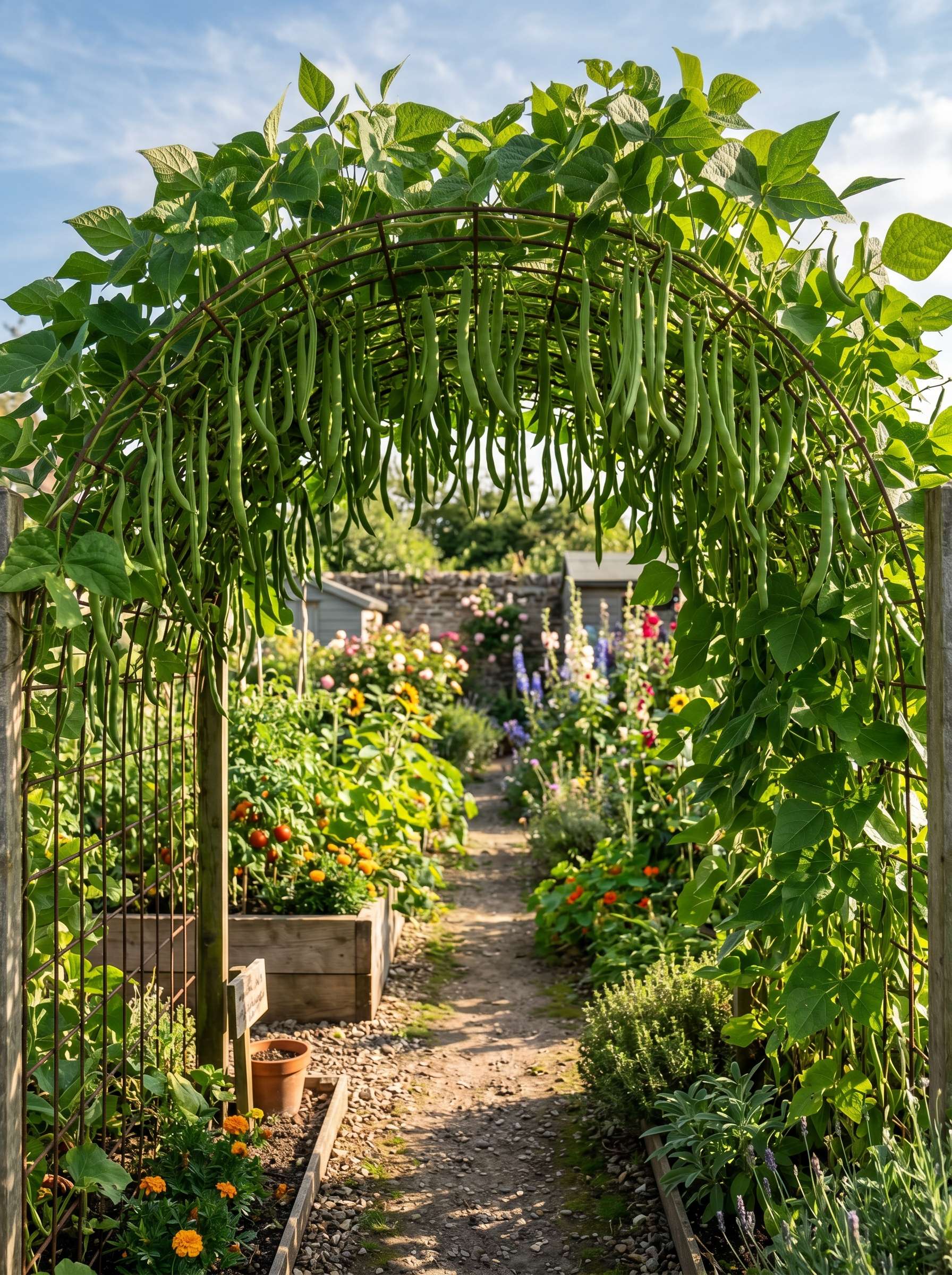
If you want a productive food garden, pole beans are an absolute dream for this setup. They climb rapidly, require zero training, and hang down through the top grid squares so you can pick them at chest level without ever having to bend over or search through dense mud.
Small, personal-sized pumpkins and butternut squash also do incredibly well here, and watching a heavy winter squash dangle safely three feet above your head is one of the most satisfying sights in home gardening.
For a purely ornamental look, nothing beats a classic climbing rose or a fragrant clematis vine. Just keep in mind that woody, perennial vines like wisteria can grow to be absolutely massive and incredibly heavy after five or ten years, so if you plan to plant those, make sure your initial support posts are heavy-duty wood rather than thin steel stakes.
If you are looking to complement this arch with more vertical interest nearby, you can always build a simple DIY tiered herb planter ladder cut list for beginners project to sit right at the base, creating a beautiful multi-layered entrance to your growing space.
What Actually Works: The Quick-Start Cheat Sheet
If you want to get this done this weekend without any unexpected trips back to the store, follow this simple breakdown.
The Tools You Need
- Heavy Hammer or Post Driver: Essential for getting supports deep enough into the ground.
- Bolt Cutters: Essential if you need to modify the panel lengths at home.
- Thick Work Gloves: Protects your hands from sharp wire ends and heavy steel edges.
The Basic Steps
- Clear the Area: Clear away any large weeds, rocks, or debris from your pathway location.
- Set the Width: Keep your base posts exactly 5 feet apart across the walking path.
- Drive the Supports: Bury your stakes or posts at least 2 feet deep into the soil.
- Flex and Secure: Bend the panel into a curve, brace the bottom, and secure it tightly with heavy-duty ties from the bottom up.
Things That Didn’t Work for Me
I’ve made plenty of blunders over my fifteen-plus years playing in the dirt. Here are a few specific things I tried with these arches that turned into complete disasters.
Using Cheap Plastic Zip Ties
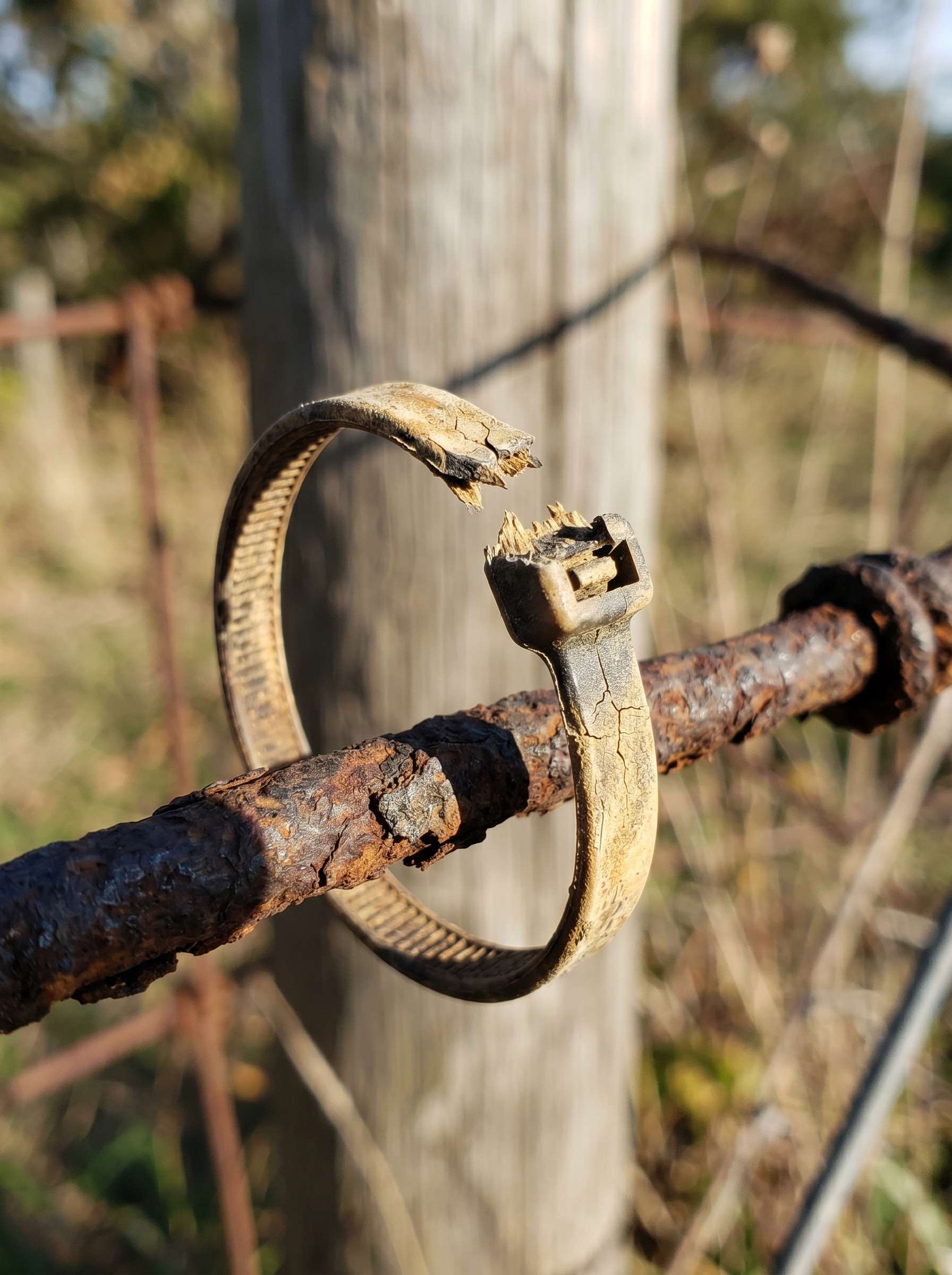
The first time I built one of these, I used cheap, clear plastic zip ties from a bargain bin to secure the panels to the posts. Within six months, the summer sun completely degraded the plastic, making it incredibly brittle.
One windy afternoon in September, half the ties snapped at once, and the entire arch tilted over at a forty-five-degree angle under the weight of my pumpkin harvest. Always buy heavy-duty, UV-stabilized black zip ties or use actual metal fencing wire clips.
Planting Invasive Vines
I thought it would be a fantastic idea to plant a fast-growing trumpet vine on an arch near my old garden shed. It grew fast, alright.
Within two seasons, it had sent out underground runners that popped up ten feet away in the middle of my raised veggie beds, and the woody stems grew so thick they actually started crushing the wire grid framework. Stick to well-behaved clambering plants or annual vines that die back completely when the winter frost hits.
Ignoring Overhead Clearances
I built an arch directly underneath the low-hanging branch of an old silver maple tree without thinking about how high the center curve would sit. The top of the panel ended up jammed tightly against the tree limb, making it incredibly difficult to train vines over the top peak, and the heavy shade from the tree meant nothing planted at the base actually wanted to climb up into the darkness anyway. Always look up before you start pounding stakes into the ground.
Small Things That Make a Big Difference
- Bevel the Wire Edges: When you cut your cattle panels down to size, use a metal file to smooth out the sharp, raw wire ends so you don’t scratch your arms every time you walk through.
- Plant on the Inside: Place your vine seeds or starter plants on the inside edge of the arch base so they are naturally protected from lawnmowers or string trimmers.
- Add Landscape Staples: Use a few heavy metal landscape staples pinned directly over the bottom wire of the panel where it touches the dirt to keep the base from sliding inward over time.
- Think About the Sun: Orient your archway running North to South if possible; this ensures that both sides of the climbing structure get equal amounts of sunlight throughout the day.
Common Questions from the Garden Gate
Not easily without modification. This specific design relies on the posts being driven deep into the earth to resist the outward spring-back force of the bent metal panels. If you want to place an arch over a hard surface, you would need to build heavy, gravel-filled wooden planter boxes on either side to act as solid anchor weights for the base of the panels.
These panels are heavily galvanized to withstand harsh farm weather and livestock abuse, so they resist rust incredibly well. You might see a tiny bit of surface discoloration or dullness after a few winters out in the elements, but it takes decades for the thick wire core to lose its structural strength.
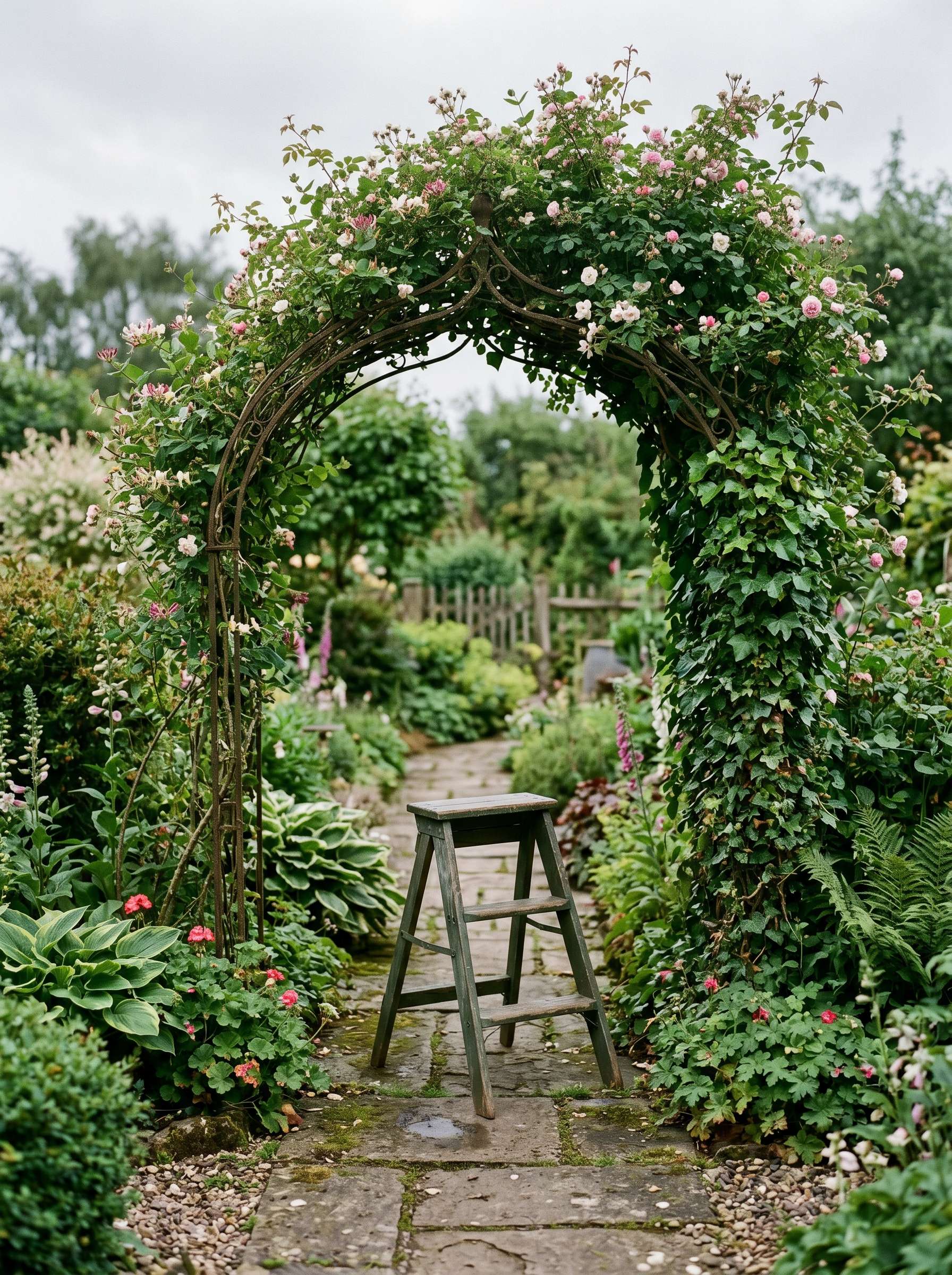
I keep a small, two-step folding aluminum ladder stashed behind my garden shed just for this purpose. In late autumn or early spring, I set it up right inside the archway so I can safely reach the top peak to snip away old dead vines and clear the grid for next year’s growth.
Yes, but you will need to give the actual fruit some extra support. While the wire grid can easily support the weight of the vine, heavy fruits like large watermelons or large cantaloupes can pull themselves right off the stem before they are ripe. You can make simple little fruit hammocks out of old t-shirts or stretchable nylon mesh and tie them directly to the overhead wires to support the weight of the hanging produce.
If you hit heavy rocks while trying to drive your T-posts down, don’t force it or you’ll bend the steel tips. Try shifting your post location forward or backward by a few inches to find a clear path through the soil, or use a heavy iron digging bar to clear out a pilot hole before setting your support posts. If your yard is notoriously tough to dig, you might want to look into ideas for how to landscape a dry yard using tough, beautiful shrubs that can handle difficult ground conditions without requiring deep post holes.
Once you get the hang of working with these basic utility materials, you start seeing your entire outdoor space a bit differently. You realize you don’t need to spend thousands of dollars on pre-packaged retail kits or flimsy decorative plastic imports to build a garden that feels organized, permanent, and incredibly productive.
The first arch is always the biggest learning experience, but once it’s up and covered in your first successful harvest of sweet peas or fresh summer beans, you’ll probably find yourself wanting to build another one somewhere else along your garden path next spring. If you want to make sure you have the best gear on hand before diving into your next outdoor build, take a look through my breakdown of 5 gardening tools that are worth every penny (and 3 you should absolutely skip) to save yourself some extra cash at the hardware store.
Once you understand the basic mechanics of how materials behave out in the weather, things usually get much easier.
Transparency Note: Most advice in this article comes from years of real gardening experience and trial-and-error in home gardens. Results may vary depending on climate, weather, and growing conditions.

Aagam – Founder of SpruceTouch
I’m Aagam, a home and garden enthusiast who enjoys growing, building, and improving outdoor spaces. I focus on practical backyard projects, garden ideas, and simple DIY solutions that are useful in real homes. Through SpruceTouch, I share what I’ve learned, what worked, what didn’t, and the small details that can make an outdoor project easier.