18 Best Plants You Can Grow From Cuttings (Beginner-Friendly Guide!)
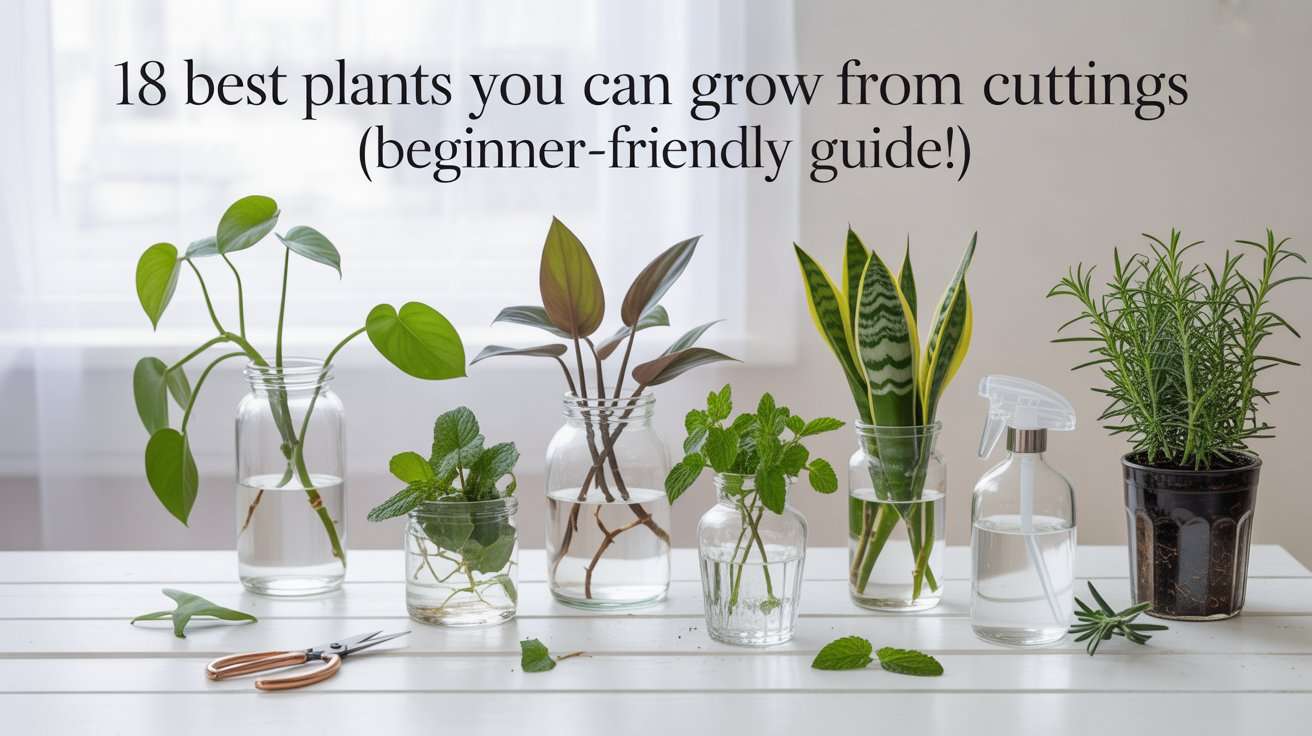
In this guide, you’re going to learn exactly how to turn a single snip from a mother plant into a thriving new garden resident. We aren’t just talking about the “what”—we’re diving deep into the “how” and “why” for 18 specific varieties.
I’ve been gardening for nearly 15 years, and I’ve tested dozens of setups—from professional misting benches to simple jars on a kitchen windowsill. I’ve learned that while nature wants to grow, it occasionally needs a gentle nudge in the right direction.
Honestly, my early attempts were a disaster. I once tried to root a rose cutting in bone-dry sand because I read it “drained well.” It died in two days. I’ve made the mistakes so you don’t have to.
If you’re ready to stop spending a fortune at the nursery and start multiplying your greenery for free, let’s get into it.
But here’s the thing:
Success starts with your tools. Use sharp, sterilized bypass pruners to ensure a clean cut that heals quickly.
1. Pothos (Epipremnum aureum) – The Easiest Cutting Plant Ever
Pothos is the ultimate “confidence booster” plant. It features heart-shaped leaves and long trailing vines that contain high levels of natural rooting hormones. Because it’s a tropical vining plant, it has evolved to grow roots wherever a node touches a damp surface.
Real-Life Use Case: I love using Pothos cuttings to “green up” dark bookshelves. I root them in water and often just leave them there—they can live in water for years if you provide liquid nutrients.
Practical Tip: Always cut about 1/2 inch below a “node”—that little brown bump on the stem. This is where the magic happens. If you don’t have a node, you don’t have a plant.
Small Mistake to Avoid: Don’t use a cutting that is too long (over 12 inches). The stem has to work too hard to support the leaves before it has roots. Keep your cuttings to 4–6 inches for the best results.
2. Snake Plant (Sansevieria) – Grow a Whole New Plant From One Leaf
Snake plants are structural powerhouses that can be propagated via leaf cuttings. You essentially cut a leaf into 3-inch sections and let them regenerate into entirely new pups.
Real-Life Use Case: I use these to create “living air purifiers” for bedrooms. One large $30 snake plant can easily yield 10+ new plants if you have the patience.
Practical Tip: Cut a “V” shape into the bottom of your leaf cutting. This increases the surface area for roots to grow and—more importantly—helps you remember which end is “down.”
Small Mistake to Avoid: Planting it upside down. If the polarity is reversed, it will rot before it ever roots. Always keep the side that was closest to the soil facing down.
3. Coleus – Explosion of Color From a Simple Snip
Coleus is a soft-stemmed perennial often grown as an annual. It works because the stems are incredibly fleshy and store enough moisture to sustain the plant while it builds a root system in record time.
Real-Life Use Case: When I’m designing Outdoor BBQ Kitchen Ideas, I use Coleus to fill in the “shaded” corners under counters. It adds instant neon color without needing flowers.
Practical Tip: Pinch off any flowers immediately. You want the plant’s energy going into root production, not seed production.
What I noticed: In my 20 years of gardening, I’ve found that the “Wizard” series of Coleus roots significantly faster than the woodier “Kong” varieties.
4. Mint – The Herb That Repopulates Itself
Mint is biologically programmed to spread. Its nodes are highly sensitive to moisture and will sprout roots within 48 hours of touching water.
Real-Life Use Case: I grow “Mojito Mint” from cuttings specifically for summer drinks. It’s much cheaper than buying plastic clamshells of herbs at the grocery store.
Practical Tip: Strip the bottom two sets of leaves. Any leaves submerged in water will rot and create bacteria that kills the stem.
I learned this the hard way: Never plant mint directly in your garden beds. Use your cuttings to fill pots, or you’ll be weeding mint out of your lawn for the next decade.
Pro Tip: The “Node” Rule: Nearly every plant on this list requires a node to propagate. This is the “joint” on the stem where leaves grow. If you cut a stem between nodes and don’t include a joint, it will rarely produce roots.
5. Rosemary – Tough but Totally Rootable
Unlike mint, Rosemary is a woody herb. It works by forming a “callus” over the cut end before pushing out roots. It’s slower but creates a very hardy plant.
Real-Life Use Case: I use rosemary cuttings to create a low-growing hedge along my driveway. It smells amazing when the car tires brush against it.
Practical Tip: Use “semi-hardwood” cuttings. This is the part of the branch that is turning from green to brown. It’s strong enough to resist rot but young enough to grow roots.
Small Mistake to Avoid: Using a dome or bag for too long. Rosemary hates high humidity and will develop powdery mildew if it doesn’t have good airflow.
6. Basil – A Kitchen Favorite That Roots Overnight
Basil is a high-moisture herb. Because it’s so succulent, it transports water easily, allowing the stem to stay hydrated while the roots develop at the base.
Real-Life Use Case: I keep a permanent “basil station” on my kitchen counter. As soon as a plant gets too tall, I snip the top and start a new one.
Practical Tip: Keep the water level consistent. Basil is thirsty; if the water evaporates and the stem dries out even for a few hours, the cutting will wilt and likely won’t recover.
This worked better than I expected: Putting your basil jar in a spot that gets morning sun but afternoon shade. It prevents the water from “cooking” the delicate roots.
7. Rose – A Classic Plant You Can Root at Home
Roses are the “advanced” level of this list. They root via “cambium” growth—the layer just under the bark. It requires specific moisture levels to prevent the woody stem from drying out.
Real-Life Use Case: My grandmother had a 50-year-old climbing rose. Before she moved, I took 5 cuttings. Three survived, and now I have a piece of her garden in my own backyard.
Practical Tip: The “Potato Trick” is a myth—don’t do it. Instead, use a clear soda bottle with the bottom cut off as a mini-greenhouse over your cutting in a pot of sandy soil.
What I noticed: Cuttings taken from a stem that just finished blooming have the highest success rate.
Here’s where most people go wrong: Using “old” water. Oxygen in the water is depleted over time. Change your propagation water every 2-3 days to keep those baby roots breathing!
8. Geranium – Colorful, Low-Stress, and Easy
Geraniums (Pelargoniums) have thick, succulent-like stems that hold a lot of energy. This “stored fuel” allows them to survive for a long time without roots, giving them plenty of time to establish in the soil.
Real-Life Use Case: Every autumn, I take cuttings from my window boxes. I keep them as small indoor plants over winter, and by spring, I have massive plants ready to go back outside.
Practical Tip: Let the cutting “callus” (dry out) for 2-3 hours before putting it in soil. This prevents the “black leg” fungus from entering the open wound.
Small Mistake to Avoid: Using heavy garden soil. Geranium cuttings need a very airy soil health guide or seed-starting mix to avoid stem rot.
9. Lavender – Fragrant Cuttings That Thrive
Lavender works similarly to rosemary but is even more sensitive to drainage. It’s a Mediterranean plant that thrives on “neglect” once the roots are established.
Real-Life Use Case: I love rooting lavender to create homemade sachets. Having 10-15 plants means I can harvest as much as I want without bald spots in the garden.
Practical Tip: Take “heel” cuttings. Instead of snipping a branch, gently pull a side shoot downward so a small “tail” of the main stem bark comes with it. This area is rich in growth cells.
One mistake I made: Using a high-nitrogen fertilizer on new lavender cuttings. It causes “leggy” growth that flops over. Stick to plain, poor soil.
10. Begonia – Leaf or Stem, Both Work
Begonias are unique because their leaves contain “meristematic” cells—basically plant stem cells that can turn into any part of the plant.
Real-Life Use Case: Rex Begonias have stunning metallic leaves. I use leaf-vein propagation to create “living art” for my office desk.
Practical Tip: For leaf propagation, use a clean razor to nick the main veins on the underside of a leaf, then pin it flat against damp soil. New plantlets will sprout from every nick!
This worked better than I expected: Using a heating mat. Begonias are tropical; keeping the soil at a steady 75°F (24°C) cut my rooting time in half.
11. Hydrangea – Big Blooms From Simple Cuttings
Hydrangeas are vigorous growers. Their softwood cuttings (the flexible green growth of the current year) are extremely “hormonally active,” making them eager to root in high-humidity environments.
Real-Life Use Case: I used cuttings to fill a 40-foot border along my north-facing fence. It would have cost $500 at a nursery; it cost me $0 and some patience.
Practical Tip: Cut the remaining leaves in half horizontally. This reduces the amount of water the leaf “breathes out” (transpiration), keeping the stem hydrated.
I learned this the hard way: If you take cuttings in late summer (hardwood), they may not root until the following spring. Stick to June/July for fast results.
12. Dracaena – Bold Indoor Plant With Easy Propagation
Dracaena (often called the Dragon Tree) is a resilient indoor plant. It roots through “terminal” or “cane” cuttings, meaning even a bare stick of the trunk can sprout new heads.
Real-Life Use Case: When my Dracaena hit the ceiling, I “beheaded” it. The top became a new floor plant, and the old stump sprouted three new heads. It’s a 2-for-1 deal.
Practical Tip: If rooting in water, add a small piece of horticultural charcoal. It keeps the water clean and prevents the “stinky water” syndrome common with thick-stemmed plants.
Common Mistake: Giving up too soon. Dracaena can take 2 months to show roots. As long as the stem isn’t mushy, it’s still working!
The 4-Week Propagation Success Plan
Most people fail because they “futz” with the plants too much. Here is my 20-year system:
| Week | Action | Why? |
| Week 1 | Take cuttings & place in bright, indirect light. | Minimize stress. |
| Week 2 | Change water or check soil moisture. | Keep oxygen high and bacteria low. |
| Week 3 | Resistance test: Give a tiny tug on soil cuttings. | If you feel “grab,” roots are forming! |
| Week 4 | Start “hardening off” by removing domes. | Prepares them for the real world. |
13. ZZ Plant – Surprisingly Rootable
The ZZ plant is a prehistoric survivor. It grows from “rhizomes” (underground bulbs). When you take a cutting, the plant first spends energy building a tiny bulb at the base of the stem before it ever grows a root.
Real-Life Use Case: I gift these in small 2-inch pots for office “welcome” gifts. They are basically unkillable, making them the perfect starter plant.
Practical Tip: You can actually propagate individual leaves. Just stick the stem of a single leaf into soil. It takes forever (6-9 months), but it’s a fun experiment.
What I noticed: ZZ cuttings in water tend to rot more often than those in a very dry succulent mix. I recommend the “set it and forget it” soil method.
14. Jade Plant (Crassula) – Succulent That Loves Cuttings
Jades are essentially “water balloons” in plant form. They hold so much moisture that they can survive for weeks without a single root, giving them a massive advantage during propagation.
Real-Life Use Case: I’ve turned a single 10-year-old Jade “mother” into over 50 “babies” for a wedding favor project.
Practical Tip: Do NOT water the soil for the first week after planting a Jade cutting. The plant needs to seek out moisture, which triggers root growth.
Small Mistake to Avoid: Direct hot sun. While mature Jades love sun, a cutting without roots will sunburn and shrivel in hours. Keep it in bright shade.
15. Oregano – A Kitchen Staple That Roots Quickly
Oregano is a “creeping” herb. In nature, its stems trail along the ground and root wherever they touch. We just replicate this in a jar or pot.
Real-Life Use Case: I grow Greek Oregano in the cracks of my stone DIY Garden Path Ideas. I just “stuck” rooted cuttings into the dirt between stones, and they took off.
Practical Tip: Take cuttings from the “runners”—the stems that are already trying to lay flat. They have the most active rooting sites.
This worked better than I expected: Using honey as a natural rooting agent. If you don’t have hormone powder, a tiny dip in honey helps prevent bacterial infection.
16. Sweet Potato Vine – Fast, Vibrant, and Fun
This is the “Ferrari” of propagation. Because it’s a tuberous-based vine, its growth rate is explosive. It’s designed to cover ground quickly to maximize photosynthesis.
Real-Life Use Case: I use the “Marguerite” (lime green) variety to spill over the edges of my Small Balcony Vertical Vegetable Garden. It hides the plastic pots perfectly.
Practical Tip: These are heavy drinkers. If you’re rooting in soil, keep it “sponge damp” at all times. If it dries out, the delicate new roots will snap.
What I noticed: These roots are very brittle. When moving from water to soil, be extremely gentle or you’ll set the plant back by two weeks.
17. Philodendron – Trailing Beauty Made for Beginners
Philodendrons are the cousins of Pothos but often have more dramatic colors. They have “aerial roots” already visible on the stems, which give them a massive head start.
Real-Life Use Case: I love the “Heartleaf” variety for training up a moss pole. I take cuttings to fill in the “bald” spots at the bottom of the pole.
Practical Tip: If the aerial roots (those brown nubs) are already long, you can wrap them in damp sphagnum moss while still on the mother plant. This is called “air layering” and it’s 100% fail-proof.
Small Mistake to Avoid: Confusing them with Pothos. Philodendrons have a “sheath” (a little papery leaf cover) that Pothos doesn’t. Make sure you aren’t cutting the sheath instead of the node!
The best part?
Once you learn these 18 plants, the “logic” of propagation applies to thousands more. You’ll never look at a friend’s garden the same way again (you’ll be looking for nodes!).
18. Christmas Cactus – A Unique Prop That Loves Humidity
Despite the name, this is a “Zygocactus” from the Brazilian rainforest. It roots from “pads” or segments. It works because each segment junction is a potential growth point.
Real-Life Use Case: I have a Christmas Cactus that is a “grandchild” of a plant my mother had in the 70s. It’s a living family heirloom.
Practical Tip: Use at least 3 segments for a cutting. A single segment doesn’t have enough stored energy to produce both roots and a new leaf quickly.
One mistake I made: Using regular “cactus soil.” These are jungle plants, not desert plants. They need a mix with more peat or coco coir to hold a bit of moisture.
Things That Didn’t Work for Me (The “Failure” Files)
I want to be honest—I’ve killed a lot of plants to get this good.
- The “Direct Sun” Disaster: I used to think more sun = more energy for roots. Wrong. Cuttings have no way to take up water yet. I once fried an entire tray of lavender cuttings by putting them in my greenhouse during a 90°F July day. Now, I keep them in “bright shade” until I see new leaves.
- The Dirty Scissors Mistake: I once propagated 20 expensive variegated Monsteras using a pair of scissors I’d just used to trim a diseased rose bush. Every single cutting turned into black mush within 48 hours. Sterilize your tools.
- The “Checking Too Often” Trap: I used to pull my cuttings out of the soil every day to see if roots were growing. This breaks the tiny, microscopic root hairs that are just starting to form. It’s like trying to heal a wound and picking the scab every hour.
Small Things That Make a Big Difference
- Water Quality: If you have highly chlorinated tap water, let it sit out for 24 hours before using it for cuttings.
- The 45-Degree Cut: Always cut at an angle. It prevents the stem from sitting flat on the bottom of a glass, which allows for better water intake.
- Timing: Take your cuttings in the morning when the parent plant is most hydrated.
- Patience: If the leaves are green, the plant is alive. Don’t throw it out just because you don’t see roots yet.
FAQs (Beginner-Friendly)
This is “damping off” or rot. It’s usually caused by bacteria in the water or soil. Change water more often and make sure your tools are clean.
Yes! Honey has natural antiseptic properties that protect the cut. It’s not as strong as synthetic hormones, but it’s great for composting at home enthusiasts who want a natural route.
Small! A common beginner gardening mistake is putting a tiny cutting in a huge pot. Too much soil stays wet for too long, rotting the new roots. Start in a 2-inch or 3-inch pot.
Spring and early summer are the “golden windows” because the plants are naturally in a high-growth phase.
Yes. Standing water loses oxygen. Roots need oxygen to grow; without it, they literally drown.
Gardening is a conversation, not a set of commands. Some years, my lavender roots perfectly; other years, the humidity is just wrong and they struggle.
Don’t let a few dead stems discourage you. Every “failed” cutting is just a lesson in what your specific environment needs. Start small, adjust as you go, and soon you’ll have more plants than you know what to do with. Happy growing.
This guide is based on my 20 years of personal gardening experience and field testing. Results may vary depending on your local climate, humidity levels, and the health of your mother plant. Watering plants correctly is the most critical factor in post-propagation success.

Aagam – Founder of SpruceTouch
Hi, I’m Aagam — the creator behind SpruceTouch. I’m a home and garden enthusiast who shares practical ideas for backyard design, garden projects, patio decor, and small outdoor spaces. Through SpruceTouch, I focus on simple and budget-friendly ways to improve outdoor living spaces.