Firescaping for Home Safety: 5 Fire-resistant plants for dry US regions.
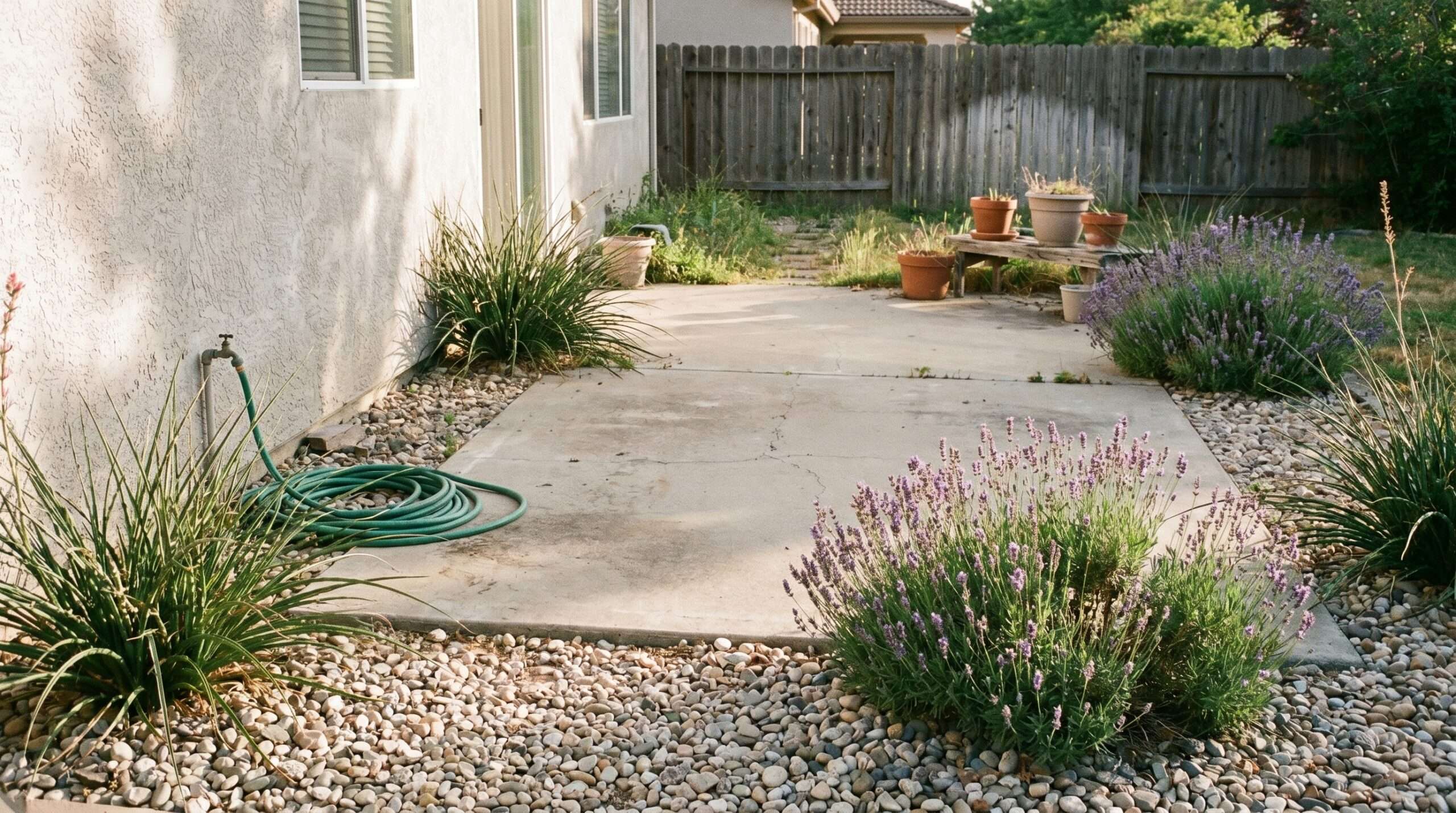
Most folks moving out West think creating a fire-safe yard means clearing every single green thing and replacing it with a sea of ugly gray gravel. I used to think the exact same thing when I first started out, and honestly, it made my place look like a barren desert parking lot.
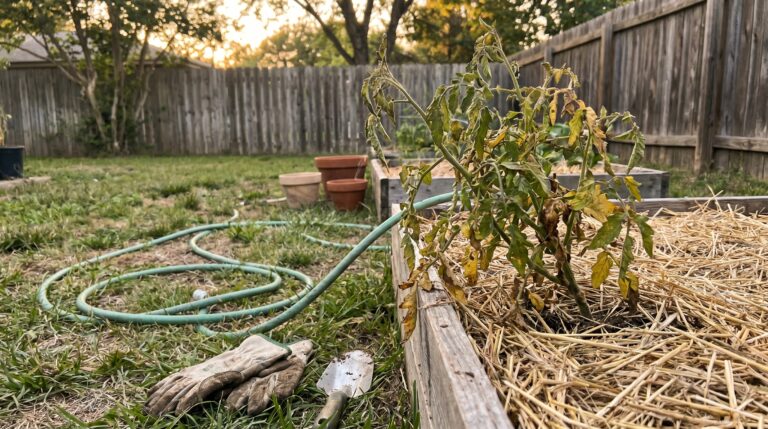
But here’s where it gets tricky: stripping your soil bare actually leaves your home vulnerable to intense ground heat and serious erosion problems. You don’t need a moonscape to keep your property safe; you just need the right plants growing in the right zones.
Most online guides give you these massive, overly academic lists of fire-retardant species without explaining how they actually behave when a dry spell hits. Today, we’re going to fix that by looking at five incredibly tough, fire-resistant plants that actually thrive in dry US regions while keeping your landscape looking alive.
I learned the hard way that picking the wrong “drought-tolerant” shrub can turn your property into a literal tinderbox if you aren’t careful. Let’s make sure you don’t make those same mistakes.
The Dangerous Mistakes Most Beginners Make
When you’re trying to protect your home, you can’t just trust a colorful tag at a big-box nursery that says “low water.”
One thing most people miss is that many drought-tolerant plants are packed with highly volatile oils, resins, or terpenes. Think of plants like rosemary or certain types of ornamental pines; they survive dry weather beautifully, but they burn like gasoline if a spark hits them.
This is where beginners usually panic and either plant nothing at all or pack their garden beds with lush, thirsty tropicals that die the moment the local water district issues a watering restriction. A dead, dried-out plant is always a fire hazard, no matter what species it originally was.
You want plants that hold onto moisture in their leaves and stems even when the air feels like a furnace.
Signs Your Current Landscape Is a Fire Hazard
If you aren’t sure whether your current yard setup is safe or dangerous, you need to look for a few very specific warning signs.
- Trapped Deadwood: Look closely inside your thickest shrubs; if the center is full of dry, brittle twigs, it’s a hazard.
- Papery Bark and Flaking Stems: Trees that constantly shed paper-thin bark create instant fuel for blowing embers.
- Continuous Plant Lines: If your flower beds form an unbroken highway of vegetation leading straight to your wooden deck, you’re setting yourself up for trouble.
- An Abundance of Sap: Plants that ooze sticky resin or thick sap when you snap a twig are generally highly flammable.
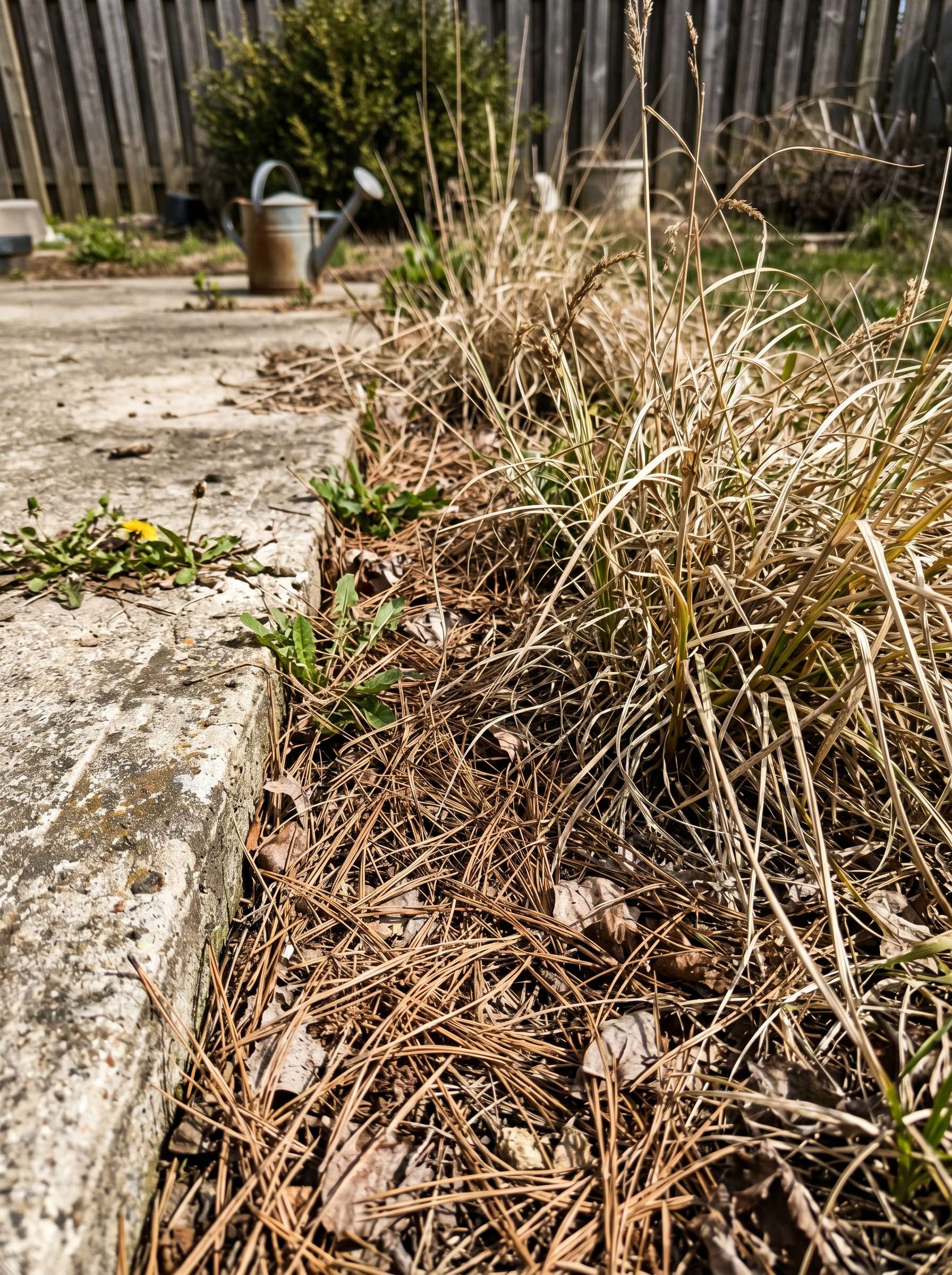
- Neglected Overgrowth: Ornamental grasses from last season that have turned completely tan and hollow are incredibly easy to ignite.
Understanding Why Some Plants Burn and Others Don’t
To build a truly resilient yard, you have to understand the basic mechanics of how plants interact with heat.
Fire-resistant plants aren’t completely fireproof—anything will burn if a fire gets hot enough for long enough—but these specific varieties don’t ignite easily, and they don’t produce intense, raging flames that jump from branch to branch.
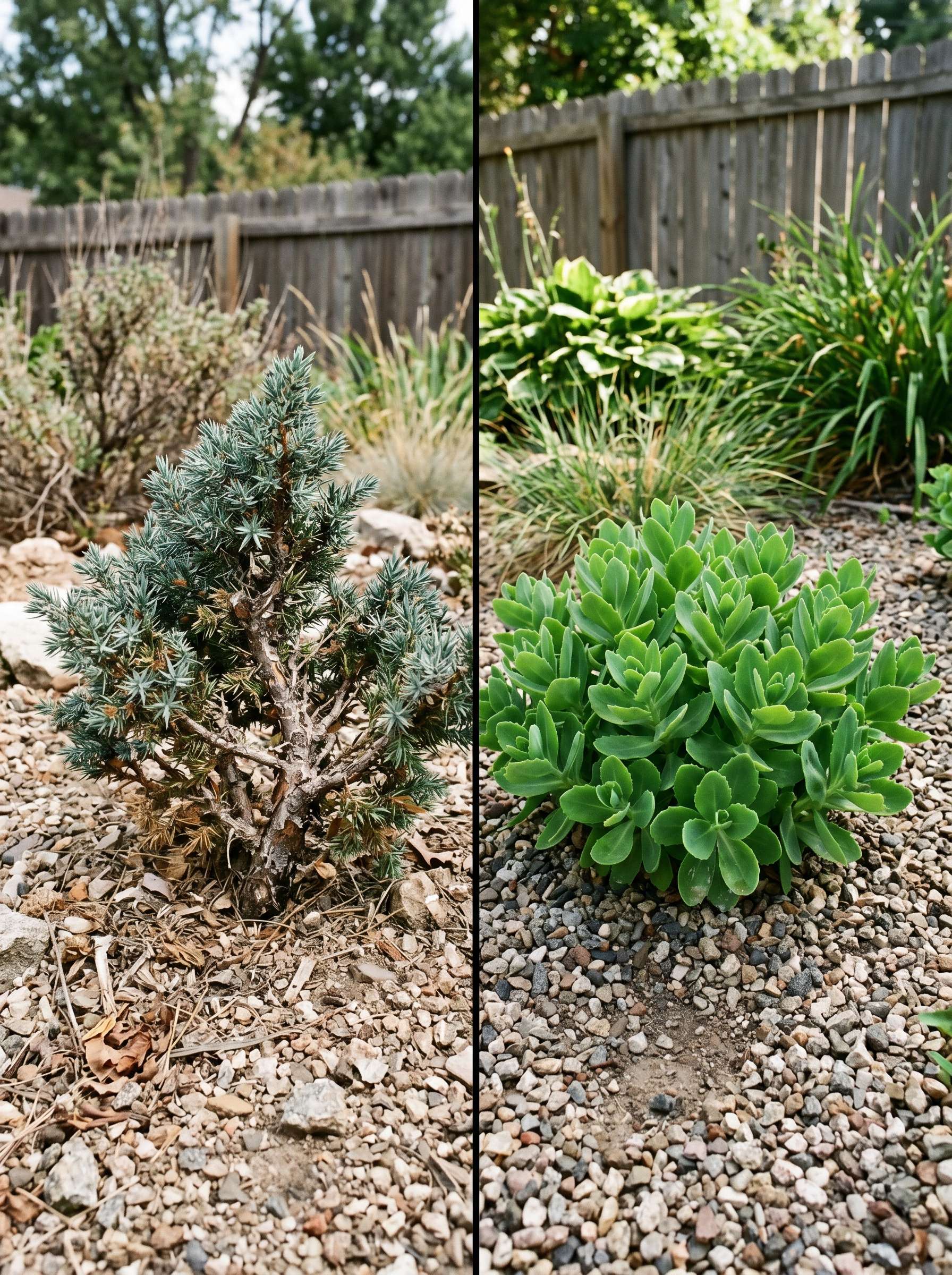
The secret lies in the moisture content of the leaves and the structural makeup of the plant. Succulent leaves, thick fleshy stems, and plants with water-rich sap take a significantly longer time to heat up to their ignition point.
On the flip side, plants with tiny, needle-like leaves and high resin content lose their minimal water supply almost instantly when exposed to heat, causing them to explode into flames.
You also have to consider how cleanly a plant grows. Varieties that naturally shed their old, dead inner leaves create an internal pile of tinder that you might not even notice until you start pruning them back.
The Core Solution: 5 Fire-Resistant Plants That Actually Work
Let’s dive into the specific plants that will keep your property safer while saving you from a massive water bill every month. These aren’t delicate tropicals; they are rugged, reliable workhorses for dry regions.
1. French Lavender (Lavandula dentata)
Now, some traditional gardeners might raise an eyebrow here because lavender does contain some natural oils. But French lavender has a much higher moisture-retaining capability in its foliage when properly maintained compared to its woodier relatives.
The trick with French lavender is keeping it tidy; you can’t just plant it and walk away for three years.
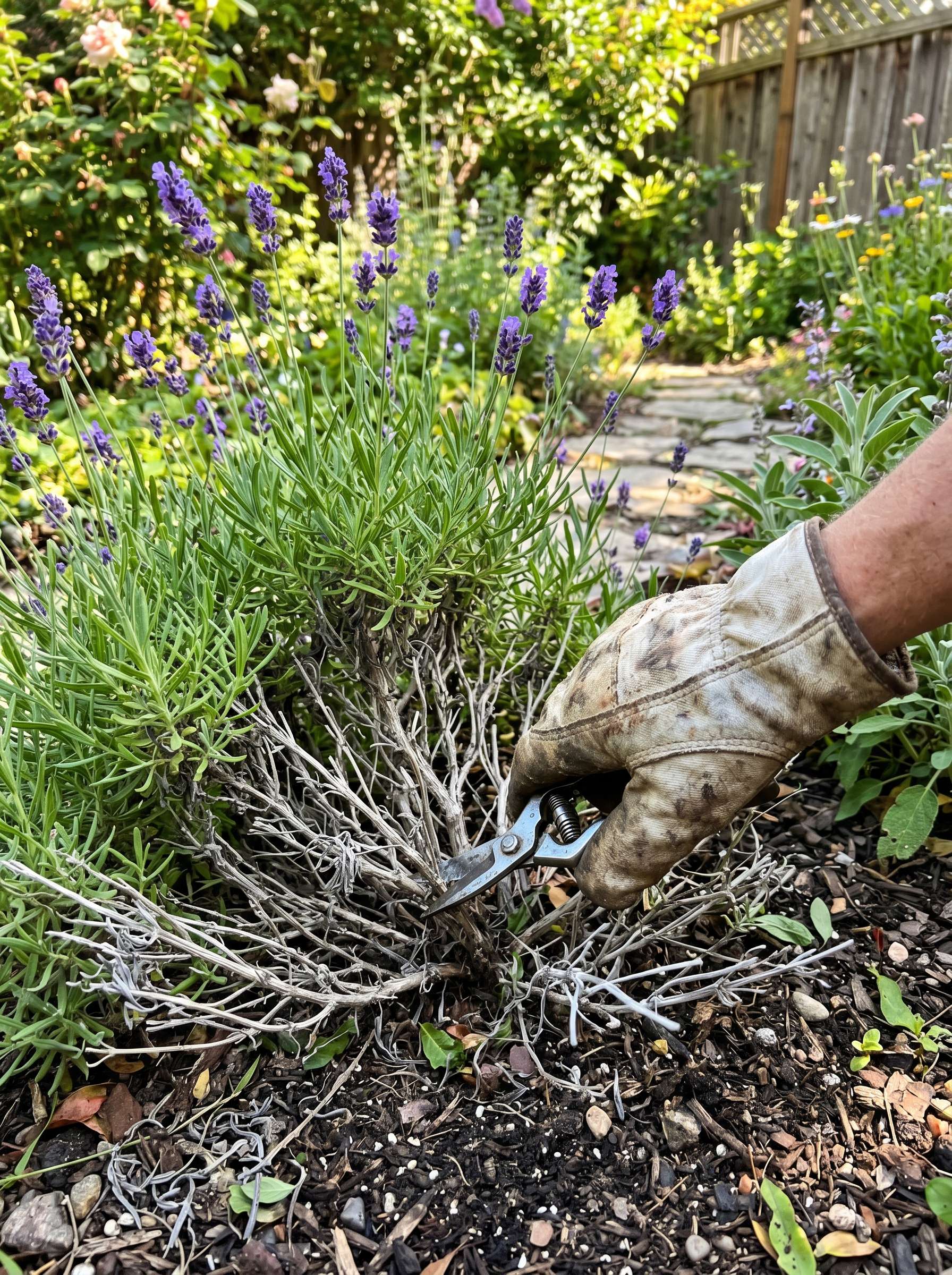
I prune mine back by about a third every single autumn right after the blooms fade, which forces the plant to produce fresh, succulent growth rather than a dense core of dry, flammable wood. It loves the poor, gravelly soil that kills off finer ornamental flowers, making it perfect for those tough slopes or sunny borders where nothing else seems to grow.
2. Broadleaf Stonecrop (Sedum spathulifolium)
If you have rocky ledges, stone retaining walls, or gravel paths near your home, this native western succulent is your absolute best friend.
Because it stores its water reserves directly inside its thick, fleshy leaves, it acts like a miniature, living water balloon against flying embers.
I’ve watched stray sparks from a fire pit land right on top of a patch of stonecrop; they just fizzle out instantly because there’s simply nothing dry for the fire to catch onto. It hugs the ground closely, meaning it won’t create a “ladder fuel” situation where a ground fire can climb up into the lower branches of your trees.
3. Red Yucca (Hesperaloe parviflora)
Don’t let the name fool you—this isn’t a true yucca, so it doesn’t have those dangerously sharp, sword-like tips that will impale your shins every time you walk past.
It forms a beautiful, fountain-like clump of leathery, blue-green leaves that remain plump and full of moisture through the worst summer heatwaves.
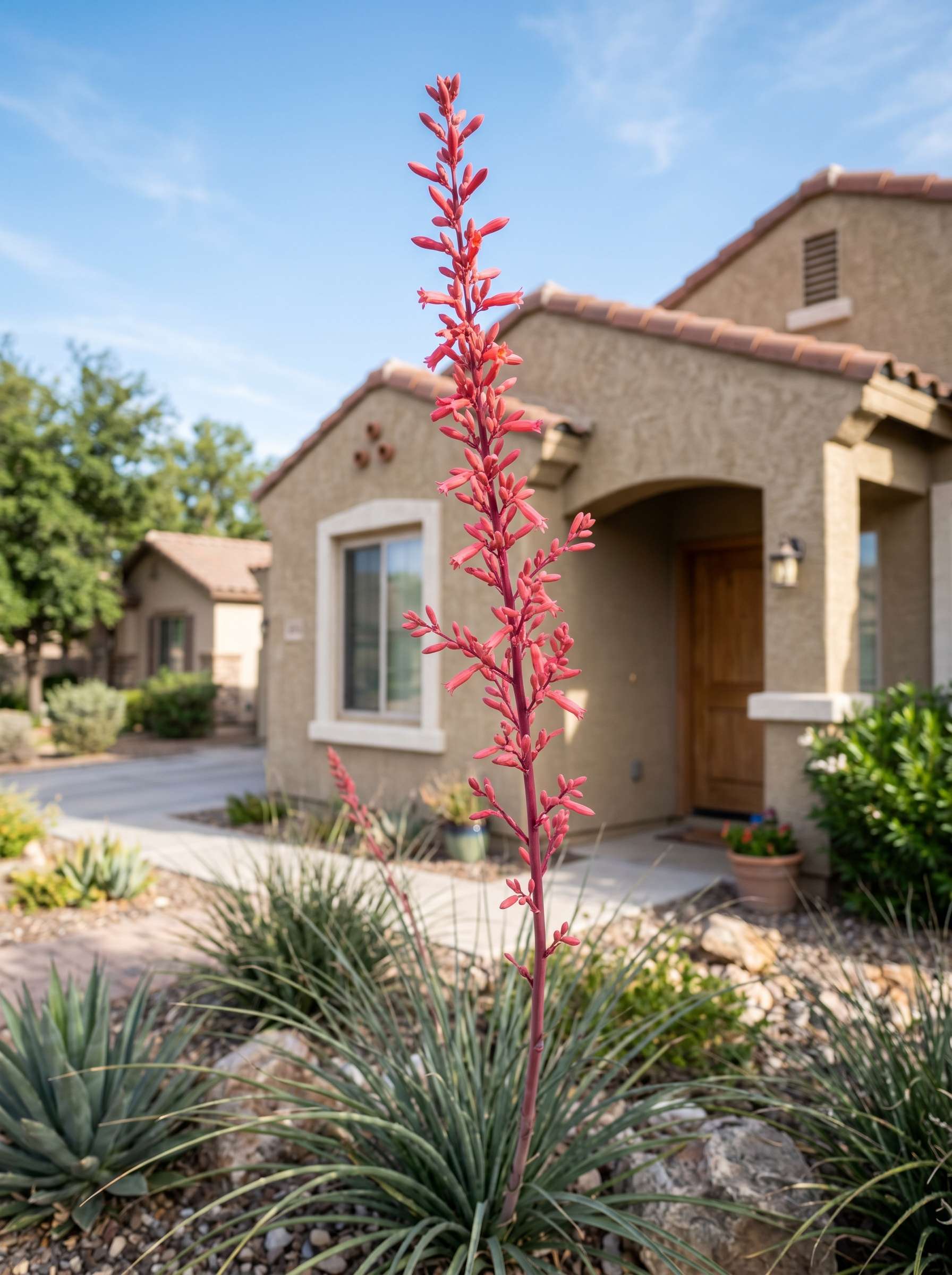
It sends up gorgeous, deep coral flower spikes that hummingbirds absolutely love. It is an incredible choice if you’re trying to figure out your pollinator friendly layouts without adding high-risk fuel sources to your front yard. It survives on nothing but natural rainfall once its roots are established in the ground.
But wait, there’s a catch: make sure you clip off the old flower stalks once they turn brown and woody at the end of the season, as those dry stalks can act as small torches if a fire sweeps through.
4. California Fuchsia (Epilobium canum)
This is one of those plants that looks incredibly delicate but is actually as tough as old boots. It loves intense, baking sun and thrives in the kind of dry, crumbled soil where most plants simply wither away and turn to tinder.
In the late summer—exactly when the risk of wildfire is at its absolute peak—this plant erupts into a mass of brilliant, bright orange-red tubular flowers.
The beauty of California fuchsia is its ability to ground-cover a slope, binding the soil together to prevent erosion while maintaining a low, moisture-rich profile.
Just give it a hard cut right down to the ground in the late winter to keep it fresh, green, and completely free of any lingering dead stems.
5. Common Iceplant (Delosperma cooperi)
If you need to cover a large expanse of bare ground with something that is completely unbothered by heat, iceplant is an exceptional choice.
It forms a dense, carpet-like mat of rubbery, sausage-shaped leaves that are packed to the brim with water.
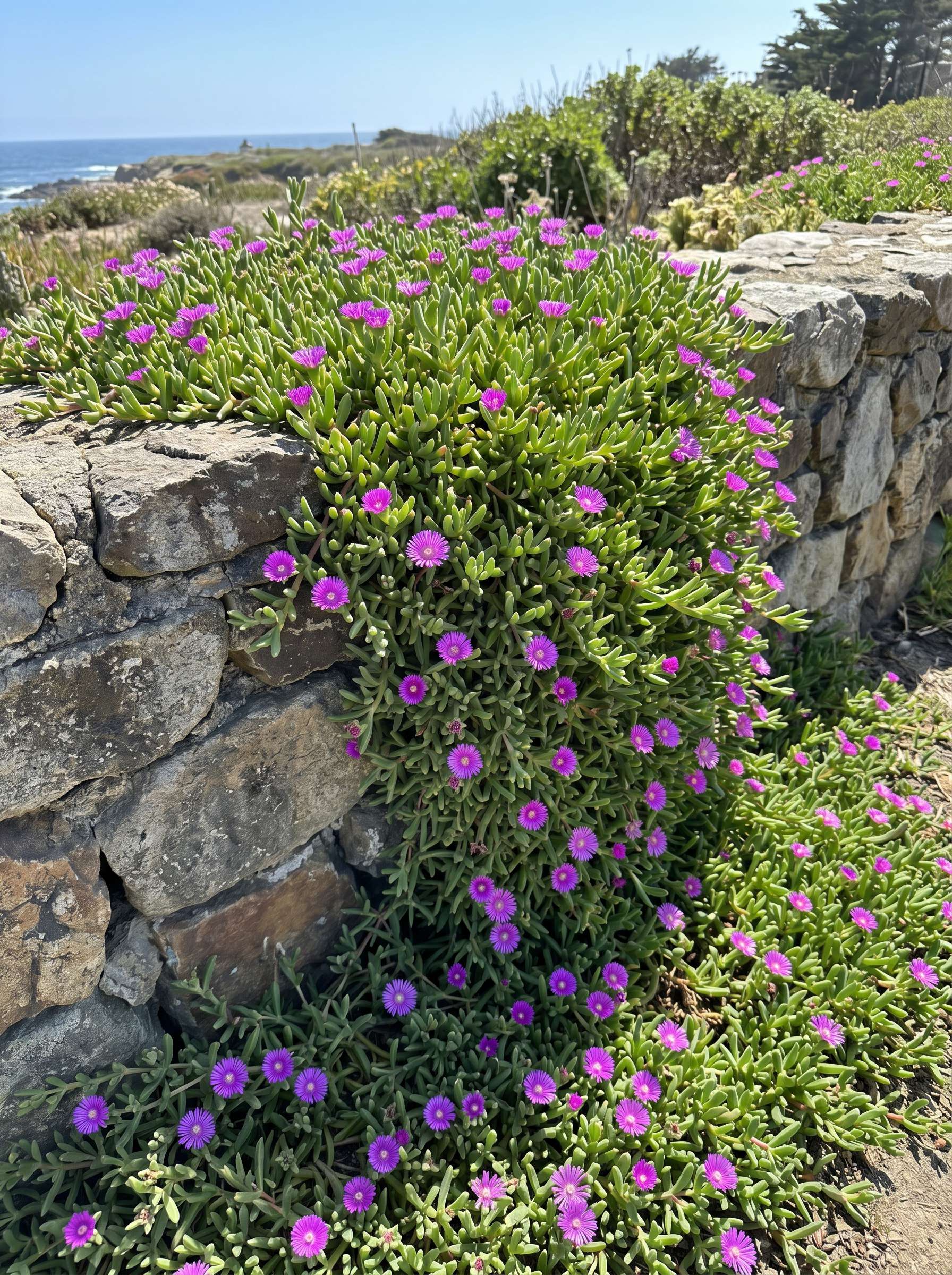
It is a fantastic tool for creating a green buffer zone immediately around your home’s foundation or patio edges. It suppresses flammable weeds from taking root while creating an attractive, vibrant barrier that stops ground fires right in their tracks.
Just make sure you don’t overwater it, as soggy soil will cause the roots to rot out entirely, leaving behind a patch of dry, dead crust.
How to Handle Different Growing Setups
Your strategy needs to shift depending on exactly where you are putting these plants into the ground. A plant growing in a decorative pot on your deck doesn’t face the same challenges as a plant stuck out on a hot, exposed hillside.
In-Ground Garden Beds
When planting directly in your yard, spacing is your number one priority. You want to avoid creating a continuous line of vegetation that leads directly to your home.
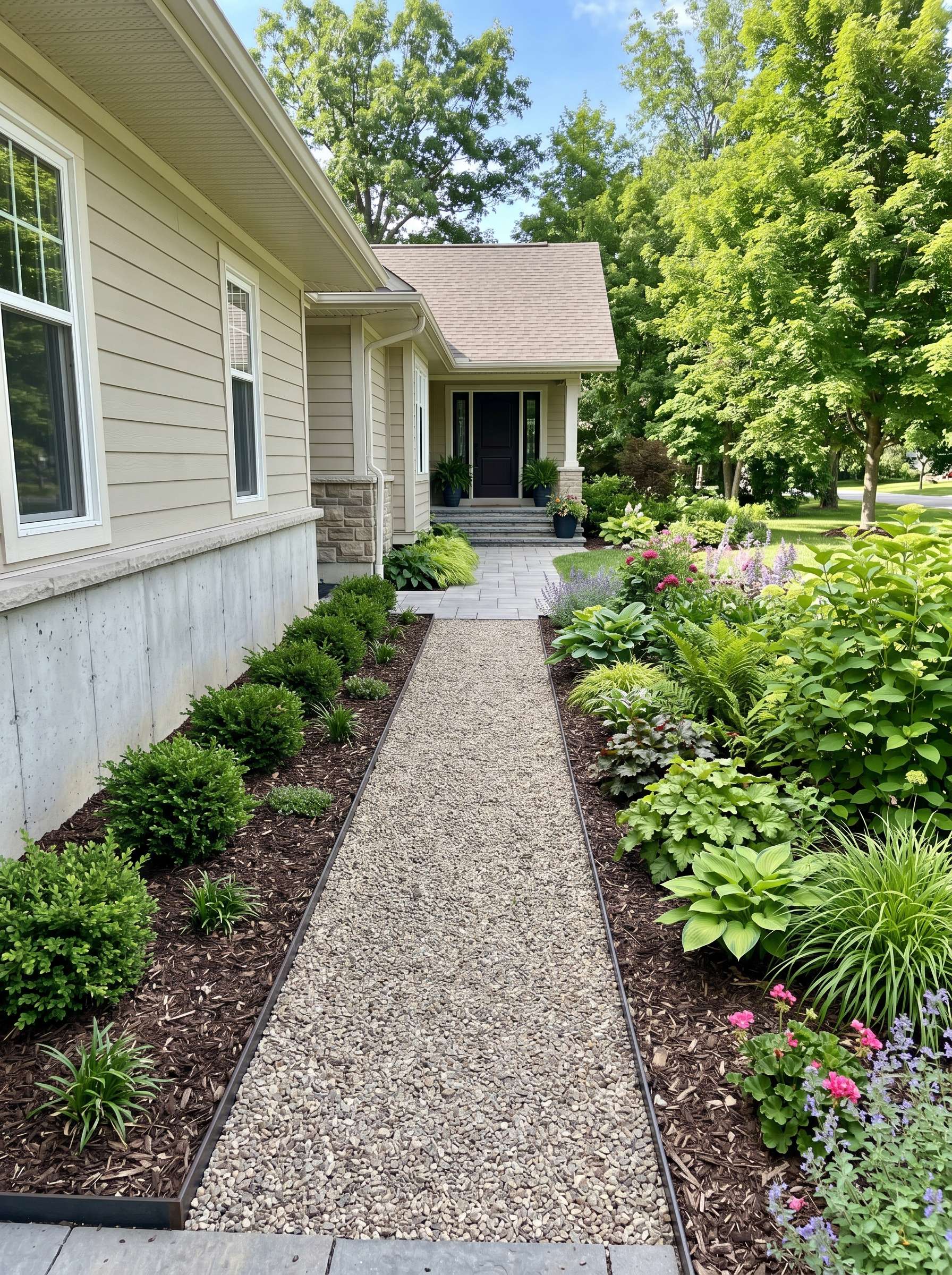
Space your fire-resistant plants out in distinct islands separated by non-flammable elements like flagstone paths, crushed river rock, or decorative boulders. This breaks up the path of a potential fire and makes it much easier to keep individual groups of plants properly hydrated.
Container Gardening
Pots and planters are ideal for creating a safe zone right next to your living spaces.
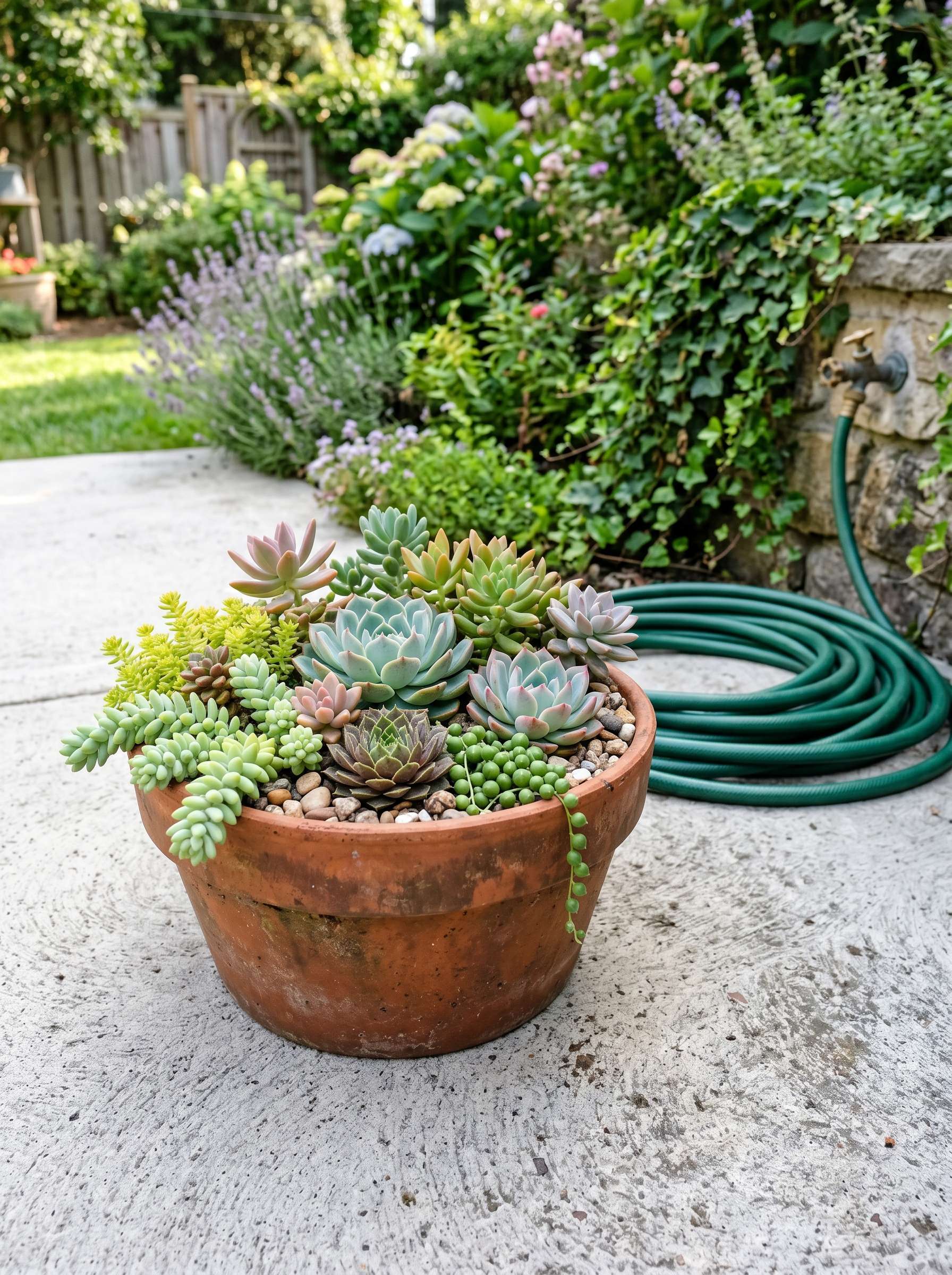
Using heavy clay or ceramic pots adds an extra layer of non-combustible protection around your porch or patio. Just keep in mind that containers dry out vastly quicker than the ground does, so you’ll need to check them regularly to ensure the plants inside don’t dry out and become a liability themselves.
Simple Step-by-Step Planting Guide
Setting these plants up for success doesn’t require a degree in landscape architecture or a massive garage full of expensive tools.
First, clear away any existing patches of dry weeds, dead grass, or old bark mulch from the area you want to plant. Bark mulch is a major issue because dry wood chips catch fire incredibly easily and can carry flames right up to your siding.
Next, dig a hole that is twice as wide as your plant’s root ball but exactly the same depth. You don’t want to bury the crown of the plant too deep, or it will rot.
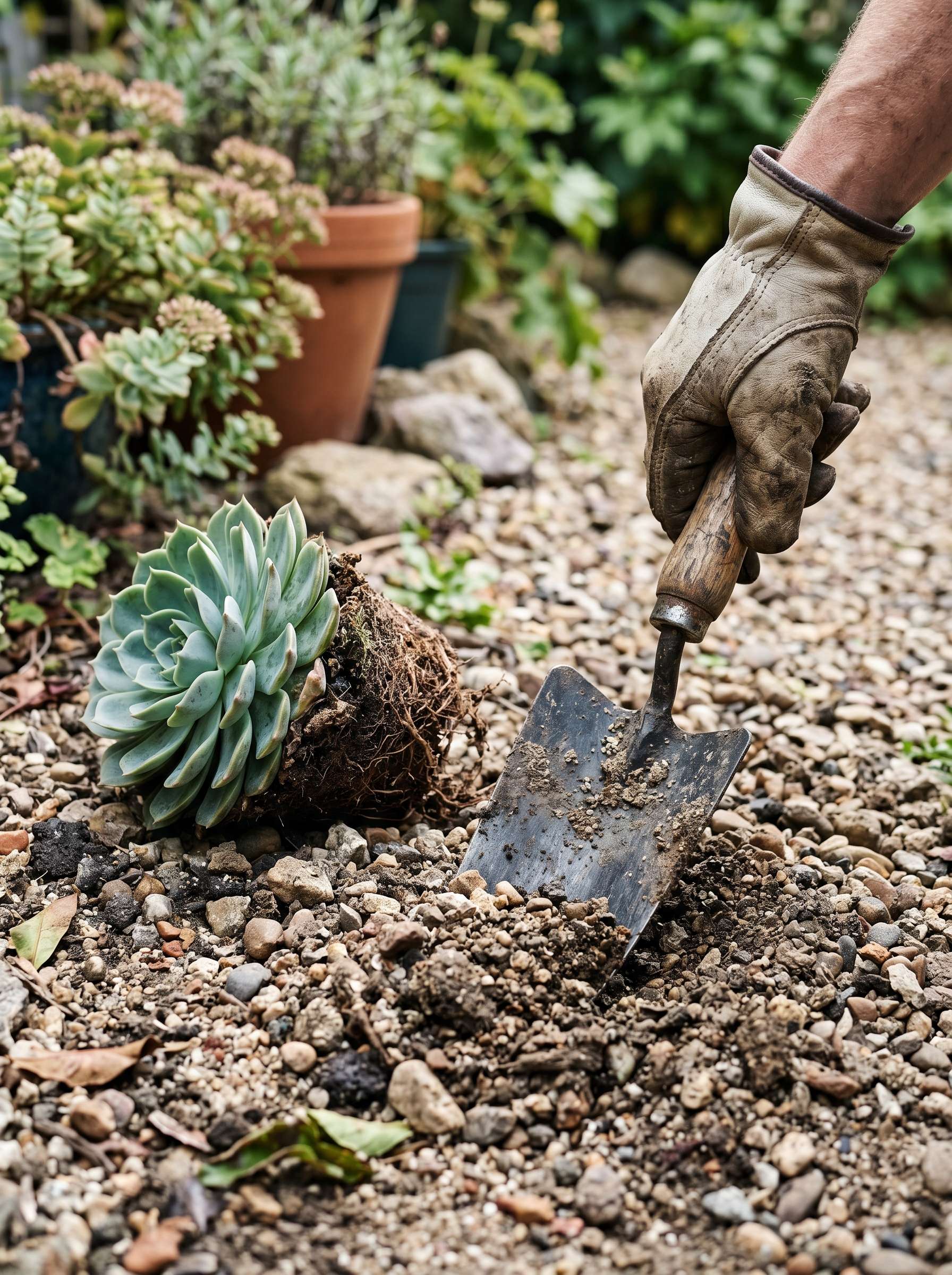
Fill the hole with water before you even put the plant in, and let it drain completely into the surrounding dirt. This ensures the deep soil layers are thoroughly damp.
Pop the plant in, gently pack the native soil back around the roots, and finish the area with a two-inch layer of crushed gravel or decomposed granite instead of wood mulch. This rock mulch keeps the soil cool, slows down evaporation, and won’t ignite if an ember lands on it.
Real Lessons from My Own Gardening Failures
I’ve made plenty of dumb mistakes over the past two decades, and I’m not proud to admit that I’ve accidentally created a few fire hazards of my own along the way.
Years ago, I planted a gorgeous row of traditional rosemary right along the edge of my wooden front porch because I loved the scent and knew it didn’t need much water.
Within three years, the tops looked beautifully green, but the undersides had turned into a massive, hidden tangle of dry, woody sticks full of highly aromatic, flammable oils. I had essentially built a fuel woodpile right against my house. I ended up tearing the whole row out after realizing just how dangerous it was.
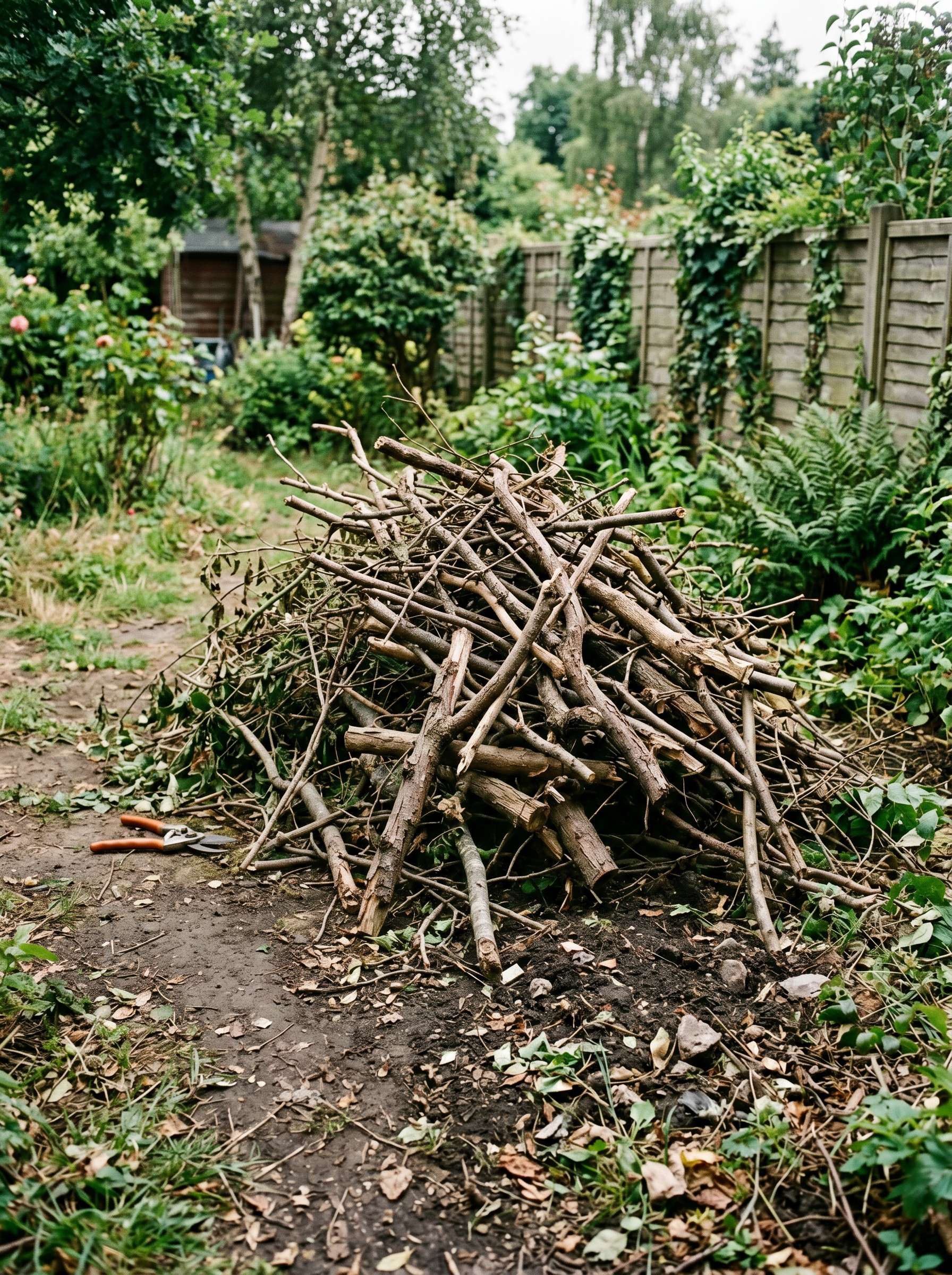
Another time, I fell for some terrible internet advice that recommended using thick layers of shredded cedar mulch to conserve water in a dry garden bed.
During a particularly brutal summer dry spell, a stray spark from a neighbor’s yard work landed in that mulch, and it smoldered invisibly for hours, slowly burning through the roots of my plants before I even noticed the smoke.
Since that day, I use absolutely nothing but crushed river stone or clean gravel around my home’s immediate perimeter.
I also used to panic-prune my plants during mid-summer heatwaves, thinking I was helping them by cutting away extra growth. All that did was expose the sensitive, moisture-rich inner stems to the blistering sun, causing them to dry out twice as fast.
Now, I leave my plants alone during the hottest months and do all my structural cleanup work during the cool winter season. Knowing how to manage your yard during a heat-wave recovery period is all about patience, not frantic cutting.
Seasonal Care and Maintenance Reality
Fire safety isn’t a “one-and-done” weekend project; your yard’s needs will change drastically as the seasons shift across the year.
| Season | Key Maintenance Focus | Why It Matters for Fire Safety |
| Spring | Clear out winter deadwood; apply gravel mulch | Removes fuel before the dry season begins |
| Summer | Run deep, occasional watering sessions at dawn | Keeps plant tissue plump and full of moisture |
| Autumn | Prune back spent flower stalks and old growth | Prevents dry stalks from acting as ember catchers |
| Winter | Hard pruning of deciduous native shrubs | Encourages fresh, succulent growth next spring |
During the intense heat of July and August, your main goal is simply keeping the moisture levels up inside the plant tissue. You don’t want to overwater and create puddles, but a deep soaking once every week or two will keep your fire-resistant selections from dropping into survival mode and drying out.
Practical Budget and Minimal Tool Kit
You don’t need a massive budget to make your yard significantly safer. In fact, keeping things simple usually yields much better results.
- Classic Steel Hand Trowel ($10 – $15): Look for a solid, single-piece metal trowel so the handle doesn’t snap off when you hit heavy, rocky soil.
- Bypass Pruning Shears ($20 – $35): Avoid anvil-style pruners; bypass shears cut cleanly like scissors, which prevents crushing the stems and creating dead, ragged edges.
- 50-Foot Heavy-Duty Garden Hose ($30 – $50): A durable hose that doesn’t kink easily makes deep watering much less of a chore.
- Decomposed Granite or Crushed Gravel ($5 – $8 per bag): Skip the wood mulch entirely and buy standard landscape rock from your local yard supply center to create a fire-safe barrier.
Common Myths About Fireproof Gardening
The biggest piece of misinformation floating around out there is that certain plants are completely “fireproof.”
I see this claim all over social media, and it’s flat-out dangerous. If a wildfire is tearing through a neighborhood with high winds and extreme temperatures, every single piece of vegetation will burn if it gets hot enough.
Our goal here isn’t to build an indestructible shield; it’s to create a defensive space that slows the fire down, prevents small embers from igniting your home, and gives firefighters a realistic chance to defend your property.
Another myth is that native plants never burn. While native species are fantastic for your local ecosystem, plenty of them are highly resinous and burn incredibly hot if they haven’t been cleared of deadwood.
Always look at the physical characteristics of the individual plant—its moisture content, sap type, and growth habit—rather than just relying on its native status.
Questions Frustrated Beginners Always Ask
Yes, absolutely. Especially during their first one to two years in the ground while their root systems are establishing. Even the toughest drought-tolerant succulent will dry out, shrivel up, and become a fire hazard if it goes completely without water during a historic dry spell. The difference is they require significantly less water to stay plump and healthy compared to traditional garden plants.
If you must use wood mulch for aesthetic reasons, keep it at least 5 to 10 feet away from any structure, deck, or wooden fence. Within that immediate 5-foot zone around your home, use exclusively non-combustible materials like river rock, gravel, or decorative pavers.
For most species, a thorough cleanup once a year in the late winter or early spring is more than enough. The main objective is to look inside the plant and remove any hidden tangles of dead, grey, or brittle wood before the summer heat arrives.
Most of the varieties we discussed, like French lavender and red yucca, are surprisingly cold-hardy and can easily handle typical winter freezing temperatures across most US regions. However, certain tender succulents might need a light burlap cover if your area experiences prolonged, deep freezes.
Heavy clay is tough because it holds onto water for too long, which can rot the roots of dry-climate plants. If you have clay, plant them on a slight slope or build a raised bed using a mix of native soil and coarse sand or fine gravel to ensure water drains away quickly from the plant’s crown.
Planning Your Ultimate Safe Zone
When you look at the big picture of your yard, think of it in terms of concentric circles moving away from your home. The first five feet should be entirely non-combustible material with perhaps a few well-spaced, low-growing succulents in heavy clay pots.
As you move further out into the 5-to-30-foot zone, you can start introducing your larger fire-resistant choices like French lavender, California fuchsia, and red yucca, ensuring they are grouped in small, distinct islands rather than long, unbroken hedges.
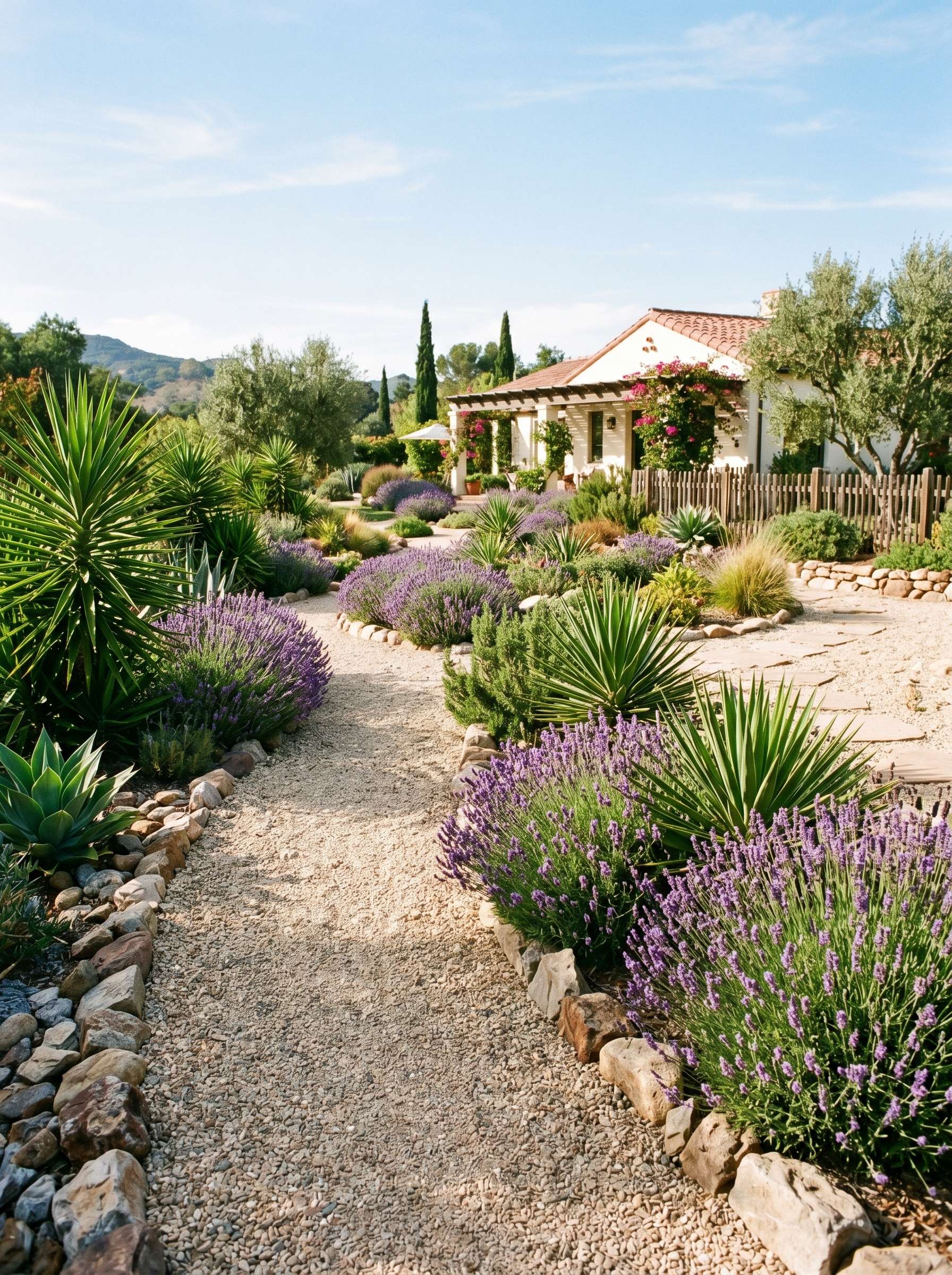
This structural layout does double duty: it protects your home from fire risks while creating a gorgeous, low-maintenance landscape that doesn’t require you to spend your entire weekend dragging hoses around the yard.
If you want to move away from dry, dusty designs and explore richer color options that still work within a sensible layout, take a look at our guide on jewel tone gardens to see how you can elevate your curb appeal safely.
Getting Things Sorted for the Long Haul
At the end of the day, transforming your yard into a safe, fire-resistant space doesn’t mean you have to lose your love for gardening or settle for a boring plot of land.
If you’re looking to balance your fire safety layout with a touch of moody, dramatic style, check out our breakdown of the dark cottagecore trend to see how to mix deeper tones into your exterior spaces.
And if you’re still working on the fundamentals of keeping your soil alive and healthy through tough weather, don’t miss our core beginner gardening tips to get your foundations completely solid.
Once you understand how these plants behave and how to keep them clear of dry deadwood, maintaining a safe, vibrant yard becomes second nature. Take it one section at a time, clear out the old flammable debris, and let these rugged varieties do the heavy lifting for you.
Most advice in this article comes from years of hands-on gardening experience and trial-and-error in real home gardens. Results can vary depending on your specific local climate, soil conditions, and current regional weather patterns. Always check with your local fire department for specific defensible space guidelines in your area.

Aagam – Founder of SpruceTouch
I’m Aagam, a home and garden enthusiast who enjoys growing, building, and improving outdoor spaces. I focus on practical backyard projects, garden ideas, and simple DIY solutions that are useful in real homes. Through SpruceTouch, I share what I’ve learned, what worked, what didn’t, and the small details that can make an outdoor project easier.